
This is my little online home where we celebrate life's real magic - the warm connections, simple self-care rituals, and those quiet moments that stay with you.
What I do here:
• Craft stories and tips to brighten your everyday
• Build a space where everyone feels welcome
• Make each visit worth your while - whether you need quick advice or food for thought
My superpowers? Turning ordinary moments into something special through words that actually mean something.
Off-screen, I'm probably:
☕ Curled up with a book that changes my perspective
🎨 Trying some new creative hobby
🌿 Noticing the small wonders we usually rush past
So glad you're here - let's make something meaningful together!
Table of Contents
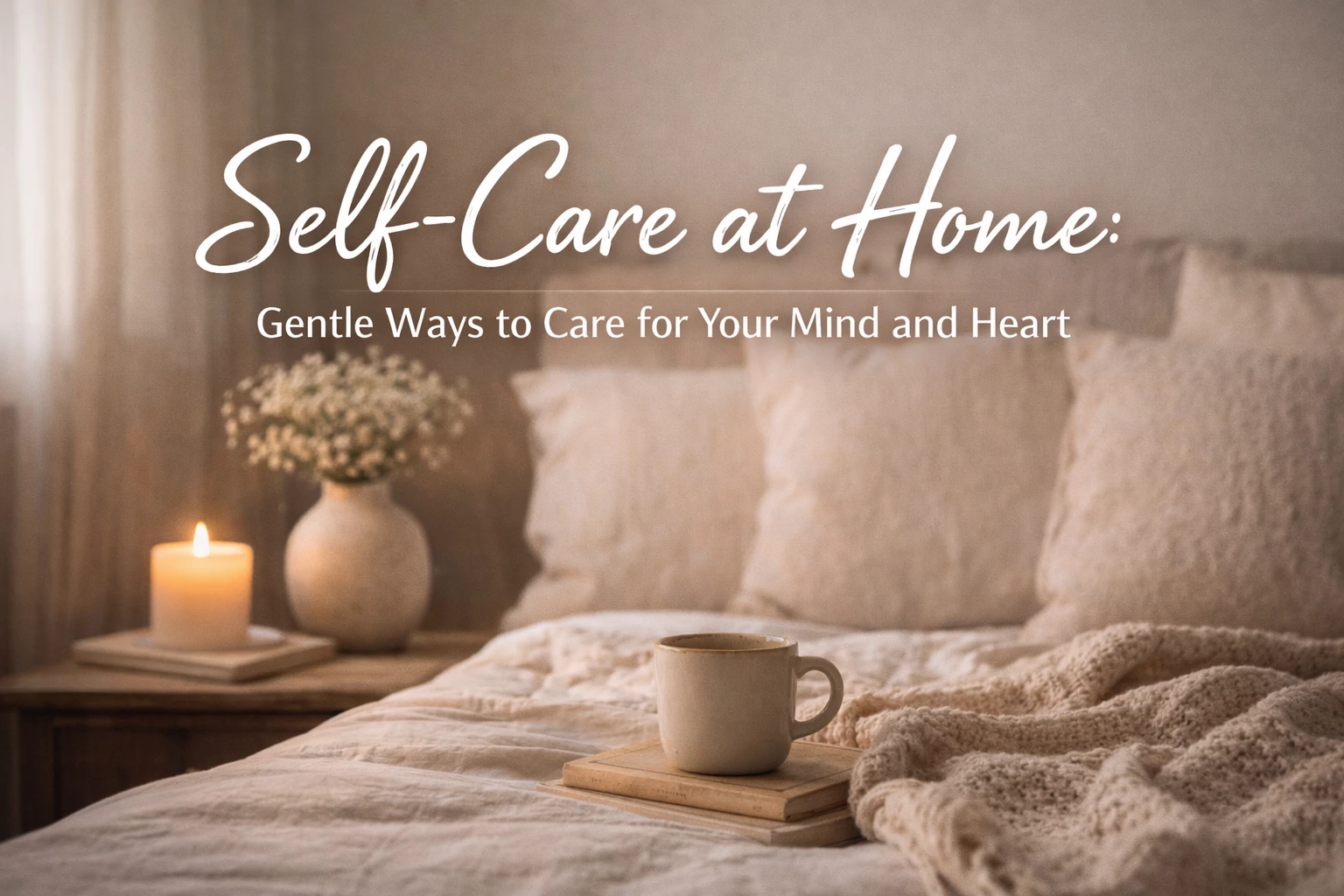
Self-Care at Home for Emotional Wellbeing: Simple Practices That Actually Help

Last Updated: September 15, 2026
By David Yang
Quick Answer
Self-care at home means using simple, sustainable habits to support your physical, emotional, and mental wellbeing in the place where you spend much of your everyday life. It does not require expensive products, a perfect routine, or hours of free time.
Helpful self-care at home can include getting enough sleep, moving your body, eating regular meals, creating periods of quiet, practicing relaxation or breathing exercises, staying connected with people you trust, setting reasonable boundaries, and making your home easier to rest in. These habits may support wellbeing and stress management, but they are not a substitute for professional care when significant mental health symptoms persist.
Introduction: Self-Care Does Not Have to Be Complicated
Self-care is often presented as something you need to buy.
A new product. A perfect morning routine. A beautiful bedroom. A long meditation session. A complicated wellness schedule.
But real self-care is usually much less glamorous.
Sometimes it is going to bed instead of scrolling for another hour.
Sometimes it is eating a proper meal when you have been too busy to notice that you are hungry.
Sometimes it is taking a ten-minute walk.
Sometimes it is turning off the television and sitting quietly for five minutes.
And sometimes it is telling someone, “I can’t take care of everything today.”
Self-care at home is not about creating a perfect life.
It is about making small choices that support the life you actually have.
That distinction matters because self-care can easily become another source of pressure. If your “self-care routine” requires an hour every morning, expensive purchases, perfect nutrition, daily meditation, and an immaculate home, it may become another task to fail at.
A more useful approach is simpler:
Ask what your body, mind, and relationships need today—and choose one realistic action.
What Does Self-Care at Home Really Mean?
Self-care is not a formal treatment for mental illness. It is a broad term for behaviors that support physical and mental wellbeing.
The National Institute of Mental Health describes self-care as taking time for activities that help you live well and support both physical and mental health. Its recommendations include regular physical activity, healthy meals and hydration, adequate sleep, relaxing activities, realistic priorities, gratitude, and staying connected with supportive people.
At home, this can look like:
- protecting your sleep;
- creating a calmer evening routine;
- keeping easy, nourishing food available;
- moving your body regularly;
- taking short breaks from constant stimulation;
- checking in with your emotions;
- speaking to yourself with less unnecessary criticism;
- setting boundaries around time and energy;
- staying connected with people who support you;
- making your living space easier to rest in.
Notice what is missing from this list:
Perfection.
Why Home Can Be an Important Part of Self-Care
Your environment does not determine your mental health, but it can influence how easy or difficult certain habits are to maintain.
A home that makes sleep difficult, encourages constant screen use, contains distracting clutter everywhere, or provides no comfortable place to rest can make recovery from a demanding day harder.
On the other hand, small environmental changes can make healthy choices more convenient.
For example:
- keeping walking shoes near the door makes a short walk easier to start;
- placing your phone away from the bed can reduce bedtime temptation;
- keeping water nearby makes hydration more convenient;
- creating one comfortable chair can give you a reliable place to read or decompress;
- reducing clutter in your bedroom can make the space feel more suitable for rest.
The goal is not to create a “perfect wellness home.”
The goal is to design your environment so that taking care of yourself requires slightly less effort.
12 Simple Self-Care Practices You Can Do at Home
1. Protect Your Sleep Before Adding More Wellness Habits
Sleep is one of the easiest parts of self-care to underestimate.
When you are busy, sleep is often the first thing sacrificed.
You stay up to finish work. You scroll because it is the only quiet time you have. You watch one more episode. You answer messages in bed.
Then you wonder why you feel emotionally depleted the next day.
Instead of creating a complicated nighttime routine, start with one consistent anchor.
- Choose a reasonably consistent bedtime.
- Create a short wind-down period.
- Reduce stimulating activities close to bedtime.
- Keep your bedroom comfortable for sleep.
- Move your phone farther away if it repeatedly keeps you awake.
NIMH specifically recommends making sleep a priority and keeping a regular sleep schedule as part of mental health self-care.
2. Eat Regularly and Stay Hydrated
Self-care is not only emotional.
Your body also needs consistent support.
When life becomes stressful, it is easy to skip meals or rely almost entirely on caffeine and convenience foods.
You do not need a perfect diet to practice self-care.
Start with basics:
- eat regular meals when possible;
- keep simple nutritious foods available;
- drink enough water;
- notice how caffeine affects your sleep and anxiety;
- avoid using food restriction as a response to emotional stress.
NIMH includes regular meals and hydration among its basic mental health self-care recommendations.
3. Take a Short Walk
You do not need a gym membership to move your body.
A short walk around your neighborhood, a few minutes of stretching, household chores, gardening, or another activity you enjoy can be a practical way to add movement to your day.
NIMH notes that even smaller amounts of physical activity can add up when you cannot complete a longer workout.
Think sustainable rather than impressive.
Ten minutes you actually do is more useful than a perfect workout plan you never start.
4. Create Five Minutes of Low-Stimulation Time
Modern life gives your attention very little time to rest.
Messages arrive.
Videos autoplay.
News updates appear.
Work notifications continue after work has technically ended.
Try creating five minutes when you intentionally reduce stimulation.
You could:
- sit beside a window;
- drink tea without your phone;
- listen to quiet music;
- look outside;
- stretch;
- simply sit and breathe.
The goal is not to force your mind to become empty.
It is simply to give your attention a short break.
5. Try a Simple Breathing Exercise
Slow breathing is one of the easiest relaxation practices to try at home.
For example:
- Sit comfortably.
- Relax your shoulders.
- Take a comfortable breath in.
- Let the exhale become slow and unforced.
- Repeat for one to three minutes.
NCCIH reports that slow, deep breathing may modestly reduce stress and has shown preliminary evidence for reducing stress in some studies.
But avoid turning breathing into another performance test.
You do not have to breathe in a particular pattern or force a longer exhale if that feels uncomfortable.
If a relaxation exercise makes you feel more anxious, stop and choose a different grounding activity. NCCIH notes that relaxation techniques can occasionally produce unpleasant experiences such as increased anxiety or intrusive thoughts in some people.
6. Check In With Your Emotions Without Trying to Fix Them
Emotional self-care does not always require solving a problem.
Sometimes you simply need to identify what is happening.
Ask yourself:
- What am I feeling?
- What happened today?
- What is taking most of my mental energy?
- What do I need right now?
You might discover that you are not “in a bad mood.”
You are tired.
Or disappointed.
Or lonely.
Or overwhelmed by too many unfinished tasks.
That information can change what you do next.
If emotional healing is a major concern for you, you can also read Emotional Healing: Simple Practices to Restore Inner Calm.
7. Practice More Supportive Self-Talk
Pay attention to how you speak to yourself when something goes wrong.
For example:
Instead of: “I’m so useless.”
Try: “I made a mistake, and I can figure out what to do next.”
Instead of: “Everyone else can handle this.”
Try: “This is difficult for me right now, and I can take it one step at a time.”
Self-compassion is not the same as making excuses.
It means responding to yourself with understanding while still taking responsibility for your choices.
Research supports an association between self-compassion and wellbeing, while newer research also suggests links between self-compassion, lower stress, and healthier behaviors. These findings are encouraging, but they do not mean self-compassion automatically solves mental health problems.
8. Set One Boundary at Home
Self-care sometimes means saying no.
That may be uncomfortable, especially if you are accustomed to taking care of everyone else first.
A boundary could be:
- not answering work messages after a certain time;
- asking for uninterrupted time;
- declining an unnecessary commitment;
- telling family members when you need quiet;
- ending a conversation that has become disrespectful.
A boundary is not a demand that everyone behave exactly as you want.
It is a way of communicating what you can participate in and what you need to protect.
9. Create a Small Comfort Ritual
Rituals can make ordinary transitions feel more intentional.
Your ritual could be extremely simple:
- tea after dinner;
- reading for ten minutes before bed;
- a short evening shower;
- music while preparing dinner;
- writing tomorrow’s priorities before going to sleep;
- sitting quietly with your morning coffee.
The value is not in the object itself.
It is in creating a predictable moment that marks a transition from “doing” to “resting.”
10. Make One Part of Your Home Easier to Live In
Do not try to reorganize your entire house when you are already exhausted.
Choose one small area.
Maybe it is:
- your bedside table;
- your kitchen counter;
- your desk;
- your favorite chair;
- the place where you keep your keys.
Remove what does not belong there.
Make the space functional.
Stop.
Self-care should not become a six-hour cleaning project.
11. Stay Connected Instead of Isolating Completely
Sometimes being alone is exactly what you need.
But isolation can also make difficult emotions heavier.
Try maintaining at least one small connection with someone you trust.
It could be:
- a phone call;
- a short text;
- sharing a meal;
- a walk together;
- asking someone to listen without trying to solve the problem.
NIMH includes staying connected with friends and family who can provide emotional support and practical help among its mental health self-care recommendations.
12. Give Yourself Permission to Do Less
One of the most overlooked forms of self-care is reducing unnecessary demands.
Ask:
- What genuinely needs to happen today?
- What can wait?
- What am I doing only because I feel guilty?
- What could I simplify?
NIMH recommends setting goals and priorities, deciding what needs attention now, and learning to say no when responsibilities become excessive.
Sometimes the healthiest decision is not adding another habit.
It is removing one unnecessary burden.
How to Create a Self-Care-Friendly Home
Your home does not need to be expensive, minimalist, or Instagram-perfect.
Think about function instead.
Create One Place for Rest
Choose a chair, corner, bedroom area, balcony, or other small space where you can regularly slow down.
Make Healthy Choices Convenient
Keep water visible. Put comfortable walking shoes where you can see them. Keep simple foods available. Put books where you are likely to read them.
Reduce Unnecessary Stimulation
Consider turning off notifications, reducing background television, or creating parts of the evening when screens are not the center of attention.
Protect the Bedroom
Whenever possible, make the bedroom a place associated with sleep and rest rather than work, arguments, endless scrolling, or stressful tasks.
Do Not Turn Your Home Into Another Project
A self-care-friendly home is not a perfect home.
If maintaining your home consumes all your energy, simplify the standard.
Comfort matters more than perfection.
Self-Care for Different Emotional States
The best self-care strategy may depend on what you actually need.
| If You Feel… | You Might Try… |
|---|---|
| Overwhelmed | Reduce today’s priorities to one or two essentials. |
| Emotionally exhausted | Rest, eat, hydrate, and reduce unnecessary demands. |
| Lonely | Contact someone safe rather than waiting until you feel better. |
| Anxious | Try slow breathing, gentle movement, grounding, or a supportive conversation. |
| Angry | Pause the conversation, move your body, and return when you are calmer. |
| Sad | Allow the feeling, seek connection, and maintain basic routines. |
| Mentally scattered | Write down what needs attention and choose one next step. |
| Burned out | Look beyond self-care and examine whether your workload or circumstances need to change. |
Self-Care Is Not the Same as Escaping Stress
Some activities feel relaxing in the moment but do not actually support you over time.
For example, you might spend hours scrolling because you feel exhausted. You might avoid an important conversation because you do not want to deal with it. You might stay in bed all day because everything feels overwhelming.
There is nothing inherently wrong with rest or entertainment.
The question is:
“Does this leave me better supported, or does it simply help me avoid what I cannot face?”
Sometimes avoidance is understandable and temporary.
But if the same coping strategy repeatedly makes your sleep, relationships, responsibilities, or mood worse, it may be worth reconsidering.
Self-Care Is Not Selfish
Many people struggle with self-care because they associate caring for themselves with neglecting others.
But basic maintenance is not selfish.
You need food.
You need sleep.
You need breaks.
You need emotional support.
You need time when you are not performing a role for someone else.
Self-care also does not mean putting yourself first in every situation.
It means recognizing that your wellbeing is part of the equation.
Why Self-Care Sometimes Does Not Work
There is an important limit to self-care advice.
If the source of your distress is an unsafe relationship, overwhelming workload, serious financial pressure, untreated mental illness, chronic health problems, grief, trauma, or another major circumstance, lighting a candle and taking a bath may not solve the underlying problem.
That does not mean self-care is useless.
It means the intervention needs to match the problem.
Sometimes the next act of self-care is:
- asking for help;
- seeing a healthcare professional;
- talking to a therapist;
- changing an unhealthy boundary;
- asking for practical support;
- taking leave from an unsustainable situation;
- addressing a relationship problem directly.
Self-care should support real life, not become a way to avoid changing what is hurting you.
Self-Care and Emotional Healing
Self-care and emotional healing overlap, but they are not exactly the same.
Self-care is often about supporting your wellbeing today.
Emotional healing can involve recovering from deeper or longer-lasting emotional pain.
For example:
| Self-Care | Emotional Healing |
|---|---|
| Getting enough sleep | Understanding recurring emotional patterns |
| Taking a walk | Processing difficult experiences |
| Eating regularly | Learning healthier emotional responses |
| Taking a break | Working through grief or relationship pain |
| Creating a calming home | Building greater emotional resilience over time |
You can practice both.
For a deeper look at the emotional side, read Emotional Healing: Simple Practices to Restore Inner Calm.
A Simple 10-Minute Self-Care Routine at Home
If you are busy, try this:
Minute 1–2: Pause
Put your phone down and take a few comfortable breaths.
Minute 3–5: Check In
Ask yourself what you are feeling and what you need most today.
Minute 6–8: Move
Stretch, walk around the room, or step outside.
Minute 9–10: Choose One Next Step
Drink water. Make food. Send a message. Take a shower. Finish one important task. Go to bed earlier.
That’s enough.
You do not need to transform your entire life in ten minutes.
A Simple 7-Day Self-Care Reset
Day 1 — Sleep
Choose a realistic bedtime and protect it.
Day 2 — Movement
Take a short walk or do gentle movement at home.
Day 3 — Food and Water
Pay attention to whether you are eating and hydrating regularly.
Day 4 — Quiet
Create ten minutes without unnecessary digital stimulation.
Day 5 — Connection
Contact someone you trust.
Day 6 — Boundaries
Say no to one unnecessary demand.
Day 7 — Reflection
Ask:
- What helped me most?
- What felt unrealistic?
- What would I like to continue next week?
Keep the habits that fit your real life.
How Do You Know Your Self-Care Is Actually Helping?
Self-care does not always produce dramatic changes.
Look for smaller signs.
- You recover from stressful moments a little faster.
- You notice your needs earlier.
- You sleep more consistently.
- You have slightly more energy.
- You feel less guilty about resting.
- You are better able to say no.
- You are less harsh toward yourself.
- You have more patience with people you care about.
- Your home feels easier to rest in.
- You feel more capable of handling ordinary difficult days.
Progress is not always “I feel amazing.”
Sometimes it is simply:
“I am coping a little better than I was last month.”
Frequently Asked Questions About Self-Care at Home
What is self-care at home?
Self-care at home means using practical habits and routines within your living environment to support physical, emotional, and mental wellbeing. It can include sleep, movement, regular meals, relaxation, emotional awareness, social connection, boundaries, and creating a comfortable environment.
What is the best self-care activity at home?
There is no single best activity for everyone. The most useful choice depends on what you currently need. If you are exhausted, rest may matter most. If you feel isolated, connection may help more. If you are overwhelmed, reducing demands may be more useful than adding another activity.
Does self-care actually reduce stress?
Some self-care practices can support stress management. NIMH recommends habits such as exercise, adequate sleep, relaxing activities, realistic priorities, and social connection. Relaxation techniques such as breathing exercises may also help some people manage stress.
Do I need a strict self-care routine?
No. A flexible routine is often more realistic. Self-care should fit your circumstances rather than become another source of pressure.
Is self-care selfish?
No. Basic self-care is part of maintaining your physical and mental wellbeing. Caring for yourself does not mean ignoring other people; it means recognizing that your own needs matter too.
What if I only have 10 minutes for self-care?
Ten minutes can still be useful. Try breathing, stretching, taking a short walk, drinking water, sitting quietly, writing down your priorities, or contacting someone you trust.
Can self-care replace therapy?
No. Self-care can support wellbeing and may complement professional treatment, but it should not be used as a replacement when significant or persistent mental health symptoms require professional care.
When should I seek professional help?
Consider professional support if symptoms are severe or distressing and last for two weeks or more, especially when they interfere with sleep, concentration, daily activities, appetite, enjoyment, or your ability to function. NIMH recommends talking with a healthcare provider when these problems persist or worsen.
When Self-Care Needs to Become Professional Care
There is no prize for handling everything alone.
Talk with a qualified healthcare or mental health professional if you are experiencing persistent or severe emotional difficulties, significant changes in sleep or appetite, loss of interest in things you normally enjoy, difficulty completing normal responsibilities, or symptoms that are getting worse.
If you feel you may hurt yourself or someone else, seek urgent help through your local emergency or crisis services.
Self-care is valuable.
But sometimes the most caring thing you can do for yourself is ask someone qualified to help.
Final Thoughts
Self-care at home does not have to look impressive.
It can be quiet.
It can be ordinary.
It can be ten minutes of rest, a glass of water, a walk around the block, a proper meal, an earlier bedtime, a difficult boundary, or a conversation with someone who makes you feel less alone.
The most sustainable self-care is usually not the routine that looks best on social media.
It is the routine you can realistically return to when life becomes difficult.
Your home does not need to become a perfect sanctuary.
Your life does not need to become perfectly balanced.
You simply need a few reliable ways to support yourself when the day becomes heavy.
Take care of yourself in ways that make tomorrow a little easier—not ways that make today another performance.
Authoritative Sources & References
- National Institute of Mental Health (NIMH) — Caring for Your Mental Health
- NIMH — My Mental Health: Do I Need Help?
- National Center for Complementary and Integrative Health (NCCIH) — Stress
- NCCIH — Meditation and Mindfulness: Effectiveness and Safety
- NCCIH — 5 Things To Know About Relaxation Techniques for Stress
- Liu, J. et al. (2026) — Self-compassion, stress and health behaviour: a systematic review and meta-analysis
- Zessin, U., Dickhäuser, O., & Garbade, S. (2015) — The Relationship Between Self-Compassion and Well-Being: A Meta-Analysis
- Meta-analysis of self-compassion interventions (2023) — Effects of Self-Compassion Interventions on Reducing Depressive Symptoms, Anxiety, and Stress
Recommended Articles:
- How to Stop Feeling Empty: A Gentle Path to Wholeness
- How to Feel Happy Again: Gentle Steps to Rediscover Joy After Pain
- How to Stop Overthinking: A Practical Guide to Quieting a Busy Mind
- Anxiety Relief at Home: Creating a Space That Helps You Breathe Easier
- How to Calm Anxiety at Home Naturally (12 Proven Ways)
- Why Do I Feel Restless All the Time? 10 Surprising Sources of Inner Chaos & How to Quiet Them
- Why Do I Feel Overwhelmed in My Relationship? 12 Hidden Sources of Emotional Pressure
- Why Do I Feel Sad at Night? 13 Hidden Reasons Your Heart Aches After Dark
- Why Do I Feel Empty After Social Media? 10 Hidden Causes Behind the Scroll
- Why Do I Feel Like Something Is Missing in My Life? 12 Hidden Reasons Behind the Emptiness
- Why Do I Feel Drained After Talking to People? 10 Hidden Causes of Social Fatigue
- When Home Doesn’t Feel Safe: Why Do I Feel Anxious in My Own House?
- When You Don’t Recognize Yourself in the Mirror: Why Do I Feel Disconnected from Myself?
- Why Do I Feel Stuck in Life? 11 Root Causes & How to Move Forward
- When Life Loses Its Spark: Why Do I Feel Bored With My Life?
- Why Do I Feel Like I Don’t Belong Anywhere? 9 Hidden Reasons and the Path to True Connection
- The Silent Question That Haunts Your Heart: Why Do I Feel Like I’m Not Good Enough?
- Why Do I Feel Like I’m Not Good Enough? Understanding Low Self-Worth
- Why Do I Feel Emotionally Exhausted? Causes & Healing
- Why Do I Feel Overwhelmed by Simple Things? Understanding Emotional Overload and Stress Sensitivity
- Why Do I Feel Unmotivated and Tired? Understanding Low Energy, Burnout, and Lack of Drive
- Why Do I Feel Mentally Drained Every Day? Understanding Burnout, Fatigue, and Emotional Exhaustion
- Why Do I Feel Lost in Life Right Now? A Gentle Guide to Finding Your Direction, Purpose, and Self Again
- Why Do I Feel Unhappy for No Reason? Understanding the Hidden Causes of Unexplained Sadness
- Why Do I Feel Anxious at Home? Understanding Home Anxiety and How to Reclaim Your Safe Space
- Why Do I Feel Emotionally Numb All the Time? Understanding Emotional Numbness and How to Feel Again
- How to Calm Anxiety at Home: Gentle, Science-Backed Ways to Create Anxiety Relief in Your Safe Space
- Letting Go of Stress: Calm Practices You Can Do at Home
- Everyday Rituals That Support Emotional Wellbeing

- How to Find Inner Balance in a Busy and Noisy World
- Self-Care at Home That Actually Helps

- Emotional Healing: Simple Practices to Restore Inner Calm