
Why Do I Feel Unmotivated and Tired? Understanding Low Energy, Burnout, and Lack of Drive

Quick Answer

If you keep asking yourself, “why do I feel unmotivated and tired,” the answer is usually more complex than simple laziness. Low energy, burnout, emotional stress, poor sleep, mental overload, and unmet emotional needs can all drain your motivation and make daily life feel heavier than it should.

The good news is that a lack of drive is often reversible. By understanding the emotional, physical, and psychological causes behind your exhaustion, you can rebuild your energy, focus, and sense of purpose step by step.

Introduction

You wake up already tired. Small tasks feel overwhelming. Messages pile up unanswered. Your goals no longer excite you the way they once did. Even things you used to enjoy now feel like obligations.

Many people silently struggle with this feeling and wonder: “Why do I feel unmotivated and tired all the time?” They blame themselves for lacking discipline, ambition, or willpower. But in reality, chronic low energy and lack of drive are often signs that your mind and body are asking for care, recovery, and emotional balance.

Modern life pushes people into constant stimulation, pressure, comparison, and productivity. Over time, the nervous system becomes overloaded. Motivation disappears not because you are weak, but because your emotional and physical reserves have been depleted.

woman feeling emotionally exhausted and asking why do I feel unmotivated and tired

Understanding what is happening beneath the surface is the first step toward feeling like yourself again. This article explores the real reasons behind low energy, burnout, and lack of drive — along with practical ways to recover your motivation without guilt or self-judgment.

What Is Lack of Motivation?

Lack of motivation is a state where your mind and body struggle to generate the energy, focus, or emotional momentum needed to take action. It can affect work, relationships, health habits, creativity, and even simple daily tasks.

Motivation is not just about mindset. It is connected to sleep quality, emotional health, stress levels, physical wellness, hormones, social connection, and nervous system regulation. When one or more of these areas become unbalanced, your brain naturally reduces energy output as a protective mechanism.

That means your exhaustion may not be a personal failure at all. It may be your body signaling that something deeper needs attention.

People experiencing low energy or burnout often notice symptoms such as:

  • Constant fatigue even after resting
  • Difficulty concentrating
  • Loss of excitement or passion
  • Procrastination and avoidance
  • Feeling emotionally numb
  • Irritability or emotional overwhelm
  • Lack of drive to complete simple tasks
  • Brain fog and forgetfulness
  • Withdrawal from social interactions
person experiencing low energy and burnout symptoms

Sometimes motivation disappears suddenly after a stressful event. Other times, it fades slowly over months or years of emotional exhaustion.

Why Lack of Motivation Matters

When motivation disappears, people often become harsh toward themselves. They assume they are lazy or falling behind in life. This creates shame, which only increases emotional exhaustion.

But motivation is deeply connected to emotional safety and psychological health. Human beings are not machines designed for endless output. We need rest, meaning, connection, and recovery.

Chronic lack of drive can affect every area of life:

  • Career performance and confidence
  • Relationships and communication
  • Physical health and immune function
  • Self-esteem and identity
  • Sleep quality and emotional stability
  • Long-term mental health

Research in psychology shows that burnout and emotional fatigue reduce dopamine activity, which directly impacts motivation and reward processing. When stress becomes chronic, the brain shifts into survival mode. Instead of pursuing goals, the nervous system focuses on protection and energy conservation.

This is why forcing yourself harder often backfires. Recovery usually begins with reducing emotional pressure rather than increasing it.

calm emotional recovery environment for people with lack of drive and burnout

Common Problems People Face

  • Feeling exhausted even after sleeping
  • Starting tasks but never finishing them
  • Losing interest in hobbies and passions
  • Constant scrolling and avoidance behaviors
  • Comparing yourself to more productive people
  • Feeling emotionally disconnected from life
  • Difficulty getting out of bed
  • Overthinking every decision
  • Feeling guilty for resting
  • Burnout from work, caregiving, or emotional stress
  • Experiencing low energy during periods of anxiety or depression
  • Feeling trapped in routines that no longer feel meaningful

These experiences are extremely common in today’s fast-paced culture. Many people function in survival mode for years before realizing how emotionally exhausted they truly are.

Core Framework

Pillar 1: Restore Physical Energy

One major reason people ask “why do I feel unmotivated and tired” is because physical exhaustion slowly accumulates over time.

Sleep deprivation, poor nutrition, dehydration, lack of sunlight, sedentary habits, and chronic stress all reduce the body’s ability to produce sustainable energy.

Your brain consumes a large amount of energy each day. When your body is depleted, motivation naturally declines because the brain prioritizes survival over ambition.

Simple physical restoration habits can create major improvements:

  • Consistent sleep schedule
  • Morning sunlight exposure
  • Walking daily
  • Eating balanced meals with protein and nutrients
  • Reducing excessive caffeine and sugar
  • Drinking enough water
  • Taking real breaks from screens

Many people underestimate how deeply physical exhaustion affects emotional resilience and mental clarity.

Pillar 2: Reduce Emotional Overload

Burnout is not only physical. Emotional overload is one of the biggest causes of low motivation.

When the mind constantly processes stress, uncertainty, pressure, conflict, or emotional pain, the nervous system becomes overwhelmed. Over time, even small tasks feel mentally exhausting.

This often happens to:

  • Caregivers
  • Parents
  • High achievers
  • People recovering from trauma
  • Workers in stressful environments
  • People who suppress emotions for long periods

Emotional exhaustion can look like laziness from the outside, but internally it often feels like carrying invisible weight every day.

Healing begins when people allow themselves to acknowledge emotional fatigue instead of ignoring it.

Pillar 3: Rebuild Meaning and Direction

Sometimes lack of drive happens because life has become disconnected from meaning.

Human beings need more than productivity. We need emotional connection, purpose, creativity, and hope. If daily life becomes repetitive, emotionally empty, or misaligned with personal values, motivation slowly fades.

This is especially common after major life transitions, career dissatisfaction, heartbreak, grief, or long periods of stress.

Rebuilding motivation often starts with reconnecting to small sources of meaning:

  • Creative expression
  • Helping others
  • Spending time in nature
  • Building healthier relationships
  • Learning new skills
  • Setting realistic goals
  • Creating calm daily routines
structured recovery framework for burnout and low energy

Practical Action Steps

  • Start with one small task each morning instead of overwhelming yourself with long lists.
  • Create a consistent sleep schedule, even on weekends.
  • Spend at least 10–20 minutes outside daily for sunlight and nervous system regulation.
  • Reduce exposure to negative or overstimulating social media content.
  • Break large goals into tiny manageable actions.
  • Practice self-compassion instead of self-criticism.
  • Schedule regular rest without guilt.
  • Talk openly with supportive people about emotional stress.
  • Limit multitasking and focus on one thing at a time.
  • Reconnect with hobbies that once brought joy or calm.
  • Seek professional support if exhaustion becomes persistent or severe.

Recovery from burnout or low motivation is rarely instant. Sustainable healing happens gradually through consistent habits and emotional awareness.

Mistakes to Avoid

  • Calling yourself lazy without understanding the root cause
  • Ignoring chronic stress and emotional exhaustion
  • Using constant caffeine to mask fatigue
  • Comparing your energy levels to others
  • Expecting instant motivation overnight
  • Overloading yourself with unrealistic productivity goals
  • Believing rest must be earned
  • Suppressing emotions instead of processing them
  • Working continuously without recovery time
  • Neglecting sleep and physical health

Many people unintentionally deepen burnout by attacking themselves emotionally for being tired. Compassion and patience are far more effective than shame.

Deep Insight

One of the most overlooked truths about motivation is that the nervous system cannot thrive under constant pressure.

When people live in survival mode for too long, the brain shifts away from creativity, excitement, and long-term planning. Instead, it focuses on conserving energy and avoiding additional stress.

This means your lack of drive may not be a character flaw. It may be a biological response to emotional overload.

Psychologists often describe motivation as a result of emotional safety. When people feel rested, emotionally supported, and connected to meaning, energy naturally returns.

Mindfulness practices can also help interrupt cycles of burnout. Slowing down allows the brain to recover from chronic overstimulation. Simple moments of quiet, breathing, reflection, or time in nature can calm the nervous system more than many people realize.

Healing does not always begin with pushing harder. Sometimes it begins with finally allowing yourself to recover.

Simple Daily Habits

  • Wake up at a consistent time each day
  • Drink water before caffeine
  • Take short walks to reset mental energy
  • Keep a simple gratitude journal
  • Spend less time consuming and more time creating
  • Practice deep breathing during stressful moments
  • Reduce clutter in your environment
  • Listen to calming music or podcasts
  • Protect quiet time before sleep
  • Celebrate small progress instead of perfection
  • Reach out to supportive friends or family members
  • Allow yourself moments of genuine rest
daily habits to recover from low energy and lack of drive

FAQ

Why do I feel unmotivated and tired even after sleeping?

Sleep alone may not fully restore energy if emotional stress, burnout, anxiety, depression, poor sleep quality, or physical health issues are present. Chronic mental overload can leave people feeling exhausted even after long periods of rest.

Can burnout cause low motivation?

Yes. Burnout often reduces emotional resilience, focus, and dopamine-related reward processing. People experiencing burnout commonly report low energy, lack of drive, emotional numbness, and difficulty completing tasks.

Is lack of motivation a sign of depression?

Sometimes. Persistent low motivation combined with sadness, hopelessness, isolation, sleep problems, or loss of interest in life may indicate depression. If symptoms continue for weeks or interfere with daily functioning, professional support can help.

How can I rebuild motivation when I feel stuck?

Start very small. Focus on sleep, hydration, movement, emotional recovery, and manageable daily goals. Motivation often returns gradually after the nervous system feels safer and less overwhelmed.

Why does social media make me feel more exhausted?

Constant comparison, overstimulation, and information overload can increase mental fatigue and emotional stress. Excessive scrolling may also reduce attention span and worsen feelings of inadequacy or burnout.

Can physical health problems cause low energy?

Absolutely. Nutrient deficiencies, thyroid issues, chronic stress, sleep disorders, hormonal imbalances, and other medical conditions can contribute to persistent fatigue and lack of drive.

Authoritative Sources & References

  • American Psychological Association (APA) – Chronic stress and burnout significantly impact motivation, emotional health, and cognitive performance – https://www.apa.org
  • Harvard Health Publishing – Sleep, stress management, and emotional wellness play major roles in restoring mental energy – https://www.health.harvard.edu
  • Mayo Clinic – Persistent fatigue and lack of motivation may relate to burnout, depression, sleep disorders, or medical conditions – https://www.mayoclinic.org
  • Cleveland Clinic – Emotional exhaustion can create physical symptoms including fatigue, brain fog, and lack of drive – https://health.clevelandclinic.org
  • National Institute of Mental Health (NIMH) – Depression and chronic stress frequently affect motivation, concentration, and daily functioning – https://www.nimh.nih.gov
  • Stanford Medicine – Chronic stress changes brain function and affects emotional regulation and energy levels – https://med.stanford.edu
  • World Health Organization (WHO) – Burnout is recognized as an occupational phenomenon linked to chronic unmanaged stress – https://www.who.int

Final Summary

If you have been wondering, “why do I feel unmotivated and tired,” remember this: exhaustion is not always a failure of discipline. Sometimes it is a signal that your body, mind, and emotions need recovery.

Low energy, burnout, and lack of drive often develop slowly through chronic stress, emotional overload, poor recovery habits, and disconnection from meaning. Healing begins when you stop treating yourself like a machine and start responding to your needs with awareness and compassion.

You do not need to fix your entire life overnight. Start with one small act of care today — a walk, a better night of sleep, a conversation, a deep breath, or a moment of stillness. Motivation often returns quietly, one gentle step at a time.

Recommended Articles:

Welcome – love a happy home

Why Do I Feel Mentally Drained Every Day? Understanding Burnout, Fatigue, and Emotional Exhaustion

Quick Answer

If you constantly wonder, “why do I feel mentally drained every day,” the answer often involves a combination of chronic stress, emotional overload, poor recovery habits, burnout, sleep disruption, and unresolved emotional tension. Mental exhaustion builds slowly when your brain stays in survival mode for too long without enough rest, boundaries, or emotional support.

Introduction

You wake up tired even after sleeping. Small tasks feel overwhelming. Conversations drain your energy. Your motivation disappears, your patience becomes thinner, and even things you used to enjoy begin to feel like work. If this sounds familiar, you are not alone.

Mental exhaustion is becoming one of the most common struggles in modern life. Between nonstop notifications, work pressure, financial anxiety, relationship stress, and emotional responsibilities, many people are quietly carrying more than their nervous systems were designed to handle.

When people ask, “why do I feel mentally drained every day,” they are often searching for more than a medical explanation. They are searching for relief. They want to understand why their mind feels heavy, why their emotional energy disappears so quickly, and why they can no longer feel fully present in their own lives.

The good news is that mental fatigue is not a personal failure. It is usually a signal. Your body and mind are asking for recovery, balance, emotional processing, and healthier rhythms.

woman experiencing why do I feel mentally drained every day symptoms at home

What Is Mental Exhaustion?

Mental exhaustion is a state of psychological fatigue caused by prolonged emotional, cognitive, or stress-related overload. Unlike ordinary tiredness, mental exhaustion affects your thoughts, emotions, concentration, motivation, and ability to function normally.

When someone experiences burnout or emotional exhaustion, the brain stays in a heightened stress response for extended periods. Over time, this drains mental resources and creates symptoms like brain fog, irritability, anxiety, emotional numbness, forgetfulness, and constant fatigue.

Mental exhaustion can happen gradually. Many people ignore the early signs because they are used to pushing through discomfort. Eventually, the nervous system becomes overwhelmed.

Common signs include:

  • Feeling emotionally detached
  • Difficulty focusing
  • Low motivation
  • Feeling tired after basic tasks
  • Increased sensitivity to stress
  • Sleep problems
  • Physical tension and headaches
  • Feeling hopeless or emotionally flat

The important thing to understand is that mental exhaustion is not laziness. It is a biological and emotional response to prolonged strain.

person dealing with burnout and emotional exhaustion

Why Mental Exhaustion Matters

Ignoring mental fatigue can affect every part of your life. Relationships become harder to maintain. Work performance declines. Emotional resilience weakens. Even physical health can suffer.

When the brain is overwhelmed, the body releases stress hormones like cortisol more frequently. While cortisol is helpful in short bursts, long-term stress exposure can disrupt sleep, increase inflammation, weaken immunity, and intensify emotional instability.

Psychologists often describe burnout as the result of chronic imbalance between demands and recovery. Humans are not machines. We cannot continuously absorb stress without consequences.

Emotional exhaustion also affects how we experience joy and connection. People who feel mentally drained every day often describe feeling emotionally numb. They may stop engaging in hobbies, withdraw socially, or feel disconnected from themselves.

This matters because emotional wellbeing influences everything from decision-making to physical health and family relationships.

When mental exhaustion is left untreated, it can contribute to anxiety disorders, depression, sleep disorders, and long-term health complications.

quiet emotional exhaustion and mental fatigue reflection

Common Problems People Face

  • Working without real mental breaks
  • Emotional caregiving fatigue
  • Constant phone and social media stimulation
  • Poor sleep quality
  • Perfectionism and self-pressure
  • People-pleasing behaviors
  • Lack of emotional boundaries
  • Ignoring stress symptoms for too long
  • Unprocessed grief or trauma
  • Chronic anxiety and overthinking
  • Feeling guilty when resting
  • Trying to stay productive while emotionally overwhelmed

Core Framework for Recovering From Mental Exhaustion

Pillar 1: Nervous System Recovery

If you keep asking yourself, “why do I feel mentally drained every day,” your nervous system may never be fully relaxing. Many people live in a near-constant state of alertness. Their brains stay busy even during rest.

Nervous system recovery involves creating safety and calm inside the body. This includes quality sleep, slower routines, quiet time, deep breathing, physical movement, and reduced overstimulation.

For example, someone who works long hours and scrolls social media late into the night may never give their brain true recovery time. Even if they technically “rest,” their nervous system remains stimulated.

Recovery requires intentional slowing down.

Pillar 2: Emotional Processing

Many emotionally exhausted people are carrying feelings they never fully processed. Stress accumulates when emotions are constantly suppressed.

Unexpressed anger, grief, fear, disappointment, and loneliness can quietly drain mental energy. Emotional suppression requires effort. Over time, that effort becomes exhausting.

Healthy emotional processing may include:

  • Journaling
  • Therapy or counseling
  • Talking honestly with trusted people
  • Mindfulness practices
  • Creative expression
  • Allowing yourself to feel emotions without judgment

People often underestimate how exhausting emotional masking can become.

Pillar 3: Sustainable Life Balance

Burnout frequently happens when life becomes chronically imbalanced. Too much output. Not enough restoration.

Sustainable living means recognizing your emotional limits and building routines that support long-term wellbeing instead of short-term productivity.

This may involve:

  • Setting work boundaries
  • Reducing unnecessary commitments
  • Prioritizing sleep
  • Creating quiet moments during the day
  • Learning to say no
  • Protecting emotional energy

Balance does not mean perfection. It means creating a life your nervous system can realistically sustain.

framework for overcoming why do I feel mentally drained every day

Practical Action Steps

  • Track your energy levels for one week and identify patterns that increase mental fatigue.
  • Reduce unnecessary digital stimulation, especially before bed.
  • Schedule intentional recovery time instead of waiting until burnout becomes severe.
  • Practice saying no to emotionally draining obligations.
  • Spend more time outdoors to reduce nervous system stress.
  • Improve sleep hygiene by maintaining a consistent sleep schedule.
  • Talk openly about emotional stress instead of internalizing everything.
  • Break large tasks into smaller manageable actions.
  • Take short screen-free breaks throughout the day.
  • Consider professional mental health support if exhaustion becomes persistent.

Mistakes to Avoid

  • Believing rest must be earned
  • Using caffeine to ignore deeper exhaustion
  • Constant multitasking
  • Comparing your energy levels to others
  • Ignoring emotional pain
  • Trying to “push through” chronic burnout
  • Overloading your schedule without recovery time
  • Using social media as your primary coping mechanism
  • Expecting instant recovery after prolonged stress

Deep Insight

One of the most overlooked truths about emotional exhaustion is that the human brain interprets constant pressure as danger. Even if your stress is emotional instead of physical, your nervous system may still react as though you are under threat.

This means your body may remain hyper-alert long after stressful moments end. Overthinking, emotional vigilance, perfectionism, and people-pleasing often keep the brain trapped in survival mode.

Many mentally exhausted people are not weak. In fact, they are often highly responsible, deeply caring, emotionally sensitive individuals who spent too long carrying invisible emotional weight.

Healing begins when you stop treating yourself like a machine and start treating yourself like a human nervous system that requires care, rhythm, recovery, and emotional honesty.

Mindfulness research also shows that presence matters. When people spend most of their lives mentally stuck in the future or replaying the past, the brain rarely experiences calm. Learning to slow down and reconnect with the present moment can significantly reduce mental fatigue over time.

Burnout and emotional exhaustion are deeply connected, but they are not exactly the same thing.

Burnout usually develops from prolonged stress, especially work-related or responsibility-related stress. Emotional exhaustion is often the emotional core of burnout itself.

For example, someone may continue functioning professionally while privately feeling emotionally empty. They may smile, complete tasks, and maintain responsibilities while internally feeling disconnected and exhausted.

This is why many people experiencing burnout say things like:

  • “I don’t feel like myself anymore.”
  • “Everything feels heavy.”
  • “I’m tired no matter how much I sleep.”
  • “I don’t care about things the same way anymore.”
  • “Even simple tasks feel overwhelming.”

These are signs that emotional reserves are depleted.

Recovery often requires more than taking a vacation. It involves rebuilding emotional safety, restoring boundaries, reducing chronic stress exposure, and reconnecting with meaning and emotional support.

How Technology Contributes to Mental Fatigue

Modern life exposes the brain to constant stimulation. Notifications, emails, social media feeds, breaking news, online comparisons, and digital multitasking all increase cognitive load.

The brain was not designed for nonstop information processing.

Research suggests excessive screen time can reduce attention span, increase anxiety, and worsen sleep quality. Many people never experience true mental silence anymore.

Even moments that should feel restful become filled with scrolling, comparison, and overstimulation.

If you feel mentally drained every day, reducing digital overload may help more than you realize.

Simple changes can make a major difference:

  • Keep phones out of the bedroom
  • Turn off unnecessary notifications
  • Take technology-free walks
  • Avoid doomscrolling before sleep
  • Create screen-free morning routines

Protecting mental space is now a necessary part of emotional wellbeing.

The Role of Sleep in Mental Recovery

Sleep is one of the most important factors in emotional and cognitive recovery. During quality sleep, the brain processes emotional experiences, consolidates memories, and restores neurological function.

Unfortunately, stress and burnout often disrupt sleep itself. People experiencing emotional exhaustion may struggle with racing thoughts, light sleep, or waking up already tired.

Poor sleep creates a cycle:

  • Stress disrupts sleep
  • Poor sleep increases emotional sensitivity
  • Increased emotional sensitivity worsens stress
  • Burnout intensifies

Breaking this cycle requires consistent recovery habits rather than occasional self-care.

Helpful sleep-supportive habits include:

  • Reducing screen exposure before bed
  • Keeping a consistent sleep schedule
  • Avoiding heavy mental work late at night
  • Creating calming evening rituals
  • Limiting caffeine later in the day

Simple Daily Habits

  • Spend 10 minutes in silence each morning
  • Take slow walks without your phone
  • Practice deep breathing during stressful moments
  • Write down your thoughts before bed
  • Drink enough water throughout the day
  • Stretch your body regularly
  • Protect your sleep schedule
  • Take mini breaks between tasks
  • Spend time with emotionally safe people
  • Limit negative information overload
  • Practice self-compassion instead of harsh self-criticism
  • Allow yourself genuine rest without guilt
daily habits to reduce why do I feel mentally drained every day symptoms

When to Seek Professional Help

Sometimes mental exhaustion becomes too severe to manage alone. Professional support is important if:

  • Your exhaustion lasts for weeks or months
  • You experience hopelessness frequently
  • Your daily functioning declines significantly
  • You cannot regulate emotions normally
  • You feel emotionally numb most of the time
  • Anxiety or depression symptoms intensify
  • You experience panic attacks
  • Your relationships are suffering severely

Therapists, counselors, and mental health professionals can help identify deeper causes of burnout and emotional fatigue. Seeking help is not weakness. It is often the beginning of recovery.

FAQ

Why do I feel mentally drained every day even after sleeping?

Sleep alone may not fully restore mental energy if chronic stress, anxiety, emotional overload, or burnout are present. Emotional exhaustion affects the nervous system and can make you feel tired even after physical rest.

Can burnout cause physical symptoms?

Yes. Burnout can contribute to headaches, muscle tension, digestive issues, fatigue, sleep problems, lowered immunity, and chronic stress-related symptoms.

How long does emotional exhaustion last?

Recovery varies depending on stress levels, emotional health, lifestyle changes, and support systems. Some people improve within weeks, while others need several months of intentional recovery.

Is mental exhaustion the same as depression?

Not always. Mental exhaustion and burnout can overlap with depression, but they are not identical conditions. Persistent hopelessness, severe emotional numbness, or loss of interest in life may require professional evaluation.

What helps mental fatigue the fastest?

The most effective recovery methods usually include improved sleep, stress reduction, emotional support, nervous system calming practices, healthy boundaries, and reduced overstimulation.

Can overthinking cause mental exhaustion?

Yes. Constant mental rumination keeps the brain active and stressed, which can drain emotional and cognitive energy over time.

Authoritative Sources & References

  • American Psychological Association (APA) – Chronic stress and burnout significantly affect emotional and physical health – https://www.apa.org
  • Harvard Health Publishing – Emotional stress can contribute to fatigue, sleep disruption, and cognitive strain – https://www.health.harvard.edu
  • Mayo Clinic – Burnout symptoms include exhaustion, reduced motivation, and emotional detachment – https://www.mayoclinic.org
  • Cleveland Clinic – Mental fatigue impacts concentration, mood, and energy levels – https://my.clevelandclinic.org
  • National Institute of Mental Health (NIMH) – Chronic stress affects both mental and physical wellbeing – https://www.nimh.nih.gov
  • World Health Organization (WHO) – Burnout is recognized as a syndrome resulting from chronic workplace stress – https://www.who.int
  • Sleep Foundation – Poor sleep quality directly contributes to emotional exhaustion and mental fatigue – https://www.sleepfoundation.org

Final Summary

If you keep asking yourself, “why do I feel mentally drained every day,” your mind and body may be signaling that something important needs attention. Burnout, fatigue, emotional overload, and chronic stress are not signs of failure. They are signs that your nervous system has been carrying too much for too long.

Recovery does not happen overnight. But small consistent changes can rebuild emotional energy over time. Better boundaries, deeper rest, emotional honesty, healthier routines, and meaningful support can slowly restore clarity and peace.

You do not need to become perfectly productive to deserve rest. You deserve recovery simply because you are human.

Recommended Articles:

Welcome – love a happy home

Why Do I Feel Lost in Life Right Now? A Gentle Guide to Finding Your Direction, Purpose, and Self Again

Quick Answer

If you’re wondering why do I feel lost in life right now, it’s often because your sense of identity, direction, or purpose is shifting. This feeling is common during transitions, burnout, or emotional overwhelm—and it’s a signal that something within you needs attention, not a sign that you’ve failed.

Introduction

There are moments in life when everything looks “fine” on the outside—but inside, something feels off. You wake up, go through the motions, maybe even smile and laugh—but deep down, there’s a quiet question echoing: “What am I doing with my life?”

If you’ve been asking yourself why do I feel lost in life right now, you’re not alone. This feeling can creep in slowly or hit suddenly. It might come after a big life change, a breakup, career confusion, or even during periods that seem stable. That’s what makes it so confusing.

But here’s the truth: feeling lost isn’t the end of your path—it’s the beginning of a more honest one.

person sitting alone reflecting why do I feel lost in life right now

What Is Feeling Lost in Life?

Feeling lost in life is a psychological and emotional state where your sense of direction, purpose, or identity feels unclear or disconnected. It often overlaps with what people call an identity crisis—a period where you question who you are, what matters to you, and where you’re going.

This experience can show up in different ways:

  • A lack of motivation or excitement
  • Feeling disconnected from your goals
  • Questioning your choices or path
  • A sense of emptiness or confusion

It’s not just about not knowing what to do—it’s about not knowing who you are becoming.

uncertain path symbolizing life direction and why do I feel lost in life right now

Why Feeling Lost in Life Matters

At first glance, feeling lost might seem like something to “fix” as quickly as possible. But psychologically, it plays an important role in personal growth.

When your current identity or lifestyle no longer aligns with your inner needs, your mind creates discomfort. That discomfort is not random—it’s feedback.

In psychology, this is often linked to the concept of cognitive dissonance—the tension between who you are and how you’re living. When this gap grows too wide, you begin to feel lost.

This matters because:

  • It signals a need for change or growth
  • It invites you to reassess your values
  • It creates an opportunity for deeper self-awareness

In other words, feeling lost is not a failure—it’s a turning point.

person thinking deeply about identity crisis and life purpose

Common Problems People Face

  • Feeling stuck in a job or lifestyle that no longer feels meaningful
  • Losing a sense of identity after a major life change
  • Comparing themselves to others and feeling behind
  • Lack of clarity about goals or future direction
  • Emotional burnout or mental fatigue
  • Difficulty making decisions due to fear of choosing wrong

Core Framework

Pillar 1: Reconnect with Your Inner Self

When you feel lost, it’s often because you’ve been living based on expectations—society’s, your family’s, or even your past self’s.

Reconnection means asking deeper questions:

  • What truly matters to me now?
  • What drains me vs. what energizes me?

For example, someone who pursued a career for stability might realize they crave creativity instead. That awareness is the first step back to alignment.

Pillar 2: Redefine Your Direction

Clarity doesn’t come from thinking alone—it comes from experimenting. Many people stay stuck because they wait for a perfect answer before taking action.

Instead, try small steps:

  • Explore new interests
  • Take on low-risk changes
  • Test different paths

Direction is built through movement, not perfection.

Pillar 3: Build Meaning, Not Just Goals

Goals without meaning feel empty. That’s why even successful people can feel lost.

Meaning comes from:

  • Connection (relationships)
  • Contribution (helping others)
  • Growth (learning and evolving)

When your actions align with these, your sense of purpose naturally strengthens.

framework for life direction and finding purpose when feeling lost

Practical Action Steps

  • Step 1: Journal your thoughts daily—especially your frustrations and desires
  • Step 2: Identify 3 things that drain your energy and reduce them
  • Step 3: Try one new activity each week to explore your interests
  • Step 4: Limit comparison by reducing social media exposure
  • Step 5: Talk to someone you trust about your feelings
  • Step 6: Create a flexible “direction,” not a rigid life plan

Mistakes to Avoid

  • Expecting instant clarity about your life direction
  • Comparing your journey to others’ timelines
  • Ignoring your emotions or pushing them aside
  • Believing that feeling lost means you’re failing
  • Waiting passively instead of taking small actions

Deep Insight

One of the most overlooked truths is this: you don’t feel lost because you’re broken—you feel lost because you’re evolving.

Your old identity no longer fits, but your new one hasn’t fully formed yet. This in-between space is uncomfortable, but it’s also where transformation happens.

Mindfulness practices suggest that instead of resisting this feeling, you observe it. Sit with the uncertainty. Let it teach you.

Clarity often emerges not when you chase it—but when you create space for it.

Simple Daily Habits

  • Spend 10 minutes in quiet reflection or meditation
  • Write one honest sentence about how you feel each day
  • Go for a walk without distractions
  • Practice gratitude for small things
  • Limit information overload
  • Reconnect with something you used to enjoy
calm lifestyle and daily habits to overcome why do I feel lost in life right now

FAQ

Is it normal to feel lost in life?

Yes. Most people experience periods of feeling lost, especially during transitions or personal growth phases. It’s a natural part of developing a deeper understanding of yourself.

How long does feeling lost last?

It varies. For some, it lasts weeks; for others, months. The duration often depends on whether you actively engage with the feeling or avoid it.

Does feeling lost mean I chose the wrong path?

Not necessarily. It often means your current path needs adjustment, not abandonment. Growth requires recalibration.

Can feeling lost lead to something positive?

Absolutely. Many people discover their true purpose, passion, or identity during periods of uncertainty.

Authoritative Sources & References

Final Summary

If you’ve been asking yourself why do I feel lost in life right now, take a moment to see it differently. This isn’t a dead end—it’s a doorway.

You are not falling apart. You are outgrowing a version of yourself that no longer fits.

Start small. Stay curious. Be patient with the process. Your direction isn’t missing—it’s waiting to be discovered through your next honest step.

Recommended Articles:

Welcome – love a happy home

Why Do I Feel Unhappy for No Reason? Understanding the Hidden Causes of Unexplained Sadness

Quick Answer

If you’re wondering why do I feel unhappy for no reason, the truth is that there is usually a reason—it’s just not always obvious. Unexplained sadness can stem from subtle emotional stress, hormonal shifts, unresolved thoughts, or mental health patterns that operate beneath conscious awareness.

Introduction

You wake up, everything seems “fine,” yet something feels off. There’s a quiet heaviness in your chest, a lack of motivation, or a strange emptiness that lingers throughout the day. You ask yourself, “Why do I feel unhappy for no reason?”

This feeling is more common than you might think. In a world that encourages constant positivity and productivity, moments of unexplained sadness can feel confusing—even isolating. But these emotions are not random. They are signals, subtle whispers from your inner world asking for attention, care, and understanding.

person sitting alone feeling unhappy for no reason

What Is Unhappiness Without Reason?

Unhappiness without an obvious cause—often described as unexplained sadness or emotional numbness—is a state where you feel low, disconnected, or uneasy without a clear external trigger.

It doesn’t necessarily mean something is “wrong” with you. Instead, it often reflects internal processes such as emotional buildup, subconscious stress, or even biological factors like sleep quality or brain chemistry.

This experience can show up as:

  • A lingering low mood
  • Sudden mood swings
  • Loss of interest in things you usually enjoy
  • Feeling tired or emotionally drained
quiet reflection about why do I feel unhappy for no reason

Why Unhappiness Without Reason Matters

Ignoring unexplained sadness doesn’t make it disappear—it often deepens over time. Emotions are not random glitches; they are meaningful signals shaped by your mind and body.

Psychologically, your brain constantly processes experiences, even those you don’t consciously notice. When emotional needs go unmet or stress accumulates silently, your mind expresses it through subtle unhappiness.

Understanding why you feel unhappy for no reason is important because it:

  • Helps you reconnect with your emotional needs
  • Prevents long-term mental health issues
  • Builds self-awareness and resilience
  • Improves relationships and daily functioning
emotional reflection and unexplained sadness environment

Common Problems People Face

  • Feeling guilty for being sad without a “valid” reason
  • Struggling to explain emotions to others
  • Experiencing mood swings without warning
  • Losing motivation or energy unexpectedly
  • Overthinking and searching for answers constantly
  • Fear that something is “wrong” mentally

Core Framework

Pillar 1: Hidden Emotional Build-Up

Not all emotions are processed immediately. Small stresses—like work pressure, social tension, or unmet expectations—can accumulate over time.

Example: You may brush off a difficult conversation or ignore daily stress, but your mind stores it. Eventually, it surfaces as unexplained sadness.

Pillar 2: Biological and Lifestyle Factors

Your body plays a major role in your emotional state. Sleep deprivation, poor nutrition, lack of sunlight, or hormonal changes can directly affect mood.

Example: Even one night of poor sleep can lower serotonin levels, making you feel emotionally off the next day.

Pillar 3: Subconscious Thought Patterns

Many thoughts operate beneath awareness. Negative beliefs or unresolved past experiences can influence how you feel without you realizing it.

Example: A deep-seated fear of failure may create ongoing anxiety or sadness, even when everything seems okay externally.

framework understanding why do I feel unhappy for no reason

Practical Action Steps

  • Step 1: Pause and check in with yourself—ask “What am I really feeling right now?”
  • Step 2: Track your mood daily to identify patterns
  • Step 3: Improve sleep, hydration, and nutrition
  • Step 4: Spend time outdoors for natural light exposure
  • Step 5: Talk to someone you trust or journal your thoughts
  • Step 6: Limit overstimulation (social media, constant noise)

Mistakes to Avoid

  • Suppressing or ignoring your emotions
  • Judging yourself for feeling sad
  • Assuming there is “no reason” without reflection
  • Relying only on distractions to cope
  • Avoiding professional help when needed

Deep Insight

Your mind is constantly working to maintain balance. When something feels off internally—even slightly—your emotional system responds. Unexplained sadness is often not a problem to eliminate, but a message to understand.

From a mindfulness perspective, emotions are temporary states, not permanent truths. Learning to observe your feelings without immediately reacting or judging them can reduce their intensity and help you gain clarity.

In many cases, the question is not just “why do I feel unhappy for no reason,” but “what is my inner self trying to tell me that I haven’t been listening to?”

Simple Daily Habits

  • Start your day with 5 minutes of quiet reflection
  • Write down one thing you’re feeling each day
  • Take a short walk without your phone
  • Practice deep breathing or meditation
  • Set realistic expectations for yourself
  • Get consistent sleep (7–9 hours)
calm daily routine to manage unexplained sadness and mental health

FAQ

Is it normal to feel unhappy for no reason?

Yes, it’s very common. Emotions don’t always have obvious triggers, but they usually have underlying causes such as stress, biology, or subconscious thoughts.

Can unexplained sadness be a sign of depression?

It can be. If the feeling persists for weeks, affects daily life, or worsens, it may be helpful to consult a mental health professional.

Why do mood swings happen suddenly?

Mood swings can result from hormonal changes, stress levels, sleep quality, or even environmental factors like weather or social interactions.

How do I stop feeling this way?

Instead of trying to stop the feeling, focus on understanding it. Awareness, healthy habits, and emotional expression are key to improvement.

Authoritative Sources & References

Final Summary

If you keep asking yourself, “why do I feel unhappy for no reason,” remember this: your feelings are not random—they are meaningful signals. Instead of resisting them, get curious. Explore what your mind and body might be trying to communicate.

You don’t need to have all the answers today. Start small. Pay attention. Take care of yourself in simple ways. Over time, clarity replaces confusion—and emotional balance becomes something you build, not something you chase.

Recommended Articles:

Welcome – love a happy home

Why Do I Feel Anxious at Home? Understanding Home Anxiety and How to Reclaim Your Safe Space

Quick Answer

If you’re asking “why do I feel anxious at home,” the answer often lies in hidden stress triggers, unresolved emotions, or an environment that no longer feels safe or supportive. Home anxiety can develop when your mind associates your space with pressure, conflict, or overstimulation. The good news is that with awareness and intentional changes, your home can become calming again.

Introduction

You finally close the door behind you after a long day. This is supposed to be your safe space—the place where you can exhale. But instead, your chest tightens. Your thoughts race. Something feels… off.

If this sounds familiar, you’re not alone. Many people quietly struggle with home anxiety, wondering why the one place meant for comfort feels overwhelming. The truth is, anxiety doesn’t just follow you—it adapts to your environment, your habits, and your inner world.

Understanding why you feel anxious at home is the first step toward reclaiming peace, stability, and emotional safety where it matters most.

What Is Anxiety at Home?

Anxiety at home refers to feelings of unease, tension, or restlessness that occur specifically in your living environment. Unlike general anxiety, this type is often tied to your surroundings, routines, or emotional associations with your home.

It can show up as:

  • A constant sense of discomfort or restlessness
  • Difficulty relaxing even when nothing is “wrong”
  • Overthinking, especially at night
  • A desire to escape your own space

When people ask “why do I feel anxious at home,” they’re often experiencing a mismatch between what home should feel like and what it actually feels like.

home anxiety bedroom overthinking safe space issues

Why Anxiety at Home Matters

Your home is more than a physical place—it’s a psychological anchor. It’s where your nervous system resets, where your identity stabilizes, and where emotional processing happens.

When your home becomes a source of stress instead of relief, it disrupts your mental health in deeper ways:

  • Your brain stays in “alert mode,” preventing true rest
  • Sleep quality declines, increasing overall anxiety
  • Emotional exhaustion builds faster
  • You lose your sense of safety and control

Psychologically, humans need a secure base. Without it, even small stressors feel overwhelming. That’s why addressing home anxiety isn’t optional—it’s foundational.

emotional stress home environment anxiety feelings

Common Problems People Face

  • Feeling anxious for “no reason” when at home
  • Associating home with work stress or unfinished tasks
  • Living in cluttered or overstimulating environments
  • Experiencing tension with family or roommates
  • Struggling with loneliness or emotional isolation
  • Having no clear boundary between rest and productivity

Core Framework

Pillar 1: Environmental Triggers

Your surroundings directly affect your mental state. Clutter, noise, poor lighting, or even certain smells can act as stress triggers.

For example, a messy living room might subconsciously signal “unfinished work,” keeping your brain active instead of relaxed.

Pillar 2: Emotional Associations

Your brain links places with feelings. If you’ve experienced stress, conflict, or burnout at home, your mind may associate the space with those emotions.

This is why even sitting on your couch can trigger anxiety—your brain remembers how you felt there before.

Pillar 3: Internal State

Sometimes, the issue isn’t the home—it’s what you bring into it. Unprocessed stress, overthinking, or burnout can make any environment feel overwhelming.

If your mind never slows down, your home won’t feel peaceful, no matter how perfect it looks.

home anxiety framework environment emotional triggers

Practical Action Steps

  • Redefine your space: Assign clear purposes to different areas (rest, work, relaxation).
  • Declutter intentionally: Remove items that create visual or emotional noise.
  • Create sensory calm: Use soft lighting, calming scents, and quiet sounds.
  • Set boundaries: Avoid bringing work stress into your personal space.
  • Check emotional patterns: Notice when and where anxiety spikes at home.
  • Introduce comfort rituals: Tea, music, or reading can retrain your brain to relax.

Mistakes to Avoid

  • Ignoring subtle stress triggers in your environment
  • Trying to “push through” anxiety without understanding it
  • Using screens constantly, increasing mental overstimulation
  • Blaming yourself instead of analyzing your surroundings
  • Expecting instant results instead of gradual improvement

Deep Insight

Here’s the truth most people miss: anxiety at home is often a signal, not a problem.

Your mind is telling you something important—about your boundaries, your emotional needs, or your environment. Instead of asking “how do I stop this feeling,” a better question is: “what is this feeling trying to show me?”

When you shift from resistance to curiosity, anxiety loses its power. It becomes information instead of fear.

Simple Daily Habits

  • Open windows each morning to refresh your space
  • Spend 10 minutes resetting your environment daily
  • Practice deep breathing when entering your home
  • Limit phone use in relaxation areas
  • Create a consistent nighttime wind-down routine
  • Check in with your emotions without judgment
calm home routine why do I feel anxious at home peaceful habits

FAQ

Why do I feel anxious at home but not outside?

Outside environments often distract your mind, while home allows thoughts and emotions to surface. If your home is linked to stress or overthinking, anxiety becomes more noticeable there.

Can clutter really cause anxiety?

Yes. Research shows clutter increases cortisol levels, making your brain feel overwhelmed and less in control.

Is home anxiety a mental health issue?

It can be, but not always. Sometimes it’s a response to environment, habits, or emotional patterns rather than a clinical condition.

How long does it take to feel comfortable again?

With consistent changes, many people notice improvement within a few weeks. The key is small, intentional steps.

Authoritative Sources & References

Final Summary

If you’ve been asking yourself “why do I feel anxious at home,” take it as a starting point—not a dead end. Your home can become a place of peace again, but it requires awareness, honesty, and small changes that align your environment with your emotional needs.

You don’t need a perfect home. You need a supportive one. Start there, and everything else begins to shift.

Recommended Articles:

Welcome – love a happy home

Why Do I Feel Emotionally Numb All the Time? Understanding Emotional Numbness and How to Feel Again

Quick Answer

If you’re asking yourself “why do I feel emotionally numb all the time,” the answer often lies in prolonged stress, mental fatigue, or emotional overload. Emotional numbness is your mind’s way of protecting you from overwhelm, but it can also disconnect you from joy, connection, and meaning if it persists.

Introduction

You wake up, go through your routine, talk to people, maybe even smile—but inside, there’s nothing. No excitement. No sadness. Just a quiet emptiness. If this feels familiar, you’re not alone. Many people silently struggle with a lack of emotions, wondering why life feels muted or distant.

This isn’t laziness or a personal failure. It’s often your mind trying to cope with something deeper—burnout, stress, unresolved feelings, or even long-term emotional suppression. Understanding why you feel this way is the first step toward reconnecting with yourself and rebuilding a life that feels alive again.

person sitting alone feeling why do I feel emotionally numb all the time

What Is Emotional Numbness?

Emotional numbness is a psychological state where you feel disconnected from your emotions. Instead of experiencing the full range of human feelings—joy, sadness, anger, love—you may feel flat, detached, or indifferent.

This lack of emotions doesn’t mean you don’t care. It means your brain has temporarily “turned down the volume” on emotional experiences, often as a response to mental fatigue or overwhelming stress.

People experiencing emotional numbness often describe it as:

  • Feeling like you’re watching life from the outside
  • Not reacting to events that used to matter
  • Struggling to feel happiness or excitement
  • Feeling disconnected from loved ones
person distant expression emotional numbness lack of emotions

Why Emotional Numbness Matters

At first glance, emotional numbness might seem easier than feeling pain. But over time, it creates a deeper issue—it disconnects you from your own life.

Emotions are signals. They guide decisions, build relationships, and give meaning to experiences. When those signals fade, life can feel directionless and empty.

From a psychological perspective, emotional numbness is often linked to:

  • Chronic stress or burnout symptoms
  • Depression or anxiety
  • Trauma or unresolved emotional pain
  • Emotional suppression over time

Your mind isn’t broken—it’s overwhelmed. And instead of processing everything, it chooses to protect you by shutting things down.

tired person burnout symptoms mental fatigue emotional numbness

Common Problems People Face

  • Feeling disconnected from loved ones and relationships
  • Loss of motivation or interest in daily life
  • Difficulty expressing or identifying emotions
  • Chronic mental fatigue and low energy
  • Guilt about “not feeling anything”
  • Struggling to find meaning or purpose

Core Framework

Pillar 1: Understand the Root Cause

You can’t fix what you don’t understand. Emotional numbness often stems from accumulated stress, burnout symptoms, or unresolved emotional experiences.

For example, someone working long hours without rest may develop mental fatigue that gradually dulls emotional responses. Another person who has experienced repeated disappointment may subconsciously shut down feelings to avoid further pain.

Pillar 2: Reconnect with Your Body

Emotions don’t just live in your mind—they live in your body. When you feel numb, it’s often because you’ve become disconnected from physical sensations.

Simple practices like walking, stretching, or mindful breathing can help you reconnect. Even noticing small sensations—like warmth, tension, or movement—can begin to wake up emotional awareness.

Pillar 3: Create Safe Emotional Space

Many people suppress emotions because they don’t feel safe expressing them. Creating a space where you can feel without judgment is essential.

This could be journaling, talking to a trusted friend, or working with a therapist. The goal isn’t to force emotions—but to allow them to return naturally.

framework steps healing emotional numbness mental clarity

Practical Action Steps

  • Start journaling daily, even if you feel “nothing”
  • Limit overstimulation (social media, constant noise)
  • Take short breaks throughout the day to reset mentally
  • Engage in physical movement like walking or yoga
  • Talk to someone you trust about how you feel
  • Prioritize sleep to reduce mental fatigue
  • Seek professional help if numbness persists

Mistakes to Avoid

  • Forcing yourself to “feel something” immediately
  • Ignoring burnout symptoms and continuing overwork
  • Isolating yourself from others
  • Using distractions (like excessive screen time) to avoid reflection
  • Assuming something is “wrong” with you permanently

Deep Insight

Emotional numbness is not the absence of emotion—it’s the result of emotional overload. When your system becomes overwhelmed, it doesn’t process more—it processes less.

This is similar to how your body reacts to physical pain. If something becomes too intense, your system may go into shock to protect you. Emotional numbness works the same way.

The key insight is this: your numbness is not your enemy. It’s a signal. A message that something in your life needs attention, rest, or healing.

Simple Daily Habits

  • Spend 10 minutes in silence each day
  • Write one sentence about how your day felt
  • Go outside and notice your surroundings
  • Practice slow, deep breathing
  • Limit multitasking to reduce mental overload
  • Connect with one person daily, even briefly
calm daily habits peaceful routine emotional healing lifestyle

FAQ

Why do I feel emotionally numb all the time?

This often happens due to chronic stress, burnout, or emotional overload. Your brain reduces emotional responses as a protective mechanism.

Is emotional numbness a sign of depression?

It can be. Emotional numbness is a common symptom of depression, but it can also occur with anxiety, trauma, or prolonged stress.

Can emotional numbness go away?

Yes. With proper rest, self-awareness, and support, emotional sensitivity can gradually return.

How long does emotional numbness last?

It varies. For some, it lasts days or weeks; for others, longer. Addressing the underlying cause is key to recovery.

Authoritative Sources & References

Final Summary

If you keep asking “why do I feel emotionally numb all the time,” understand this: your mind isn’t failing—you’re responding to something that needs care. Emotional numbness is a pause, not an ending.

Start small. Rest more. Reflect gently. Reconnect slowly. You don’t need to force yourself back to life—just create the conditions where feeling becomes safe again.

With time, patience, and the right support, the numbness fades—and what returns is not just emotion, but a deeper, more grounded version of yourself.

Recommended Articles:

Welcome – love a happy home

How to Calm Anxiety at Home: Gentle, Science-Backed Ways to Create Anxiety Relief in Your Safe Space

Quick Answer

If you’re wondering how to calm anxiety at home, the most effective approach combines breath regulation, grounding techniques, and a supportive home environment. Simple actions like slow breathing, reducing sensory overload, and creating calming routines can quickly reduce stress and help your mind feel safe again.

Introduction

You’re at home—supposedly the safest place in the world—yet your chest feels tight, your thoughts are racing, and something just isn’t right. Anxiety doesn’t always care where you are. It can follow you into your living room, your bedroom, even your quietest moments.

The good news is this: your home can become your most powerful tool for anxiety relief. With the right understanding and small, intentional changes, you can transform your environment into a space that actively helps calm your mind instead of overwhelming it.

calm home environment for how to calm anxiety at home

What Is Anxiety Relief at Home?

Anxiety relief at home refers to using your immediate environment, habits, and mental strategies to reduce feelings of stress and regain emotional balance. Instead of relying solely on external help, it focuses on empowering you to regulate your nervous system using tools available in your daily life.

This includes physical practices like breathing exercises, emotional awareness, and environmental design—such as lighting, sound, and space organization—to create a calming atmosphere.

peaceful space showing how to calm anxiety at home naturally

Why Anxiety Relief at Home Matters

Your brain is constantly scanning your environment for safety or threat. When your home feels chaotic, cluttered, or overstimulating, your nervous system stays in a low-level “fight or flight” mode—even if nothing is actually wrong.

Psychologically, familiarity and control are two key elements in reducing anxiety. At home, you have the unique advantage of shaping both. This makes it one of the most powerful places to build long-term emotional resilience.

When you intentionally create a calm mind at home, you’re not just managing anxiety—you’re retraining your brain to feel safe again.

cozy calming environment for anxiety relief at home

Common Problems People Face

  • Overthinking when alone with their thoughts
  • Difficulty separating work stress from home life
  • Constant phone or screen stimulation
  • Cluttered or noisy living spaces
  • Lack of emotional routines or structure
  • Feeling guilty for “not doing enough” to relax

Core Framework

Pillar 1: Regulate the Body First

Anxiety begins in the body before it becomes a thought problem. Your heart rate increases, breathing becomes shallow, and your muscles tense. Trying to “think your way out” rarely works.

Instead, focus on physical regulation. For example, inhale slowly for 4 seconds, hold for 4, and exhale for 6. This activates your parasympathetic nervous system, signaling safety.

Pillar 2: Create a Safe Environment

Your surroundings shape your mental state. Soft lighting, reduced noise, and organized spaces can dramatically reduce stress levels. Even small changes—like a tidy corner or calming scent—can signal comfort to your brain.

Example: Turn off harsh overhead lights and use warm lamps in the evening. Your body will naturally begin to relax.

Pillar 3: Interrupt Thought Loops

Anxiety thrives on repetitive thinking. To break the cycle, you need to shift your attention intentionally.

One simple method is grounding: name 5 things you see, 4 things you feel, 3 things you hear. This pulls your mind out of the future and back into the present moment.

structured routine for how to calm anxiety at home effectively

Practical Action Steps

  • Practice slow breathing for 2–5 minutes when anxiety rises
  • Create a “calm corner” with soft lighting and minimal distractions
  • Limit screen time, especially before sleep
  • Use calming sounds like rain or soft music
  • Write down anxious thoughts to release mental pressure
  • Keep your space clean and visually simple

Mistakes to Avoid

  • Trying to suppress anxiety instead of acknowledging it
  • Overloading yourself with too many “self-help” techniques
  • Staying constantly distracted instead of addressing emotions
  • Ignoring sleep and physical health
  • Expecting instant results instead of gradual improvement

Deep Insight

Anxiety is not your enemy—it’s a signal. It’s your mind trying to protect you, even if it’s overreacting. When you fight anxiety aggressively, you reinforce the idea that something is wrong.

But when you respond with calm awareness—“I feel anxious, and that’s okay”—you begin to change your relationship with it. Over time, anxiety loses its intensity because it no longer triggers fear about itself.

Simple Daily Habits

  • Start your morning without immediately checking your phone
  • Open windows for fresh air and natural light
  • Spend 5 minutes in silence or mindfulness
  • Keep a consistent sleep schedule
  • Drink water and reduce caffeine intake
  • Take short breaks to reset your mind
daily calming routine supporting how to calm anxiety at home

FAQ

How quickly can I calm anxiety at home?

Some techniques like breathing exercises can reduce symptoms within minutes, while long-term relief comes from consistent habits and environment changes.

Can my home environment really affect my anxiety?

Yes. Your brain constantly reacts to your surroundings. A calm, organized space reduces stress signals and promotes relaxation.

What if anxiety keeps coming back?

This is normal. Anxiety often comes in waves. The goal is not to eliminate it completely, but to respond more calmly each time.

Do I need professional help?

If anxiety significantly interferes with your daily life, seeking support from a therapist or healthcare provider can be very helpful alongside home strategies.

Authoritative Sources & References

Final Summary

Learning how to calm anxiety at home isn’t about finding one perfect solution—it’s about building a supportive system around you. Your breath, your space, your habits, and your mindset all work together to create a sense of safety.

Start small. Adjust one corner of your home. Try one breathing exercise. Take one mindful pause. Over time, these small actions compound into something powerful: a home that doesn’t just shelter you, but actively heals you.

Recommended Articles:

Welcome – love a happy home

Letting Go of Stress: Calm Practices You Can Do at Home
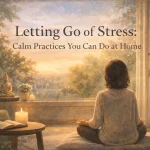
Letting go of stress with calm practices at home – peaceful interior for emotional wellbeing

🌿 Letting Go of Stress: Calm Practices You Can Do at Home

Modern life rarely slows down on its own.

Between responsibilities, digital noise, emotional demands, and constant mental stimulation, stress can quietly become the background rhythm of everyday living. Many people adapt to this tension without realizing how deeply it affects their sleep, mood, relationships, and overall sense of wellbeing.

But here is something important to remember:

Stress is not meant to be carried forever.

The human nervous system is designed to move between activation and recovery. When we intentionally create moments of calm — especially at home — we help the body return to balance.

Letting go of stress is not about escaping life.
It is about learning how to soften within it. 🤍

This in-depth guide explores gentle, science-informed practices you can use at home to release emotional pressure, restore inner steadiness, and build a calmer daily experience.


🧠 Why Learning to Release Stress Is Essential for Emotional Health

Stress is more than a feeling — it is a full-body biological response.

When your brain perceives pressure or threat, it activates the sympathetic nervous system, releasing hormones like cortisol and adrenaline. This response is helpful in short bursts, but when stress becomes chronic, the body struggles to return to baseline.

Over time, prolonged stress may contribute to:

  • Mental fatigue
  • Irritability
  • Difficulty concentrating
  • Shallow sleep
  • Emotional reactivity
  • Persistent tension

Research consistently shows that supportive environments and calming routines help regulate the nervous system and improve emotional resilience.

Letting go of stress is not a luxury.

It is a form of self-protection.


🌱 The Misconception That Stress Relief Requires Big Life Changes

Many people assume they need dramatic solutions:

  • A long vacation
  • A new job
  • A complete lifestyle reset
  • Perfect morning routines

But emotional regulation rarely responds to intensity — it responds to consistency.

Small daily signals of safety teach the brain that it does not need to remain on high alert.

If you’ve explored
👉 Everyday Rituals That Support Emotional Wellbeing,
you already know that emotional stability is built through repeated, gentle habits rather than extreme transformations.

Stress release follows the same principle.


🏡 Why Home Is One of the Most Powerful Places to Reduce Stress

Your nervous system is always asking one silent question:

“Am I safe enough to relax?”

A thoughtfully supportive home answers that question without words.

Elements that encourage relaxation include:

  • Predictable rhythms
  • Comfortable lighting
  • Familiar sensory cues
  • Emotional safety
  • Reduced overstimulation

When these factors are present, the brain begins to shift out of survival mode.

This is why designing supportive spaces — as discussed in
👉 Creating Comfort at Home Through Thoughtful Daily Routines
plays such a crucial role in long-term emotional balance.

Comfort is not accidental.
It is created through intention.


🌸 Gentle Yet Powerful Practices to Let Go of Stress

You do not need complicated systems to begin feeling better.

Often, the most effective practices are also the simplest — because the nervous system responds best to clarity and repetition.


🌬️ 1. Use Breath to Signal Safety to Your Body

Breathing patterns directly influence the autonomic nervous system.

One particularly effective technique is the physiological sigh, which research suggests can reduce stress quickly.

Try this:

  1. Inhale slowly through your nose
  2. Take a second shorter inhale
  3. Exhale gently through your mouth

Repeat for one to three minutes.

Longer exhales activate the parasympathetic nervous system — the body’s natural calming mechanism.

Simple breathing is often the fastest bridge back to emotional steadiness.


🕯️ 2. Create a Daily “Transition Ritual”

One hidden cause of chronic stress is the absence of psychological boundaries between roles.

When work energy flows directly into evening life, the brain never fully powers down.

A transition ritual helps your body shift from doing → being.

Examples include:

  • Changing into comfortable clothes
  • Washing your hands or face
  • Lighting a candle
  • Making herbal tea
  • Playing soft music

These small acts communicate something powerful to your brain:

You are allowed to slow down now.

This gentle unwinding process closely supports
👉 Emotional Healing: Simple Practices to Restore Inner Calm,
because healing begins when the nervous system senses safety.


🌿 3. Reduce Visual and Sensory Overload

Your brain processes more environmental information than you consciously notice.

Clutter, harsh lighting, constant background noise — all of it keeps the mind subtly activated.

You do not need a perfectly minimalist home.

Instead, aim to reduce friction.

Start small:

  • Clear one surface
  • Soften one light source
  • Quiet one noisy corner
  • Create one calm area

Even minor environmental shifts can help your mental state settle.


🧘‍♀️ 4. Relearn the Skill of Doing Nothing

Modern culture often equates rest with laziness.

But emotionally healthy nervous systems require pauses.

Doing nothing is not wasted time — it is recovery.

Sit near a window.
Stretch slowly.
Watch the light change.
Breathe without agenda.

If stillness feels unfamiliar, you may find guidance in
👉 How to Find Inner Balance in a Busy and Noisy World,
which explores how calm can exist even when life remains full.

Stillness is not the absence of productivity.
It is the presence of regulation.


💛 5. Soften Your Inner Dialogue

External stress is only part of the equation.

Internal pressure often magnifies it.

Notice the tone of your thoughts. Are they supportive — or demanding?

Instead of saying:

  • “I should be handling this better.”
  • “Why am I so overwhelmed?”

Try:

  • “Today asked a lot of me.”
  • “It makes sense that I feel tired.”
  • “Rest is allowed.”

Self-talk shapes emotional physiology more than many people realize.

This compassionate approach is central to
👉 Self-Care at Home: Gentle Ways to Care for Your Mind and Heart,
where caring for yourself begins with how you speak to yourself.


🌙 6. Protect Your Evenings From Excess Stimulation

Many people unintentionally extend their stress late into the night through bright screens, intense media, and constant information.

Your brain interprets stimulation as a cue to stay alert.

Instead, consider creating a softer evening rhythm:

  • Dim the lights
  • Lower screen brightness
  • Avoid distressing news
  • Choose calming audio
  • Move more slowly

Better nights often create calmer mornings.


🌼 Subtle Signs You’re Successfully Letting Go of Stress

Progress is rarely dramatic — but it is noticeable.

You may observe:

  • Falling asleep more easily
  • Feeling less reactive
  • Recovering faster from difficult moments
  • Thinking more clearly
  • Experiencing longer stretches of calm

Stress relief tends to feel quiet.

But quiet change is still powerful change.


🌱 Letting Go Is Not a One-Time Decision — It Is a Practice

Stress will always be part of human life.

The goal is not elimination.

The goal is resilience — becoming someone who knows how to return to calm again and again.

Over time, your home can become associated with restoration rather than stimulation.

And once your nervous system trusts that safety exists somewhere, emotional balance becomes far more accessible.


❓ Frequently Asked Questions (FAQ)

💬 What is the fastest way to calm stress at home?

Slow breathing, stepping away from stimulation, and creating sensory calm are among the quickest methods for regulating the nervous system.


💬 Can small habits really reduce stress?

Yes. Research shows that predictable routines help lower baseline stress and improve emotional regulation.


💬 How long does it take to feel less stressed?

Some practices create immediate relief, while deeper nervous system changes develop gradually through repetition.


💬 Is all stress harmful?

Not necessarily. Short-term stress can be adaptive. Chronic, unresolved stress is what tends to impact long-term health.


💬 Do I need a perfectly peaceful home?

No. Emotional safety matters far more than aesthetic perfection.

A home feels calming when it supports your humanity — not when it looks flawless.


🌿 Final Thoughts

Letting go of stress is not about controlling every circumstance life brings.

It is about learning how to support yourself within those circumstances.

Through gentle routines, calming environments, and compassionate awareness, your home can become more than a place you live.

It can become a place that restores you. 🤍

And the more often your body experiences that restoration, the easier it becomes to access calm — even in a noisy world.


📚 Authoritative Sources & References

American Psychological Association (APA)
Stress effects and coping strategies
👉 https://www.apa.org/topics/stress

National Institute of Mental Health (NIMH)
Understanding stress and mental health
👉 https://www.nimh.nih.gov/health/topics/stress

Harvard Health Publishing
Mind-body approaches to stress management
👉 https://www.health.harvard.edu/mind-and-mood

Cleveland Clinic — Stress Management
Medical guidance on reducing stress
👉 https://my.clevelandclinic.org/health/articles/8133-stress-management

Greater Good Science Center – UC Berkeley
Science-based practices for emotional wellbeing
👉 https://greatergood.berkeley.edu


Recommended Articles:

Welcome – love a happy home

Everyday Rituals That Support Emotional Wellbeing

Everyday rituals that support emotional wellbeing — calm morning routine by a peaceful lake

Everyday Rituals That Support Emotional Wellbeing 🌿

Simple Daily Practices That Help You Feel Calmer, Safer, and More Emotionally Balanced

Emotional wellbeing is rarely the result of one big life change.

More often, it is shaped quietly — through the small things you do every day.

The way you wake up.
The pauses you allow.
The kindness you show yourself.
The safety you create at home.

In a fast-moving world filled with constant stimulation, everyday rituals offer something deeply restorative: predictability.

And predictability tells the nervous system:

You are safe.
You can slow down.
You can breathe.

This guide explores gentle, research-supported rituals that help regulate emotions, reduce stress, and cultivate inner steadiness — without requiring perfection, complicated routines, or major lifestyle changes. 🤍

Because emotional wellbeing is not something you chase.

It is something you practice.


🌱 What Are Everyday Rituals?

Everyday rituals are small, intentional actions performed with awareness and care. Unlike productivity habits, rituals focus less on achievement and more on emotional experience.

They create rhythm in your day — and rhythm creates psychological safety.

Examples include:

  • Opening the curtains each morning
  • Drinking tea slowly
  • Taking a quiet breath before switching tasks
  • Dimming lights in the evening
  • Writing down lingering thoughts

These moments may appear ordinary, yet their emotional impact is profound.

Research in behavioral psychology suggests that predictable routines help regulate the stress response system, making it easier for the brain to move out of survival mode.

Over time, calm becomes more familiar — and familiarity reduces anxiety.

If you’re beginning a deeper emotional reset, you may also benefit from reading
👉 Emotional Healing: Simple Practices to Restore Inner Calm, which explores how emotional recovery starts with safety rather than self-pressure.


🧠 Why Rituals Are Powerful for Emotional Health

Your brain constantly scans for cues of danger or safety — a process known as neuroception.

When life feels chaotic, the brain stays alert.

But small, repeated rituals send a different signal:

Nothing is threatening right now.

This allows your nervous system to downshift.

Daily rituals can help:

✅ Lower baseline stress
✅ Improve emotional regulation
✅ Reduce reactivity
✅ Support clearer thinking
✅ Encourage self-trust
✅ Improve sleep quality

Most importantly, rituals shift emotional care from something occasional into something lived.

Not dramatic.
Not overwhelming.
Just steady.


🌸 Start Small — Because Small Is Sustainable

One of the biggest misconceptions about emotional wellbeing is that it requires major change.

It doesn’t.

The nervous system responds more strongly to consistency than intensity.

A single slow breath practiced daily is more regulating than an occasional weekend reset.

Instead of redesigning your life overnight, focus on gentle repetition.

Small rituals become emotional anchors — especially during uncertain seasons.

If your life currently feels overstimulating, consider exploring
👉 How to Find Inner Balance in a Busy and Noisy World, where practical strategies help you regain steadiness without withdrawing from life.


🌞 Morning Rituals That Set an Emotional Tone

Your morning does more than start your schedule — it establishes your emotional baseline.

A rushed beginning trains the brain toward vigilance.

A gentle beginning encourages regulation.


☀️ 1. Wake Without Immediate Input

Before reaching for your phone, allow your mind to arrive.

Try:

  • Taking one deep breath
  • Stretching slowly
  • Noticing natural light
  • Sitting up gradually

This brief transition reduces the cortisol spike linked to sudden stimulation.

Think of it as emotional buffering.


🌿 2. Let Natural Light Guide Your Brain Awake

Morning light plays a crucial role in regulating circadian rhythms and serotonin production.

Whenever possible:

  • Open curtains early
  • Step outside for a minute
  • Sit near a window

Light is one of the simplest emotional regulators available — and one many people overlook.


🧘‍♀️ 3. Practice a 60-Second Emotional Check-In

Ask gently:

How am I arriving today?

You don’t need solutions.

Awareness alone reduces emotional suppression, which research links to increased stress.

Naming feelings helps the brain organize them — making them less overwhelming.


🏡 Midday Rituals That Prevent Emotional Build-Up

Emotional exhaustion often isn’t caused by one big stressor.

It’s caused by unreleased micro-stress accumulating throughout the day.

Small resets prevent overload.


🌬️ 4. Insert Micro-Pauses Between Tasks

Instead of rushing forward, pause for 10–20 seconds.

Relax your jaw.
Drop your shoulders.
Exhale longer than you inhale.

These brief moments regulate the autonomic nervous system more than you might expect.

If your environment feels overstimulating, you may find guidance in
👉 How to Create a Peaceful Home Environment That Feels Calm and Safe.

Your surroundings shape your emotional state — often quietly.


🍵 5. Turn an Ordinary Activity Into a Ritual

Choose something you already do daily:

  • Brewing coffee
  • Washing dishes
  • Preparing lunch
  • Watering plants

Now slow it slightly.

Notice textures.
Temperatures.
Movement.

Presence transforms routine into restoration.


💛 6. Practice Supportive Self-Talk

Your inner voice becomes the emotional climate you live inside.

Try shifting from criticism to support:

Instead of:
I should be handling this better.

Try:
This is a lot. It makes sense I feel stretched.

Gentle internal language creates psychological safety.

For deeper guidance, explore
👉 Self-Care at Home: Gentle Ways to Care for Your Mind and Heart.


🌙 Evening Rituals That Help the Mind Release the Day

Many people attempt sleep without first allowing their brain to decompress.

But the nervous system needs a bridge from alertness to rest.

Evening rituals provide that bridge.


🕯️ 7. Dim the Lights and Soften the Atmosphere

Bright lighting signals alertness.

Softer lighting encourages melatonin production and emotional unwinding.

Your home does not need perfection — only gentleness.

If you’re building a calmer lifestyle overall,
👉 Simple Living Ideas for a Cozy and Joyful Home offers deeper inspiration.


✍️ 8. Externalize Lingering Thoughts

Before bed, write down:

  • What felt heavy
  • What can wait
  • What went well

This reduces rumination — one of the biggest disruptors of emotional recovery.

You don’t need polished journaling.

Just honesty.


🌌 9. Create a Predictable Wind-Down Cue

Consistency conditions the brain for rest.

Examples:

  • Herbal tea
  • Gentle stretching
  • Soft music
  • Reading

Eventually, your body begins calming automatically when the ritual begins.

This is emotional conditioning at work.

Quiet — yet powerful.


🌼 Signs Your Emotional Wellbeing Is Strengthening

Progress is often subtle, but meaningful.

You may notice:

  • Faster recovery from stress
  • Fewer emotional spikes
  • Greater patience
  • Improved sleep
  • Feeling safer at home
  • Less inner urgency

These shifts indicate nervous system regulation — the true foundation of emotional health.


⚠️ What Rituals Are NOT

Let’s remove unnecessary pressure.

Rituals are not:

❌ rigid schedules
❌ productivity hacks
❌ aesthetic performances
❌ proof of discipline

They are acts of self-support.

Nothing more is required.


🌱 Emotional Wellbeing Is Built Through Return — Not Perfection

You will skip days.

Life will interrupt.

That is not failure.

Emotional resilience is strengthened each time you gently return.

Start with one ritual.

Let it become familiar.

Then let familiarity become safety.

Over time, your daily life itself begins to feel more supportive.

And that changes everything.


❓ Frequently Asked Questions (FAQ)

💬 What are everyday rituals for emotional wellbeing?

They are small, consistent practices that help regulate emotions, reduce stress, and create a sense of psychological safety.

💬 How long does it take to feel the benefits?

Many people notice subtle emotional shifts within a few weeks when rituals are practiced consistently.

💬 Do rituals need to happen at the same time daily?

Predictability helps, but gentleness matters more than precision.

💬 Can small rituals really reduce anxiety?

Yes. Research shows predictable behaviors increase perceived control, lowering stress responses.

💬 What if I forget or miss a day?

Nothing is lost. Emotional wellbeing grows through repetition — not perfection.


🌸 Final Thoughts

Emotional wellbeing is not reserved for slower seasons of life.

It is something you can nurture — even on busy days.

Through small rituals, compassionate awareness, and supportive environments, your everyday life can become a place where calm feels possible again.

You don’t need to change everything.

Just begin with one quiet moment.

And return to it tomorrow. 🤍


📚 Authoritative Sources & References

American Psychological Association (APA)
Stress, resilience, and emotional health
🔗 https://www.apa.org/topics/stress

National Institute of Mental Health (NIMH)
Mental health and emotional regulation
🔗 https://www.nimh.nih.gov/health

Greater Good Science Center — UC Berkeley
Research on mindfulness and emotional wellbeing
🔗 https://greatergood.berkeley.edu

Harvard Health Publishing
Daily habits that support psychological health
🔗 https://www.health.harvard.edu/mind-and-mood

Journal of Environmental Psychology
Environmental predictability and stress reduction
🔗 https://www.journals.elsevier.com/journal-of-environmental-psychology

Frontiers in Psychology
Habit formation and emotional regulation
🔗 https://www.frontiersin.org/journals/psychology


Recommended Articles:

Welcome – love a happy home

How to Find Inner Balance in a Busy and Noisy World
How to find inner balance in a busy and noisy world — peaceful indoor moment overlooking a city

How to Find Inner Balance in a Busy and Noisy World 🌿

In today’s fast-paced world, it’s easy to feel pulled in a hundred directions at once. Between work, family, social obligations, and the constant hum of digital devices, our minds can feel overstimulated and scattered. Finding inner balance isn’t about escaping life — it’s about learning to navigate it with calm, intention, and emotional clarity. 🤍

This guide explores practical strategies, gentle habits, and mindful routines to help you restore balance in your everyday life, even amid the chaos.


🌱 What Inner Balance Really Means

Inner balance is a state where your mind, body, and emotions feel aligned. It doesn’t mean perfection or total control — it means:

  • Emotional awareness: Understanding what you feel and why
  • Mental clarity: Being able to focus without mental clutter
  • Physical calm: Feeling grounded and rested
  • Spiritual or emotional alignment: Being connected to your values and priorities

Inner balance allows you to respond rather than react, find peace in small moments, and approach challenges with steadiness.

💡 Tip: Many people begin cultivating balance by integrating self-care at home routines into their daily life. Learn more here.


🧠 Why Finding Balance Matters

Living in a noisy, busy environment without balance can lead to:

  • Stress and anxiety
  • Emotional overwhelm
  • Difficulty focusing or sleeping
  • Strained relationships

Research shows that consistent self-care, emotional awareness, and supportive home routines improve mental health and resilience. (APA, NIMH)

Inner balance isn’t a luxury — it’s a foundation for thriving, not just surviving.


🌸 Simple Practices to Restore Balance

You don’t need drastic changes. Small, repeatable habits are often more effective than major life overhauls.


🧘‍♀️ 1. Daily Emotional Check-Ins

Pause a few times each day and ask:

  • How am I feeling right now?
  • What thoughts or emotions are taking up space?

Acknowledge feelings without judgment. This practice strengthens emotional regulation and self-awareness.

💡 Internal Link: Pair this with emotional healing practices to restore calm and resilience. Read more here.


🌿 2. Create Predictable Daily Routines

Consistency signals safety to your nervous system:

  • Morning rituals: Stretch, drink tea, set intentions
  • Evening wind-down: Journaling, gentle lighting, calm music
  • Scheduled breaks: Step away from screens or social media

Routine helps your mind and body anticipate calm periods, reducing overall stress.


🕯️ 3. Design a Supportive Home Environment

Your environment greatly impacts inner balance:

  • Reduce visual and mental clutter
  • Use warm, soft lighting
  • Incorporate natural elements like plants or wood
  • Create cozy spaces for rest

A balanced home complements your inner calm. Check Creating Comfort at Home for practical tips. Explore here.


🌬️ 4. Practice Mindful Breathing and Meditation

Simple breathing techniques can reset your nervous system:

  • Inhale gently for 4 seconds
  • Exhale slowly for 6–8 seconds
  • Repeat for 2–5 minutes

Combine with guided meditation or mindful observation to deepen focus and reduce mental noise.


✍️ 5. Gentle Journaling

Writing thoughts and emotions allows for reflection without judgment:

  • Note feelings of overwhelm
  • Identify patterns in stress triggers
  • Record small wins and gratitude moments

💡 Journaling naturally pairs with self-care at home routines to create structure and emotional awareness. Learn more.


🌙 6. Limit Digital Noise

Constant notifications and social media can disrupt balance:

  • Schedule phone-free periods
  • Mute non-essential notifications
  • Create a calming evening routine away from screens

Even small boundaries create a mental sanctuary.


💛 7. Cultivate Mindful Connections

Relationships can be nourishing or draining. To maintain balance:

  • Engage in meaningful conversations
  • Set gentle emotional boundaries
  • Prioritize quality over quantity in social interactions

🌼 Small Signs That Balance Is Working

  • Feeling calmer amid daily tasks
  • Improved focus and productivity
  • Better sleep and less fatigue
  • Less reactivity to stressful events
  • Greater emotional clarity

❓ Frequently Asked Questions (FAQ)

💬 How long does it take to find inner balance?
There’s no fixed timeline. Small daily practices accumulate over weeks and months to create lasting calm.

💬 Can inner balance be achieved without therapy?
Yes. While therapy is helpful, emotional healing and self-care routines at home can foster significant balance.

💬 How do I start if I’m constantly busy?
Start with 5–10 minutes of any daily practice, such as mindful breathing, journaling, or a calm evening ritual.

💬 Is inner balance the same as happiness?
Not exactly. Balance is about steadiness and presence, while happiness is an emotion that fluctuates naturally.

💬 Can my home environment really affect my balance?
Absolutely. A supportive, decluttered, and nurturing home environment helps your mind settle and strengthens emotional resilience.


🌱 Final Thoughts

Inner balance is about returning to yourself amidst life’s noise. By combining:

  • Gentle emotional awareness
  • Mindful routines
  • Supportive home environment

…you create a foundation of calm that lasts. Remember, it’s not about perfection — it’s about steady, compassionate steps. 🤍

Internal Links Recap:


📚 Authoritative Sources & References


Recommended Articles:

Welcome – love a happy home