Table of Contents
Healing & Wellbeing: Practical Ways to Support Emotional Balance, Calm, and Resilience

Last Updated: September 15, 2026
By David Yang
Quick Answer: What Does Healing & Wellbeing Really Mean?
Healing and wellbeing are not about feeling happy or calm all the time. They are about developing practical ways to understand difficult emotions, manage everyday stress, care for your physical and emotional needs, maintain supportive relationships, recover from difficult experiences, and continue moving through life with greater flexibility and resilience.
There is no single routine that works for everyone. Helpful foundations can include adequate sleep, regular movement, relaxing activities, emotional awareness, healthy boundaries, meaningful social connection, time for reflection, and asking for professional support when difficulties become persistent or overwhelming.
This Healing & Wellbeing guide brings together LoveAHH’s core resources for emotional healing, self-care, stress management, everyday rituals, and inner balance so you can start with the area that best matches what you need right now.
Introduction: Wellbeing Is More Than Feeling Good
There are days when life feels light.
You sleep well.
You have energy.
You enjoy talking with people.
You can concentrate on what matters.
Then there are other days.
You wake up tired.
Your mind feels crowded before the day has even started.
A small problem feels unusually difficult.
You become impatient with someone you love.
You want to rest, but you feel guilty for doing nothing.
At night, your body is tired but your mind continues thinking.
These experiences do not automatically mean something is seriously wrong with you.
Emotional wellbeing is not a permanent state of calm.
The Centers for Disease Control and Prevention describes positive emotional wellbeing in terms that include managing emotions, having supportive relationships, finding meaning and purpose, and being able to cope with difficult experiences. People with positive emotional wellbeing can still feel sad or stressed; the difference is that they may have more resources for managing those challenges. CDC: About Emotional Well-Being
That is an important distinction.
You do not have to eliminate difficult emotions to have a healthy emotional life.
You need ways to meet them.
What Is Healing & Wellbeing?
Healing and wellbeing are related, but they are not exactly the same thing.
Wellbeing Is About How You Are Living
Wellbeing includes the ongoing conditions that support your mental, emotional, physical, and social health.
That can include:
- Getting enough sleep.
- Moving your body regularly.
- Eating and hydrating adequately.
- Having time for rest.
- Managing everyday stress.
- Maintaining meaningful relationships.
- Having boundaries around your time and attention.
- Doing activities that give your life meaning or enjoyment.
- Knowing when you need additional support.
NIMH similarly recommends practical habits such as regular exercise, adequate sleep, relaxing activities, setting priorities, and staying connected with supportive people as part of caring for mental health. NIMH: Caring for Your Mental Health
Healing Is About Recovery and Adaptation
Healing becomes especially relevant when you have experienced emotional pain, prolonged stress, grief, disappointment, relationship difficulties, burnout, or another difficult period.
Healing does not necessarily mean returning to exactly who you were before.
Sometimes it means understanding what happened, processing what you feel, rebuilding routines, reconnecting with people, learning healthier ways to respond, and gradually creating a life that feels more sustainable.
Healing can be gradual.
It can also be uneven.
A difficult day does not necessarily mean you have gone backward.
Why Emotional Wellbeing Matters
Your emotional state can influence how you experience ordinary parts of life.
When you are chronically overwhelmed, even simple decisions can feel harder.
When you are exhausted, a minor disagreement may feel much bigger.
When you are isolated, problems may feel heavier because there is no one to share them with.
When you are constantly stimulated by information, notifications, and competing demands, it can become difficult to create space for reflection.
This does not mean every emotional difficulty is caused by lifestyle.
Mental health is complex and can be influenced by biological, psychological, social, environmental, and situational factors.
But everyday habits and relationships can still provide important support.
CDC guidance on emotional wellbeing emphasizes healthy coping, emotional awareness, mindfulness, connection with others, and asking for help when needed.
The 5 Core Areas of Healing & Wellbeing at LoveAHH
LoveAHH’s Healing & Wellbeing section is organized around five closely connected areas.
| Area | Main Question | Best Starting Point |
|---|---|---|
| Emotional Healing | How can I recover from emotional pain and regain inner steadiness? | Emotional Healing: Simple Practices to Restore Inner Calm |
| Self-Care | How can I take better care of myself without creating more pressure? | Self-Care at Home That Actually Helps |
| Everyday Rituals | What small habits can support emotional wellbeing over time? | Everyday Rituals for Emotional Wellbeing |
| Stress Management | How can I reduce and respond to everyday stress? | Letting Go of Stress |
| Inner Balance | How can I stay grounded when life is busy and demanding? | How to Find Inner Balance in a Busy World |
These topics overlap naturally, but each one has a different purpose.
That distinction can help you find the right resource instead of trying to solve every emotional problem with the same technique.
1. Emotional Healing: When You Need More Than Stress Relief
Sometimes the problem is not simply that you had a stressful day.
You may be carrying grief.
A painful breakup.
Years of self-criticism.
A difficult family experience.
Repeated disappointment.
Emotional exhaustion.
Or feelings that you have been avoiding for a long time.
In those situations, relaxation alone may not address the underlying issue.
Emotional healing can involve:
- Recognizing what you are actually feeling.
- Allowing difficult emotions without immediately judging them.
- Understanding patterns in your thoughts and behavior.
- Creating supportive routines.
- Reconnecting with safe and supportive people.
- Practicing self-compassion.
- Working through difficult experiences with professional support when appropriate.
For a deeper exploration, read Emotional Healing: Simple Practices to Restore Inner Calm.
2. Self-Care: Caring for Yourself Without Turning It Into Another Job
Self-care has become a popular phrase, but it is easy to misunderstand.
Self-care does not have to mean expensive products, elaborate routines, or constantly doing things that feel pleasant.
Sometimes self-care is going to bed.
Sometimes it is eating a proper meal.
Sometimes it is saying no.
Sometimes it is asking for help.
Sometimes it is taking ten minutes without your phone.
And sometimes it is making an appointment with a healthcare professional because your current coping strategies are not enough.
NIMH describes self-care as taking time for activities that support both physical and mental health and notes that even small acts can matter.
For practical ideas you can use at home, visit Self-Care at Home That Actually Helps.
3. Everyday Rituals: Let Small Habits Carry Some of the Load
When life is unpredictable, simple routines can provide useful structure.
An everyday ritual might be:
- Opening the curtains in the morning.
- Taking a short walk after lunch.
- Having tea without looking at your phone.
- Writing down tomorrow’s priorities before bed.
- Calling someone you care about each week.
- Taking a few quiet minutes between work and family time.
The purpose is not to create a perfect lifestyle.
It is to make supportive behavior easier to repeat.
NIMH recommends regular sleep, exercise, relaxing activities, priorities, and social connection as practical components of mental health self-care.
Explore more in Everyday Rituals for Emotional Wellbeing: Simple Habits That Bring Calm and Balance.
4. Letting Go of Stress: Learning to Recover From Daily Pressure
Stress itself is not always harmful.
It is a normal response to challenges and demands.
The problem is what happens when stress becomes persistent, overwhelming, or difficult to recover from.
NCCIH notes that long-term stress may contribute to or worsen a range of health problems, while relaxation techniques such as deep breathing and progressive relaxation may help some people manage stress.
Useful stress-management practices can include:
- Slow, comfortable breathing.
- Regular physical activity.
- Taking short breaks.
- Reducing unnecessary stimulation.
- Protecting sleep.
- Creating transitions between work and rest.
- Talking with supportive people.
- Addressing the actual source of stress when possible.
Read Letting Go of Stress: Calm Practices You Can Do at Home for a more detailed guide.
5. Inner Balance: Staying Steady in a Busy World
Inner balance does not mean having a quiet life.
You can have responsibilities, deadlines, children, relationships, financial concerns, and a full calendar while still developing healthier ways to manage your attention and energy.
Inner balance is more about how you respond to what is happening.
It may involve:
- Knowing what deserves your attention today.
- Recognizing when you are overloaded.
- Protecting your attention from constant digital interruption.
- Creating boundaries between work and rest.
- Accepting that some things can wait.
- Maintaining meaningful relationships.
- Making room for activities that are not about productivity.
If your main challenge is feeling scattered, overstimulated, or unable to slow down, begin with How to Find Inner Balance in a Busy World: Practical Tips for Calm & Focus.
Healing & Wellbeing Is Not the Same as Constant Happiness
One of the most harmful ideas in modern wellness culture is that emotional wellbeing means feeling positive most of the time.
It does not.
You can be emotionally healthy and still feel:
- Sad.
- Angry.
- Lonely.
- Disappointed.
- Uncertain.
- Frustrated.
- Grieving.
- Overwhelmed.
Healthy emotional functioning includes the ability to experience difficult emotions without automatically becoming controlled by them.
CDC guidance similarly recognizes that people with positive emotional wellbeing can still experience sadness and stress during difficult periods.
So the goal is not:
“How can I stop feeling bad?”
A more useful question may be:
“What is this feeling telling me, and what would a healthy response look like?”
Emotional Awareness: Start by Naming What Is Happening
You do not always need to solve an emotion immediately.
Sometimes naming it is a useful first step.
Try asking:
- What am I feeling?
- Where do I notice it in my body?
- What happened before I started feeling this way?
- What story am I telling myself about what happened?
- Do I need rest, connection, action, space, or support?
CDC guidance on emotional wellbeing similarly encourages people to check in with themselves, identify difficult emotions, and learn healthier ways of coping with them.
The point is not to analyze every feeling endlessly.
It is to create enough awareness that your emotions become information rather than automatic commands.
Stress Management: Reduce What You Can and Recover From What You Cannot
Some stressors can be changed.
Others cannot be changed immediately.
A useful stress-management approach distinguishes between the two.
When You Can Change the Stressor
Consider:
- Setting a boundary.
- Changing your schedule.
- Reducing unnecessary commitments.
- Delegating a task.
- Having a difficult conversation.
- Asking for practical help.
- Changing an unhealthy routine.
When You Cannot Change the Stressor Immediately
Focus on:
- Recovery.
- Sleep.
- Movement.
- Supportive relationships.
- Relaxation.
- Mindful attention.
- Healthy routines.
- Professional support when needed.
NCCIH emphasizes that relaxation techniques may be useful for stress management but should not replace conventional care or delay medical attention when it is needed.
The Role of Sleep in Emotional Wellbeing
Sleep is easy to treat as an afterthought.
But when you repeatedly sleep poorly, everyday emotional demands can become harder to manage.
NIMH recommends making sleep a priority and maintaining a regular sleep schedule as part of mental health self-care.
Simple supportive habits include:
- Keeping a reasonably consistent sleep and wake time.
- Creating a calmer period before bed.
- Reducing screen exposure before sleep when possible.
- Avoiding work in bed.
- Keeping the bedroom comfortable and suitable for sleep.
- Addressing persistent sleep problems with a healthcare professional.
You do not need a perfect sleep routine.
Consistency and practicality matter more than perfection.
Movement: Support Your Mind by Caring for Your Body
Emotional wellbeing is not separate from physical wellbeing.
Regular movement can be one of the simplest ways to support overall health.
It does not have to mean intense exercise.
Depending on your health and abilities, it could be:
- Walking.
- Stretching.
- Gardening.
- Household activity.
- Cycling.
- Swimming.
- Strength training.
- Gentle mobility exercises.
NIMH notes that even smaller amounts of exercise can add up and recommends regular physical activity as part of mental health self-care.
The best form of movement is one you can realistically continue.
Social Connection Is Part of Wellbeing
Wellbeing is sometimes presented as an entirely individual project.
It is not.
Human beings live through relationships, communities, and social environments.
CDC guidance identifies social connection as important to mental and physical health and notes that supportive relationships can help people cope with stressful life challenges.
Connection does not have to mean having hundreds of friends.
It might mean:
- One person you can call when you are having a difficult day.
- A partner who listens without immediately trying to fix everything.
- A family member you feel comfortable with.
- A weekly activity with friends.
- A community group.
- A neighbor you occasionally talk to.
- Volunteering.
- Sharing an ordinary activity with another person.
CDC recommends simple actions such as checking in with others, spending meaningful time together, joining groups with shared interests, helping others, and finding ways to connect through activities already part of your life.
If your emotional wellbeing is strongly affected by loneliness or relationship difficulties, explore LoveAHH’s Love & Relationships section as well.
Mindfulness: Paying Attention Without Fighting Every Thought
Mindfulness is often presented as “emptying your mind.”
That is not necessary.
A simpler definition is intentionally paying attention to present-moment experience with less automatic judgment.
You might notice:
- Your breathing.
- The feeling of your feet on the floor.
- Sounds around you.
- The taste of food.
- The movement of your body.
- Your thoughts without immediately following every thought.
CDC includes mindfulness among practical approaches to emotional wellbeing.
NCCIH also notes that mindfulness and meditation may help some people with stress, anxiety, depression, or sleep, although evidence varies and negative experiences can occur for some people. NCCIH: Meditation and Mindfulness — Effectiveness and Safety
Mindfulness should therefore be treated as one possible tool, not a universal answer.
Self-Compassion: Support Yourself Without Ignoring Responsibility
Self-compassion is sometimes misunderstood as making excuses.
It is not.
You can acknowledge a mistake while still treating yourself as a human being who deserves respect.
Instead of:
“I always ruin everything.”
Try:
“I made a mistake. What can I learn from it, and what can I do next?”
Instead of:
“Everyone else is handling life better than me.”
Try:
“I do not know what other people are carrying. I can focus on what I need today.”
Self-compassion is not about removing accountability.
It is about removing unnecessary cruelty from the process of change.
Your Home Can Support Wellbeing — But It Does Not Have to Be Perfect
LoveAHH places particular emphasis on the home because the home is where many people rest, recover, connect with family, and spend substantial portions of everyday life.
A supportive home environment might include:
- A reasonably comfortable place to sleep.
- A quieter space for rest.
- Some natural light.
- Less unnecessary visual or digital stimulation.
- Objects that have personal meaning.
- Spaces where people can connect.
- Boundaries between work and rest when possible.
But do not turn your home into another performance project.
You do not need a perfectly decorated house to have a healthy emotional life.
Sometimes the most supportive change is simply clearing one chair so you have somewhere comfortable to sit.
Or putting your laptop away at the end of the workday.
Or creating a small corner where you can read, breathe, or talk with someone.
What Healing & Wellbeing Does Not Mean
It does not mean:
- Feeling calm every day.
- Never becoming angry.
- Never feeling anxious.
- Being productive all the time.
- Having a perfect morning routine.
- Never needing other people.
- Fixing every emotional problem yourself.
- Thinking positively about everything.
- Ignoring serious problems.
Healthy wellbeing includes flexibility.
Some days you need movement.
Some days you need rest.
Some days you need connection.
Some days you need solitude.
Some days you need to solve a problem.
And some days you need professional help.
The goal is not to respond to every day in exactly the same way.
The goal is to become better at recognizing what the situation calls for.
A Simple Daily Healing & Wellbeing Framework
If all of this feels overwhelming, use four questions.
Morning — What Do I Need?
Ask:
“How am I feeling today, and what would help me start well?”
Midday — What Is Taking Too Much From Me?
Ask:
“What is draining my attention or energy right now?”
Then reduce one unnecessary demand if possible.
Evening — What Can Wait?
Ask:
“What do I need to stop carrying tonight?”
Write down tomorrow’s tasks if your mind keeps rehearsing them.
Weekly — What Needs Attention?
Ask:
- How have I been sleeping?
- Have I been moving enough?
- Have I connected with people?
- What has been causing the most stress?
- What have I been avoiding?
- Do I need more support?
This is not a diagnostic system.
It is simply a way to notice patterns before they become harder to manage.
A 7-Day Healing & Wellbeing Reset
Day 1 — Notice
Write down what has been emotionally difficult lately without trying to solve it immediately.
Day 2 — Sleep
Protect your evening and aim for a more consistent sleep schedule.
Day 3 — Move
Take a walk or do another form of movement you can comfortably sustain.
Day 4 — Connect
Send a genuine message or speak with someone you trust.
Day 5 — Reduce
Remove one unnecessary commitment, notification, or source of stimulation.
Day 6 — Reflect
Spend five quiet minutes noticing your thoughts, feelings, and current needs.
Day 7 — Choose
Choose one practice from the week that you genuinely want to continue.
Do not keep all seven simply because you completed them.
The goal is sustainable support, not a bigger checklist.
When Self-Care Is Not Enough
There is an important limit to lifestyle advice.
Sometimes the issue is bigger than a routine.
You may be experiencing:
- Persistent sadness.
- Severe or ongoing anxiety.
- Major sleep disruption.
- Significant changes in appetite.
- Loss of interest in things you normally enjoy.
- Difficulty concentrating.
- Difficulty getting out of bed or completing ordinary tasks.
- Persistent irritability or restlessness.
- Thoughts of self-harm or suicide.
NIMH recommends seeking professional help when severe or distressing symptoms last two weeks or more, especially when they interfere with everyday functioning.
Professional support can include a doctor, psychologist, therapist, counselor, or another appropriately qualified healthcare professional depending on your needs and location.
Seeking help is not evidence that your self-care failed.
Sometimes the healthiest form of self-care is recognizing that you should not have to handle everything alone.
How to Choose Where to Start
You do not need to read every LoveAHH article in this category.
Start with the problem that feels most relevant today.
| If you are experiencing… | Start here |
|---|---|
| Emotional pain or difficulty processing feelings | Emotional Healing |
| Difficulty caring for yourself | Self-Care at Home |
| A need for healthier daily routines | Everyday Rituals |
| Feeling stressed or tense | Letting Go of Stress |
| Feeling scattered, overstimulated, or constantly busy | Inner Balance |
| Relationship difficulties affecting your wellbeing | Love & Relationships |
Frequently Asked Questions
What is emotional wellbeing?
Emotional wellbeing refers to how you understand, experience, and respond to emotions while maintaining supportive relationships, meaningful activities, and the ability to cope with life’s challenges. It does not mean feeling positive all the time.
What is the difference between healing and wellbeing?
Wellbeing is the broader process of supporting your mental, emotional, physical, and social health. Healing often refers more specifically to recovering and adapting after emotional pain, prolonged stress, loss, difficult experiences, or other periods of significant difficulty.
Can small daily habits improve emotional wellbeing?
Small habits can support wellbeing when they involve useful behaviors such as adequate sleep, regular movement, relaxation, social connection, emotional awareness, and healthy priorities. They are supportive practices rather than guaranteed treatments for mental health conditions.
Does emotional wellbeing mean I should always feel calm?
No. A healthy emotional life includes difficult emotions such as sadness, anger, fear, disappointment, and grief. Wellbeing is more about having healthier ways to experience and respond to those emotions.
Can mindfulness improve emotional wellbeing?
Mindfulness may help some people manage stress, anxiety, depression, or sleep difficulties, but research findings vary. It is one possible tool rather than a universal solution.
Can self-care replace therapy?
No. Self-care can complement professional treatment and support recovery, but it should not replace appropriate healthcare when symptoms are severe, persistent, or interfering with daily life.
How long does emotional healing take?
There is no universal timeline. Healing depends on the person, the circumstances, the nature of the difficulty, available support, and other factors. Progress is often gradual and can include difficult periods along the way.
What is the best place to start if I feel overwhelmed?
Start with one basic need rather than trying to change your entire life. Consider sleep, food and hydration, movement, a short period of quiet, reducing one unnecessary demand, or contacting someone supportive. If the overwhelm is persistent or significantly affecting your functioning, consider professional support.
Final Thoughts: Wellbeing Is Something You Keep Building
Healing and wellbeing are not destinations.
You do not reach a point where you never feel stressed again.
You do not become permanently calm.
You do not eliminate difficult emotions.
And you do not need to.
A healthier emotional life is often built through ordinary actions:
Sleeping when your body needs rest.
Moving when you have been sitting too long.
Taking a breath before reacting.
Talking to someone instead of carrying everything alone.
Creating boundaries when your responsibilities become unrealistic.
Allowing difficult emotions to exist without making them your entire identity.
Asking for professional help when the situation requires more than self-care.
These actions may look small.
But wellbeing is often built through exactly these kinds of ordinary decisions.
LoveAHH’s goal is not to promise a life without stress, sadness, uncertainty, or pain.
It is to offer practical, compassionate, evidence-informed ideas that can help you care for yourself and the people you love through real life.
You do not need to fix everything today. Start with what needs care now.
Explore the Healing & Wellbeing Collection
- Emotional Healing: Simple Practices to Restore Inner Calm
- Self-Care at Home: Practical Ways to Support Your Wellbeing
- Everyday Rituals: Simple Habits That Bring Calm and Balance
- Letting Go of Stress: Calm Practices You Can Do at Home
- Inner Balance: Practical Tips for Calm & Focus
Authoritative Sources & References
- National Institute of Mental Health (NIMH) — Caring for Your Mental Health
https://www.nimh.nih.gov/health/topics/caring-for-your-mental-health - NIMH — My Mental Health: Do I Need Help?
https://www.nimh.nih.gov/health/publications/my-mental-health-do-i-need-help - National Center for Complementary and Integrative Health (NCCIH) — Stress
https://www.nccih.nih.gov/health/stress - NCCIH — 5 Things To Know About Relaxation Techniques for Stress
https://www.nccih.nih.gov/health/tips/things-to-know-about-relaxation-techniques-for-stress - NCCIH — Meditation and Mindfulness: Effectiveness and Safety
https://www.nccih.nih.gov/health/meditation-and-mindfulness-effectiveness-and-safety - Centers for Disease Control and Prevention (CDC) — Improve Your Emotional Well-Being
https://www.cdc.gov/emotional-well-being/improve-your-emotional-well-being/index.html - CDC — About Emotional Well-Being
https://www.cdc.gov/emotional-well-being/about/index.html - CDC — Social Connection
https://www.cdc.gov/social-connectedness/about/ - CDC — Improving Social Connectedness
https://www.cdc.gov/social-connectedness/improving/index.html
Important: This article is intended for general educational purposes. It does not diagnose, treat, or replace individualized medical or mental health care. If emotional or psychological difficulties are persistent, severe, or interfering with everyday life, consider speaking with an appropriately qualified healthcare professional.
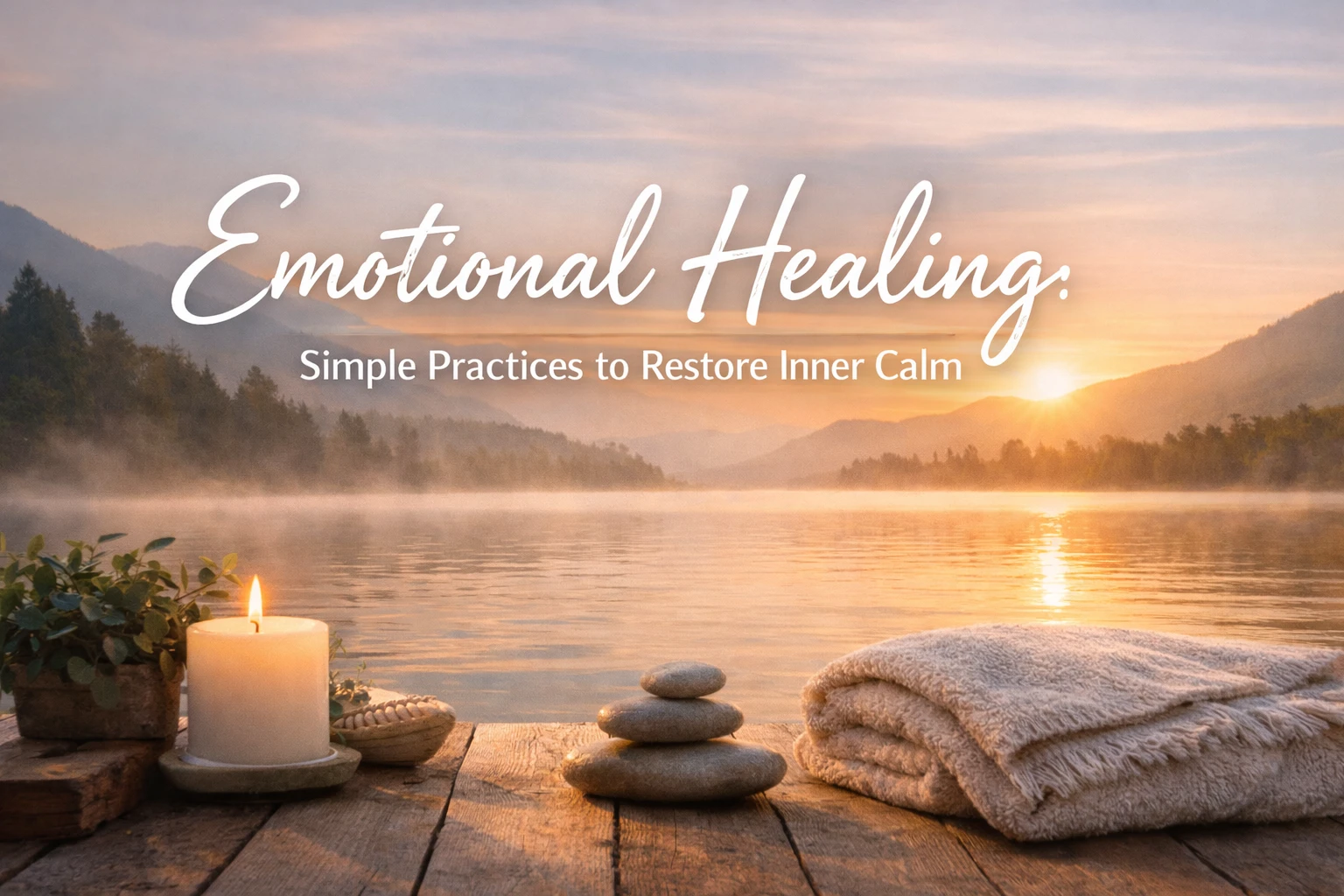
Emotional Healing: Simple Practices to Restore Inner Calm Naturally
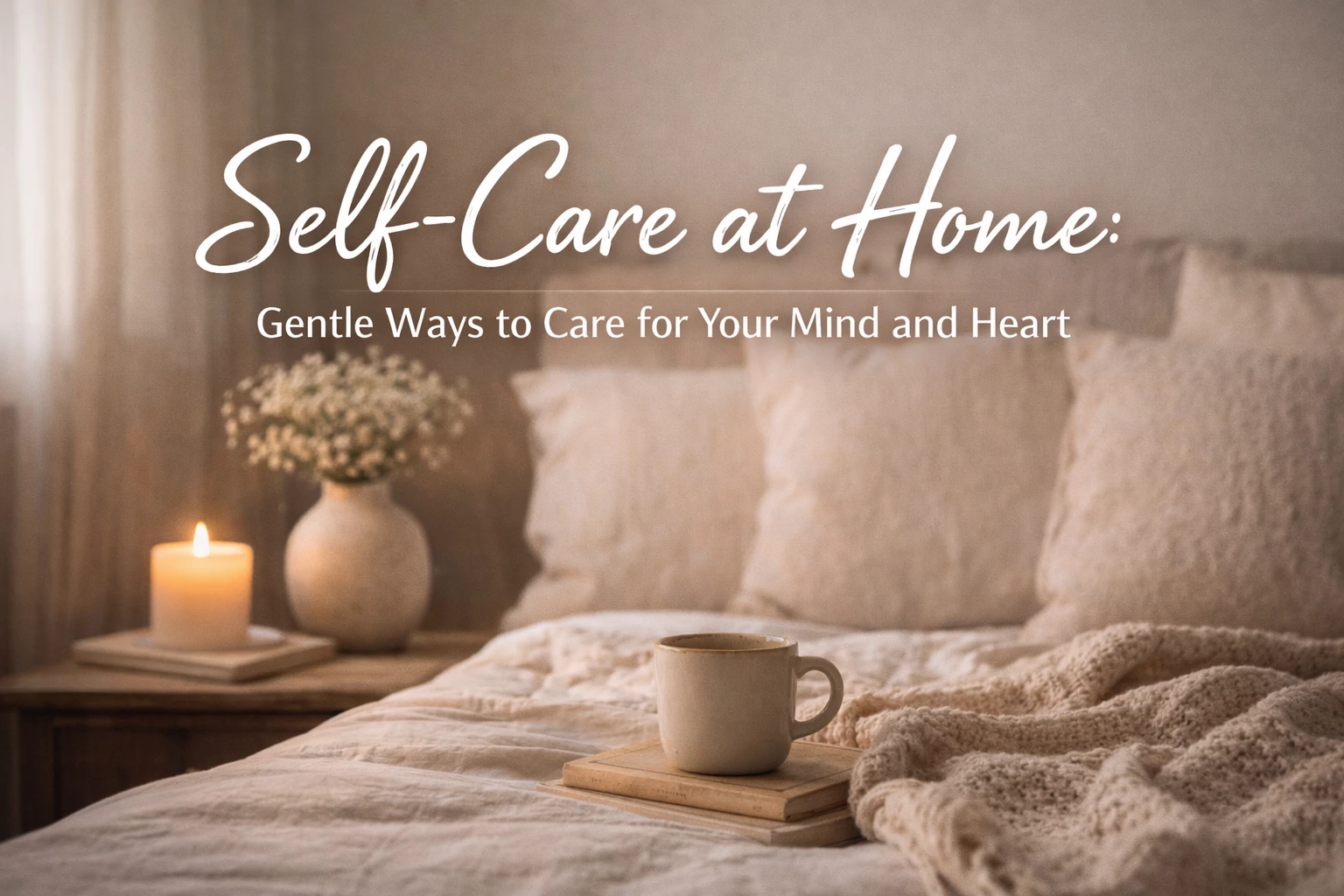
Self-Care at Home: Gentle Ways to Care for Your Mind and Heart
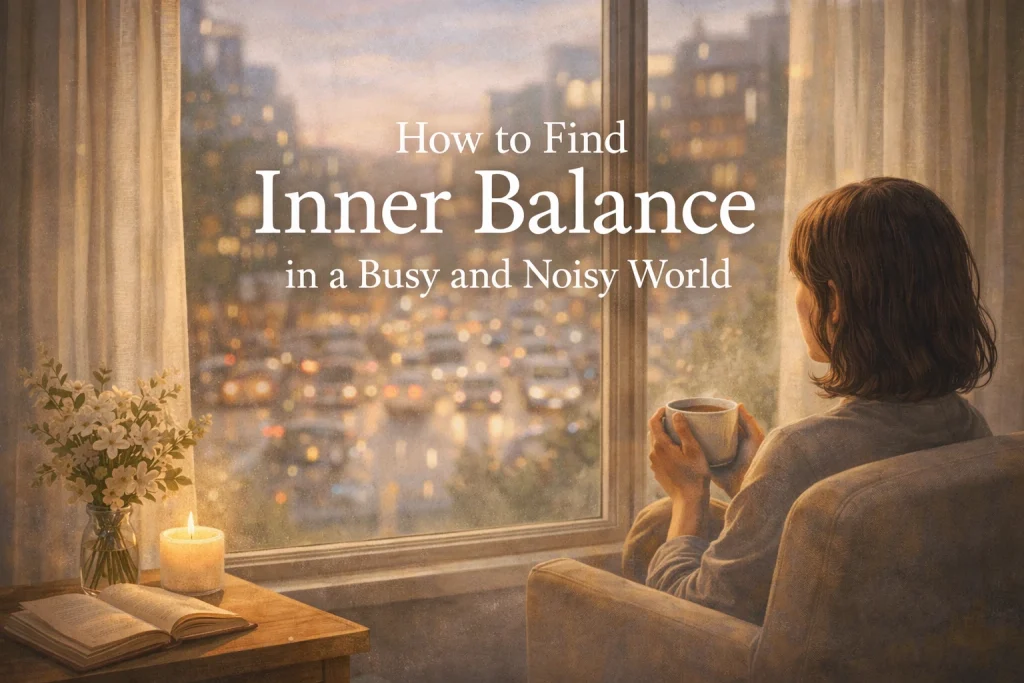
How to Find Inner Balance in a Busy World: Practical Tips for Calm & Focus
Everyday Rituals for Emotional Wellbeing: Simple Habits That Bring Calm and Balance
Letting Go of Stress: 6 Calm Practices You Can Do at Home Today
Recommended Articles:
- Evening Routine for Better Sleep and Less Anxiety: 10 Simple Habits to Wind Down
- How to Stop Feeling Empty: A Gentle, Practical Path Back to Yourself
- How to Feel Happy Again: Gentle Steps to Reclaim Joy
- How to Stop Overthinking: A Practical Guide to Quiet Your Mind
- Anxiety Relief at Home: How to Create a Calmer Space That Supports You
- How to Calm Anxiety at Home Naturally (12 Proven Ways)
- Why Do I Feel Restless All the Time? Causes, What It Means & How to Feel Calmer
- Why Do I Feel Overwhelmed in My Relationship? 12 Hidden Sources of Emotional Pressure
- Why Do I Feel Sad at Night? 13 Hidden Reasons Your Heart Aches After Dark
- Why Do I Feel Empty After Social Media? 10 Hidden Causes Behind the Scroll
- Why Do I Feel Like Something Is Missing in My Life? 12 Hidden Reasons Behind the Emptiness
- Why Do I Feel Drained After Talking to People? 10 Hidden Causes of Social Fatigue
- When Home Doesn’t Feel Safe: Why Do I Feel Anxious in My Own House?
- When You Don’t Recognize Yourself in the Mirror: Why Do I Feel Disconnected from Myself?
- Why Do I Feel Stuck in Life? 11 Root Causes & How to Move Forward
- When Life Loses Its Spark: Why Do I Feel Bored With My Life?
- Why Do I Feel Like I Don’t Belong Anywhere? 9 Hidden Reasons and the Path to True Connection
- Why Do I Feel Like I’m Not Good Enough? Understanding Self-Doubt and Low Self-Worth
- Why Do I Feel Like I’m Not Good Enough? Understanding Low Self-Worth
- Why Do I Feel Emotionally Exhausted? Causes & Healing
- Why Do I Feel Overwhelmed by Simple Things? Understanding Emotional Overload and Stress Sensitivity
- Why Do I Feel Unmotivated and Tired? Understanding Low Energy, Burnout, and Lack of Drive
- Why Do I Feel Mentally Drained Every Day? Understanding Burnout, Fatigue, and Emotional Exhaustion
- Why Do I Feel Lost in Life Right Now? Find Your Purpose, Direction & Yourself
- Why Do I Feel Unhappy for No Reason? Real Causes, What It Means & Simple Ways to Feel Better
- Why Do I Feel Anxious at Home? 9 Real Causes and How to Feel More at Ease
- Why Do I Feel Emotionally Numb All the Time? Understanding Emotional Numbness and How to Feel Again
- How to Calm Anxiety at Home: Gentle, Science-Backed Ways to Create Anxiety Relief in Your Safe Space
- Letting Go of Stress: Calm Practices You Can Do at Home
- Everyday Rituals That Support Emotional Wellbeing

- How to Find Inner Balance in a Busy and Noisy World
- Self-Care at Home That Actually Helps

- Emotional Healing: Simple Practices to Restore Inner Calm