
Table of Contents
Love & Relationships: Building Stronger Emotional Connections
Last Updated: October 8, 2026

Quick Answer
Healthy love and relationships are built through more than attraction or strong feelings. They grow through emotional safety, honest communication, trust, mutual respect, healthy boundaries, affection, shared responsibility, and the ability to repair after conflict.
A strong relationship is not one where two people never disagree. It is one where both people can communicate honestly, respect each other’s boundaries, stay connected while maintaining their individuality, and work through difficult moments without losing basic respect.
If you want to strengthen your relationship, start small: listen more carefully, ask instead of assuming, express appreciation, communicate your needs clearly, make time for connection, respect boundaries, and repair small hurts before they become emotional distance.
What Makes a Relationship Healthy?
Love can begin with excitement.
A message from someone special can change your entire day. A first date can feel effortless. You may stay up late talking, discover shared interests, and imagine what your future could look like.
But long-term relationships eventually ask different questions.
Can we talk when something hurts?
Can I tell you what I need without being afraid?
Can you disagree with me without disrespecting me?
Can we maintain closeness while still being ourselves?
Can we repair things after one of us makes a mistake?
Can we support each other when life becomes stressful?
These questions reveal an important truth:
Healthy love is not created by feelings alone. It is built through repeated patterns of behavior.
The American Psychological Association emphasizes open communication, regular check-ins, constructive approaches to disagreement, and addressing recurring relationship problems rather than simply avoiding difficult subjects.
Relationships are shaped through thousands of ordinary interactions.
A conversation after work.
A hand held during a difficult moment.
An apology.
A boundary respected.
A question asked with genuine curiosity.
A partner turning toward you when you reach out.
These moments may seem small, but together they create the emotional environment of a relationship.
Love Is More Than Romance
When people hear the word “love,” they often think about romance, attraction, affection, or physical intimacy.
Those things can be important.
But sustainable relationships require more.
Love also appears in the way you listen when your partner is stressed.
It appears when you remember something important to them.
It appears when you respect their need for space.
It appears when you take responsibility for a mistake instead of trying to win an argument.
It appears when you make room for their feelings even when you cannot immediately solve the problem.
And it appears when both people continue to care for the relationship during ordinary, unremarkable days.
Romance can create excitement. Relationship habits create stability.
The Core Areas of Love & Relationships
There is no single formula for every relationship, but several areas repeatedly matter when people are trying to build healthier connections.
- Emotional safety — being able to express yourself without fear of humiliation or intimidation.
- Communication — listening, expressing needs, clarifying misunderstandings, and discussing difficult subjects.
- Emotional connection — feeling seen, heard, understood, and valued.
- Trust — experiencing consistency between words and actions.
- Respect — treating each other as individuals with dignity and autonomy.
- Boundaries — maintaining healthy limits around time, privacy, body, money, family, and communication.
- Conflict and repair — handling disagreements without turning them into attacks on each other’s character.
- Affection and appreciation — continuing to notice and value one another.
- Shared responsibility — treating the relationship and shared life as something both people contribute to.
- Individuality — maintaining personal interests, friendships, values, and identity.
These areas are connected rather than separate.
Better communication can strengthen trust. Trust can make vulnerability easier. Respect can protect emotional safety. Emotional connection can make difficult conversations feel less threatening. Repair can help restore closeness after conflict.
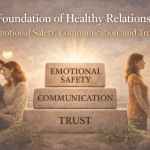
For a deeper look at the fundamental building blocks of relationship health, read The Foundation of Healthy Relationships: Emotional Safety, Communication, and Trust.
1. Emotional Safety: Can You Be Yourself?
Emotional safety is one of the most important qualities in a healthy relationship.
It means you can generally express your feelings, concerns, needs, and opinions without expecting humiliation, intimidation, manipulation, or disproportionate retaliation.
Emotional safety does not mean your partner always agrees with you.
You can be emotionally safe while hearing:
“I understand what you’re saying, but I see the situation differently.”
You can also be emotionally safe while being told that something you did caused harm.
Healthy relationships need room for difficult honesty.
Signs of Greater Emotional Safety
- You can say when something hurts.
- You can admit a mistake.
- You can ask for reassurance.
- You can disagree without expecting punishment.
- You can express a reasonable boundary.
- You can discuss difficult subjects.
- You can share vulnerable feelings.
- You do not constantly feel that you must monitor every word to prevent retaliation.
Feeling understood and responded to by a partner is also important to relationship quality. Research on perceived partner responsiveness connects experiences of being understood, cared for, and appreciated with intimacy and relationship satisfaction.
If this is an area you want to explore more deeply, read How to Feel Emotionally Safe in a Relationship.
2. Communication: Learn to Understand Before Trying to Be Understood
Communication is not simply talking.
It includes:
- Listening.
- Asking questions.
- Expressing feelings.
- Explaining needs.
- Clarifying expectations.
- Managing disagreement.
- Recognizing when a conversation needs a pause.
- Returning to important conversations.
One of the simplest communication improvements is learning to listen before immediately solving.
Imagine your partner says:
“I’ve had a really difficult day.”
You might respond:
“Then you should stop worrying about it.”
You may have good intentions, but the response skips over what your partner is experiencing.
Try:
“I’m sorry. What happened?”
Then listen.
Research on conversations suggests that asking relevant follow-up questions can demonstrate attention and interest, while deeper conversations can sometimes create more connection than people expect.
Ask Instead of Assuming
Assumptions can turn small uncertainties into large emotional problems.
For example:
- “They are quiet, so they must be angry.”
- “They didn’t text back, so they don’t care.”
- “They want time alone, so they must be pulling away.”
- “They disagreed with me, so they don’t respect me.”
Sometimes an assumption is correct.
But you cannot know until you ask.
Try:
“I’ve noticed you’ve been quiet today. Is something on your mind?”
Curiosity creates room for information.
Make Your Requests Specific
Instead of:
“You never help me.”
Try:
“Could you handle dinner tonight? I’m exhausted.”
Specific requests are easier to understand and respond to than broad accusations.
For a deeper guide, read How to Improve Communication in Relationships.
You can also explore How to Communicate with Love and Understanding in Everyday Relationships.
3. Emotional Connection: Feeling Close, Not Just Staying Together
Two people can share a home, a schedule, and years of history while still feeling emotionally distant.
Emotional connection is the experience of feeling that another person is genuinely interested in your inner world and that you matter to them.
It can grow when partners:
- Listen with attention.
- Share meaningful thoughts and feelings.
- Express appreciation.
- Respond to attempts to connect.
- Create shared rituals.
- Spend intentional time together.
- Repair after difficult moments.
It does not require constant conversation.
Sometimes emotional connection is a deep discussion.
Sometimes it is sitting quietly together after a difficult day.
Sometimes it is remembering that your partner has an important meeting tomorrow and asking how it went.
The Gottman Institute describes these small attempts to connect as “bids for connection.” They can include questions, comments, humor, touch, invitations, or other small efforts to gain attention and emotional contact.

For a complete guide, read How to Build Emotional Connection: A Guide to Feeling Close.
4. Trust: Consistency Matters More Than Grand Promises
Trust rarely appears all at once.
It develops through repeated experiences.
You say you will call—and you call.
You make a mistake—and you tell the truth.
You promise to respect a boundary—and you follow through.
You hurt your partner—and you take responsibility rather than immediately shifting blame.
Over time, these experiences create a sense of reliability.
Trust is built through patterns of behavior.
Everyday Trust-Building Behaviors
- Keeping important commitments.
- Being honest when the truth is uncomfortable.
- Following through on agreements.
- Respecting privacy.
- Respecting boundaries.
- Taking responsibility for mistakes.
- Being willing to discuss difficult subjects.
- Allowing actions to support promises.
When trust has been damaged, one apology may be meaningful, but consistent behavior is usually what gives the apology credibility.
5. Boundaries: Closeness Without Losing Yourself
Healthy love does not require two people to become one person.
You can be deeply connected and still have:
- Your own friends.
- Your own interests.
- Time alone.
- Personal goals.
- Privacy.
- Your own opinions.
- Physical boundaries.
- Financial boundaries.
A boundary communicates what you are comfortable with and what you will do when a limit is crossed.
For example:
“I’m willing to discuss this, but I don’t want to continue while we’re insulting each other.”
Or:
“I need some time alone tonight. I still care about you, and we can talk tomorrow.”
Healthy boundaries are not punishment.
They create clarity.
6. Conflict: Healthy Relationships Still Have Difficult Conversations
Conflict is not proof that love has failed.
Two people have different histories, personalities, expectations, preferences, and needs. Disagreement is therefore inevitable in many close relationships.
The more important question is:
What happens when you disagree?
Healthier Conflict Patterns
- Discussing the specific problem instead of attacking character.
- Listening to the other person’s perspective.
- Using a calmer tone when possible.
- Taking a break when emotions become overwhelming.
- Returning to the conversation.
- Looking for workable solutions.
- Apologizing when appropriate.
- Accepting that some differences may remain.
Patterns That Deserve Attention
- Repeated humiliation.
- Threats or intimidation.
- Contempt.
- Deliberate manipulation.
- Repeated boundary violations.
- Using silence primarily as punishment.
- Coercion.
- Physical or sexual violence.
The APA notes that disagreements are normal, while destructive patterns such as yelling, personal criticism, and withdrawal can be harmful to relationships.
If you want practical strategies for handling difficult conversations, see Relationship Red Flags and The Foundation of Healthy Relationships.
7. Repair: What You Do After Something Goes Wrong
Even healthy couples hurt each other sometimes.
You may become defensive.
You may say something too sharply.
You may misunderstand what your partner meant.
Your partner may disappoint you.
Trying to create a relationship where nobody ever makes mistakes is unrealistic.
A healthier goal is learning how to repair.
A Simple Repair Process
- Recognize the problem.
- Take responsibility for your part.
- Acknowledge the impact.
- Listen to the other person’s experience.
- Discuss what could change next time.
- Follow through.
A meaningful apology might sound like:
“I was frustrated, but I spoke to you disrespectfully. I’m sorry. I understand why that hurt you. Next time I need to pause before continuing the conversation.”
The important part is not only the words.
It is the combination of accountability and changed behavior.
8. Affection and Appreciation Keep Love Visible
Long-term relationships can become highly practical.
Who is picking up the children?
What time is dinner?
Did you pay the bill?
When is the appointment?
Did you buy groceries?
These conversations are necessary.
But a relationship cannot live on logistics alone.
Partners also need moments that communicate:
“I see you.”
“I appreciate you.”
“I’m glad you’re here.”
“You still matter to me.”
Try specific appreciation rather than generic praise.
Instead of:
“You’re amazing.”
Try:
“Thank you for handling dinner tonight. I know you were tired too.”
Specific appreciation shows that you are actually noticing the other person’s effort.
9. Shared Responsibility: Love Includes Everyday Work
Relationships are not maintained only through emotional conversations.
There is also practical work.
- Household tasks.
- Financial decisions.
- Parenting responsibilities.
- Appointments.
- Family obligations.
- Planning.
- Emotional support.
A relationship can become strained when one person feels responsible for almost everything while the other person sees their contribution as optional.
Fairness does not always mean exactly 50/50 every day.
Life changes.
One person may need more support during illness. Another may temporarily work longer hours. Parenting and caregiving can also create periods of imbalance.
The bigger question is:
Do both people generally see the shared life as a shared responsibility?
10. Independence: Healthy Love Leaves Room for Two Whole People
It is possible to be deeply connected without doing everything together.
Healthy relationships can include separate:
- Friendships.
- Hobbies.
- Interests.
- Career goals.
- Personal routines.
- Time alone.
Independence does not necessarily weaken intimacy.
For many couples, it allows each person to continue developing as an individual while remaining part of a shared relationship.
A useful mindset is:
“We are a team, but we are still two people.”
When Life Stress Starts Affecting Your Relationship
Sometimes a relationship feels worse because life has become harder.
Work pressure.
Money problems.
Parenting.
Caregiving.
Illness.
Moving.
Sleep deprivation.
Major career changes.
These pressures can reduce patience and make ordinary communication more difficult.
Research discussed by the APA suggests that stress can affect couple communication and relationship satisfaction. Recognizing the stressor can help partners understand that the problem may not simply be “us.”
During a stressful season, ask:
- What is putting pressure on us right now?
- Are we experiencing the same stress differently?
- What can we temporarily simplify?
- Which responsibilities can be redistributed?
- What kind of support does each person need?
- What small ritual can help us stay connected?
Sometimes relationship care means having a deep conversation.
Sometimes it means doing the dishes so your exhausted partner can rest.
Both can be expressions of love.

When You Feel Emotionally Distant From Your Partner
Emotional distance does not automatically mean love has disappeared.
It can develop gradually through:
- Chronic stress.
- Unresolved conflict.
- Busy schedules.
- Reduced affection.
- Repeated misunderstandings.
- Emotional avoidance.
- Major life changes.
- Taking each other for granted.
If you feel disconnected, you do not necessarily need to begin with a dramatic relationship conversation.
Try a small invitation:
“I’ve been missing you lately. Can we spend some time together tonight without our phones?”
If emotional distance has become a recurring problem, read Why Do I Feel Disconnected From My Partner?.
For practical ways to rebuild closeness, read How to Build Emotional Connection.
When You Feel Lonely Even Though You Are in a Relationship
Physical closeness does not automatically create emotional connection.
You can share a home and still feel alone.
You can talk every day and still feel unseen.
You can have affection and still feel emotionally distant.
Relationship loneliness is worth paying attention to rather than dismissing.
Ask yourself:
- Do I feel emotionally known?
- Can I talk about meaningful things?
- Do I feel heard?
- Do we spend intentional time together?
- Have we stopped responding to each other’s attempts to connect?
- Do I feel that my needs matter?
If several answers concern you, start with one small conversation rather than trying to solve the entire relationship at once.
Love and Family Relationships
Love is not limited to romantic partnerships.
Family relationships also depend on communication, respect, emotional safety, boundaries, appreciation, and repair.
Family connection can grow through ordinary rituals:
- Eating together.
- Talking about the day.
- Sharing household responsibilities.
- Celebrating milestones.
- Taking walks.
- Listening without immediately correcting.
- Making space for different personalities.
For more practical ideas, explore How to Strengthen Family Relationships at Home and Healthy Communication Habits That Bring Families Closer.
Friendships Need Emotional Connection Too
The same principles apply outside romantic relationships.
A strong friendship also requires attention and reciprocity.
Ask about the other person’s real life.
Remember important details.
Make plans instead of always saying “we should catch up sometime.”
Share your own experiences instead of making every conversation an interview.
Be present when your friend is going through something difficult.
Healthy relationships are ultimately about how people treat one another across different forms of connection.
15 Signs a Relationship Is Becoming Healthier
Look for patterns rather than perfection.
- You can express disagreement without fear.
- You listen to each other more carefully.
- You ask instead of assuming.
- You can discuss difficult topics.
- You respect each other’s boundaries.
- You can apologize without feeling humiliated.
- Both people take responsibility for mistakes.
- You notice everyday attempts to connect.
- You maintain appropriate independence.
- You support each other’s growth.
- You express appreciation regularly.
- You repair more effectively after conflict.
- You can talk about needs directly.
- You can discuss the future honestly.
- The relationship allows both people to remain themselves.
For a deeper assessment, read Signs of a Healthy Relationship.
Relationship Red Flags You Should Not Ignore
Not every relationship problem is a red flag.
People have bad days. Couples argue. Partners sometimes communicate poorly, become defensive, or need time to cool down.
The concern becomes greater when unhealthy behavior forms a persistent pattern.
Pay attention to:
- Intimidation.
- Threats.
- Humiliation.
- Coercive control.
- Repeated boundary violations.
- Isolation from friends or family.
- Monitoring or controlling your movements or communication.
- Physical violence.
- Sexual coercion.
- Stalking.
The CDC defines intimate partner violence as including physical violence, sexual violence, stalking, and psychological aggression. These behaviors are substantially different from ordinary relationship disagreements.
If you are dealing with these patterns, improving communication is not necessarily the right first step. Safety and specialized support may need to come first.
Read Relationship Red Flags: Warning Signs You Shouldn’t Ignore for a deeper discussion.
A Simple 7-Day Love & Relationship Reset
Day 1: Give Full Attention
Have one conversation without checking your phone.
Day 2: Express Appreciation
Tell your partner or someone you love one specific thing you genuinely appreciate.
Day 3: Ask a Better Question
Ask something deeper than “How was your day?”
Try:
“What has been on your mind lately?”
Day 4: Express One Need Clearly
Tell the other person what you need without turning it into criticism.
Day 5: Notice a Bid for Connection
Pay attention when someone reaches toward you with a question, comment, joke, invitation, or request for attention.
When possible, respond rather than automatically dismissing it.
Day 6: Repair Something Small
If a minor tension has been sitting between you, acknowledge it.
Day 7: Talk About the Relationship
Ask:
“What is working well between us, and what could we do a little better?”
The objective is not a dramatic transformation.
It is to create repeated opportunities for connection.
When Professional Relationship Support May Help
Sometimes self-help strategies are not enough.
Consider professional support when:
- The same conflict keeps repeating.
- Communication has become consistently hostile or avoidant.
- Trust has been seriously damaged.
- You cannot reach agreements about major life decisions.
- Both people want to change but cannot break the same pattern.
- The relationship has become emotionally exhausting.
Couples therapy can provide a structured environment for understanding recurring patterns and learning communication and conflict-management skills. The APA notes that psychologists can help couples work through recurring conflict and improve communication.
However, couples counseling should not be treated as a universal solution for abuse or coercive control.
If there is violence, sexual coercion, stalking, serious intimidation, or coercive control, prioritize safety and specialized support.
FAQ: Love & Relationships
What makes a relationship healthy?
Healthy relationships generally involve emotional safety, respect, communication, trust, appropriate boundaries, affection, mutual consideration, personal autonomy, and the ability to repair after conflict.
Is arguing normal in a healthy relationship?
Yes. Disagreement is normal when two people have different needs, experiences, perspectives, and expectations. The important question is how disagreements are handled. Repeated contempt, intimidation, threats, or coercion are much more concerning than disagreement itself.
How can I improve communication in my relationship?
Start by listening to understand, asking instead of assuming, describing specific problems instead of attacking character, expressing needs clearly, making realistic requests, taking a pause when emotions become overwhelming, and returning to important conversations.
How do you build emotional connection?
Emotional connection grows through attention, curiosity, vulnerability, appreciation, shared experiences, responsiveness, and repair. It is usually built through repeated small moments rather than one dramatic gesture.
How do you rebuild trust?
Trust can sometimes be rebuilt through honesty, accountability, consistent behavior, respect for boundaries, and enough time for the injured person to experience genuine change.
Can healthy relationships include time apart?
Yes. Healthy closeness and healthy independence can coexist. Personal interests, friendships, privacy, and time alone can help each person maintain a sense of individuality.
What are serious relationship red flags?
Serious warning signs include intimidation, threats, coercive control, stalking, physical violence, sexual coercion, isolation, repeated boundary violations, and patterns that make you afraid of your partner.
When should a couple consider counseling?
Professional support may help when recurring problems cannot be resolved through ordinary conversations, trust has been damaged, communication has deteriorated, or both partners want help changing persistent patterns.
What if I am the only person trying to improve the relationship?
You can improve your own communication and behavior, but you cannot create mutual trust or respect by yourself. A healthy relationship requires some willingness from both people to participate, communicate, and take responsibility.
Explore LoveAHH’s Love & Relationships Guides
This page is the starting point for the LoveAHH Love & Relationships topic. If you want to go deeper, explore the guides below.
- The Foundation of Healthy Relationships — emotional safety, communication, trust, boundaries, mutual effort, and repair.
- How to Build Emotional Connection — practical ways to feel closer and more emotionally connected.
- Why Do I Feel Disconnected From My Partner? — causes of emotional distance and practical ways to reconnect.
- How to Improve Communication in Relationships — practical communication strategies for couples.
- How to Communicate with Love and Understanding — everyday communication habits that support closeness.
- How to Feel Emotionally Safe in a Relationship — understanding trust, vulnerability, and emotional security.
- Signs of a Healthy Relationship — how to recognize healthy relationship patterns.
- Relationship Red Flags — warning signs that deserve closer attention.
- How to Strengthen Family Relationships at Home — practical ways to create stronger family connections.
- Healthy Communication Habits That Bring Families Closer — communication strategies for family life.
Authoritative Sources & References
- American Psychological Association — Happy Couples: How to Keep Your Relationship Healthy
- American Psychological Association — Marriage and Relationships
- American Psychological Association — Conversations Are Powerful: How to Deepen Relationships
- The Gottman Institute — Improve Relationship Communication
- The Gottman Institute — An Introduction to Emotional Bids and Trust
- CDC — About Intimate Partner Violence
LoveAHH articles are intended for educational purposes and are not a substitute for professional relationship counseling, mental health care, or safety planning. If a relationship involves violence, coercive control, stalking, sexual coercion, or threats, prioritize safety and seek appropriate professional or local support.
Final Thoughts: Healthy Love Is Built in Ordinary Moments
Love can begin with a feeling.
But a lasting relationship is built through behavior.
It is built when you listen even when you are tired.
When you tell the truth even when the truth is uncomfortable.
When you respect a boundary even when you would make a different choice.
When you apologize instead of trying to win.
When you ask instead of assuming.
When you notice that someone you love is reaching toward you.
When you make room for another person’s individuality.
And when two people decide that the relationship is worth caring for—not only during romantic moments, but during ordinary Tuesdays, stressful weeks, difficult conversations, and changing seasons of life.
You do not need a perfect relationship.
You need a relationship where love can coexist with honesty, respect, individuality, vulnerability, and growth.
That is how stronger emotional connections are built.
How to Communicate with Love and Understanding in Everyday Relationships
Simple Ways to Strengthen Family Relationships at Home (Backed by Psychology)
Building Emotional Intimacy Through Small Daily Moments | Strengthen Your Relationship Naturally
How to Create a Loving and Supportive Family Environment (Practical Guide)

Healthy Communication Habits That Bring Families Closer
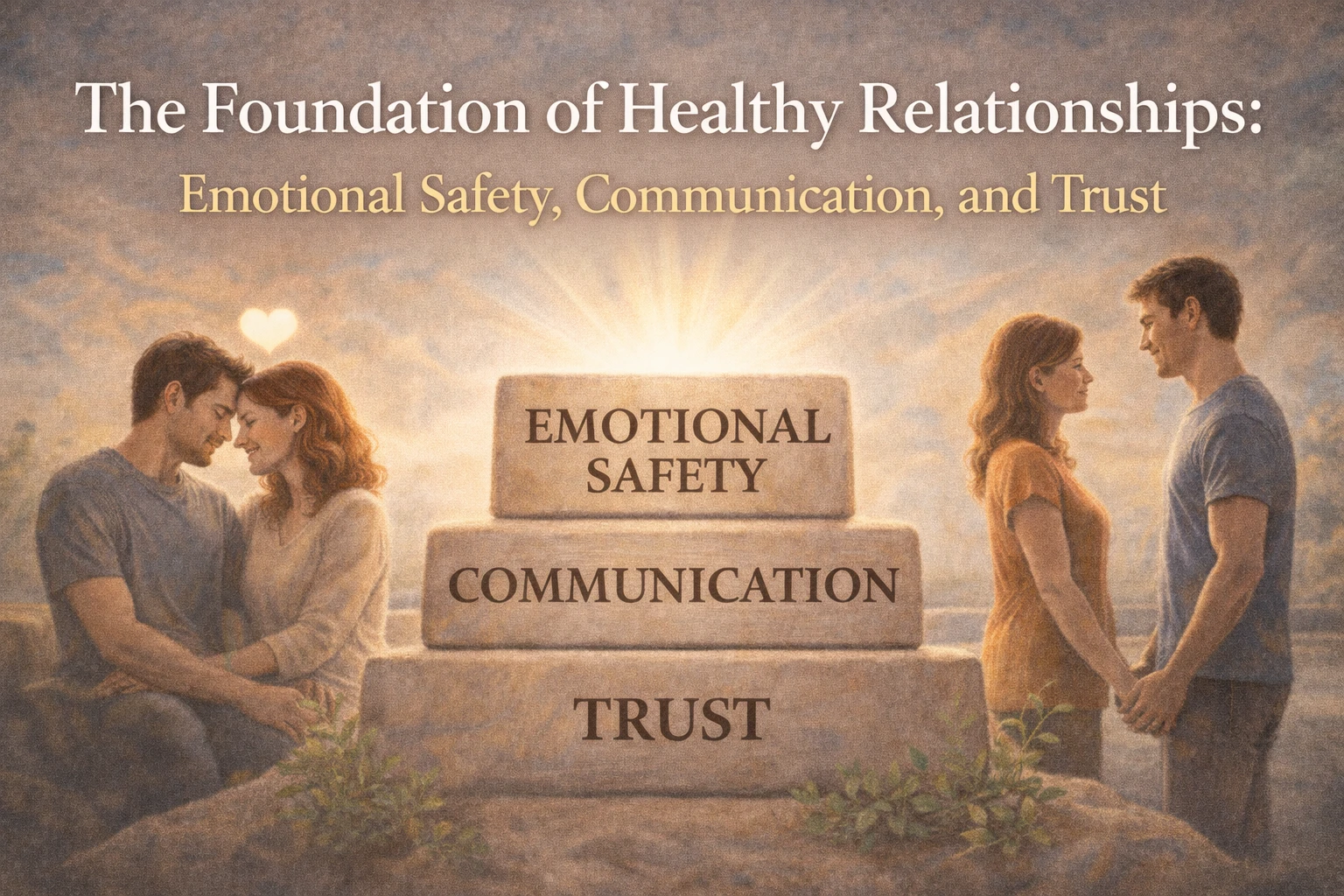
The Foundation of Healthy Relationships: Emotional Safety, Communication, and Trust
15 Signs of a Healthy Relationship: How to Know Your Love Is Truly Strong
Relationship Red Flags: 17 Warning Signs You Should Never Ignore
How to Improve Communication in Relationships (12 Practical Strategies That Work)
Recommended Articles:
- How to Build Emotional Connection: A Guide to Feeling Close
- Loneliness in the Elderly: How to Reconnect and Help
- How to Reconnect with Your Partner: Rebuilding Emotional Intimacy One Step at a Time
- How to Feel Emotionally Safe in a Relationship: 10 Keys to Trust
- Why Do I Feel Distant From My Partner? 11 Reasons and How to Reconnect
- Before I Do Scan Review: Is This AI Relationship Tool Worth It?
- Parallel Vows Review: Can This App Truly Heal Relationship Drift?
- Why Do I Feel Insecure in My Relationship? Understanding Trust Issues, Fear of Loss, and Attachment Anxiety
- Why Do I Feel Disconnected From My Partner? Real Causes and Practical Ways to Reconnect
- Why Do I Feel Lonely in a Relationship? Understanding Emotional Disconnect and Finding Real Connection
- Healthy Communication Habits That Bring Families Closer

- How to Create a Loving and Supportive Family Environment

- How to Improve Communication in Relationships: 12 Practical Strategies That Work

- Building Emotional Intimacy Through Small Daily Moments

- The Foundation of Healthy Relationships: Emotional Safety, Communication, and Trust
- 15 Signs of a Healthy Relationship: What to Look For

- Relationship Red Flags: 17 Warning Signs You Should Never Ignore

- Simple Ways to Strengthen Family Relationships at Home: 12 Practical Strategies

- How to Communicate with Love and Understanding in Everyday Relationships

- 100 Best Anniversary Gifts 2026: The Ultimate Guide for Every Couple, Budget & Love Story