

This is my little online home where we celebrate life's real magic - the warm connections, simple self-care rituals, and those quiet moments that stay with you.
What I do here:
• Craft stories and tips to brighten your everyday
• Build a space where everyone feels welcome
• Make each visit worth your while - whether you need quick advice or food for thought
My superpowers? Turning ordinary moments into something special through words that actually mean something.
Off-screen, I'm probably:
☕ Curled up with a book that changes my perspective
🎨 Trying some new creative hobby
🌿 Noticing the small wonders we usually rush past
So glad you're here - let's make something meaningful together!
Table of Contents
Last Updated: October 7, 2026

Quick Answer
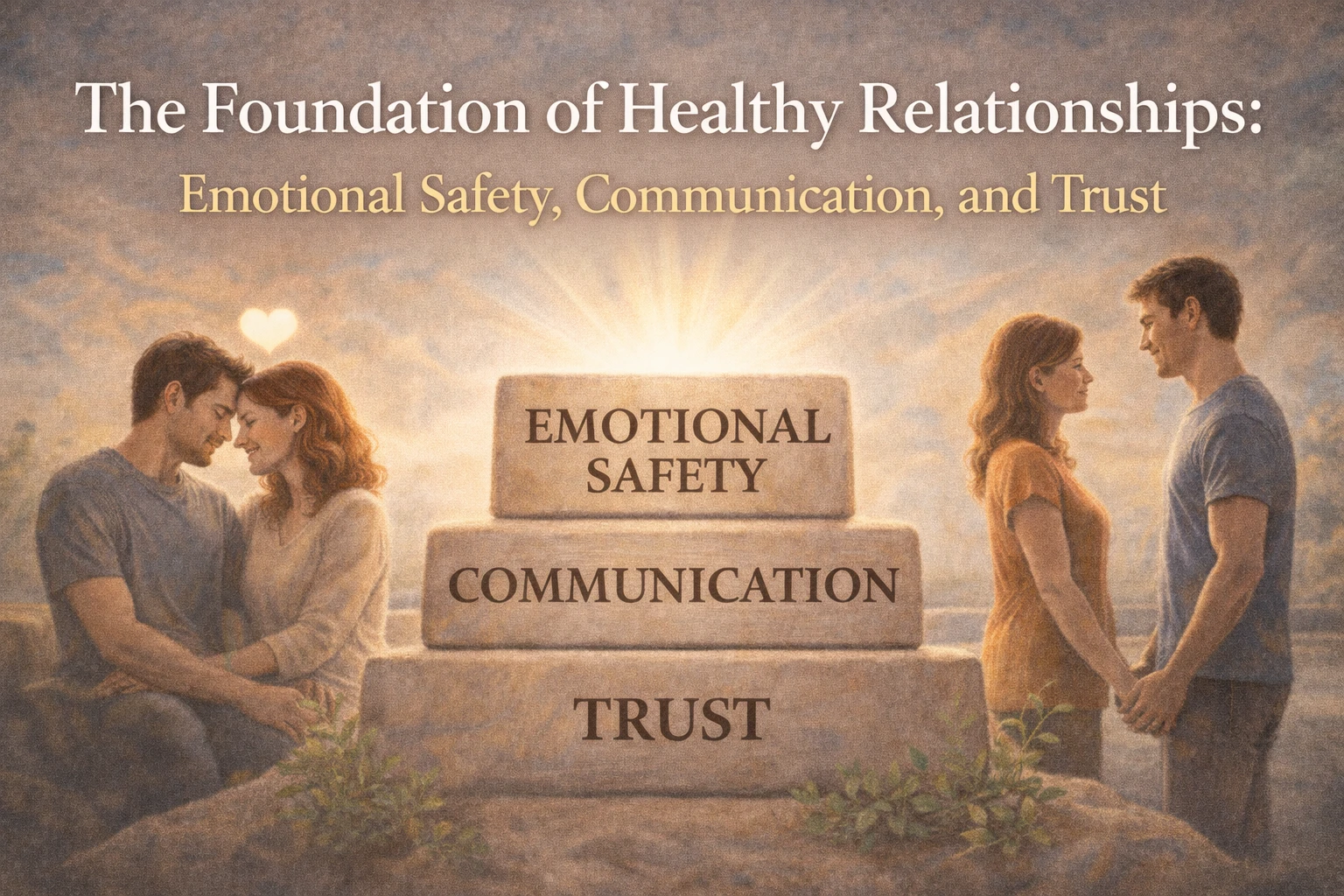
The foundation of a healthy relationship is not simply love or attraction. A strong relationship usually depends on several qualities working together: emotional safety, respectful communication, trust, healthy boundaries, mutual effort, and the ability to repair after conflict.
Healthy relationships are not conflict-free. Two people can love each other deeply and still disagree, misunderstand one another, need space, or go through stressful periods. What matters is whether they can communicate honestly, respect each other’s boundaries, follow through on important commitments, and work toward repair when something goes wrong.
The simple idea: A healthy relationship is not one where nothing goes wrong. It is one where both people have healthier ways to respond when something does go wrong.
What Actually Makes a Relationship Healthy?
It is easy to confuse the beginning of love with the foundation of a healthy relationship.
Attraction can make you excited to see someone. Chemistry can make conversations feel effortless. Shared interests can make you feel compatible. And being deeply in love can make you willing to overlook differences that may become important later.
But relationships eventually move beyond the exciting beginning.
Life brings work stress, financial decisions, family responsibilities, different expectations, tired evenings, misunderstandings, changing priorities, illness, and periods when two people simply want different things.
That is when the foundation matters.
A couple may have strong chemistry and still lack emotional safety. Two people may love each other and still struggle to communicate. Partners may spend years together and still have difficulty trusting each other.
Healthy relationships are therefore less about finding a perfect partner and more about developing healthier patterns together.
The American Psychological Association highlights open communication, regular check-ins, constructive approaches to disagreement, and seeking help when recurring problems become difficult to resolve. Research on perceived partner responsiveness similarly suggests that feeling understood, cared for, and appreciated is closely connected with relationship quality and intimacy.
Healthy relationships are built through patterns.
Small patterns repeated over months and years can become the emotional environment of a relationship.
The Five Foundations of a Healthy Relationship
For practical purposes, you can think of a healthy relationship as having five interconnected foundations:
- Emotional safety — feeling able to be honest without fear of humiliation or intimidation.
- Healthy communication — listening, expressing needs, clarifying misunderstandings, and discussing difficult subjects.
- Trust and reliability — experiencing consistency between words and actions.
- Respect and boundaries — maintaining closeness without controlling or diminishing each other.
- Mutual effort and repair — treating the relationship as a shared responsibility and addressing problems when they occur.
These foundations overlap.
Communication can strengthen trust. Trust can make vulnerability easier. Respect can protect emotional safety. Repair can restore connection after conflict.
Think of them less as five separate boxes and more as parts of the same relationship system.
1. Emotional Safety: The Foundation Beneath Everything Else
Emotional safety means feeling reasonably able to express your thoughts, feelings, needs, concerns, and vulnerabilities without expecting humiliation, intimidation, manipulation, or disproportionate retaliation.
It does not mean that every conversation feels comfortable.
Your partner may disagree with you. They may tell you something difficult. You may discover that one of your habits has hurt them. You may need to apologize or change your behavior.
Emotional safety means difficult honesty does not automatically threaten your dignity or your ability to speak.
What Emotional Safety Can Look Like
- You can say that something hurt you.
- You can admit when you made a mistake.
- You can disagree without being treated as an enemy.
- You can ask for reassurance without being mocked.
- You can say no to a reasonable request.
- You can discuss uncomfortable subjects.
- You can have opinions that differ from your partner’s.
- You can share something vulnerable without expecting it to be deliberately used against you later.
Emotional safety is closely related to the experience of feeling understood and cared for by a partner. Research on perceived partner responsiveness has found meaningful associations between feeling that a partner is responsive and greater intimacy, closeness, and relationship satisfaction.
Emotional Safety Is Not the Same as Emotional Comfort
This distinction matters.
A relationship can be emotionally safe while still being uncomfortable sometimes.
You may need to hear:
“I love you, but that behavior hurt me.”
You may need to say:
“I understand why you’re upset, but I see this situation differently.”
You may need to negotiate a difficult difference instead of getting your preferred outcome.
That discomfort does not automatically mean the relationship is unhealthy.
Emotional safety means difficult conversations can happen without destroying basic respect.
2. Healthy Communication: How Two People Understand Each Other
Communication is often reduced to “talking,” but healthy communication is much broader.
It includes:
- Listening.
- Asking questions.
- Expressing needs.
- Clarifying misunderstandings.
- Discussing expectations.
- Responding to emotions.
- Managing disagreement.
- Repairing after conflict.
You do not need perfect communication.
You need a willingness to understand and be understood.
Listen Before You Solve
One common communication problem is trying to fix a problem before understanding what the other person actually needs.
Imagine your partner says:
“I feel completely overwhelmed lately.”
You might immediately respond:
“Then stop taking on so many things.”
The intention may be helpful, but the response skips over the emotional experience.
A better starting point might be:
“That sounds like a lot. What has been overwhelming you the most?”
Then listen.
Advice may eventually be useful. But understanding often needs to come first.
Use Curiosity Instead of Assumptions
When communication becomes difficult, people often fill in missing information with assumptions.
- “They didn’t text me back, so they’re angry.”
- “They’re quiet, so they don’t care.”
- “They disagreed with me, so they don’t respect me.”
- “They want some time alone, so they must be pulling away.”
Sometimes those assumptions are correct.
Sometimes they are completely wrong.
A simple question creates room for information:
“I’ve noticed you’ve been quiet. Is something bothering you?”
Curiosity is not weakness. It is a way of reducing unnecessary misunderstanding.
Express Needs Clearly
Unspoken expectations are another common source of relationship frustration.
Instead of hoping your partner will somehow know what you need, make the request specific.
- “I need some reassurance right now.”
- “I need 20 minutes alone before we continue this conversation.”
- “I would like more help with dinner this week.”
- “I’d like us to spend some time together this weekend without our phones.”
- “I need you to listen before giving me advice.”
Clear communication gives the other person something concrete to respond to.
For more practical communication strategies, read How to Improve Communication in Relationships.

3. Trust: Built Through Consistency, Not Promises
Trust is sometimes treated as something you either have or do not have.
In everyday relationships, trust is often more gradual.
You learn whether someone is trustworthy through experience.
They say they will call—and they call.
They make a mistake—and they tell you.
They agree to respect a boundary—and they do.
They hurt you—and they take responsibility instead of immediately blaming you.
Over time, these experiences create expectations about what you can rely on.
Trust is built through repeated behavior.
Everyday Behaviors That Strengthen Trust
- Doing what you said you would do.
- Being honest about mistakes.
- Following through on important commitments.
- Respecting agreed boundaries.
- Protecting private information.
- Being reasonably predictable in important matters.
- Taking responsibility when you cause harm.
- Discussing problems rather than repeatedly hiding them.
The Gottman Institute similarly emphasizes that trust grows through everyday interactions, responsiveness, and consistent acts of care rather than relying only on occasional grand gestures.
Trust Is More Than Fidelity
For romantic couples, sexual and romantic faithfulness can be an important part of trust. But trust is broader than fidelity.
You can also ask:
- Can I depend on this person?
- Do their actions generally match their words?
- Do they respect my boundaries?
- Can I tell them something vulnerable?
- Do they consider my wellbeing when making important decisions?
- Can we talk about difficult subjects honestly?
These ordinary experiences contribute to whether a relationship feels dependable.
4. Respect and Boundaries: Love Needs Room to Breathe
Healthy relationships require closeness, but closeness should not mean losing your individuality.
You can love someone deeply and still need:
- Privacy.
- Personal interests.
- Friendships.
- Time alone.
- Personal decisions.
- Physical boundaries.
- Emotional boundaries.
- Different opinions.
Boundaries are not walls against intimacy.
Healthy boundaries help two people understand how to remain connected while respecting each other’s autonomy.
Examples of Healthy Boundaries
Time: “I need an hour to decompress after work before we talk about this.”
Privacy: “I would like some personal space right now.”
Communication: “I’m willing to discuss this, but not while we’re insulting each other.”
Physical: “I don’t want a hug right now, but I still care about you.”
Digital: “I don’t want us checking each other’s phones without permission.”
Respect means taking another person’s boundaries seriously even when you would make a different choice yourself.
5. Mutual Effort: A Healthy Relationship Is a Shared Responsibility
One person can improve their communication.
One person can become a better listener.
One person can learn to manage their reactions more effectively.
But a relationship itself involves two people.
Healthy relationships generally require some degree of mutual effort.
That does not mean both people contribute exactly 50 percent every day.
Real life is more complicated.
One partner may carry more responsibility during illness. Another may temporarily take on more work during an intense period at their job. Parenting, caregiving, pregnancy, recovery, and other life circumstances can create temporary imbalances.
The more useful question is:
Do both people generally see the relationship as something they are responsible for caring for?
A temporary imbalance is normal.
A permanent expectation that one person must communicate, apologize, compromise, organize, repair, and emotionally carry the entire relationship is something different.
Why Small Everyday Moments Matter
Relationships are not maintained only through big conversations or romantic dates.
They are also shaped by ordinary moments.
- A smile when your partner walks into the room.
- A message asking how their day went.
- Remembering something they told you last week.
- Making coffee for them.
- Listening to a story you’ve already heard.
- Celebrating a small success.
- Checking in after a difficult day.
- Putting your phone down when they are telling you something important.
The Gottman Institute describes these everyday attempts to connect as bids for connection. A bid can be verbal or nonverbal, obvious or subtle. Responding to these moments can communicate attention and care and can contribute to trust and emotional connection.
This does not mean you must respond enthusiastically to every interaction. Nobody has unlimited energy.
The goal is not perfect responsiveness.
The goal is a general pattern of turning toward each other rather than consistently turning away.
For a deeper guide, read How to Build Emotional Connection: A Guide to Feeling Close.
Conflict Does Not Automatically Mean a Relationship Is Unhealthy
This is one of the most important ideas to understand.
Healthy couples disagree.
Healthy families disagree.
Healthy people have different preferences, expectations, values, and emotional reactions.
The absence of disagreement is not a reliable definition of relationship health.
What matters is how disagreement is handled.
Constructive Conflict Can Include
- Staying focused on the current issue.
- Listening to the other person’s perspective.
- Avoiding personal attacks.
- Taking a respectful break when emotions become too intense.
- Returning to the conversation rather than abandoning it indefinitely.
- Looking for workable solutions.
- Apologizing when appropriate.
- Accepting that some differences may remain unresolved.
The APA notes that disagreements are a normal part of partnership and that destructive patterns such as yelling, personal criticism, and withdrawing can be especially damaging. Constructive approaches include listening to the other person’s perspective and trying to understand their feelings.
Healthier Conflict vs. Destructive Conflict
| Healthier Pattern | Destructive Pattern |
|---|---|
| “I disagree with you.” | “You’re an idiot.” |
| Discussing one problem | Bringing up every past mistake |
| Taking a respectful break | Using silence to punish |
| Explaining your feelings | Assigning hostile motives |
| Listening to another perspective | Preparing a counterattack |
| Repairing after conflict | Pretending nothing happened |
| Setting a boundary | Using threats or intimidation |
Repair: What Healthy Relationships Do After They Hurt Each Other
Even good relationships contain mistakes.
You will say something too sharply.
You will misunderstand.
You may become defensive.
Your partner may become frustrated.
Trying to eliminate every rupture is unrealistic.
A healthier goal is learning how to repair.
A Simple Repair Process
- Recognize what happened.
- Take responsibility for your part.
- Acknowledge the impact.
- Clarify what you meant if necessary.
- Discuss what could be different next time.
- Follow through with changed behavior.
For example:
“I was frustrated, but I spoke to you disrespectfully. I’m sorry. I can see why that hurt. Next time I need to take a break before continuing the conversation.”
A meaningful repair is more than saying “sorry.”
It connects responsibility with behavior.
If the same apology is repeated without any change, trust can continue to erode.
If an apology is followed by genuine effort, it can become part of rebuilding trust.
Research-informed relationship approaches also emphasize repair and returning to connection after conflict rather than expecting couples to avoid all disagreement.
How Emotional Safety, Communication, and Trust Work Together
These foundations reinforce each other.
Safety → Honesty → Communication → Consistency → Trust → Greater Safety
When people feel reasonably safe, they may be more willing to communicate honestly.
When communication is honest and respectful, both people have more information about each other’s needs.
When actions consistently match words, trust can grow.
When trust grows, vulnerability can become easier.
Greater emotional safety can then make future conversations easier.
The opposite pattern can also develop.
Repeated criticism can reduce emotional safety. Reduced safety can lead to withholding. Withholding can create uncertainty. Uncertainty can weaken trust. Lower trust can make future conversations more defensive.
That is why seemingly small patterns matter.
7 Practical Habits That Strengthen Relationship Foundations
1. Have a Daily Check-In
You do not need a one-hour relationship meeting every night.
Try one meaningful question:
“How are you really doing today?”
Then listen without immediately turning the answer into a problem-solving session.
2. Say What You Appreciate
Be specific.
Instead of:
“You’re great.”
Try:
“Thank you for taking care of dinner tonight. I know you were tired too.”
Specific appreciation shows that you notice the other person’s effort.
3. Ask Before Giving Advice
Try:
“Do you want advice, or would you like me to listen?”
This simple question can prevent unnecessary misunderstandings.
4. Protect Important Conversations
If the subject matters, give it attention.
Put down your phone. Reduce distractions. Avoid starting an emotionally important conversation when one of you is rushing out the door.
Good communication needs enough space to happen.
5. Make Needs Explicit
Do not make your partner guess.
Instead of:
“You never help me.”
Try:
“Could you handle the dishes tonight? I’m exhausted.”
The second statement gives the other person a specific opportunity to respond.
6. Repair Small Ruptures
Not every disagreement needs a dramatic relationship conversation.
Sometimes a simple:
“I was short with you earlier. I’m sorry.”
is enough to prevent a small moment from becoming emotional distance.
7. Protect Individuality
A strong relationship does not require two people to become one person.
Keep room for separate interests, friendships, rest, personal goals, and time alone.
Closeness is healthier when both people can remain whole individuals.
Signs Your Relationship Foundation Is Getting Stronger
Instead of asking whether your relationship is always happy, look for patterns.
- You can discuss difficult subjects more openly.
- You feel comfortable asking for help.
- You can disagree without immediately fearing rejection.
- Apologies happen when they are needed.
- Your partner generally follows through on important commitments.
- Your boundaries are respected.
- You spend some time connecting without discussing chores or logistics.
- You can talk about your future.
- Both people contribute to maintaining the relationship.
- Conflict can eventually return to conversation and repair.
These signs do not mean everything is perfect.
They suggest that the relationship has mechanisms for maintaining connection during ordinary stress.
Signs the Relationship Foundation May Need Attention
Pay particular attention when unhealthy patterns become persistent rather than occasional.
- You regularly feel afraid to express yourself.
- Important concerns are repeatedly dismissed.
- Promises are repeatedly broken without accountability.
- Your friendships, money, movement, or communication are controlled.
- Your boundaries are consistently ignored.
- Arguments repeatedly involve humiliation or intimidation.
- One person carries nearly all responsibility for repairing the relationship.
- Emotional withdrawal continues without any willingness to address it.
- You feel that you must constantly monitor your words to avoid retaliation.
One difficult interaction does not automatically define an entire relationship.
But persistent patterns of control, intimidation, humiliation, coercion, or fear deserve to be taken seriously.
If you’re trying to understand whether a pattern is simply a relationship difficulty or a more serious warning sign, read Relationship Red Flags: Warning Signs You Shouldn’t Ignore.
Healthy Relationship vs. Perfect Relationship
One of the biggest misconceptions about healthy love is that it should feel peaceful all the time.
Real relationships contain:
- Stress.
- Misunderstandings.
- Different opinions.
- Bad days.
- Unmet expectations.
- Periods of distance.
- Life transitions.
A healthy relationship is not one where nothing goes wrong.
It is one where the people involved have healthier ways of responding when something does go wrong.
That is a much more realistic definition of relationship health.
What If Only One Person Is Trying?
This is one of the hardest questions in relationship work.
It is useful to separate personal responsibility from relationship responsibility.
You can improve your own communication, become a better listener, apologize more sincerely, and set healthier boundaries.
But you cannot single-handedly create mutual trust.
You cannot force another person to respect boundaries.
You cannot make someone communicate honestly.
You cannot repair a relationship indefinitely if the other person refuses to participate.
So if you are the only person making changes, focus first on what you can control while paying attention to the larger pattern.
Ask:
- Does my partner acknowledge that there is a problem?
- Are they willing to discuss it?
- Do they make any effort to change their behavior?
- Do they respect reasonable boundaries?
- Can we repair after conflict?
Healthy relationships can survive temporary imbalance.
They struggle when responsibility for the entire relationship permanently falls on one person.
When Professional Help May Be Useful
Sometimes relationship advice is not enough.
If the same conflict keeps repeating despite genuine efforts, couples counseling or relationship therapy can provide a structured environment for identifying patterns, improving communication, and working through recurring problems.
You do not necessarily need to wait until a relationship reaches a crisis before seeking professional support. The APA notes that psychologists can help couples improve communication and work through recurring conflict, and that relationship education can teach skills such as effective listening and conflict management.
However, couples counseling should not be treated as a simple solution to abuse or coercive control.
If there is physical violence, sexual coercion, stalking, intimidation, or serious controlling behavior, safety should come first and specialized support may be more appropriate.
A Simple Healthy Relationship Foundation Checklist
Take a few minutes to consider these questions honestly:
- Can I be honest with my partner?
- Can my partner be honest with me?
- Do we listen to each other?
- Can we disagree without attacking each other?
- Do our actions generally match our promises?
- Are our boundaries respected?
- Can we apologize?
- Can we repair after conflict?
- Do we make time for connection?
- Do we support each other’s individuality?
- Do both of us contribute to the health of the relationship?
You do not need to answer “yes” to every question.
The purpose of the checklist is not to grade your relationship.
It is to help you notice where the foundation is already strong and where it may need attention.
How This Guide Fits Into LoveAHH
This article is the broad foundation of the LoveAHH healthy relationship topic cluster.
If you want to explore a specific area, continue with these guides:
- How to Build Emotional Connection: A Guide to Feeling Close — for emotional closeness and feeling connected.
- Why Do I Feel Disconnected From My Partner? — for understanding emotional distance and reconnecting.
- Signs of a Healthy Relationship — for recognizing healthy relationship patterns.
- How to Improve Communication in Relationships — for practical communication skills.
- How to Communicate with Love and Understanding — for everyday communication habits.
- Relationship Red Flags — for recognizing persistent unhealthy or concerning patterns.
FAQ: The Foundation of Healthy Relationships
What is the most important foundation of a healthy relationship?
There is no single ingredient that guarantees a healthy relationship. Emotional safety, respectful communication, trust, boundaries, mutual effort, and repair work together. Creating an environment where both people can be honest without fear is a useful starting point.
Why is emotional safety important in relationships?
Emotional safety makes it easier to express feelings, needs, concerns, and vulnerabilities. Research on perceived partner responsiveness suggests that feeling understood, cared for, and appreciated is closely connected with relationship intimacy and satisfaction.
Can a relationship be healthy if couples argue?
Yes. Conflict is normal in close relationships. What matters is how conflict is handled. Personal attacks, humiliation, intimidation, and repeated destructive communication are much more concerning than simply having disagreements.
How is trust built in a relationship?
Trust grows through repeated experiences of honesty, reliability, accountability, respect, and consistency. Promises can help, but behavior is what gives those promises credibility over time.
Can trust be rebuilt after it has been damaged?
Sometimes. Rebuilding trust usually requires honesty about what happened, accountability, meaningful repair, consistent behavior, and enough time for the injured person to experience the change. Trust generally cannot be rebuilt through pressure or demands to “just move on.”
What does healthy communication look like?
Healthy communication includes listening, asking questions, expressing needs clearly, discussing difficult subjects respectfully, and making room for both people to be heard. It does not require perfect wording or agreement on everything.
Does a healthy relationship require spending all your time together?
No. Healthy closeness and healthy independence can coexist. Personal interests, friendships, privacy, and time alone can support individuality and make a relationship more sustainable.
What are signs of a strong relationship foundation?
Some signs include being able to discuss difficult topics, respecting boundaries, following through on commitments, apologizing when appropriate, repairing after conflict, making time for connection, and feeling that both people contribute to the relationship.
What if only one person is trying to improve the relationship?
One person can improve their own behavior, but a relationship ultimately involves more than one person. If one person consistently refuses communication, accountability, respect, or repair, the situation may require more than ordinary relationship advice.
Can healthy relationships improve emotional wellbeing?
Supportive relationships are associated with important aspects of wellbeing, but a relationship should not be expected to solve every emotional or mental health difficulty. When significant distress continues, professional mental health support may be appropriate.
Final Thoughts: Build the Foundation Before You Expect Perfection
A healthy relationship is rarely created by one dramatic romantic gesture.
It is built quietly.
Through the way you respond when your partner tells you something difficult.
Through whether your actions match your promises.
Through whether you can say “I disagree” without becoming cruel.
Through whether you respect a boundary even when you do not fully understand it.
Through whether you can admit, “I was wrong.”
Through whether you return to a difficult conversation instead of allowing distance to become permanent.
And through the hundreds of ordinary moments when two people choose to notice, listen to, respect, and support each other.
You do not need a perfect relationship.
You need a relationship where both people are willing to keep building something healthier.
That is the real foundation of healthy love.
Authoritative Sources & References
- American Psychological Association — Happy Couples: How to Keep Your Relationship Healthy
- National Institutes of Health / PMC — Creating Good Relationships: Responsiveness, Relationship Quality, and Interpersonal Goals
- The Gottman Institute — Improve Relationship Communication
- The Gottman Institute — Improve Your Relationship by Paying Attention to Bids
- The Gottman Institute — How to Build Trust in Your Relationship
LoveAHH articles are intended for educational purposes and are not a substitute for professional relationship counseling, mental health care, or safety planning. If a relationship involves violence, coercive control, stalking, sexual coercion, or threats, prioritize safety and seek appropriate professional or local support.
Recommended Articles:
- How to Build Emotional Connection: A Guide to Feeling Close
- Loneliness in the Elderly: How to Reconnect and Help
- How to Reconnect with Your Partner: Rebuilding Emotional Intimacy One Step at a Time
- How to Feel Emotionally Safe in a Relationship: 10 Keys to Trust
- Why Do I Feel Distant From My Partner? 11 Reasons and How to Reconnect
- Before I Do Scan Review: Is This AI Relationship Tool Worth It?
- Parallel Vows Review: Can This App Truly Heal Relationship Drift?
- Why Do I Feel Insecure in My Relationship? Understanding Trust Issues, Fear of Loss, and Attachment Anxiety
- Why Do I Feel Disconnected From My Partner? Real Causes and Practical Ways to Reconnect
- Why Do I Feel Lonely in a Relationship? Understanding Emotional Disconnect and Finding Real Connection
- Healthy Communication Habits That Bring Families Closer

- How to Create a Loving and Supportive Family Environment

- How to Improve Communication in Relationships: 12 Practical Strategies That Work

- Building Emotional Intimacy Through Small Daily Moments

- The Foundation of Healthy Relationships: Emotional Safety, Communication, and Trust
- 15 Signs of a Healthy Relationship: What to Look For

- Relationship Red Flags: 17 Warning Signs You Should Never Ignore

- Simple Ways to Strengthen Family Relationships at Home: 12 Practical Strategies

- How to Communicate with Love and Understanding in Everyday Relationships

- 100 Best Anniversary Gifts 2026: The Ultimate Guide for Every Couple, Budget & Love Story