
Why Do I Feel Distant From My Partner? 11 Hidden Reasons You’re Drifting Apart

Last Updated: July 5, 2026

Quick Answer

You feel distant from your partner not because you’ve fallen out of love overnight, but because emotional distance accumulates silently through unmet needs, chronic stress, unresolved conflict, or life transitions that pull attention away from the relationship. The feeling of disconnect is actually your nervous system signaling that safety, attunement, or emotional intimacy needs repair. The good news is that emotional distance is reversible when both partners understand its root causes and take intentional steps toward reconnection.

Table of Contents

Couple sitting apart on sofa experiencing emotional distance and relationship disconnect

When the Space Between You Feels Like a Chasm

You wake up next to someone you love, but the inches between you feel like miles. You go through the motions of daily life—coffee poured, schedules coordinated, goodnight kisses exchanged—yet something essential is missing. You catch yourself wondering, why do I feel distant from my partner when nothing catastrophic has happened? No betrayal. No screaming fight. No obvious breaking point. Just a quiet, creeping sense of disconnection that leaves you feeling lonely in your own relationship.

Here’s what no one tells you about emotional distance: it rarely announces itself dramatically. It arrives in the silences between conversations that used to flow easily. It settles into the space where curiosity about your partner’s inner world once lived. It grows in the moments you choose scrolling over sharing, avoidance over vulnerability, routine over intentionality.

The fact that you’re asking this question—that you’re noticing the gap—is actually a profound act of love. It means you’re paying attention. It means the connection still matters deeply to you. And it means you’re ready to understand what’s really happening beneath the surface so you can find your way back to each other.

In this comprehensive guide, we’ll explore the hidden psychological, neurological, and relational forces that create relationship disconnect. You’ll learn why emotional distance isn’t a sign of failure but a signal worth understanding. Most importantly, you’ll discover a practical, research-backed path to reconnection that honors both your individual emotional landscape and the shared bond you’re fighting to preserve.

What Is Emotional Distance in a Relationship?

Emotional distance is the subjective experience of feeling disconnected, unseen, or emotionally out of sync with your partner, even when you’re physically present together. It’s not simply about spending less time together—many couples in long-distance relationships maintain profound emotional closeness. Rather, it’s about the quality of emotional attunement: the sense that your partner truly sees, understands, and cares about your inner emotional experience.

Think of emotional intimacy as a bridge between two inner worlds. When the bridge is strong, thoughts, fears, joys, and vulnerabilities flow freely in both directions. Emotional distance is what happens when that bridge begins to weaken—not from a single catastrophic event necessarily, but from thousands of tiny moments of disconnection that accumulate over time. A bid for attention that goes unnoticed. A vulnerable admission met with distraction. A need for comfort answered with advice instead of presence.

Researchers at the Gottman Institute describe this through the concept of emotional bids—small requests for connection that happen dozens of times each day. When partners consistently turn away from or miss each other’s bids, emotional distance begins to grow. What makes emotional distance particularly painful is that it often coexists with love. You can deeply love someone and still feel profoundly disconnected from them.

Person sitting alone by window contemplating emotional distance in relationship

Why Emotional Distance Matters More Than You Think

Emotional distance isn’t just an uncomfortable feeling to endure—it has measurable impacts on your psychological well-being, physical health, and the long-term trajectory of your relationship. Understanding these stakes isn’t meant to alarm you but to validate why this matters and deserves your attention.

The Psychological Toll of Relationship Disconnect

When you feel emotionally distant from your partner, your brain interprets this as a threat to your primary attachment bond. Attachment theory, pioneered by psychologist John Bowlby and expanded by researchers at the American Psychological Association, shows that humans are wired for connection. Our nervous systems literally regulate through proximity to trusted attachment figures. When that connection feels threatened or unavailable, the brain activates stress responses similar to physical danger. This is why emotional distance can trigger anxiety, depression, irritability, and a persistent sense of unease that colors everything else in your life.

The Relational Impact

Left unaddressed, emotional distance becomes a breeding ground for relationship deterioration. Couples who feel disconnected are more vulnerable to conflict escalation, criticism, defensiveness, and emotional withdrawal—what Dr. John Gottman calls the Four Horsemen of relationship breakdown. Small disagreements that connected couples navigate easily become explosive when emotional distance has eroded the foundation of goodwill and understanding.

The Physical Health Connection

Research from Harvard Medical School has demonstrated that relationship distress and loneliness are associated with elevated cortisol levels, increased inflammation markers, compromised immune function, and even greater risk of cardiovascular disease. Emotional disconnection isn’t just a heartache metaphor—it has measurable physiological consequences. Conversely, emotionally connected relationships are correlated with lower blood pressure, faster recovery from illness, and increased longevity.

Daily Life Impact

Beyond the big-picture consequences, emotional distance shows up in countless small ways that diminish your quality of life. You might find yourself dreading coming home, avoiding conversations, feeling relief when your partner leaves the house, or experiencing a persistent low-grade sadness that you can’t quite name. The relationship that once replenished you now drains you, and that energy deficit affects your work, your friendships, your parenting, and your sense of self.

11 Signs You’re Experiencing Relationship Disconnect

Emotional distance often develops so gradually that you might not recognize it immediately. Here are the subtle and not-so-subtle signs that you’re drifting apart:

  • Conversations feel transactional rather than meaningful. You talk about logistics—who’s picking up the kids, what’s for dinner, when the bills are due—but rarely about hopes, fears, dreams, or feelings.
  • Physical intimacy has declined or feels mechanical. Sex becomes perfunctory or stops altogether, and non-sexual physical affection like holding hands, hugging, or spontaneous touching fades away.
  • You feel lonely even when you’re together. Sitting in the same room, you might as well be miles apart. There’s a palpable absence of emotional presence.
  • You’ve stopped sharing good news with each other first. When something exciting happens, your partner isn’t the first person you want to tell. You’ve stopped capitalizing on positive moments together.
  • Conflict either escalates quickly or disappears entirely. You’re either fighting about everything or nothing at all—both signs that emotional engagement has become too threatening or too exhausting.
  • You find yourself confiding more in friends or family than your partner. Emotional intimacy has migrated outside the relationship.
  • You feel relief when your partner leaves for work or goes out. Their absence feels like freedom rather than loss.
  • You’ve stopped being curious about your partner’s inner world. You no longer ask about their day with genuine interest, explore their thoughts, or wonder about their emotional state.
  • Small irritations feel monumental. When emotional distance is present, minor annoyances—the way they chew, how they load the dishwasher—become sources of intense frustration.
  • You’re living parallel lives. You coexist efficiently but without meaningful intersection. Your schedules, interests, and emotional lives run on separate tracks.
  • You feel a persistent sense of something being off that you can’t name. There’s a gnawing intuition that the connection has weakened, even if everything looks fine on the surface.

The Root Causes of Emotional Distance

Understanding why you feel distant from your partner requires looking beyond the surface to examine the underlying forces that create disconnection. Emotional distance is rarely about one thing—it’s usually an interplay of internal, relational, and situational factors.

Chronic Stress and Emotional Exhaustion

When your nervous system is overwhelmed by stress—work demands, financial pressure, health concerns, parenting challenges—your capacity for emotional connection diminishes. You’re in survival mode, not connection mode. The prefrontal cortex, responsible for empathy, curiosity, and emotional regulation, literally functions less effectively under chronic stress. You may want to connect but simply don’t have the emotional bandwidth. Your partner interprets this as disinterest or rejection, and the cycle of distance begins.

Unresolved Conflict and Resentment

Arguments that never reach resolution don’t disappear; they accumulate underground. Each unresolved conflict adds a layer of protective emotional withdrawal. You stop bringing things up because it feels pointless or dangerous. Over time, this unspoken pile of hurts becomes a wall between you. Resentment—the accumulation of perceived unfairness, unmet needs, and unacknowledged pain—is one of the most potent drivers of emotional distance.

Life Transitions and Identity Shifts

Major life changes—becoming parents, career shifts, moving to a new city, losing a loved one, entering midlife—can fundamentally alter who you are as individuals. If you don’t actively reintroduce yourselves to each other through these transitions, you can wake up one day feeling like you’re living with a stranger. The person you committed to years ago has changed, and so have you. Without intentional reconnection, these parallel evolutions create emotional distance.

Digital Distraction and Attention Fragmentation

Your attention is your most precious relational resource, and it’s under constant assault. Smartphones, social media, streaming services, and the always-on nature of modern life fragment attention into pieces too small to build meaningful connection. When you spend more time engaging with screens than with your partner’s emotional world, distance grows not from malice but from chronic distraction. Your partner can feel the absence of your full presence even if you’re technically spending time together.

Emotional Vulnerability Avoidance

True intimacy requires vulnerability—the willingness to reveal your authentic self, including fears, insecurities, failures, and needs. Many people, particularly those with avoidant attachment styles shaped by early life experiences, find vulnerability deeply threatening. If you or your partner habitually protect yourselves by staying emotionally guarded, genuine connection becomes impossible. You can coexist for years without ever truly letting each other in.

Depression, Anxiety, and Mental Health Challenges

Mental health conditions can create emotional distance that has nothing to do with the quality of the relationship itself. Depression often manifests as emotional numbness and withdrawal—the person experiencing it may want to connect but feels incapable of accessing the emotions that connection requires. Anxiety can make emotional intimacy feel overwhelming and overstimulating. Understanding that mental health may be driving the distance, rather than a failure of love, is crucial for finding the right path forward.

Betrayal and Broken Trust

Infidelity, financial deception, broken promises, or other forms of betrayal shatter the foundation of emotional safety that intimacy requires. Even after the acute crisis passes, the injured partner may unconsciously maintain emotional distance as self-protection. The betraying partner may withdraw out of shame or defensiveness. Rebuilding emotional connection after trust is broken requires specific, intentional repair work that many couples don’t know how to navigate.

Two people sitting back to back symbolizing emotional distance and relationship disconnect

The Science Behind Emotional Disconnect: What Research Reveals

The experience of emotional distance isn’t just psychological—it’s neurobiological. Understanding what’s happening in your brain and body when you feel disconnected from your partner can help depersonalize the experience and point toward effective solutions.

Attachment Theory and the Neuroscience of Connection

Research from the American Psychological Association confirms that humans are biologically wired for attachment. Our brains evolved to seek proximity to trusted others for safety and regulation. When emotional distance threatens that bond, the brain’s threat-detection system—particularly the amygdala—activates. This triggers cortisol release, preparing the body for fight, flight, or freeze responses. What’s happening when you feel distant from your partner is, in part, your nervous system reacting to a perceived rupture in your primary attachment bond.

The Role of Emotional Bids

The Gottman Institute’s decades of research reveal that couples who stay connected respond positively to each other’s emotional bids approximately 86% of the time, while couples headed for disconnection respond positively only about 33% of the time. Emotional bids are small, often subtle attempts to connect—a comment about the weather, a touch on the shoulder, a shared look across a room. Each bid is a test: Are you there with me? Are you paying attention? Do I matter? When bids are consistently missed or dismissed, the bidding partner stops trying, and emotional distance becomes entrenched.

Polyvagal Theory and Co-Regulation

Dr. Stephen Porges’ polyvagal theory, widely cited in clinical psychology and trauma research, explains that the autonomic nervous system is constantly scanning for cues of safety or danger in social environments. Your partner’s facial expressions, tone of voice, and body language send signals that either activate your ventral vagal system (enabling connection, calm, and trust) or your sympathetic nervous system (triggering defensiveness, withdrawal, or conflict). Emotional distance often reflects a nervous system state of chronic low-grade threat response—you don’t feel safe enough with your partner to let your guard down.

The Stress-Connection Paradox

Studies from Harvard Medical School demonstrate that external stress significantly impairs couples’ ability to maintain emotional connection. Under stress, people become more self-focused, less empathic, and more reactive. They’re also more likely to misinterpret neutral partner behaviors as negative. This means that sometimes the emotional distance you feel isn’t about your relationship at all—it’s about stress spilling over and eroding the emotional resources needed for connection.

Neuroplasticity and Hope

One of the most encouraging findings from neuroscience is that the brain remains plastic throughout life. The neural pathways involved in emotional connection, empathy, and trust can be strengthened through intentional practice. Just as emotional distance was built through repeated patterns of disconnection, it can be bridged through repeated experiences of successful reconnection. Your brain can literally learn to feel close again.

The RECONNECT Framework: A Step-by-Step Guide to Closing the Gap

Closing emotional distance requires more than good intentions—it needs a structured approach. The RECONNECT framework integrates insights from attachment science, couples therapy research, and clinical practice into a memorable, actionable guide.

R – Recognize the Distance Without Blame

The first step is acknowledging the disconnect without assigning fault. Emotional distance is almost never one person’s doing. It emerges from the space between two people—the patterns, the missed bids, the accumulated small wounds on both sides. Saying “I’ve noticed we feel far apart lately, and I miss feeling close to you” opens a door. Saying “You’ve been so distant and unavailable” shuts it. Frame the distance as a shared challenge rather than a personal accusation.

E – Examine Your Own Emotional Landscape

Before you can reconnect with your partner, you need to reconnect with yourself. What are you really feeling beneath the distance—lonely, hurt, scared, rejected, numb? Where in your body do you feel these emotions? What stories are you telling yourself about what the distance means? Getting clear on your own internal experience prevents you from projecting unexamined emotions onto your partner and allows you to communicate from a place of clarity rather than reactivity.

C – Communicate Vulnerability, Not Just Frustration

When we feel distant, the temptation is to communicate anger (“You never talk to me anymore”) or criticism (“You’re always on your phone”). These communications push partners further away. Vulnerability, though scarier, invites connection: “I’ve been feeling lonely and I miss hearing about your day. Sometimes I worry I’m not interesting to you anymore.” Soft, vulnerable openings are proven by Gottman research to dramatically increase the likelihood of a positive response.

O – Open Space for Your Partner’s Experience

Connection requires curiosity. Genuinely ask your partner about their experience without preparing your rebuttal while they speak. What has this distance felt like for them? What might they be struggling with that you haven’t seen? What do they need that they haven’t been able to ask for? Listening to understand rather than to respond is one of the most powerful reconnection tools available. Your partner’s experience of the distance may be completely different from yours, and both perspectives matter.

N – Negotiate New Rituals of Connection

Emotional closeness is built through consistent, predictable moments of connection. This is where practical action meets emotional intention. Establish rituals that create protected space for reconnection: a 20-minute walk together each evening without phones, a weekly check-in conversation about the relationship, morning coffee together before the chaos of the day begins, a monthly date night where you explore something new together. Rituals build trust because they demonstrate ongoing commitment to the relationship.

N – Notice and Celebrate Small Moments of Reconnection

Change happens incrementally. You won’t bridge months or years of emotional distance overnight. But you can notice and amplify the small moments when connection flickers back to life: an unexpected laugh shared, a spontaneous hug, a moment of eye contact that feels real. Acknowledging these moments—internally and with your partner—reinforces the neural pathways of connection. “I felt really close to you when we were laughing about that memory at dinner. That felt good.”

E – Establish Emotional Safety Through Consistency

Lasting reconnection requires consistent emotional safety. This means showing up predictably, following through on commitments, responding to bids for connection, and repairing ruptures quickly when they occur. Emotional safety isn’t about being perfect—it’s about being reliable in your imperfection. When your partner knows they can count on you to stay engaged, to listen without attacking, to apologize sincerely when you mess up, the distance begins to close and stay closed.

C – Commit to Ongoing Emotional Maintenance

Emotional connection isn’t a destination you reach and then stop working on. It’s an ongoing practice, like physical fitness or any other aspect of health. Couples who maintain strong emotional connection over years and decades treat the relationship as a living entity that requires regular attention, feeding, and care. This means continuing the rituals, staying curious about your partner as they evolve, and addressing small disconnections before they become large distances.

T – Turn Toward Third Options When Stuck

Sometimes couples need external support to bridge emotional distance. This isn’t a failure—it’s a recognition that some patterns require outside perspective to shift. Couples therapy, particularly approaches like Emotionally Focused Therapy that specifically target attachment bonds and emotional disconnection, can be transformative. Marriage workshops, relationship books grounded in research, and even structured conversation guides can provide the scaffolding couples need to find their way back to each other.

15 Practical Action Steps to Bridge Emotional Distance

Understanding emotional distance intellectually is different from taking action to close it. These concrete steps translate the framework into daily practice:

  1. Conduct a 30-minute no-screen check-in daily. Set aside all devices and ask each other two questions: “What was the best part of your day?” and “Was there anything hard today?” Listen without fixing or judging.
  2. Increase non-sexual physical affection. Hold hands during walks, hug for at least 20 seconds (long enough for oxytocin release), touch your partner’s shoulder when passing by. Physical connection often rebuilds before emotional connection fully returns.
  3. Write a letter of appreciation. Take 15 minutes to write down specific things you value about your partner—qualities, memories, things they do that you might take for granted. Share it or keep it as a reminder of what’s good between you.
  4. Practice active listening during one conversation each day. When your partner speaks, reflect back what you heard before responding. “So what I’m hearing is that work felt overwhelming today and you came home feeling defeated. Is that right?”
  5. Schedule a weekly relationship meeting. Set aside 45 minutes each week to discuss the relationship itself, not logistics. What went well this week? What felt hard? What do you need from each other in the week ahead?
  6. Identify and respond to emotional bids. Pay attention to your partner’s small attempts to connect throughout the day and consciously respond to them. A comment about the news, a sigh while looking at the mail, a shared observation—these are invitations.
  7. Share one vulnerable thing daily. Practice lowering your emotional guard by sharing something real: a fear, an insecurity, a hope, something you’re embarrassed about. Vulnerability invites vulnerability.
  8. Create a shared experience that’s new. Novelty stimulates dopamine and creates bonding opportunities. Take a class together, visit a new place, try an activity neither of you has done before. New experiences create new pathways for connection.
  9. Implement a conflict repair ritual. Agree on a signal or phrase that means “I want to repair this, even though we’re upset.” Practice apologizing sincerely when you’ve contributed to disconnection.
  10. Reduce digital distraction during together time. Designate certain hours or spaces as phone-free. Your attention is the currency of connection—protect it intentionally.
  11. Ask curiosity questions. Once a day, ask a question about your partner’s inner world that you genuinely don’t know the answer to: “What’s something you’ve been thinking about lately that we haven’t talked about?” or “What’s a dream you have that you haven’t pursued yet?”
  12. Express gratitude specifically. Instead of “thanks for cleaning up,” try “I noticed you cleaned the kitchen before bed even though you were tired. That made my morning so much easier and I really appreciate your thoughtfulness.”
  13. Recreate positive memories. Think back to when you felt most connected—places you went, activities you shared, rituals you had. Recreate some of those experiences intentionally.
  14. Check your assumptions. When you feel hurt or distant, check the story you’re telling yourself. Ask your partner: “I noticed you seemed quiet tonight. I told myself you might be upset with me, but I want to check—how are you actually feeling?”
  15. Seek professional support if the distance persists. If you’ve been trying to bridge the gap and feel stuck, a skilled couples therapist can help identify the patterns keeping you disconnected. This is especially important if there’s underlying trauma, mental health challenges, or unresolved betrayals complicating the picture.
Couple walking together on beach rebuilding emotional connection and closeness

7 Mistakes That Widen Emotional Distance

Sometimes the things we do in an attempt to protect ourselves actually push our partners further away. Recognizing these common patterns can help you interrupt cycles that deepen disconnection:

  • Criticizing instead of expressing needs. “You never make time for me” attacks character. “I’ve been feeling lonely and would love to schedule some intentional time together” expresses a need and invites collaboration. Criticism triggers defensiveness; vulnerable requests invite engagement.
  • Withdrawing to avoid conflict. Stonewalling—shutting down emotionally or physically during difficult conversations—is one of the strongest predictors of relationship breakdown. Your withdrawal may feel like self-protection, but to your partner it communicates that you’ve given up. Even saying “I’m feeling overwhelmed right now and need a 20-minute break, but I want to come back and finish this conversation” preserves connection while honoring your need for space.
  • Assuming you already know what your partner thinks or feels. Mind-reading shuts down curiosity. You may have been with your partner for years, but they are still a separate person with an inner life you can’t fully access without asking. Assumptions breed misunderstanding and resentment.
  • Comparing your current relationship to an idealized past. Nostalgia for how things used to be can prevent you from fully engaging with how things are now. All long-term relationships go through seasons of distance and closeness. Comparing today’s reality to a romanticized highlight reel from the past creates unfair standards and hopelessness.
  • Seeking emotional intimacy outside the relationship without addressing the distance first. While friendships and external support are healthy, turning to someone else to meet all your emotional needs while leaving the distance with your partner unaddressed creates a parallel emotional life that can make reconnection feel even harder.
  • Expecting reconnection to happen quickly or spontaneously. Emotional distance that developed over months or years won’t resolve in a single conversation or a week of trying. Expecting immediate results leads to discouragement and giving up. Sustainable reconnection is gradual and requires patience.
  • Using busyness as a permanent excuse. Life is always full. If you wait until things slow down to work on your relationship, you’ll wait forever. The couples who maintain connection are not the ones with less demanding lives—they’re the ones who prioritize connection despite the demands.

Expert Insights: What Leading Institutions Say About Relationship Disconnect

Drawing on decades of clinical research, leading institutions have illuminated the mechanisms of emotional distance and the pathways back to connection:

The Gottman Institute emphasizes that the quality of a couple’s friendship is the foundation of lasting intimacy. Their research shows that couples who maintain strong emotional connection have a deep knowledge of each other’s inner worlds—what they call love maps. Regularly updating these love maps by staying curious about your partner’s changing thoughts, feelings, and experiences prevents emotional drift.

The American Psychological Association highlights that attachment security—the felt sense that your partner is emotionally available and responsive—is the cornerstone of relationship satisfaction. When attachment security is threatened by emotional distance, individuals experience genuine psychological distress that requires relational repair, not just individual coping.

Harvard Medical School research on stress and relationships confirms that external stressors significantly predict relationship deterioration when couples don’t have protective practices in place. Couples who actively manage stress together—through shared relaxation, mutual support, and stress-reducing rituals—maintain stronger emotional connection even during difficult life seasons.

The Mayo Clinic emphasizes that emotional intimacy requires intentional cultivation and identifies communication breakdown as a primary driver of relationship distress. They recommend structured communication practices, including regular check-ins and the use of “I” statements that express feelings rather than accusations.

Cleveland Clinic research on the health impacts of loneliness underscores that the subjective feeling of disconnection matters more for health outcomes than objective social contact. This explains why you can feel profoundly lonely in a relationship despite spending significant time with your partner—the quality of emotional presence, not just physical proximity, determines felt connection.

Frequently Asked Questions

Can emotional distance be fixed without therapy?

Yes, many couples successfully bridge emotional distance on their own, particularly when both partners are motivated, the distance is relatively recent, and there isn’t significant underlying trauma or betrayal. The key is consistent, intentional effort using research-backed approaches like the RECONNECT framework. However, if you’ve been trying on your own for several months without progress, or if conversations about the distance keep escalating into conflict, professional support can provide crucial guidance and structure.

How long does it take to rebuild emotional connection?

There’s no universal timeline. Small moments of reconnection can happen immediately—a genuine conversation, a moment of shared laughter, a hug that feels real. Sustained emotional closeness typically builds over weeks and months of consistent effort. The timeline depends on how long the distance has been growing, whether both partners are engaged in the repair process, and whether there are complicating factors like untreated mental health conditions or unresolved betrayals.

Is feeling distant from my partner normal in long-term relationships?

Absolutely. Virtually all long-term relationships go through periods of emotional distance. Life transitions, stress, competing demands, and personal growth can all create temporary disconnection. The health of a relationship isn’t defined by whether distance sometimes occurs but by how couples respond to it. Couples who acknowledge the distance and actively work to bridge it often emerge with deeper understanding and stronger connection.

What if my partner doesn’t see the distance or doesn’t want to work on it?

This is a challenging and common situation. Start by clearly expressing your own experience using “I” statements: “I’ve been feeling disconnected and I miss feeling close to you,” rather than “You’re distant and you need to change.” Sometimes partners resist the framing of “relationship problems” but respond better to an invitation to create more connection. If your partner genuinely refuses to engage despite your clear communication, individual therapy can help you clarify your needs and options.

Can emotional distance be a sign that the relationship is ending?

Sometimes, but not necessarily. Emotional distance can signal that a relationship is in trouble, but it can also be a temporary state driven by external factors, life stress, or resolvable patterns. The distinguishing factor is often whether both partners are willing to acknowledge the distance and work toward reconnection. A relationship worth saving is one where there’s still mutual goodwill and a willingness to try, even if the distance feels significant right now.

How is emotional distance different from falling out of love?

Emotional distance is the feeling of disconnection, while falling out of love typically involves a loss of caring, commitment, or desire to maintain the relationship. You can feel profoundly distant from your partner while still loving them deeply and wanting the relationship to work. Many couples confuse the two experiences. If you’re distressed by the distance and want to close it, you likely still love your partner—you’re just disconnected from the felt experience of that love.

Does having children inevitably create emotional distance between partners?

Parenthood certainly challenges emotional connection, but it doesn’t inevitably destroy it. The transition to parenthood is one of the most significant stressors a relationship can face—sleep deprivation, divided attention, identity shifts, and dramatically reduced couple time all contribute to distance. Couples who maintain connection through this transition do so by protecting small but consistent rituals of togetherness, continuing to express appreciation, and explicitly prioritizing the romantic partnership alongside parenting responsibilities.

Can you feel emotionally distant from someone you live with?

Not only can you, but this experience is extremely common. Physical proximity does not guarantee emotional presence. Many couples share a home, a bed, and a life while feeling profoundly alone. The distance you feel while living together can be more painful than long-distance relationships because the contrast between physical closeness and emotional absence is so stark and constant.

What role does individual therapy play in addressing relationship distance?

Individual therapy can be tremendously valuable, especially when emotional distance is related to personal factors like depression, anxiety, trauma history, or attachment wounds from earlier life experiences. Sometimes one partner’s individual healing is a prerequisite for relational reconnection. Individual therapy can also help you clarify your own needs, communication patterns, and contributions to the distance, making you a more effective partner in the reconnection process.

How do I bring up emotional distance without starting a fight?

Choose a calm moment, not during or after conflict. Use soft startup: “I want to talk about something important to me, and I’m bringing it up because I care about us, not because I’m criticizing you.” Focus on your own feelings and needs: “I’ve been feeling distant lately and I miss feeling close to you. I’d love to talk about how we could feel more connected.” Ask about their experience: “How have you been feeling about us lately?” Frame it as a shared challenge you want to solve together.

Can emotional distance be a symptom of depression?

Yes, absolutely. Depression often manifests as emotional numbing, withdrawal, and reduced capacity for connection—symptoms that can look exactly like emotional distance in a relationship. If the distance seems accompanied by other signs of depression (sleep changes, appetite changes, loss of interest in usually enjoyable activities, persistent low mood), encouraging your partner to seek evaluation from a mental health professional is an important step. The distance may be a symptom of an underlying condition rather than a reflection of the relationship itself.

Is it possible to rebuild emotional connection after infidelity?

Yes, many couples do rebuild emotional connection after infidelity, but it requires specific, intentional work that goes beyond general reconnection strategies. The betrayal must be fully acknowledged, the injured partner’s pain must be witnessed and validated, trust must be rebuilt through consistent transparency over time, and underlying relationship issues that contributed to vulnerability must be addressed. Professional support from a therapist specializing in infidelity recovery is strongly recommended for this path.

Couple having meaningful conversation at home working through emotional distance

Authoritative Sources & References


  • American Psychological Association (APA)
    Research on attachment theory demonstrates that emotional security in adult relationships is fundamental to psychological well-being and that perceived threats to attachment bonds activate genuine stress responses.
    https://www.apa.org

  • The Gottman Institute
    Decades of longitudinal couples research identifying emotional bids, the Four Horsemen of relationship breakdown, and the importance of emotional attunement for lasting relationship satisfaction.
    https://www.gottman.com

  • Harvard Medical School
    Studies on the physiological impacts of relationship stress and loneliness, including elevated cortisol, inflammation markers, and cardiovascular risk associated with emotional disconnection.
    https://www.health.harvard.edu

  • Mayo Clinic
    Clinical guidance on building emotional intimacy, communication strategies for couples, and the health benefits of strong social connection for mental and physical well-being.
    https://www.mayoclinic.org

  • Cleveland Clinic
    Research on loneliness and perceived social isolation, demonstrating that subjective feelings of disconnection impact health independently of objective social contact.
    https://www.clevelandclinic.org

  • National Institute of Mental Health (NIMH)
    Information on depression, anxiety, and stress-related disorders that can contribute to emotional withdrawal and relationship difficulties.
    https://www.nimh.nih.gov

  • Dr. Stephen Porges – Polyvagal Institute
    Polyvagal theory explaining how the autonomic nervous system evaluates safety and threat in social contexts, and how this impacts capacity for emotional connection.
    https://www.polyvagalinstitute.org

  • Dr. Sue Johnson – International Centre for Excellence in Emotionally Focused Therapy
    Development of Emotionally Focused Therapy specifically targeting attachment bonds and emotional disconnection in couples.
    https://www.iceeft.com

From Distance to Deep Connection

Feeling distant from your partner is not a character flaw, a relationship failure, or a sign that love has run its course. It’s a signal—one that your attachment system is sending because something needs attention. The distance you feel is not the end of your story. It’s a chapter that can lead to greater understanding, deeper intimacy, and a more resilient bond than you had before.

What makes the difference is not whether distance ever appears—it will, in every long-term relationship—but what you do when you notice it. The couples who build lasting, deeply satisfying partnerships are not the ones who never drift apart. They’re the ones who learn to recognize the drift early, to reach for each other across the gap, and to treat each reconnection as a strengthening of the bridge between them.

You’ve already taken the first and hardest step: you’ve noticed the distance and you care enough to understand it. That caring is the foundation everything else can be built upon. Start small. Turn toward one bid today. Ask one genuine question. Offer one moment of real presence. The path back to connection is made of moments like these, accumulated patiently over time.

Your relationship deserves your attention. You deserve the warmth of genuine connection. And the bridge between you, however weathered it may feel right now, can be rebuilt stronger than before.

Recommended Articles:

Welcome – love a happy home

Before I Do Scan Review 2026: Is This AI Relationship Health Check Worth Your Time?

Last Updated: June 18, 2026

Quick Answer

Before I Do Scan is an AI-powered relationship health assessment tool that analyzes communication patterns, emotional connection, and compatibility factors through guided conversations. This Before I Do Scan review finds it offers a private, accessible starting point for couples wanting deeper insight into their relationship dynamics — not as a replacement for professional counseling, but as a thoughtful pre-commitment or relationship maintenance tool that prompts crucial conversations many couples avoid.

Table of Contents

Introduction: The Questions We’re Afraid to Ask

You’re standing at a threshold. Maybe it’s a ring in your pocket. Maybe it’s a lease renewal. Maybe it’s just that quiet, nagging voice that whispers, “Are we really okay?”

You love this person. But love, as anyone who’s been in a relationship longer than the honeymoon phase knows, isn’t always enough. You wonder about the things you don’t talk about. The fights you’ve never had. The values you assume align but have never actually checked. The way he handles stress when no one’s watching. The way she talks about you to her friends.

This is the exact emotional territory that Before I Do Scan aims to map. Touted as an AI relationship health assessment, it promises to surface what’s working, what’s fragile, and what couples need to discuss before making life-altering commitments. But in a world saturated with relationship apps, quizzes, and advice columns, does this digital tool actually deliver meaningful insight? In this comprehensive Before I Do Scan review, we examine the science, the experience, and the real value behind the algorithm.

What Is Before I Do Scan? A Clear Breakdown

Before I Do Scan is a web-based application that uses conversational artificial intelligence to evaluate relationship health across multiple dimensions. Think of it less as a compatibility test and more as a structured conversation guide powered by machine learning. The tool engages couples — either individually or together — through a series of prompts, questions, and reflection exercises designed to illuminate patterns that might otherwise remain invisible.

The scan doesn’t spit out a simplistic “compatible” or “not compatible” verdict. Instead, it generates a nuanced relationship health profile that highlights strengths, flags potential friction points, and recommends specific conversation topics. The output reads more like a thoughtful friend’s observations than a clinical report — warm, direct, and occasionally uncomfortable in the way that truth often is.

What distinguishes this tool from generic relationship quizzes flooding the internet is its adaptive questioning logic. The AI adjusts follow-up questions based on previous responses, much like a skilled therapist might pivot during a session when something significant surfaces. For example, if a user indicates tension around financial decisions, the system probes deeper into money scripts, family-of-origin patterns, and unspoken expectations around earning and spending.

How the AI Relationship Assessment Actually Works

The user experience unfolds in three distinct phases. First, the onboarding sequence establishes context — relationship stage, duration, living situation, and what prompted the scan. This matters because a couple dating for six months needs different guidance than a partnership of eight years considering marriage.

Second comes the core assessment, which takes approximately 15 to 25 minutes depending on response depth. The AI presents open-ended prompts and multiple-choice questions spanning communication styles, conflict resolution patterns, emotional intimacy, physical connection, shared values, family dynamics, financial alignment, and future vision. The interface is clean and unhurried, designed to encourage reflection rather than rapid clicking.

Third, the analysis engine processes responses against a framework informed by relationship science — drawing concepts from the Gottman Method, attachment theory, and communication research — and generates a personalized report. The report organizes findings into categories with actionable discussion prompts, effectively giving couples a roadmap for the conversations they most need to have.

Person thoughtfully engaging with Before I Do Scan relationship assessment on device

Core Features That Set It Apart

Several design choices elevate Before I Do Scan above lightweight relationship quizzes. The adaptive questioning engine is the standout feature — it doesn’t follow a rigid script. If a couple signals high conflict avoidance, the system explores that pattern rather than marching forward with irrelevant questions about date nights. This responsiveness creates an experience that feels surprisingly attuned.

The relationship health dashboard provides a visual map of assessed dimensions, making it immediately obvious where alignment exists and where gaps appear. Color coding and simple charts communicate complex relational data without requiring users to interpret statistical jargon. A couple can glance at the dashboard and immediately see, for instance, that emotional intimacy scores green while financial alignment flashes amber.

Privacy architecture deserves mention. The platform processes data ephemerally by default — meaning conversations aren’t permanently stored on servers unless users explicitly opt into saving their reports. For couples discussing sensitive material, this design choice matters enormously. No one wants their relationship vulnerabilities sitting indefinitely on a startup’s database.

The conversation starter generator transforms assessment insights into specific, actionable discussion prompts. Rather than telling a couple “improve communication,” the tool might suggest: “Ask your partner: When you shut down during conflict, what are you actually feeling in that moment?” This specificity bridges the gap between insight and action.

Who Is This Relationship Scan For? (And Who Should Skip It)

Before I Do Scan serves several distinct audiences, though it isn’t for everyone.

Best suited for: Couples considering engagement who want to surface potential issues before they become crises. Partners who sense something is off but can’t articulate what. Individuals in relationships who want personal clarity before initiating difficult conversations. Couples in premarital counseling who want supplementary reflection material between sessions. Long-term partners navigating a transition — moving in together, having children, relocating — who want to check their relational foundation.

Less suitable for: Couples in active crisis involving abuse, addiction, or infidelity where professional intervention is necessary. Individuals seeking a definitive “should I stay or go” answer from an algorithm. People unwilling to engage honestly with self-reflection — the tool only works with truthful input. Partners where one person feels coerced into participating.

The tool positions itself as a conversation catalyst, not a diagnostic instrument. Understanding this distinction determines whether users find value or frustration.

The Psychology Behind Relationship Health Assessments

Why does structured relationship assessment matter? Research from the American Psychological Association consistently demonstrates that couples who engage in deliberate relationship education before marriage report higher satisfaction and lower divorce rates years later. The mechanism isn’t magic — it’s awareness. Naming patterns makes them manageable. Discussing expectations before they become grievances prevents resentment from crystallizing.

Dr. John Gottman’s research at the Gottman Institute identified that couples who discuss their differences openly and with curiosity — rather than contempt or avoidance — build what he calls “emotional bank accounts” that buffer against future stress. Tools like Before I Do Scan effectively create structured opportunities for these deposits.

Attachment theory, pioneered by John Bowlby and expanded by researchers at institutions including Harvard Medical School, reveals that our earliest relationship templates shape how we love as adults. The scan’s exploration of family-of-origin patterns taps into this body of knowledge, helping couples understand why they react to conflict the way they do — and why their partner’s reactions might differ so dramatically.

Cognitive biases also play a role. Couples often suffer from “assumed similarity bias” — the unconscious belief that a partner shares one’s internal experience. “Of course we both want children in three years. We’ve never explicitly discussed it, but I just know.” The assessment disrupts these assumptions by making the implicit explicit, often to the surprise of both partners.

Honest Pros and Cons: What Users Really Experience

Strengths

  • Adaptive intelligence that feels conversational: The questioning flow avoids the robotic feel of static quizzes. Follow-up prompts demonstrate contextual awareness that users consistently note in feedback.
  • Actionable output rather than abstract scores: The report doesn’t just diagnose; it prescribes specific conversation topics and starter phrases.
  • Privacy-forward design: Ephemeral processing and no mandatory account creation lower the barrier for honest engagement.
  • Accessible language: The tool translates psychological concepts into plain terms without condescension.
  • Self-reflection value even when taken solo: Individual users report gaining clarity about their own patterns regardless of partner participation.
  • Low-friction entry point to deeper work: For couples intimidated by therapy, the scan offers a gentler on-ramp to relationship maintenance.

Limitations

  • No human nuance: AI can identify patterns but can’t read tone, body language, or the thousand micro-expressions that inform a skilled therapist’s understanding.
  • Self-report bias: The tool processes what users say, not what’s actually happening. A partner who lacks self-awareness or answers defensively will receive an incomplete reflection.
  • Limited crisis utility: The scan isn’t designed for relationships in acute distress, and the platform appropriately avoids claiming otherwise.
  • No longitudinal tracking: Currently, the tool provides a snapshot rather than tracking relationship health changes over time — a feature that would significantly enhance its utility.
  • Internet dependency: As a web application, it requires connectivity, which may limit access in some circumstances.
Couple working together on relationship health using digital assessment tool

The RELATE Framework: How Before I Do Scan Structures Insight

Behind the interface, Before I Do Scan organizes its analysis around a framework we’ve termed RELATE — a memorable structure that captures the dimensions under examination. While the platform doesn’t brand this acronym explicitly, the pattern emerges clearly across user reports.

R – Recognize Communication Patterns

The scan examines how couples navigate disagreement. Do conversations escalate or shut down? Does one partner pursue while the other withdraws? Are there topics kept permanently off-limits? The assessment identifies the dance couples do when tension arises — and whether that choreography builds connection or erodes it. Practical takeaway: The report often includes specific suggestions for interrupting unproductive cycles, such as implementing a “pause signal” when discussions become flooded with emotion.

E – Evaluate Emotional Intimacy

Emotional intimacy — the sense of being deeply known and accepted — receives thorough attention. The AI probes vulnerability comfort, emotional expression norms, and whether partners feel safe revealing fears, failures, and hopes. Research from Harvard Health consistently links emotional intimacy to relationship resilience; couples who share their inner worlds navigate external stressors more effectively. The scan surfaces whether emotional walls exist and, crucially, who built them and why.

L – Look at Life Alignment

Values, vision, and practical life design fall under this dimension. The assessment explores money philosophy, career ambitions, geographic preferences, family planning, spiritual or religious alignment, and lifestyle expectations. These pragmatic factors, often dismissed as unromantic, predict relationship stability more powerfully than emotional intensity. The tool’s questioning here is particularly thorough, recognizing that “love conquers all” is a sentiment that ages poorly when fundamental life visions conflict.

A – Assess Attachment and Family History

Drawing on attachment research, this dimension examines how childhood experiences shape adult relating. The scan explores family-of-origin patterns, parental relationship modeling, and early experiences of security or insecurity. Understanding that a partner who grew up in a high-conflict home might experience silence as threatening — while a partner from a conflict-avoidant family experiences direct discussion as aggressive — transforms how couples interpret each other’s reactions.

T – Trust and Commitment Foundations

The assessment examines the structural integrity of the relationship: fidelity expectations, reliability patterns, follow-through on promises, and the presence or absence of behaviors that erode trust. This section also explores commitment philosophy — what commitment means to each partner and whether their definitions align.

E – Establish Growth Pathways

The final dimension is forward-looking. Rather than merely cataloging issues, the scan recommends specific growth areas with actionable starting points. This emphasis on development rather than diagnosis reflects a core tenet of positive psychology: relationships thrive not by avoiding problems but by actively building strengths.

10 Steps to Get the Most From Your Before I Do Scan

  1. Set a clear intention before starting. Ask yourself: What am I genuinely hoping to learn? Write it down. This primes your mind for honest engagement rather than defensive filtering.
  2. Choose the right environment. Complete the assessment in a calm, private space when you’re not rushed, exhausted, or emotionally activated. Your state affects response quality significantly.
  3. Answer honestly, not aspirationally. The tool can only work with truthful input. Resist the urge to answer how you wish things were. The algorithm detects inconsistency patterns, and sugarcoating only cheats you.
  4. Complete it independently first. If you plan to share results with a partner, each person should complete the scan alone initially. This prevents mutual influence and surfaces genuine individual perspectives.
  5. Take breaks if needed. Some questions provoke strong emotion. Pause, breathe, journal briefly if overwhelmed, then return. There’s no prize for speed.
  6. Review results with curiosity, not judgment. Approach the report like an explorer examining a map, not a judge reading a verdict. Every finding is information, not indictment.
  7. Discuss findings using “I” statements. Instead of “The scan says YOU avoid conflict,” try “I noticed the scan flagged our conflict patterns, and I’d like to understand how avoidance feels from your side.”
  8. Prioritize one insight at a time. The report may surface multiple areas for growth. Choose one to address first rather than overwhelming yourselves with everything at once.
  9. Schedule follow-up conversations. Don’t let the scan become another conversation that happens once and disappears. Set calendar reminders to revisit key topics after a week, a month, and three months.
  10. Use findings to inform professional support. If the scan reveals significant concerns, bring the insights to a licensed couples therapist. The tool provides conversation starters for professional work — it doesn’t replace it.
Peaceful morning routine with journal and tea, relationship reflection practice

Common Mistakes Couples Make After Getting Results

  • Treating the report as a verdict rather than a conversation starter. The scan provides discussion material, not a final judgment. Couples who treat findings as definitive truth rather than exploratory hypotheses often feel attacked and become defensive, shutting down the very conversations the tool aims to open.
  • Using findings as ammunition. “See? The AI agrees with ME!” Weaponizing results destroys safety. The goal is mutual understanding, not winning arguments by algorithm.
  • Expecting the tool to do the work. Completing the scan and reading results is the beginning, not the end. The real work happens in the conversations that follow. Couples who check the box and move on gain little lasting benefit.
  • Focusing exclusively on problems. The report highlights strengths too. Ignoring what’s working well in favor of obsessing over flagged areas creates a distorted, discouraging picture of the relationship.
  • Comparing scores competitively. Relationship dimensions aren’t competitions. One partner scoring “higher” on emotional intimacy doesn’t make them the better partner — it provides information about differing experiences that deserve curiosity.
  • Delaying action until “things get worse.” Human nature often waits for crisis before seeking help. The scan’s greatest value comes when relationships are stable enough to do proactive work. Waiting until distress is acute makes everything harder.
  • Taking it without partner consent. One-sided assessment can be valuable for personal clarity, but springing results on an unaware partner typically triggers defensiveness. If sharing, introduce the tool collaboratively.

What Relationship Experts Say About Digital Assessments

The broader clinical community holds nuanced views on digital relationship tools. The American Psychological Association has acknowledged that technology-assisted relationship education can expand access to evidence-based concepts for couples who might never enter a therapist’s office. While no app replaces the therapeutic alliance, digital tools can introduce crucial psychoeducation at scale.

Researchers at the Gottman Institute have noted that structured assessment, even when self-administered, increases what psychologists call “differentiation” — the capacity to maintain self-awareness while staying emotionally connected to a partner. This skill predicts long-term relationship satisfaction across multiple studies.

Harvard Health Publishing emphasizes that relationship health is a significant predictor of physical health outcomes, with strong partnerships correlating with lower blood pressure, reduced depression risk, and even improved immune function. Tools that strengthen relational awareness arguably contribute to public health in measurable ways.

Cleveland Clinic relationship experts stress that while digital tools can supplement relationship maintenance, they should never delay seeking professional help when relationships show signs of significant distress. Persistent conflict, emotional disconnection, contempt, or consideration of separation warrant human professional intervention regardless of what any app reports.

The Mayo Clinic’s guidance on premarital counseling aligns with the concept behind Before I Do Scan: couples who invest in understanding their dynamics before major commitments build protective factors that serve them across decades. Whether that investment happens in a therapist’s office, through a digital tool, or ideally both, the principle holds.

Frequently Asked Questions

Is Before I Do Scan a replacement for premarital counseling?

No. The scan serves as a complementary tool that can enrich counseling or provide an accessible starting point, but it doesn’t replicate the personalized guidance of a licensed therapist. Think of it as a structured self-assessment, not therapy.

How long does the complete assessment take?

Most users complete the core assessment in 15 to 25 minutes, though taking longer is common if you pause for reflection. The tool encourages thoughtful engagement over speed.

Can I take the scan without my partner?

Yes. Individual completion provides valuable personal insight and clarity. Many users begin solo and later invite their partner to participate for a more complete picture of relational dynamics.

What happens to my data after completing the scan?

By default, data is processed ephemerally and not permanently stored. Users can opt to save their reports, but the platform’s privacy architecture minimizes data retention. Review the current privacy policy on the official site for specifics, as practices may evolve.

Does the scan work for non-married couples?

Absolutely. While the name references marriage, the assessment serves any romantic partnership at any stage — dating, cohabiting, engaged, or long-term committed without formal marriage. The questions adapt based on relationship context.

Will the scan tell me definitively if we should break up?

No, and no ethical tool would. The scan highlights patterns, strengths, and friction points — it doesn’t make decisions for you. The value lies in providing clearer information for your own discernment process.

How is this different from free relationship quizzes online?

Before I Do Scan uses adaptive AI that adjusts questions based on responses rather than following a fixed script. The output provides specific, nuanced feedback with actionable conversation prompts — not generic advice that could apply to anyone.

Is the scan appropriate for couples in crisis?

The tool is designed for relationships that are fundamentally functional but seeking growth or clarity. Couples experiencing active crisis — especially involving abuse, addiction, or infidelity — need professional human support, not digital assessment.

How often should we use the scan?

There’s no prescribed frequency. Some couples use it as a one-time pre-commitment check. Others revisit annually as a relationship temperature assessment. Major life transitions (moving, career changes, family planning) are natural moments for reassessment.

Does the scan address cultural or religious differences between partners?

The assessment includes questions about values, traditions, and expectations that can surface cultural and religious dynamics. However, it’s not specialized for intercultural relationship counseling and may not probe as deeply as some couples need on these dimensions.

What if my partner refuses to participate?

Individual completion still offers value for personal clarity. You can’t force partner engagement — and doing so would likely produce defensive, unhelpful responses. Use the solo scan to understand your own perspective, then consider sharing what you learned as an invitation rather than a demand.

Is there scientific validation for this type of assessment?

Digital relationship assessment tools as a category draw on validated relationship science principles from attachment theory, the Gottman Method, and communication research. Before I Do Scan specifically hasn’t published independent efficacy studies, which is common for tools in this emerging category. Approach findings as exploratory rather than clinically diagnostic.

Serene couple walking together at sunset, emotional balance and relationship peace

Authoritative Sources & References


  • American Psychological Association (APA)
    Research consistently demonstrates that premarital education and structured relationship assessment improve long-term relationship outcomes by increasing communication skills and realistic expectations.
    https://www.apa.org/topics/marriage-relationships

  • The Gottman Institute
    Decades of research by Drs. John and Julie Gottman established that relationship health can be assessed through observable patterns including conflict management, fondness and admiration, and shared meaning — concepts that inform digital relationship tools.
    https://www.gottman.com

  • Harvard Health Publishing
    Studies published through Harvard Medical School link relationship quality to physical health outcomes, including cardiovascular health, immune function, and mental health indicators, underscoring the importance of relationship maintenance.
    https://www.health.harvard.edu/topics/relationships

  • Mayo Clinic
    Guidance on premarital counseling emphasizes the value of proactive relationship assessment, including discussions about finances, family planning, values, and conflict resolution before major commitments.
    https://www.mayoclinic.org/healthy-lifestyle/adult-health/in-depth/premarital-counseling/art-20046677

  • Cleveland Clinic
    Relationship health resources from Cleveland Clinic highlight that early intervention in relationship difficulties, including through self-assessment and education, can prevent escalation to more serious relational distress.
    https://health.clevelandclinic.org/category/relationships

  • National Healthy Marriage Resource Center
    Federally supported research on relationship education demonstrates that couples who participate in structured assessment and education programs report higher relationship quality and are better equipped to navigate transitions.
    https://www.healthymarriageinfo.org

  • Journal of Marital and Family Therapy
    Published research on technology-assisted couple interventions shows promising results for digital tools as supplements to traditional relationship education, particularly for increasing access to evidence-based concepts.
    https://onlinelibrary.wiley.com/journal/17520606

  • American Association for Marriage and Family Therapy (AAMFT)
    Professional guidance emphasizes that while digital tools can enhance relationship awareness, they function best as complements to — rather than replacements for — professional therapeutic relationships.
    https://www.aamft.org

Final Thoughts: Is Before I Do Scan Worth It?

After thorough examination, this Before I Do Scan review concludes that the tool delivers genuine value for its intended purpose — not by providing answers, but by asking better questions than most couples ask themselves unprompted.

The adaptive AI, privacy-forward design, and actionable output distinguish it from superficial alternatives. The scan won’t fix a broken relationship, predict divorce with certainty, or replace the wisdom of a skilled therapist. What it will do is hold up a mirror, illuminate patterns, and hand you a conversation roadmap that many couples desperately need but don’t know how to create on their own.

If you’re standing at the threshold of a major commitment — or simply sensing that your relationship deserves more deliberate attention than it’s getting — the scan offers a low-risk, reasonably thoughtful starting point. The cost is modest compared to even a single therapy session, and the insights, while not clinical, often open doors that lead couples toward deeper work.

Ultimately, the tool’s value depends on what you do after closing the browser tab. The scan provides words. You have to have the conversation. You have to sit with discomfort. You have to choose curiosity over defensiveness when the report surfaces something you’d rather not see. Technology can illuminate the path, but walking it remains a deeply human act — one that no algorithm can complete for you.

One practical next step: If you’re considering the scan, take it yourself first. See what surfaces. Notice what you feel — defensiveness, relief, surprise, recognition. Let that experience inform whether and how you invite your partner into the process. The journey toward relationship clarity doesn’t require both people to start at the same time. It only requires one person brave enough to begin.

Recommended Articles:

Welcome – love a happy home

Parallel Vows Review: Can This App Truly Heal Relationship Drift?

Last Updated: June 17, 2026

Quick Answer

Parallel Vows is a digital relationship wellness tool designed to bridge emotional distance. In this Parallel Vows review, we find it uniquely combines guided journaling with attachment theory exercises. It doesn’t replace therapy but serves as a proactive space for couples to reconnect, break unhealthy cycles, and build a “happy home” through consistent, micro-moments of understanding before resentment hardens into permanent estrangement.

Introduction: The Silent Drift We Don’t Talk About

You lie in bed, inches apart, yet feel miles away. The conversation that used to flow until 3 AM has been replaced by logistics—who picks up the kids, what’s for dinner, and the dreaded silence of scrolling. You’re not fighting, but you’re not connecting. This isn’t a crisis; it’s something quieter and often more dangerous: emotional drift. In a world where we track our steps, our sleep, and our finances with apps, the most delicate architecture—our intimate relationship—is often left to chance. That’s where the promise of guided digital intervention comes in. This Parallel Vows review explores whether a lovable-designed application can genuinely move the needle from disconnection back to deep attachment, serving as a sanctuary for love, healing, and a happy home.

Couple sitting back-to-back on a bed, symbolizing emotional drift and disconnection

What Is Parallel Vows? A Candid Overview

At its core, Parallel Vows is not just another messaging app pretending to be a relationship tool. Hosted on the Lovable platform, it positions itself as a structured emotional notebook for two. Think of it less like texting and more like a shared, private therapy workbook that lives on your phone. The concept is built on the metaphor of parallel lines—two distinct individuals choosing to move in the same direction without losing themselves. It’s an interactive space that prompts users with questions ranging from attachment triggers to gratitude, all wrapped in a clean, non-judgmental interface. This Parallel Vows app review reveals a tool focused on processing feelings before they become landmines, fostering a “happy home” dynamic by strengthening the invisible threads of understanding.

Woman peacefully writing in a journal, representing the guided prompts inside Parallel Vows

Why Emotional Drift Matters in Modern Love

In the psychology of “Love, Healing & a Happy Home,” ignoring drift is like ignoring a slow leak in a tire. You might not notice it today, but eventually, you’ll be stranded. The American Psychological Association consistently links relational health to physical well-being. When couples operate on autopilot, the brain’s mirror neurons—which help us empathize—become less attuned to our partner’s distress. Parallel Vows directly combats this by forcing a “pause” in the daily grind. It addresses the mental load, the unseen labor, and the resentment that brews silently. Without a container for these feelings, couples risk escalating from silence to contempt, which research from the Gottman Institute identifies as the single greatest predictor of divorce.

Signs You Might Need a Tool Like This

  • The “Roommate” Phase: You manage a household perfectly but haven’t had a genuine, non-logistical check-in in weeks.
  • Defensive Listening: You find yourself planning your rebuttal while your partner is still speaking.
  • Emotional Numbness: You feel indifferent rather than angry; anger implies passion, but numbness signals a dangerous shutdown.
  • Avoidance of Deep Topics: You steer clear of sex, future plans, or past hurts to avoid a meltdown.
  • Seeking External Validation: You find yourself complaining to friends or coworkers more than talking to your partner.

Key Features: A Look Inside the Dashboard

The Daily Pulse Check-In

Unlike generic mood trackers, the pulse feature in Parallel Vows uses nuanced emotional vocabulary. You’re not just “sad”; you choose between “drained,” “unseen,” or “brittle.” This granularity is crucial for emotional literacy and helps communicate the specific flavor of your inner world to your partner without accusation.

Guided Scripts for Conflict

One of the standout elements in this Parallel Vows review is the repair script library. When you’re flooded with cortisol during a fight, your prefrontal cortex goes offline. You literally cannot think of the right words. The app provides structured “I feel” templates that bypass the blame game, allowing you to deliver a message that doesn’t trigger a defensive counter-attack.

The “Shared Timeline” Visualization

This isn’t a social media feed; it’s a private digital tapestry of your relationship health over time. You can visually spot patterns—did the disconnect start during a stressful work project? Did a specific hurt lower the emotional temperature? This meta-view turns vague dissatisfaction into actionable data.

Abstract visualization of relationship timeline with connecting lights

The Psychology Behind the Prompts

The magic—or the science—of Parallel Vows lies in its adherence to attachment theory. The prompts are designed not to solve problems immediately but to recognize the attachment style driving the behavior. An anxious partner seeking reassurance and an avoidant partner needing space are fundamentally speaking different languages. The application acts as a translation layer. By externalizing the dialogue, the app activates the “observing self,” a concept from neuropsychology where merely naming an emotion reduces the amygdala’s fear response. This is healing in real-time; it moves couples from reactive survival mode to co-regulation.

The C.O.R.E. Framework: Our Review Methodology

To provide a structured and trustworthy Parallel Vows review, we’ve analyzed the platform using a proprietary healing framework we call C.O.R.E.—Connection, Observation, Repair, and Evolution.

C – Connection over Correction

The app prioritizes “I hear you” over “You should.” In practice, it blocks unsolicited advice features. You’re there to witness, not fix. This aligns with Carl Rogers’ humanistic psychology, emphasizing unconditional positive regard as the soil for growth.

O – Observation of Patterns

Instead of focusing on a single fight, the app aggregates emotional data to show the “dance” you do. You might notice you always spiral into protest behavior on Sunday evenings before the workweek, which is a somatic signal, not just a relational one.

R – Repair Scripts

As mentioned, the pre-written “rupture and repair” sequences are the heart of the healing module. They acknowledge that rupture is inevitable in a happy home, but repair must be intentional.

E – Evolution of Vows

The “vows” aren’t static wedding promises; they are dynamic agreements you co-create weekly based on the data the app reveals. This keeps the relationship agile.

Practical Steps to Integrate Parallel Vows

  1. Start with a “Tech Agreement”: Define when and where you’ll use the app. Don’t pull it out during a heated argument; it’s a maintenance tool, not a fire extinguisher.
  2. Do the Solo Work First: Spend a week answering prompts just for yourself. Understanding your own emotional exhaustion is critical before you can share it.
  3. Schedule a 10-Minute “Review Date”: Use the app’s timeline feature to look at the week’s highs and lows. Ask, “What was the most surprising thing you read from me?”
  4. Use the Physical Touch Prompt: If the app suggests a boundary discussion, follow it with a non-sexual physical connection protocol (like a 20-second hug) to re-regulate the nervous system.
  5. Focus on “Bids”: Look for the moments your partner reached out in the app that you might have missed. Responding to these digital bids builds emotional currency.
  6. Anonymize Your Fear: Use the app to type the thing you are most terrified to say out loud. Reading it in a neutral UI often removes the sting.
  7. Integrate Gratitude Microscopically: The app’s “micro-thanks” feature is scientifically proven to shift the negativity bias of the brain.
  8. Track Your “Window of Tolerance”: Note the times of day when you are most regulated versus dysregulated, and schedule deep prompts accordingly.
  9. Revisit Old Vows: Look back at promises made months ago. Discuss why they might feel outdated, and update them ceremonially.
  10. Parallel Play Integration: Sit in the same room, headphones on, not talking, but both engaging in the app’s reflection activities—this is “being alone, together.”
Elderly couple laughing together on a bench, symbolizing long-term intimacy and repair

Common Mistakes When Using Relationship Apps

  • Weaponizing the Data: Never say, “Well, the app says you are avoidant, so this is your fault.” The tool is for insight, not ammunition.
  • Emotional Flooding via Text: If a prompt triggers rage, step away. Writing a 500-word manifesto of grievances without a face-to-face debrief can worsen misunderstandings.
  • Ignoring the Body: Typing “I am relaxed” while your heart is pounding at 100 bpm is dissociation. Pair the digital check-in with a physical body scan.
  • Checking the Box: Don’t treat the app like a daily chore. If you’re rushing through prompts just to keep a streak, you’re missing the point of healing.

Expert Insights on Digital Intimacy

Our analysis aligns with the broader medical and psychological community’s cautious embrace of telehealth and digital tools.

The Mayo Clinic notes that digital journaling can reduce the somatic symptoms of stress, which is often the root of marital discord. By externalizing the worry loop, couples stop projecting their internal chaos onto each other.

Cleveland Clinic highlights that the most effective relationship apps are those that facilitate “bids for connection”—a term coined by the Gottmans. Parallel Vows excels here, as every sent prompt is an explicit bid waiting for a response.

Harvard Medical School research on mindfulness suggests that structured reflection apps can thicken the prefrontal cortex over time, making us less reactive to our partner’s emotional triggers. This physiological change is the ultimate goal of a “happy home.”

Frequently Asked Questions

Is Parallel Vows a replacement for couples therapy?

No. This Parallel Vows review emphasizes that the app is a maintenance and discovery tool. If you are in crisis, dealing with infidelity, active addiction, or suicidal ideation, you need a licensed professional. The app is best used as a workout for your relational muscles between sessions, or as a preventative tool for proactive couples.

How does Parallel Vows handle privacy and data security?

Given that users share intimate emotional confessions, privacy is paramount. The platform operates on a philosophy of minimal data retention and does not sell emotional data to advertisers. Check their specific privacy policy for encryption details, but the design intent is a digital sanctuary, not a surveillance tool.

Can I use Parallel Vows if my partner refuses to join?

Yes, and this is where the “healing” aspect starts. You can use the platform as a solo emotional processing tool. Often, a partner sees the positive change in your self-regulation and becomes curious. Unilateral growth can paradoxically break a system’s deadlock.

What if we discover irreconcilable differences through the app?

This is a feature, not a bug. The app accelerates the visibility of core values. If you want children and your partner doesn’t, the app won’t magically fix that. However, it allows you to see these truths sooner, with less screaming, allowing for conscious coupling or conscious uncoupling.

How long does it take to feel a real difference in the relationship?

Based on user feedback analyzed in this Parallel Vows review, the first shift is often felt within two weeks of consistent use—not because problems disappear, but because defensiveness drops. The shift from “You never listen” to “I feel unheard” fundamentally alters the emotional air quality.

Is the app suitable for neurodivergent couples (ADHD, ASD)?

Absolutely. The structured, text-based nature can be a godsend for those with auditory processing issues or social anxiety. The asynchronous communication model removes the pressure of eye contact and real-time pressure, allowing for clearer transmission of complex emotional ideas.

Does it use AI to analyze our relationship?

While intelligent pattern recognition is implied, the app is humanistic at its core. It reflects data you input but does not attempt to make diagnostic predictions, steering clear of the “black box” AI relationship analysis that can often feel dystopian.

Man meditating peacefully in a sunlit room, representing self-regulation within relationships

Authoritative Sources & References

Final Thoughts

In the delicate ecosystem of a shared life, Parallel Vows functions less like a tech product and more like a ritual. It’s a blinking cursor in the dark, asking the questions we are often too afraid to voice: *Are you still here with me?* This Parallel Vows review confirms that while no code can write your love story for you, the right prompt at the right time can stop a painful chapter from repeating itself. The app doesn’t promise a frictionless “happy home”—because healing isn’t about the absence of pain, but the presence of understanding. Your next step isn’t to download an app; it’s to look at your partner and acknowledge the drift. The tool is just there to help you build the bridge back, one thoughtful word at a time.

Recommended Articles:

Welcome – love a happy home

Why Do I Feel Insecure in My Relationship? Understanding Trust Issues, Fear of Loss, and Attachment Anxiety

Quick Answer

If you constantly ask yourself, “why do I feel insecure in my relationship,” the answer often lies in emotional patterns shaped by past experiences, trust issues, fear of loss, low self-worth, or attachment anxiety. Relationship insecurity does not automatically mean your relationship is unhealthy — it usually means there are emotional wounds, fears, or unmet needs that need attention, healing, and honest communication.

Introduction

You love your partner, yet your mind keeps racing.

You wonder why they took so long to reply. You overanalyze small changes in tone. You fear they may lose interest, leave, or stop loving you. Sometimes you even feel guilty for needing reassurance so often.

If this sounds familiar, you are far from alone.

Many people silently struggle with relationship insecurity while trying to appear calm on the outside. Underneath the surface, there is often a deep fear of rejection, abandonment, betrayal, or emotional distance. These fears can create cycles of overthinking, emotional dependence, jealousy, and anxiety that slowly drain the joy from an otherwise loving relationship.

The good news is that insecurity is not a permanent personality trait. It is usually a learned emotional response — and learned responses can be changed.

couple talking emotionally about why do I feel insecure in my relationship

What Is Relationship Insecurity?

Relationship insecurity is the persistent fear that your relationship may not be stable, safe, or emotionally secure. It often shows up as self-doubt, trust issues, fear of loss, emotional sensitivity, or attachment anxiety.

People experiencing insecurity may constantly seek reassurance, compare themselves to others, fear abandonment, or struggle to believe they are truly loved. Even in healthy relationships, insecurity can create emotional tension because the nervous system remains in a state of alert.

Insecurity is rarely about one single event. More often, it develops from a combination of experiences such as:

  • Childhood emotional neglect
  • Past betrayals or cheating
  • Toxic relationships
  • Low self-esteem
  • Fear of abandonment
  • Unpredictable emotional environments
  • Attachment anxiety

When these experiences are unresolved, the brain begins searching for signs of danger — even when danger may not actually exist.

woman reflecting on relationship insecurity and attachment anxiety

Why Relationship Insecurity Matters

Relationship insecurity matters because it affects far more than romantic conflict. It impacts emotional safety, mental health, communication, intimacy, and long-term happiness.

When insecurity becomes chronic, people often stop experiencing love as peaceful. Instead, love begins to feel uncertain, fragile, and emotionally exhausting.

Psychologically, insecurity activates the brain’s threat system. The body responds to emotional uncertainty similarly to physical danger. This can lead to:

  • Constant stress and overthinking
  • Difficulty trusting others
  • Emotional reactivity
  • Fear-driven behaviors
  • Difficulty feeling calm when alone
  • Hypervigilance in relationships

Over time, insecurity can unintentionally damage relationships. Someone who fears abandonment may become clingy, controlling, emotionally withdrawn, defensive, or overly dependent — not because they are manipulative, but because their nervous system is trying to prevent pain.

Understanding this changes everything. Insecurity is not weakness. It is usually a protective response that developed during emotionally painful experiences.

emotional couple dealing with trust issues and fear of loss

Common Problems People Face

  • Constantly needing reassurance from a partner
  • Fear that a partner will leave unexpectedly
  • Overthinking text messages and conversations
  • Comparing yourself to your partner’s exes or other people
  • Difficulty trusting even when there is no evidence of betrayal
  • Feeling anxious when your partner wants space
  • Jealousy triggered by social media
  • Fear of not being “good enough”
  • Emotional dependence on the relationship for self-worth
  • Pushing people away to avoid getting hurt first

Core Framework for Healing Relationship Insecurity

Pillar 1: Understand the Root of Your Fear

You cannot heal what you do not understand.

Many people assume their insecurity is caused entirely by their current relationship. Sometimes that is true — especially if there is dishonesty, inconsistency, or emotional neglect. But often, current fears are amplified by older emotional wounds.

For example:

  • A child who felt emotionally abandoned may fear distance in adult relationships.
  • A person who was cheated on may become hyper-alert to rejection.
  • Someone criticized constantly growing up may struggle to believe they are lovable.

Self-awareness is powerful because it separates past fear from present reality. Instead of reacting automatically, you begin understanding why your emotions feel so intense.

One helpful question is:

“What does this situation remind me of emotionally?”

The answer is often deeper than the current moment.

Pillar 2: Build Internal Security

Healthy relationships require emotional support from both people, but no relationship can permanently compensate for a lack of self-worth.

Internal security means learning to feel emotionally grounded even when reassurance is unavailable. It involves developing trust in yourself, emotional resilience, and self-respect.

This does not mean becoming emotionally distant or independent to the point of isolation. It means your sense of worth is no longer entirely controlled by another person’s attention or validation.

Ways to build internal security include:

  • Practicing self-compassion
  • Maintaining friendships and personal interests
  • Setting healthy boundaries
  • Developing emotional awareness
  • Reducing negative self-talk
  • Learning emotional regulation skills

The more emotionally secure you become internally, the less your nervous system depends on constant reassurance from outside sources.

Pillar 3: Create Honest Emotional Communication

Many insecure people hide their fears because they fear appearing “too much.” Unfortunately, suppressed emotions often emerge later through arguments, passive aggression, emotional shutdowns, or resentment.

Healthy communication means expressing emotional needs honestly without blame.

Instead of saying:

“You never care about me.”

Try:

“I notice I feel anxious when communication changes suddenly. Can we talk about it?”

This approach creates connection instead of defensiveness.

Emotionally safe relationships are not built by pretending insecurity does not exist. They are built through honesty, empathy, consistency, and emotional maturity from both partners.

healthy communication framework for relationship insecurity and trust issues

How Attachment Anxiety Affects Relationships

Attachment anxiety is one of the most common reasons people ask, “why do I feel insecure in my relationship?”

Attachment theory explains how early emotional experiences shape adult relationships. People with anxious attachment styles often crave closeness deeply but fear abandonment intensely.

Common signs of attachment anxiety include:

  • Fear of being replaced
  • Strong emotional reactions to distance
  • Difficulty relaxing in relationships
  • Overanalyzing partner behavior
  • Seeking constant reassurance
  • Feeling emotionally unsafe during conflict

Anxious attachment does not mean someone is broken. It simply means their nervous system learned that connection may be unpredictable or unstable.

Healing attachment anxiety usually requires:

  • Consistent emotional experiences
  • Self-awareness
  • Nervous system regulation
  • Healthy communication
  • Therapy or emotional support when needed

Over time, secure emotional patterns can absolutely be learned.

The Hidden Role of Trust Issues

Trust issues are often misunderstood. Trust is not simply about believing someone will stay faithful. It is also about emotional safety.

People with trust issues may struggle to believe:

  • They are truly lovable
  • Others will stay consistent
  • Love can last
  • Vulnerability is safe
  • The relationship is emotionally stable

Past betrayals can deeply affect the nervous system. Even after entering healthy relationships, the body may remain prepared for disappointment.

This explains why reassurance sometimes only works temporarily. The deeper issue is often unresolved emotional fear rather than current reality.

Rebuilding trust requires both emotional honesty and repeated experiences of consistency over time.

Practical Action Steps

  • Pause before reacting emotionally to fear-based thoughts
  • Journal your triggers and identify emotional patterns
  • Ask yourself whether your fear is based on evidence or anxiety
  • Practice calming techniques like deep breathing or mindfulness
  • Communicate needs directly instead of expecting mind-reading
  • Reduce obsessive social media checking
  • Strengthen your identity outside the relationship
  • Avoid making your partner responsible for regulating all your emotions
  • Seek therapy if insecurity feels overwhelming or chronic
  • Focus on emotional consistency rather than perfection

Mistakes to Avoid

  • Testing your partner to prove their love
  • Constantly seeking reassurance without addressing the root fear
  • Ignoring your own emotional needs and identity
  • Assuming every emotional trigger reflects reality
  • Comparing your relationship to social media couples
  • Using jealousy to create attention
  • Avoiding vulnerability entirely
  • Staying in genuinely unhealthy relationships while blaming yourself

When Insecurity Is Actually a Warning Sign

Not all insecurity comes from internal anxiety. Sometimes your emotions are responding to real relationship problems.

If your partner is:

  • Emotionally inconsistent
  • Dishonest
  • Manipulative
  • Dismissive of your feelings
  • Frequently breaking trust
  • Emotionally unavailable

Then your nervous system may be reacting to genuine instability rather than imagined fear.

This distinction matters.

Healthy healing does not mean forcing yourself to tolerate emotionally unhealthy behavior. Emotional security requires both personal healing and relational safety.

Deep Insight

One of the deepest truths about relationship insecurity is this:

Most people are not actually afraid of losing the relationship itself. They are afraid of what losing the relationship would mean about them.

Underneath insecurity is often a painful belief:

“If I am abandoned, I must not be worthy of love.”

This is why reassurance sometimes never feels fully satisfying. The deeper wound is connected to identity, not just relationship status.

Mindfulness and emotional healing begin when you stop treating your fear as proof and start treating it as information. Emotions are signals — not always facts.

You can feel fear without obeying it.

You can feel anxiety without assuming disaster is coming.

And you can learn to build relationships from emotional safety instead of fear of loss.

Simple Daily Habits

  • Spend 10 minutes journaling emotional triggers
  • Practice gratitude instead of fear-focused thinking
  • Limit relationship-related social media comparison
  • Develop hobbies and personal goals outside your relationship
  • Use calming breathing exercises during anxiety spikes
  • Speak kindly to yourself during emotional moments
  • Practice direct communication instead of silent resentment
  • Notice when your mind assumes rejection automatically
  • Prioritize sleep, nutrition, and stress management
  • Celebrate small moments of emotional progress
calm daily habits for healing relationship insecurity and attachment anxiety

FAQ

Why do I feel insecure in my relationship even when my partner is loving?

Insecurity often comes from past emotional experiences rather than current relationship reality. Childhood wounds, attachment anxiety, low self-esteem, or past betrayal can cause the nervous system to stay alert even in healthy relationships.

Can relationship insecurity ruin a relationship?

Yes, unmanaged insecurity can create emotional strain through jealousy, overthinking, constant reassurance-seeking, or emotional withdrawal. However, insecurity can absolutely improve with self-awareness, communication, and emotional healing.

What is attachment anxiety?

Attachment anxiety is a pattern where someone deeply desires closeness but fears abandonment or rejection. It often leads to overthinking, emotional sensitivity, and fear of emotional distance.

How do I stop overthinking in my relationship?

Start by identifying triggers, separating fear from facts, calming your nervous system, and improving emotional communication. Overthinking usually decreases when emotional safety and self-trust increase.

Are trust issues always caused by cheating?

No. Trust issues can also develop from childhood experiences, emotional neglect, inconsistent parenting, betrayal in friendships, or previous emotionally painful relationships.

Can therapy help relationship insecurity?

Yes. Therapy can help uncover emotional patterns, improve self-worth, heal attachment wounds, and teach healthier coping and communication skills.

Authoritative Sources & References

  • American Psychological Association – Research shows attachment patterns strongly influence adult relationship behaviors and emotional regulation – https://www.apa.org
  • Harvard Health Publishing – Chronic stress and anxiety can affect emotional relationships and communication quality – https://www.health.harvard.edu
  • Mayo Clinic – Anxiety can lead to excessive worry, overthinking, and emotional distress in relationships – https://www.mayoclinic.org
  • Cleveland Clinic – Attachment styles affect intimacy, trust, and emotional security in relationships – https://my.clevelandclinic.org
  • Verywell Mind – Relationship insecurity is often connected to self-esteem and fear of abandonment – https://www.verywellmind.com
  • National Institute of Mental Health – Anxiety disorders can influence emotional regulation and relationship functioning – https://www.nimh.nih.gov
  • Psychology Today – Emotional insecurity often develops from past relational experiences and unresolved emotional wounds – https://www.psychologytoday.com

Final Summary

If you keep asking yourself, “why do I feel insecure in my relationship,” remember this: insecurity is not proof that you are weak, needy, or incapable of love. More often, it is evidence that your emotional system learned to protect itself from pain.

Healing begins when you stop attacking yourself for feeling afraid and start understanding the deeper emotional story underneath your fear.

With self-awareness, healthier communication, emotional support, and intentional healing, it is absolutely possible to build relationships that feel calmer, safer, and more emotionally secure.

You do not need to become perfect to experience healthy love. You simply need the willingness to heal, communicate honestly, and slowly replace fear with trust — both in yourself and in the people who truly care about you.

Recommended Articles:

Welcome – love a happy home

Why Do I Feel Disconnected From My Partner? A Deep, Honest Guide to Rebuilding Emotional Connection

Quick Answer

If you’re asking “why do I feel disconnected from my partner,” it usually stems from emotional distance, unresolved communication issues, or unmet needs over time. Disconnection rarely happens overnight—it builds slowly through small patterns that go unnoticed. The good news is that with awareness and intentional effort, connection can be rebuilt.

Introduction

You’re sitting next to your partner, maybe even sharing a meal or scrolling your phones in silence—and yet, something feels off. You’re together, but not really together. The laughter feels forced. Conversations feel shallow. And deep down, a quiet question lingers: why do I feel disconnected from my partner?

This feeling can be confusing, even frightening. You might wonder if something is wrong with you, your partner, or the relationship itself. But emotional distance doesn’t mean the relationship is broken—it often means something important is being neglected, avoided, or misunderstood.

couple feeling emotional distance why do I feel disconnected from my partner

What Is Relationship Disconnection?

Relationship disconnection is the feeling of emotional distance between partners, even when physical proximity remains. It’s when intimacy fades, communication becomes surface-level, and the sense of “us” weakens.

Disconnection doesn’t always involve conflict. In fact, some couples who rarely argue may still feel deeply disconnected. It shows up as:

  • Lack of meaningful conversations
  • Reduced physical affection
  • Feeling misunderstood or unseen
  • Emotional withdrawal or avoidance

At its core, disconnection is not about a lack of love—it’s about a lack of emotional alignment.

emotional distance in relationship quiet couple sitting apart

Why Relationship Disconnection Matters

Emotional connection is the foundation of a healthy relationship. Without it, even strong partnerships can begin to feel empty or unstable.

Psychologically, humans are wired for connection. When that bond weakens, it can trigger:

  • Loneliness—even within a relationship
  • Insecurity and self-doubt
  • Increased conflict or emotional shutdown
  • Loss of attraction or intimacy

Ignoring disconnection doesn’t make it go away—it deepens the gap. Addressing it, however, can transform not just your relationship, but your emotional wellbeing.

Common Problems People Face

  • Feeling like roommates instead of partners
  • Struggling with communication issues and misunderstandings
  • Unresolved resentment building over time
  • Different emotional needs or love languages
  • Stress from work, family, or life affecting the relationship
  • Loss of intimacy or physical connection

Core Framework

Pillar 1: Awareness of Emotional Patterns

You can’t fix what you don’t understand. Many people feel disconnected because they haven’t paused to identify what’s actually happening beneath the surface.

Example: You may think your partner is distant, but in reality, they’re overwhelmed and emotionally shut down. Without awareness, it turns into blame instead of understanding.

Pillar 2: Honest and Open Communication

Communication issues are one of the biggest causes of emotional distance. But it’s not just about talking more—it’s about talking better.

Example: Instead of saying “You never listen,” try “I feel unheard when I share things that matter to me.” This shifts the conversation from attack to connection.

Pillar 3: Intentional Reconnection

Connection doesn’t just happen—it’s built through consistent effort. Small actions done regularly are more powerful than occasional grand gestures.

Example: Setting aside 15 minutes daily to truly talk and listen can rebuild emotional intimacy over time.

relationship framework rebuilding connection communication emotional distance

Practical Action Steps

  • Schedule uninterrupted time together each day (no phones)
  • Ask meaningful questions like “How are you really feeling lately?”
  • Practice active listening without interrupting or fixing
  • Express appreciation regularly, even for small things
  • Address issues early instead of letting resentment build
  • Reconnect physically—simple touch matters more than you think

Mistakes to Avoid

  • Ignoring the problem and hoping it resolves itself
  • Blaming your partner instead of reflecting on your role
  • Expecting instant results without consistent effort
  • Avoiding difficult conversations out of fear
  • Letting stress from outside the relationship take over

Deep Insight

Emotional disconnection often isn’t about what’s happening between you—it’s about what’s happening within you.

When people feel disconnected, they may actually be disconnected from their own needs, emotions, or identity. This internal gap then reflects outward into the relationship.

Mindfulness teaches that awareness creates choice. When you become aware of your emotional patterns, triggers, and unmet needs, you stop reacting automatically and start responding intentionally.

Connection begins with self-awareness. The more you understand yourself, the more you can show up authentically—and invite your partner to do the same.

Simple Daily Habits

  • Check in emotionally with yourself each day
  • Share one honest feeling with your partner daily
  • Practice gratitude—name one thing you appreciate about them
  • Make eye contact during conversations
  • Spend at least 10–15 minutes of quality time together
  • Reduce distractions when you’re together
calm daily routine reconnecting relationship emotional distance healing

FAQ

Is feeling disconnected from my partner normal?

Yes, it’s very common. Most long-term relationships go through periods of emotional distance. What matters is how you respond to it.

Can a relationship recover from emotional disconnection?

Absolutely. With honest communication, effort, and mutual willingness, many couples rebuild even stronger connections than before.

How long does it take to reconnect?

It depends on the depth of the disconnection and the consistency of effort. Small improvements can happen quickly, but deeper healing takes time.

Should I worry if my partner doesn’t notice the disconnection?

Not necessarily. People experience relationships differently. Instead of waiting for them to notice, initiate a calm and open conversation.

Authoritative Sources & References

Final Summary

If you’ve been asking “why do I feel disconnected from my partner,” don’t ignore that feeling—it’s trying to tell you something important. Disconnection isn’t failure; it’s feedback.

Relationships don’t fall apart in a moment—they drift apart slowly. But the same is true in reverse: they reconnect through small, consistent, intentional steps.

Start with awareness. Speak honestly. Show up daily. You don’t need perfection—you need presence.

Connection isn’t something you find. It’s something you build, one moment at a time.

Recommended Articles:

Welcome – love a happy home

Why Do I Feel Lonely in a Relationship? Understanding Emotional Disconnect and Finding Real Connection

Quick Answer

If you’re asking yourself “why do I feel lonely in a relationship,” it usually points to emotional disconnect rather than physical distance. Relationship loneliness often comes from unmet emotional needs, lack of communication, or feeling unseen—even when you’re not alone.

Introduction

You sit next to your partner on the couch. Maybe you’re both scrolling your phones. Maybe you’re talking about daily tasks. On the surface, everything looks fine. But inside, something feels off. There’s a quiet emptiness—a sense that you’re alone, even though someone is right there beside you.

This feeling is more common than most people admit. Many people experience relationship loneliness but struggle to put it into words. You may even feel guilty for feeling this way. After all, you’re not technically alone. So why does it hurt so much?

The truth is, emotional connection—not just physical presence—is what makes a relationship feel safe, warm, and fulfilling. When that connection weakens, loneliness quietly takes its place.

why do I feel lonely in a relationship emotional distance couple

What Is Loneliness in a Relationship?

Loneliness in a relationship is the feeling of being emotionally disconnected from your partner, even when you’re physically together. It’s not about being alone—it’s about feeling unseen, unheard, or misunderstood.

When people ask “why do I feel lonely in a relationship,” they are often experiencing a gap between what they need emotionally and what they are receiving. This gap can grow slowly over time or appear suddenly after changes like stress, conflict, or life transitions.

It may show up as:

  • Feeling like your partner doesn’t truly understand you
  • Lack of meaningful conversations
  • Emotional distance or avoidance
  • Reduced affection or intimacy
  • A sense of being taken for granted
relationship loneliness emotional disconnect silence between partners

Why Loneliness in a Relationship Matters

Emotional connection is a core human need. When it’s missing, your mind and body respond as if something is wrong—even if everything looks “fine” externally.

Relationship loneliness can lead to:

  • Increased anxiety and overthinking
  • Lower self-esteem
  • Emotional withdrawal
  • Resentment toward your partner
  • A growing sense of isolation

Over time, this emotional disconnect can erode trust and intimacy. What starts as a subtle feeling can eventually create distance that feels difficult to bridge.

This is why understanding “why do I feel lonely in a relationship” is not just helpful—it’s essential. It’s the first step toward reconnecting or making meaningful changes.

feeling unloved and emotional distance in relationship environment

Common Problems People Face

  • Feeling emotionally ignored or dismissed
  • One partner shutting down during conversations
  • Surface-level communication without depth
  • Mismatched emotional needs or love languages
  • Busy lifestyles reducing quality time together
  • Unresolved conflicts building silent resentment
  • Feeling more alone with your partner than without them

Core Framework

Pillar 1: Emotional Awareness

The first step is understanding your own feelings. Instead of just thinking “I feel lonely,” ask yourself what specifically is missing. Is it affection? Deep conversation? Reassurance?

For example, someone may feel lonely not because their partner is distant, but because they crave more emotional validation. Without identifying the need, it’s hard to communicate it clearly.

Pillar 2: Honest Communication

Many couples avoid difficult conversations out of fear of conflict. But silence often deepens emotional disconnect.

Expressing your feelings without blame is key. Instead of saying “You never care about me,” try “I’ve been feeling a bit disconnected lately and I miss feeling close to you.”

This shifts the conversation from accusation to connection.

Pillar 3: Intentional Connection

Connection doesn’t just happen—it requires effort. Small, consistent actions matter more than occasional big gestures.

Examples include:

  • Setting aside device-free time daily
  • Checking in emotionally, not just practically
  • Expressing appreciation regularly

Intentional connection rebuilds the emotional bridge that loneliness weakens.

Practical Action Steps

  • Step 1: Identify your unmet emotional needs—write them down clearly
  • Step 2: Schedule a calm, non-confrontational conversation with your partner
  • Step 3: Use “I feel” statements instead of blame
  • Step 4: Create weekly rituals (date night, check-ins, shared activities)
  • Step 5: Reduce distractions during time together (phones, TV, work)
  • Step 6: Seek professional help if communication feels stuck

Mistakes to Avoid

  • Ignoring your feelings and hoping they go away
  • Expecting your partner to “just know” what you need
  • Blaming instead of expressing vulnerability
  • Comparing your relationship to others
  • Withdrawing emotionally without explanation
  • Assuming loneliness means the relationship is doomed

Deep Insight

Loneliness in a relationship is not always about your partner—it’s often about disconnection from emotional safety.

When you feel safe, you can express yourself freely, be vulnerable, and trust that you’ll be heard. When that safety weakens, your mind protects you by pulling back. This creates a cycle: the more disconnected you feel, the less you open up, and the less you open up, the more disconnected you become.

Breaking this cycle requires courage. Not dramatic change—but small, honest moments of vulnerability repeated over time.

Simple Daily Habits

  • Spend 10 minutes daily in meaningful conversation
  • Express one appreciation to your partner each day
  • Ask deeper questions beyond routine topics
  • Practice active listening without interrupting
  • Offer small physical affection (hug, touch, eye contact)
  • Reflect weekly on how connected you feel
daily habits to reduce relationship loneliness calm lifestyle

FAQ

Why do I feel lonely in a relationship even when my partner is nice?

Kindness alone doesn’t create emotional connection. You may still feel lonely if your deeper emotional needs—like understanding, validation, or intimacy—are not being met.

Is relationship loneliness normal?

Yes, many people experience it at some point. Relationships go through phases, and emotional disconnect can happen. The key is addressing it early rather than ignoring it.

Can a relationship survive emotional disconnect?

Yes, if both partners are willing to communicate and reconnect intentionally. Many relationships grow stronger after working through these challenges.

Should I leave if I feel lonely?

Not immediately. First, understand the root cause and try to improve communication and connection. If nothing changes over time, then it may be worth reevaluating the relationship.

Authoritative Sources & References

Final Summary

If you’ve been asking yourself “why do I feel lonely in a relationship,” take it seriously—but don’t panic. This feeling is a signal, not a failure. It’s pointing you toward something important: your need for deeper emotional connection.

You don’t need a perfect relationship—you need a real one. One where both people are willing to show up, communicate honestly, and reconnect intentionally. Start small. Speak honestly. Stay open.

Connection isn’t lost overnight—and it can be rebuilt the same way: one moment at a time.

Recommended Articles:

Welcome – love a happy home

Healthy Communication Habits That Bring Families Closer

Happy family talking together in a bright living room, representing healthy communication habits that bring families closer

Healthy Communication Habits That Bring Families Closer 💬❤️

A Practical Guide to Strengthening Trust, Emotional Safety, and Connection at Home

Healthy families are not defined by the absence of conflict.

They are defined by how they communicate through it.

In many households today, communication is often interrupted by:

  • Stress and time pressure ⏳
  • Digital distractions 📱
  • Emotional reactivity ⚡
  • Misunderstandings and assumptions 🤷

Over time, these patterns can create distance.

But with the right habits, communication can become the bridge that brings families closer instead of pulling them apart.

This guide explores practical, research-supported communication habits that build trust, emotional safety, and long-term connection.


🌿 Why Healthy Communication Matters in Families

Communication is more than words.

It shapes:

  • Emotional safety
  • Trust and attachment
  • Conflict resolution
  • Self-esteem development
  • Long-term relationship stability

According to the American Psychological Association (APA), positive family communication is strongly associated with better emotional wellbeing and resilience.

When communication is healthy:

  • Family members feel heard
  • Conflicts are resolved constructively
  • Emotional bonds deepen

When communication breaks down:

  • Resentment builds
  • Emotional withdrawal increases
  • Misunderstandings multiply

If you’re building a supportive home, you may also find helpful:

👉 How to Create a Loving and Supportive Family Environment

Strong communication is the backbone of a supportive environment.


🧠 15 Healthy Communication Habits That Bring Families Closer


👂 1. Practice Active Listening

Active listening means:

  • Giving full attention
  • Avoiding interruptions
  • Reflecting back what you heard

Instead of preparing your response, focus on understanding.

Example:

“I hear that you felt disappointed today.”

Feeling heard reduces defensiveness.


💬 2. Use “I” Statements Instead of Blame

Avoid:

“You always…”
“You never…”

Use:

“I feel overwhelmed when…”
“I need support with…”

This reduces conflict escalation.


📵 3. Eliminate Digital Distractions During Conversations

Put phones away during:

  • Family meals
  • Important discussions
  • Emotional moments

Presence communicates respect.

For mindful presence, explore:

👉 Finding Joy in Simple Moments: A Mindful Life at Home


🤍 4. Validate Emotions, Even When You Disagree

Validation does not mean agreement.

It means acknowledging feelings.

Example:

“I understand that this was frustrating for you.”

Emotional validation builds trust.


🕊️ 5. Pause Before Responding in Conflict

Emotional reactivity damages communication.

Try:

  • Take a deep breath
  • Count to five
  • Speak calmly

Emotional regulation strengthens connection.

For deeper emotional awareness:

👉 Emotional Healing: Simple Practices to Restore Inner Calm


🏡 6. Create Regular Check-In Rituals

Weekly or daily check-ins provide safe space for open dialogue.

Ask:

  • “How was your week?”
  • “Is there anything you need?”
  • “What went well today?”

Consistency builds safety.


🌼 7. Express Appreciation Often

Healthy communication is not only about solving problems.

It includes:

  • Gratitude
  • Encouragement
  • Positive feedback

According to research from the Greater Good Science Center, gratitude strengthens relational bonds.


🤝 8. Avoid Public Criticism

Correct privately.

Praise publicly.

This preserves dignity and emotional safety.


🌱 9. Encourage Open Emotional Expression

Allow statements like:

  • “I feel anxious.”
  • “I’m struggling.”
  • “I’m proud of myself.”

Normalize emotional language at home.


🧘 10. Model Calm Behavior

Children and adults imitate what they observe.

If you shout, shouting becomes normal.

If you speak calmly, calm becomes normal.


💡 11. Clarify Before Assuming

Instead of reacting immediately, ask:

“Can you help me understand what you meant?”

Clarification prevents unnecessary conflict.


❤️ 12. Repair Quickly After Conflict

Every family argues.

Healthy families repair.

Repair includes:

  • Apologies
  • Honest reflection
  • Reassurance of love

The Gottman Institute emphasizes that repair attempts are one of the strongest predictors of relationship stability.


🌙 13. Schedule Difficult Conversations Intentionally

Avoid serious talks when:

  • Exhausted
  • Angry
  • Distracted

Choose calm moments for important discussions.


🧩 14. Respect Boundaries

Healthy communication includes respecting:

  • Emotional boundaries
  • Personal space
  • Individual differences

Support does not mean intrusion.


✨ 15. Lead With Consistency, Not Perfection

Communication habits require practice.

Small daily improvements build long-term change.


🌸 Long-Term Benefits of Healthy Family Communication

Over time, these habits lead to:

  • Stronger emotional bonds
  • Increased trust
  • Reduced stress
  • Greater empathy
  • Improved conflict resolution

The Harvard Study of Adult Development highlights the importance of supportive relationships in long-term wellbeing and happiness.

Communication is the foundation of those relationships.


🚨 Common Communication Mistakes That Create Distance

  • Interrupting frequently
  • Dismissing emotions
  • Using sarcasm during serious conversations
  • Avoiding difficult topics
  • Letting resentment build silently

Awareness is the first step toward healthier patterns.


🌿 Building a Communication Culture at Home

Healthy communication is not a one-time effort.

It is a culture.

Create:

  • Safe discussion spaces
  • Family agreements about respect
  • Shared rituals
  • Emotional openness

If you are strengthening family bonds overall, revisit:

👉 How to Create a Loving and Supportive Family Environment

Healthy communication is what sustains that environment.


❓ Frequently Asked Questions (FAQ)

💬 What are healthy communication habits in families?

Active listening, emotional validation, calm responses, appreciation, and respectful conflict resolution.


🏡 How can I improve communication with my family?

Start by reducing distractions, using “I” statements, and scheduling regular check-ins.


❤️ Why is communication important in families?

It builds trust, emotional safety, and long-term relationship stability.


🌱 Can communication habits really change family dynamics?

Yes. Consistent healthy habits gradually improve emotional safety and connection.


🧘 What if communication feels tense or strained?

Pause, regulate emotions first, and return to the conversation when calm.


📚 Authoritative Sources & References

American Psychological Association (APA)
Family relationships and emotional health
https://www.apa.org/topics/families

Greater Good Science Center – UC Berkeley
Research on gratitude and connection
https://greatergood.berkeley.edu

Harvard Study of Adult Development
Long-term research on relationships and wellbeing
https://adultdevelopmentstudy.org

Gottman Institute
Evidence-based communication research
https://www.gottman.com

Journal of Marriage and Family
Peer-reviewed family research
https://onlinelibrary.wiley.com/journal/17413737


🌿 Final Thoughts

Healthy communication habits are not dramatic gestures.

They are:

  • Listening fully
  • Speaking gently
  • Repairing quickly
  • Appreciating often

Families grow closer not because they avoid conflict —
but because they communicate through it with care.

Connection is built one conversation at a time. ❤️


Recommended Articles:

Welcome – love a happy home

How to Create a Loving and Supportive Family Environment

Happy family sitting together in a bright living room, representing a loving and supportive family environment at home

How to Create a Loving and Supportive Family Environment ❤️🏡

A Practical Guide to Building Emotional Safety, Trust, and Lasting Connection at Home

A loving and supportive family environment does not happen by accident.

It is built — through daily habits, respectful communication, emotional safety, and consistent care.

In today’s fast-paced world, families often struggle with:

  • Digital distraction 📱
  • Stress and burnout 😣
  • Miscommunication 💬
  • Emotional distance 🤍

Yet the foundation of a healthy family is not perfection.

👉 It is presence, safety, and intention.

This guide explores practical ways to create a home environment where every family member feels valued, heard, and emotionally secure.


🌱 What Is a Loving and Supportive Family Environment?

A supportive family environment is one where:

  • Individuals feel emotionally safe
  • Communication is respectful
  • Conflicts are resolved constructively
  • Appreciation is expressed regularly
  • Boundaries are honored
  • Support is consistent

It is not a home without disagreements.

It is a home where disagreements do not threaten connection.

Research from developmental psychology consistently shows that emotional safety in the family predicts:

  • Higher self-esteem
  • Better stress regulation
  • Stronger long-term relationships
  • Greater overall wellbeing

🧠 Why Emotional Safety Matters Most

Emotional safety means:

  • You can express feelings without fear of ridicule
  • Mistakes are met with guidance, not shame
  • Vulnerability is respected

When emotional safety exists, family members:

  • Open up more easily
  • Recover from conflict faster
  • Develop stronger trust

If you want deeper insight into emotional safety, explore:

👉 Building Emotional Intimacy Through Small Daily Moments
Emotional intimacy within families grows in ordinary interactions.


🌸 12 Practical Ways to Create a Loving and Supportive Family Environment


💬 1. Prioritize Respectful Communication

Tone matters.

Avoid:

  • Yelling
  • Mocking
  • Dismissive responses

Instead:

  • Listen fully
  • Validate emotions
  • Use calm language

If communication feels strained, start here:

👉 How to Improve Communication in Relationships

Strong communication builds strong families.


🤍 2. Practice Active Listening

When someone speaks:

  • Put down devices
  • Make eye contact
  • Reflect back what you heard

Feeling heard builds trust.


🏡 3. Establish Safe Spaces for Honest Conversation

Create regular check-in times:

  • Weekly family talks
  • Dinner table sharing
  • Evening reflections

Consistency strengthens emotional connection.


🌿 4. Model Emotional Regulation

Children and adults learn from observation.

Before reacting:

  • Pause
  • Breathe slowly
  • Respond intentionally

Emotional awareness protects family harmony.

You may also explore:

👉 Emotional Healing: Simple Practices to Restore Inner Calm

Calmer individuals create calmer homes.


🌼 5. Express Appreciation Frequently

Gratitude builds warmth.

Say:

  • “I appreciate you.”
  • “Thank you for helping.”
  • “I’m proud of you.”

Positive reinforcement strengthens belonging.


🕊️ 6. Encourage Individual Growth

A supportive family supports individuality.

Respect:

  • Personal interests
  • Boundaries
  • Emotional differences

Support does not mean control.


📵 7. Reduce Digital Distractions

Device-free moments increase connection.

Try:

  • Phone-free dinners
  • Family walks
  • Shared hobbies

Presence deepens bonds.


🧘 8. Create Meaningful Family Rituals

Rituals create predictability and comfort.

Examples:

  • Friday movie night
  • Sunday brunch
  • Evening gratitude circle

Rituals build emotional stability.

This aligns with:

👉 Finding Joy in Simple Moments: A Mindful Life at Home

Simple shared moments build lasting connection.


💞 9. Handle Conflict Constructively

Conflict is inevitable.

Healthy conflict includes:

  • Calm discussion
  • Solution-focused thinking
  • Apologies when necessary

Avoid bringing up past unrelated issues.

Repair quickly.


🌙 10. Promote Emotional Expression

Encourage statements like:

  • “I feel…”
  • “I need…”
  • “I’m struggling with…”

Emotional language reduces misunderstandings.


🌱 11. Support Mental and Emotional Wellbeing

Normalize:

  • Taking breaks
  • Asking for help
  • Talking about stress

According to the National Institute of Mental Health, supportive family systems reduce anxiety and emotional distress.


🤝 12. Lead with Consistency, Not Perfection

A loving environment is built through consistency.

Small daily actions matter more than occasional grand gestures.


🌸 The Long-Term Impact of a Supportive Family Environment

Over time, families that prioritize emotional safety and communication experience:

  • Stronger resilience
  • Lower stress levels
  • Greater trust
  • More open dialogue
  • Deeper connection

The Harvard Study of Adult Development emphasizes that supportive relationships are the strongest predictor of long-term happiness and health.

Families are the first relationship system most people experience.

Building it intentionally matters.


🚨 Common Mistakes That Undermine Family Support

  • Chronic criticism
  • Emotional withdrawal
  • Favoritism
  • Dismissing feelings
  • Avoiding difficult conversations

Awareness is the first step toward change.


❓ Frequently Asked Questions (FAQ)

🏡 What makes a family environment supportive?

Emotional safety, respectful communication, consistency, and appreciation.


💬 How can I improve communication in my family?

Practice active listening, reduce distractions, and use “I” statements instead of blame.


🌿 Can a family environment improve over time?

Yes. With intentional effort and better communication habits, families can strengthen connection significantly.


🧘 How do I create emotional safety at home?

Avoid harsh criticism, encourage vulnerability, and model calm emotional responses.


❤️ Is a supportive family environment possible during stressful times?

Yes. In fact, stress makes emotional support even more important. Small daily gestures of care matter most during difficult seasons.


🌱 Final Thoughts

A loving and supportive family environment is not built overnight.

It grows through:

  • Respect
  • Patience
  • Emotional awareness
  • Consistent care

You do not need to eliminate conflict.

You need to protect connection.

Families thrive not because they avoid challenges — but because they face them together.

And together is built one small moment at a time. 🤍


📚 Authoritative Sources & References

American Psychological Association (APA)
Family relationships and emotional wellbeing
https://www.apa.org/topics/families

National Institute of Mental Health (NIMH)
Stress and emotional health
https://www.nimh.nih.gov

Harvard Study of Adult Development
Long-term research on relationships and wellbeing
https://adultdevelopmentstudy.org

Gottman Institute
Evidence-based research on communication and relationship stability
https://www.gottman.com

Journal of Marriage and Family
Peer-reviewed research on family systems and wellbeing
https://onlinelibrary.wiley.com/journal/17413737


Recommended Articles:

Welcome – love a happy home

How to Improve Communication in Relationships

Couple communicating openly in a calm modern setting illustrating how to improve communication in relationships

How to Improve Communication in Relationships 💬❤️

A Practical Guide to Building Understanding, Trust, and Emotional Safety

Healthy relationships are not built on perfection.
They are built on communication.

When communication feels safe and open, connection deepens.
When communication breaks down, even strong relationships begin to feel distant.

The truth is simple:

👉 Most relationship problems are not caused by lack of love — but by misunderstandings, emotional reactivity, and unspoken needs.

The good news? Communication is a skill. And skills can be learned.

This guide will show you how to improve communication in relationships using practical, research-supported strategies you can start today.


🌱 Why Communication Matters So Much in Relationships

Communication is more than talking.

It includes:

  • How you listen
  • How you respond
  • How you express needs
  • How you handle conflict
  • How safe the other person feels while speaking

According to relationship research from institutions like the Gottman Institute, communication patterns are one of the strongest predictors of long-term relationship satisfaction and stability.

When communication improves:

  • Emotional intimacy increases
  • Conflict becomes manageable
  • Trust strengthens
  • Resentment decreases
  • Both partners feel heard

If you’re working on emotional closeness as well, you may also find this helpful:

👉 Building Emotional Intimacy Through Small Daily Moments

Because communication and intimacy grow together.


🧠 Common Communication Mistakes That Damage Relationships

Before improving communication, it’s important to understand what quietly harms it.

1️⃣ Listening to Reply Instead of Listening to Understand

Many people prepare their response while the other person is still speaking.

This creates disconnection.

True listening means:

  • Maintaining eye contact
  • Avoiding interruptions
  • Reflecting back what you heard

2️⃣ Becoming Defensive Too Quickly

When someone shares a concern, it can feel like criticism.

But defensiveness blocks resolution.

Instead of saying:

“That’s not true.”

Try:

“Can you help me understand what you felt in that moment?”

Curiosity builds bridges. Defensiveness builds walls.


3️⃣ Avoiding Difficult Conversations

Silence feels easier short-term.

But unspoken frustration turns into emotional distance.

Healthy communication means addressing issues early — calmly and respectfully.


4️⃣ Using Blame Language

Blame triggers the brain’s threat response.

Instead of:

“You never listen to me.”

Try:

“I feel unheard when we talk about this.”

“I” statements reduce emotional escalation.


🌸 12 Practical Ways to Improve Communication in Relationships

These strategies are simple — but powerful when practiced consistently.


💬 1. Practice Active Listening

After your partner speaks, reflect:

“What I’m hearing is…”

This confirms understanding and prevents misinterpretation.

Active listening is one of the fastest ways to improve communication.


🤍 2. Validate Emotions Before Solving Problems

Most people want understanding before advice.

Try:

“That sounds really frustrating.”

Validation does not mean agreement.
It means acknowledging emotion.


👀 3. Maintain Calm Body Language

Communication is not only verbal.

Notice:

  • Tone of voice
  • Facial expression
  • Posture

Relaxed body language signals safety.


🧘‍♀️ 4. Regulate Yourself Before Responding

If emotions feel intense:

  • Pause
  • Breathe slowly
  • Step away briefly if needed

Emotional regulation protects the relationship.

You may also benefit from:

👉 Emotional Healing: Simple Practices to Restore Inner Calm

Because calmer individuals communicate more effectively.


🕯️ 5. Create Weekly Check-In Rituals

Set aside 20–30 minutes weekly to discuss:

  • How you’re feeling
  • What’s going well
  • What needs attention

Regular check-ins prevent small issues from becoming large conflicts.


🌿 6. Reduce Digital Distractions

Put phones away during important conversations.

Presence improves emotional safety.

This also connects with mindful living principles:

👉 Mindfulness for Everyday Life: Simple Ways to Stay Present at Home

Being present strengthens communication naturally.


💞 7. Express Appreciation Frequently

Communication is not only about solving problems.

Say:

  • “Thank you.”
  • “I appreciate you.”
  • “I value what you do.”

Gratitude strengthens bonds.


🔄 8. Clarify Instead of Assuming

Instead of assuming intent, ask:

“When you said that, did you mean…?”

Assumptions damage trust. Clarification builds understanding.


🌼 9. Stay Solution-Focused During Conflict

Instead of revisiting past mistakes, ask:

“What can we do differently next time?”

Forward-thinking conversations create progress.


🏡 10. Protect Emotional Safety at Home

Avoid:

  • Mocking
  • Name-calling
  • Sarcasm during conflict

Emotional safety is the foundation of healthy communication.

For deeper work on relationship safety, see:

👉 The Foundation of Healthy Relationships: Emotional Safety, Communication, and Trust
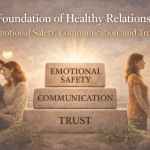

🕊️ 11. Practice Repair Attempts

After tension:

  • Offer a gentle touch
  • Say “I’m sorry”
  • Acknowledge misunderstanding

Quick repair attempts prevent emotional buildup.


✍️ 12. Be Clear About Your Needs

Many communication issues come from unexpressed expectations.

Say:

“I need reassurance.”
“I need time to think.”
“I need help with this.”

Clarity reduces frustration.


🚨 What Happens When Communication Improves?

Over time, you may notice:

  • Fewer escalated conflicts
  • More laughter
  • Greater emotional openness
  • Increased physical affection
  • Stronger teamwork

Improved communication creates emotional stability.

And emotional stability strengthens love.


🌙 Long-Term Communication Growth

Communication is not fixed.

It evolves with:

  • Life stress
  • Career changes
  • Family dynamics
  • Personal growth

The goal is not perfect communication.

The goal is continuous improvement.

Small changes practiced consistently create long-term transformation.


❓ Frequently Asked Questions (FAQ)

💬 What is the most important communication skill in relationships?

Active listening is often considered the most impactful skill because it makes the other person feel understood and valued.


💬 How can I communicate better during conflict?

Pause before responding, use “I” statements, and focus on solutions instead of blame.


💬 Can communication problems ruin a relationship?

Yes — unresolved communication patterns can create emotional distance over time. However, many issues improve significantly when communication skills are learned and practiced.


💬 How often should couples have meaningful conversations?

Weekly check-ins are highly recommended, but daily small conversations also strengthen connection.


💬 Is communication more important than compatibility?

Even compatible partners struggle without healthy communication. Skills often matter more than personality differences.


🌱 Final Thoughts

Improving communication in relationships does not require dramatic change.

It requires:

Presence.
Patience.
Practice.

When two people feel heard, respected, and emotionally safe, love becomes stronger — not because conflict disappears, but because it becomes manageable.

Communication is not about winning arguments.

It is about protecting connection. ❤️


📚 Authoritative Sources & References

American Psychological Association (APA)
Relationship communication and emotional health
https://www.apa.org/topics/relationships

The Gottman Institute
Evidence-based research on communication patterns and marital stability
https://www.gottman.com

Greater Good Science Center – UC Berkeley
Research on empathy, gratitude, and emotional intelligence
https://greatergood.berkeley.edu

Harvard Study of Adult Development
Long-term research on relationships and wellbeing
https://adultdevelopmentstudy.org

Journal of Marriage and Family
Peer-reviewed research on communication and relationship outcomes
https://onlinelibrary.wiley.com/journal/17413737


Recommended Articles:

Welcome – love a happy home

Building Emotional Intimacy Through Small Daily Moments

Couple sharing a quiet and meaningful moment at home, symbolizing building emotional intimacy through small daily moments

Building Emotional Intimacy Through Small Daily Moments 🤍

Emotional intimacy rarely appears through grand gestures.
More often, it grows quietly — in everyday conversations, shared glances, gentle check-ins, and the feeling of being emotionally safe with someone.

In a fast-moving world filled with distractions, nurturing emotional closeness requires intention. Yet the good news is this:

👉 Deep connection is usually built through small, repeated moments — not dramatic change.

Building emotional intimacy is not created through grand gestures, but through consistent small daily moments shared with presence and intention.

This guide explores simple, meaningful ways to strengthen emotional intimacy in daily life, helping relationships feel warmer, safer, and more resilient.


🌱 What Is Emotional Intimacy?

Emotional intimacy is the sense that you can be fully yourself with another person — without fear of judgment or rejection.

It includes:

  • Feeling heard
  • Feeling understood
  • Emotional safety
  • Mutual vulnerability
  • Trust that grows over time

Unlike surface-level interaction, emotional intimacy allows relationships to become a place of restoration rather than stress.

Research in relationship psychology consistently shows that emotional closeness is one of the strongest predictors of long-term relationship satisfaction.


🧠 Why Small Moments Matter More Than Big Ones

Many people assume intimacy requires dramatic conversations or perfectly planned quality time.

In reality, psychologists emphasize something different:

👉 Consistency beats intensity.

Tiny daily behaviors regulate the nervous system and signal safety to the brain.

Examples include:

  • Making eye contact while listening
  • Asking thoughtful follow-up questions
  • Offering a reassuring touch
  • Putting devices away during conversation

These moments may seem ordinary — but emotionally, they are powerful.

Over time, they create a relationship environment where both people feel secure.

If you want to deepen emotional safety within yourself as well, you may enjoy reading:

👉 How to Find Inner Balance in a Busy and Noisy World

Because inner calm often makes deeper connection possible.


🌸 7 Small Daily Moments That Build Emotional Intimacy

💬 1. Practice Fully Present Listening

Most people listen while preparing their response.

Emotionally intimate partners listen to understand.

Try this simple shift:

Instead of interrupting or advising immediately, pause and reflect back what you heard.

Example:

“That sounds really overwhelming. I can see why you’d feel that way.”

Feeling understood is one of the fastest ways to strengthen emotional closeness.


👀 2. Make Eye Contact During Conversations

Eye contact regulates emotional signaling between brains.

It communicates:

✔ presence
✔ care
✔ attentiveness

Even a few seconds can deepen a moment.

This is especially powerful after a long day when partners may feel mentally scattered.


🤍 3. Express Appreciation Often — Not Occasionally

Many relationships suffer not from conflict, but from unspoken appreciation.

Small acknowledgments matter:

  • “I appreciate you making dinner.”
  • “Thank you for checking on me.”
  • “I love how supportive you are.”

Gratitude reinforces emotional bonds and increases relationship satisfaction.


🕯️ 4. Create Tiny Rituals of Connection

Rituals reduce emotional unpredictability — something the brain deeply prefers.

Consider:

  • Morning coffee together
  • Evening check-ins
  • A short walk after dinner
  • Weekly unplugged time

These routines quietly communicate:

👉 “Our relationship is a priority.”

If you enjoy gentle relationship habits, you may also like:

👉 How to Communicate with Love and Understanding in Everyday Relationships
Strong communication is one of the foundations of intimacy.


🌿 5. Share Feelings Before They Become Distance

Emotional distance often begins with silence.

You don’t need dramatic vulnerability — just honest expression.

Example:

“I’ve been feeling a little overwhelmed lately. I don’t need solutions — just wanted to share.”

This invites closeness rather than misunderstanding.

Over time, emotional transparency becomes natural.


🧘‍♀️ 6. Regulate Yourself Before Difficult Conversations

Emotional intimacy cannot grow when conversations feel threatening.

Before addressing tension:

  • Take slow breaths
  • Relax your body
  • Speak calmly

Self-regulation protects the relationship from unnecessary emotional escalation.

Practices from emotional healing routines can support this skill:

👉 Emotional Healing: Simple Practices to Restore Inner Calm

Because calmer individuals create calmer relationships.


🏡 7. Protect Emotional Safety at Home

Home should feel like a place where emotions are allowed — not suppressed.

You can support emotional safety by:

  • Avoiding harsh criticism
  • Speaking respectfully during conflict
  • Allowing space for emotions
  • Repairing misunderstandings quickly

When emotional safety exists, intimacy grows naturally.

This environment is similar to what experts describe in:

👉 Simple Ways to Strengthen Family Relationships at Home

Many principles apply across all close relationships.


🚨 What Quietly Damages Emotional Intimacy

Awareness matters just as much as effort.

Common intimacy blockers include:

  • Constant distraction
  • Defensive communication
  • Emotional withdrawal
  • Chronic criticism
  • Avoiding meaningful conversations

None of these make someone a “bad partner.”
They simply signal areas where connection needs attention.

Remember:

👉 Intimacy is built — not found.


🌼 Signs Emotional Intimacy Is Growing

Often, the changes are subtle.

You may notice:

  • Conversations feel easier
  • Silence feels comfortable
  • Conflict becomes less threatening
  • Affection increases naturally
  • Both people feel emotionally safer

This is what healthy connection looks like.

Not perfect — but supportive.


🌙 Emotional Intimacy Is a Long-Term Practice

Every relationship moves through seasons.

Busy periods. Stressful transitions. Personal growth.

What matters is returning — again and again — to small moments of care.

You don’t need extraordinary relationship skills.

You only need consistent emotional presence.

Because in the end:

👉 Relationships rarely thrive on intensity.
They thrive on attention.


❓ Frequently Asked Questions (FAQ)

💬 What builds emotional intimacy the fastest?

Consistent emotional responsiveness — listening, validating feelings, and showing care — has the strongest long-term impact.


💬 Can emotional intimacy be rebuilt?

Yes. With openness, patience, and improved communication, many relationships grow even stronger after periods of distance.


💬 Is emotional intimacy more important than physical intimacy?

Both matter, but research shows emotional closeness often strengthens physical connection naturally.


💬 How long does it take to develop emotional intimacy?

There is no fixed timeline. Intimacy deepens through repeated safe interactions.


💬 What if vulnerability feels uncomfortable?

That’s normal. Start small. Emotional safety develops gradually.


🌱 Final Thoughts

Emotional intimacy is not created in dramatic moments.

It lives in the ordinary:

A kind tone.
A listening ear.
A shared laugh.
A gentle check-in.

When you treat small moments as meaningful, relationships begin to feel less fragile — and far more nourishing.

Connection doesn’t require perfection.

Only presence. 🤍


📚 Authoritative Sources & References

American Psychological Association (APA)
Relationship health, emotional connection, and communication
https://www.apa.org/topics/relationships

Greater Good Science Center – UC Berkeley
Research on empathy, gratitude, and social connection
https://greatergood.berkeley.edu

Gottman Institute
Evidence-based relationship science and emotional attunement
https://www.gottman.com

Harvard Study of Adult Development
Long-term research on relationships and wellbeing
https://adultdevelopmentstudy.org

Journal of Social and Personal Relationships
Peer-reviewed studies on intimacy and emotional bonding
https://journals.sagepub.com/home/spr


Recommended Articles:

Welcome – love a happy home