

This is my little online home where we celebrate life's real magic - the warm connections, simple self-care rituals, and those quiet moments that stay with you.
What I do here:
• Craft stories and tips to brighten your everyday
• Build a space where everyone feels welcome
• Make each visit worth your while - whether you need quick advice or food for thought
My superpowers? Turning ordinary moments into something special through words that actually mean something.
Off-screen, I'm probably:
☕ Curled up with a book that changes my perspective
🎨 Trying some new creative hobby
🌿 Noticing the small wonders we usually rush past
So glad you're here - let's make something meaningful together!
Table of Contents
Last Updated: October 12, 2026
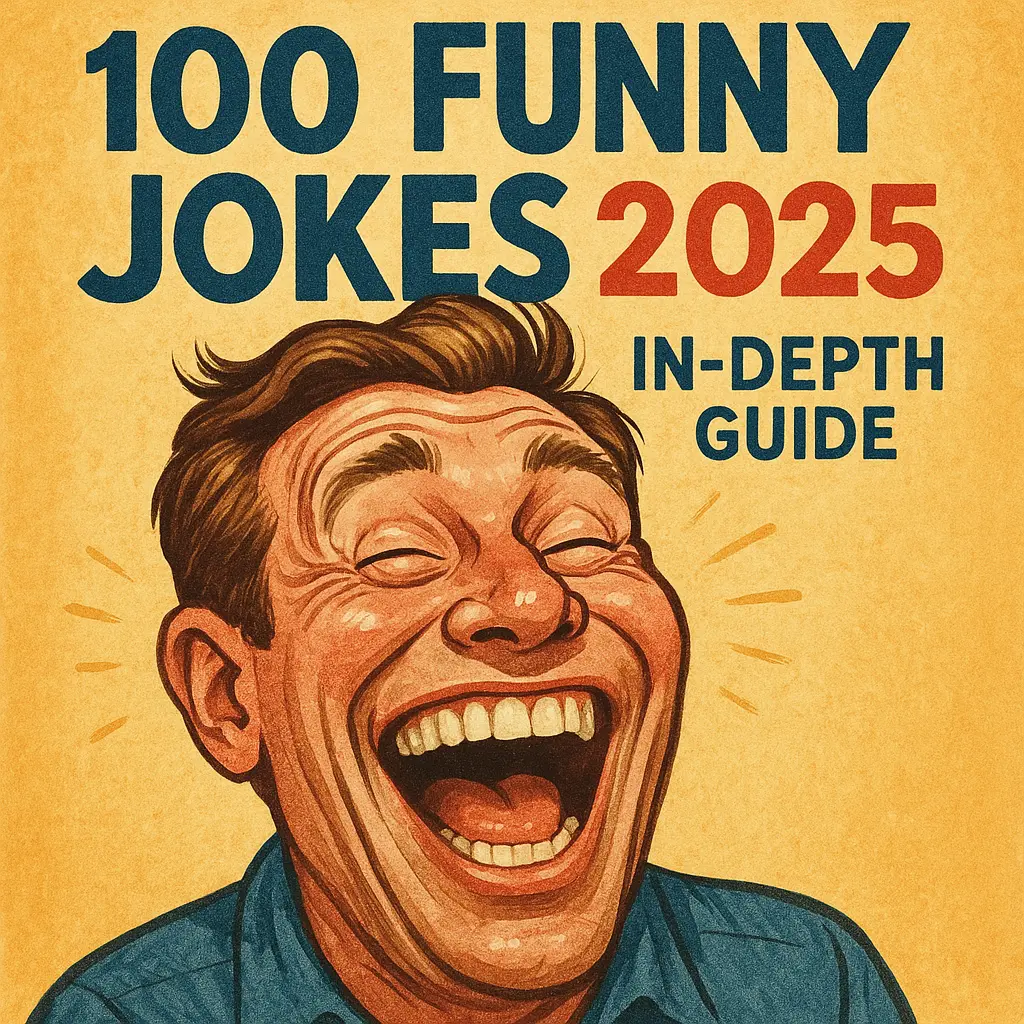
Sometimes, a little laughter is all it takes to make an ordinary day feel better. A clever one-liner can break the silence in a meeting, a silly pun can make a child giggle, and a familiar dad joke can turn an ordinary family dinner into a memorable moment.
This collection brings together 100 funny jokes for kids, adults, families, coworkers, parties, and social media. You will find clean jokes, clever wordplay, animal jokes, school humor, technology jokes, workplace one-liners, knock-knock jokes, and a few mildly sarcastic jokes for grown-ups.
Quick Answer: The best funny jokes are easy to understand, short enough to remember, and suited to the people hearing them. Start with clean puns or animal jokes for family settings, try workplace and technology jokes with coworkers, and use clever one-liners when you want a quick laugh. Delivery matters, too: pause before the punchline, keep a relaxed tone, and enjoy the joke rather than worrying about getting a big reaction.

Use this guide when you need a joke for a family gathering, a classroom, a casual conversation, a birthday card, or a quick social media post. The jokes are grouped by theme so you can find the right style without scrolling through a random list.
Quick Joke Finder: Which Type Should You Choose?
- For kids and families: Start with animal jokes, school jokes, and knock-knock jokes.
- For friends: Try puns, witty one-liners, and silly everyday observations.
- For coworkers: Use light workplace humor and technology jokes that do not target an individual.
- For parties: Choose short, easy-to-understand jokes that work without much explanation.
- For social media: Use a brief setup and a punchline that still makes sense without extra context.
- For adults who enjoy sarcasm: Try the mildly edgy section near the end.
What Makes a Joke Funny?
Humor is personal. One person may love a ridiculous pun, while another prefers a clever observation or a story with an unexpected ending. There is no universal formula that guarantees laughter, but several techniques can make jokes easier to understand and deliver.
1. Surprise
A joke often leads the listener toward one expectation and then changes direction. The punchline works because it introduces a different interpretation or an unexpected outcome.
2. Wordplay
Puns use words with multiple meanings or similar sounds. They can be delightfully silly, especially when the listener recognizes the second meaning immediately.
3. Relatable situations
Jokes about work, school, family routines, technology, and everyday mistakes can feel funny because the audience recognizes the situation.
4. Timing
A short pause before the punchline gives listeners time to follow the setup. Explaining the joke afterward usually weakens the effect, so let the punchline stand on its own.
5. A suitable audience
Good humor takes the audience into account. A joke that works among close friends may not be appropriate at work or in a classroom. When in doubt, choose something light that does not embarrass or target another person.
100 Funny Jokes to Make You Laugh
1. Clever and Witty One-Liners
These short jokes work well in casual conversations, text messages, and situations where you want a quick laugh without telling a long story.
- Why don’t secrets last long in a garden? Because the potatoes have eyes.
- I used to be addicted to soap. But I’m clean now.
- Why did the calendar get nervous? Its days were numbered.
- I tried to organize a hide-and-seek tournament. Good players are hard to find.
- Why did the bicycle fall over? It was two-tired.
- I wanted to be a professional baker. But I couldn’t make enough dough.
- Why did the elevator get promoted? It was always taking things to the next level.
- I told my suitcase there would be no vacation this year. Now I’m dealing with emotional baggage.
- Why don’t mountains get cold? They wear snowcaps.
- I started a business selling mirrors. I could really see myself succeeding.
2. Classic Dad Jokes
Dad jokes are famous for simple wordplay and punchlines that make people laugh, groan, or do both at once. Deliver these with a completely serious expression for the full effect.
- What do you call cheese that isn’t yours? Nacho cheese.
- Why don’t skeletons fight each other? They don’t have the guts.
- What do you call a fake noodle? An impasta.
- Why did the scarecrow win an award? He was outstanding in his field.
- What did one plate say to the other plate? Lunch is on me.
- Why did the golfer bring two pairs of pants? In case he got a hole in one.
- What do you call a sleeping bull? A bulldozer.
- Why couldn’t the leopard hide? Because he was always spotted.
- What kind of music do planets like? Neptunes.
- Why did the coffee file a police report? It got mugged.
3. Knock-Knock Jokes
Knock-knock jokes are interactive, making them particularly useful with children and groups. Pause after each question so the other person can respond.
- Knock, knock. Who’s there? Lettuce. Lettuce who? Lettuce in before we freeze out here!
- Knock, knock. Who’s there? Cow says. Cow says who? No, a cow says moo!
- Knock, knock. Who’s there? Boo. Boo who? Don’t cry—it’s only a joke!
- Knock, knock. Who’s there? Olive. Olive who? Olive you, and I hope you know it!
- Knock, knock. Who’s there? Tank. Tank who? You’re welcome!
- Knock, knock. Who’s there? Harry. Harry who? Harry up and open the door!
- Knock, knock. Who’s there? Atch. Atch who? Bless you!
- Knock, knock. Who’s there? Owls. Owls who? Yes, owls do say who!
- Knock, knock. Who’s there? A little old lady. A little old lady who? I didn’t know you could yodel!
- Knock, knock. Who’s there? Nobel. Nobel who? No bell, so I knocked!
4. Animal Jokes
Animals make excellent joke characters because they are familiar, expressive, and easy to imagine in ridiculous situations.
- What do you call an alligator in a vest? An investigator.
- What do you call a dog magician? A labracadabrador.
- Why do cows wear bells? Because their horns don’t work.
- What do you call a bear with no teeth? A gummy bear.
- What is a cat’s favorite color? Purr-ple.
- Why did the duck get a job? It was tired of just winging it.
- What do you call a fish wearing a bow tie? Sofishticated.
- Why are frogs so happy? They eat whatever bugs them.
- What do you call a sleeping dinosaur? A dino-snore.
- What is a spider’s favorite thing to do online? Surf the web.
5. School and Learning Jokes
These jokes are suitable for school-age children, teachers, parents, and anyone who remembers trying to finish homework before bedtime.
- Why was the math book sad? It had too many problems.
- Why did the student eat his homework? Because the teacher said it was a piece of cake.
- What did the pencil say to the paper? You’ve got a good point.
- Why was the music teacher locked out? She lost her keys.
- What is a math teacher’s favorite season? Sum-mer.
- Why did the student bring a ladder to school? Because he wanted to go to high school.
- Why was the geography book always calm? It knew its place in the world.
- What did the science book say to the math book? You’ve got too many problems, but I have solutions.
- Why did the teacher wear sunglasses? Because her students were so bright.
- Why did the student sit on his watch? He wanted to be on time.
6. Work and Office Jokes
Workplace humor is most effective when everyone can recognize the situation without feeling singled out. These jokes focus on meetings, deadlines, and the everyday absurdities of office life.
- Why did the employee bring a ladder to work? Because the company was looking for someone to take things to the next level.
- What is a meeting’s favorite exercise? Running overtime.
- My boss asked me to have a productive day. So I cleaned my desk and found a week’s worth of unfinished work.
- Why did the computer get a promotion? It had excellent processing skills.
- What is the office printer’s favorite hobby? Making copies of itself.
- Why did the calendar ask for a day off? It was fully booked.
- My coworker said he was great at multitasking. He managed to miss three deadlines at once.
- Why do office chairs make terrible secret agents? They always swivel around.
- What did the exhausted spreadsheet say? I’ve got too many tabs open.
- Why did the coffee machine become the office manager? Everyone depended on it to get things started.
7. Technology and Internet Jokes
Technology jokes play with passwords, software bugs, Wi-Fi, and the small frustrations of using digital devices. These work particularly well with friends who spend a lot of time online.
- Why do programmers prefer dark mode? Because light attracts bugs.
- Why did the computer go to therapy? It had too much emotional baggage in its cache.
- Why was the smartphone wearing glasses? It lost all its contacts.
- What do you call a computer that sings? A-Dell.
- Why did the Wi-Fi break up with the router? It needed more space.
- What did the computer say when it was hungry? Feed me some data.
- Why did the robot go on vacation? It needed to recharge.
- Why did the website go to school? It wanted to improve its spelling.
- What did the keyboard say to the computer? You’re just my type.
- Why did the phone go to bed early? It was running low on energy.
8. Food and Cooking Jokes
Food puns are easy to share because almost everyone recognizes the ingredients and situations. They are useful for lunch conversations, dinner parties, greeting cards, and playful captions.
- Why did the tomato turn red? Because it saw the salad dressing.
- What do you call a sad strawberry? A blueberry.
- Why did the cookie go to the doctor? It was feeling crumby.
- What did the grape say when it got stepped on? Nothing. It just let out a little wine.
- Why did the banana visit the doctor? It wasn’t peeling well.
- What kind of room has no doors or windows? A mushroom.
- Why did the bread break up with the butter? It felt spread too thin.
- What do you call cheese that tells jokes? Laughing cheese.
- Why did the orange stop halfway up the hill? It ran out of juice.
- What did the chef say to the impatient potato? Just hold your fries!
9. Everyday Life and Silly Situations
These jokes turn familiar routines into something ridiculous. They are useful when you want humor that does not rely on a particular hobby, job, or age group.
- Why did the man put his money in the freezer? He wanted cold, hard cash.
- Why did the alarm clock apply for a new job? It was tired of being watched all night.
- What did one wall say to the other wall? I’ll meet you at the corner.
- Why did the vacuum cleaner get promoted? It really knew how to pick things up.
- Why did the lamp get invited to every party? It knew how to brighten the mood.
- Why did the pillow go to school? It wanted to improve its headwork.
- Why was the broom late? It swept in at the last minute.
- What did the left shoe say to the right shoe? We’re a perfect pair.
- Why did the clock get kicked out of the library? It kept tocking.
- Why did the umbrella get a standing ovation? It always knew how to cover for people.
10. Light Sarcasm and Mildly Edgy Jokes
These jokes use irony and gentle sarcasm. They are intended for adults and older teens who enjoy this style, but they avoid graphic or cruel punchlines. Use your judgment when choosing jokes for a group.
- My doctor told me to watch what I eat. So now I eat in front of a mirror.
- I started a book about procrastination. I’ll finish it later.
- I tried to be more organized. Now I have a very neat pile of things I still need to do.
- My bed and I have a special relationship. We understand each other, but the alarm clock keeps getting involved.
- I asked my bank account if it needed anything. It said, “A little space from your shopping habits would help.”
- I made a to-do list for the weekend. It was a great list. We spent the whole weekend together.
- I have a talent for remembering embarrassing moments. Unfortunately, it only works at 2 a.m.
- I told myself to stop overthinking. Then I spent an hour wondering whether I was doing it correctly.
- My exercise plan is going well. I have successfully avoided every excuse I could think of by inventing new ones.
- I finally learned to live in the moment. Then I remembered I had forgotten to pay a bill.
How to Tell a Joke Without Making It Awkward
You do not need to be a comedian to make someone laugh. A little attention to timing, clarity, and context can help a simple joke land better.
Keep the setup simple
Give listeners only the information they need. A long explanation can make a short joke harder to follow.
Pause before the punchline
A brief pause helps the audience process the setup. Do not rush through the final words, but avoid stretching the pause so long that the joke becomes uncomfortable.
Use a natural delivery
You do not have to force a funny voice or exaggerated expression. A calm, straightforward delivery often works particularly well for dad jokes and dry humor.
Read the room
Choose humor that suits the setting. A family dinner, a work meeting, and a conversation with a close friend call for different levels of familiarity and sarcasm.
Do not explain every punchline
If someone does not laugh, let the moment pass. Explaining why a joke is funny rarely improves it. You can move on to another topic without making anyone feel uncomfortable.
Laugh with people, not at them
Humor is usually easier to enjoy when people feel included. Avoid jokes that rely on humiliating someone’s appearance, background, disability, private experiences, or personal struggles.
How to Write Your Own Funny Joke
Creating an original joke can be as simple as taking a familiar situation and giving it an unexpected ending. Try this three-step approach.
- Choose a familiar premise. Start with a phone, a pet, a meeting, a meal, or a common daily frustration.
- Create an expectation. Lead the listener toward an ordinary explanation or outcome.
- Change direction. Finish with a surprising interpretation, a pun, or a ridiculous consequence.
For example:
Setup: I decided to teach my houseplants about personal responsibility.
Expectation: I explained that everyone has to do their part.
Punchline: They just stood there and left all the growing to me.
This is a simple framework, not a guaranteed recipe for laughter. Try different endings and keep the version that feels natural and easy to understand.
Funny Jokes for Social Media and Text Messages
Short jokes can work well in captions, messages, and short videos, especially when the humor is understandable without extra context. If you plan to post a joke publicly, consider the audience and the format.
- For a text message: Choose a short joke and send it to someone who enjoys that style of humor.
- For a social caption: Use a concise punchline that relates to the image or situation.
- For a short video: Make the setup clear, pause briefly, and deliver the punchline in a natural way.
- For a group chat: Use light, inclusive humor rather than jokes that single out a member of the group.
- For a workplace post: Keep the content professional and avoid confidential information or jokes about colleagues.
There is no reliable guarantee that a particular joke, hashtag, or format will go viral. Audience response depends on context, timing, presentation, and many factors beyond the joke itself.
Frequently Asked Questions About Funny Jokes
What are the funniest jokes to tell friends?
Short puns, clever one-liners, and jokes about familiar everyday situations are good starting points. Choose a style your friends enjoy and avoid jokes that rely on embarrassing someone.
What are some clean jokes for kids?
Animal jokes, school jokes, food puns, and knock-knock jokes are usually good choices. Younger children may especially enjoy jokes with simple language, familiar characters, and a predictable format.
What is a dad joke?
A dad joke is generally a simple, often corny joke built around wordplay or an obvious punchline. It is usually delivered with a straight face, even when the joke is deliberately silly.
Why do people enjoy puns?
Puns create humor by connecting different meanings or similar sounds in a word or phrase. Some people enjoy the cleverness, while others enjoy how delightfully cheesy the result can be.
Are jokes appropriate at work?
They can be, provided the humor fits the environment and does not target or humiliate colleagues. Light jokes about meetings, deadlines, or technology are generally easier to adapt to professional settings than personal or edgy humor.
How can I remember jokes more easily?
Choose short jokes with a clear setup and punchline. Read them aloud, remember the key wording, and practice delivering them naturally rather than memorizing every detail of a long explanation.
Can laughter help people feel connected?
Shared laughter can be a positive social experience and may help people feel more at ease with one another. However, humor affects people differently, and it is not a substitute for addressing serious emotional or relationship concerns.
How do I write an original joke?
Start with a familiar situation, create an expectation, and then introduce an unexpected ending. Wordplay, irony, exaggeration, and surprising comparisons are useful techniques to experiment with.
Are these jokes ranked by popularity?
No. This is a curated collection organized by theme and audience. It is not a verified ranking based on social media engagement, survey results, or an independent humor study.
Can I use these jokes in my own content?
Basic joke formats and common wordplay are widely used, but individual written expressions may have copyright considerations. If you are publishing or monetizing content, avoid assuming that every joke or illustration found online is free to reuse. Create original material where possible and check applicable permissions.
Final Thoughts: A Little Humor Can Brighten an Ordinary Day
From classic dad jokes to clever one-liners, the best humor does not need to be complicated. A short pun, a silly animal joke, or a relatable observation can offer a welcome moment of lightness in an ordinary day.
Use this collection to start a conversation, entertain children, share a laugh with coworkers, or send a friend a message that makes them smile. If one joke falls flat, that is fine. Humor is personal, and not every punchline will work for every audience.
The goal is not to make everyone laugh every time. It is to create a small moment of enjoyment, connection, or surprise. Pick a favorite joke, share it with someone who might appreciate it, and let the moment be simple.
Authoritative Resources and Further Reading
- Mayo Clinic — General health information and articles about stress management and well-being. Consult individual articles for specific claims about laughter.
- American Psychological Association — Psychology resources on emotions, social relationships, and well-being.
- NHS Mental Health Resources — General information about mental well-being and ways to seek support.
- Library of Congress — Explore cultural history, historical publications, and archival material.
Editorial note: This article is intended for entertainment. The jokes are grouped by theme, not ranked using verified popularity statistics. Claims about the psychological or physical effects of laughter should be supported by appropriate research rather than inferred from the jokes themselves.
Related Articles
- 100 Best Good Jokes: Clean and Funny Ideas for Every Occasion
- 100 Best Funny Dad Jokes: Corny One-Liners for All Ages
Recommended Articles:
- Camping Essentials Ultimate Guide 2026(Keep up to date)

- What Is a Homemaker? A Modern Guide to Homemaking, Household Work & Family Life

- 100 Best Dad Jokes for Kids 2026 Ultimate Guide

- 100 Best Bad Dad Jokes 2026 Ultimate Guide

- Top 100 Best Christmas Movies 2025 In-Depth Guide

- 100 Talk Show Hosts 2025 In-Depth Guide

- 100 Best Funny Dad Jokes 2025 In-Depth Guide

- 100 Best Funny Games 2025 In-Depth Guide
- 100 Best Good Jokes 2025 In-Depth Guide

- Top 100 Party Entertainment Ideas 2025

- 100 Best Dad Jokes That Never Get Old 2025

- YouTube History Top 10 Funny Videos 2025 In-Depth

- 100 Funny Jokes That Are Clever, Clean, and Easy to Share

- 2025 100 Best Dad Jokes In-Depth Guide

- Can Dogs Eat Cat Food 2025 In-Depth Guide