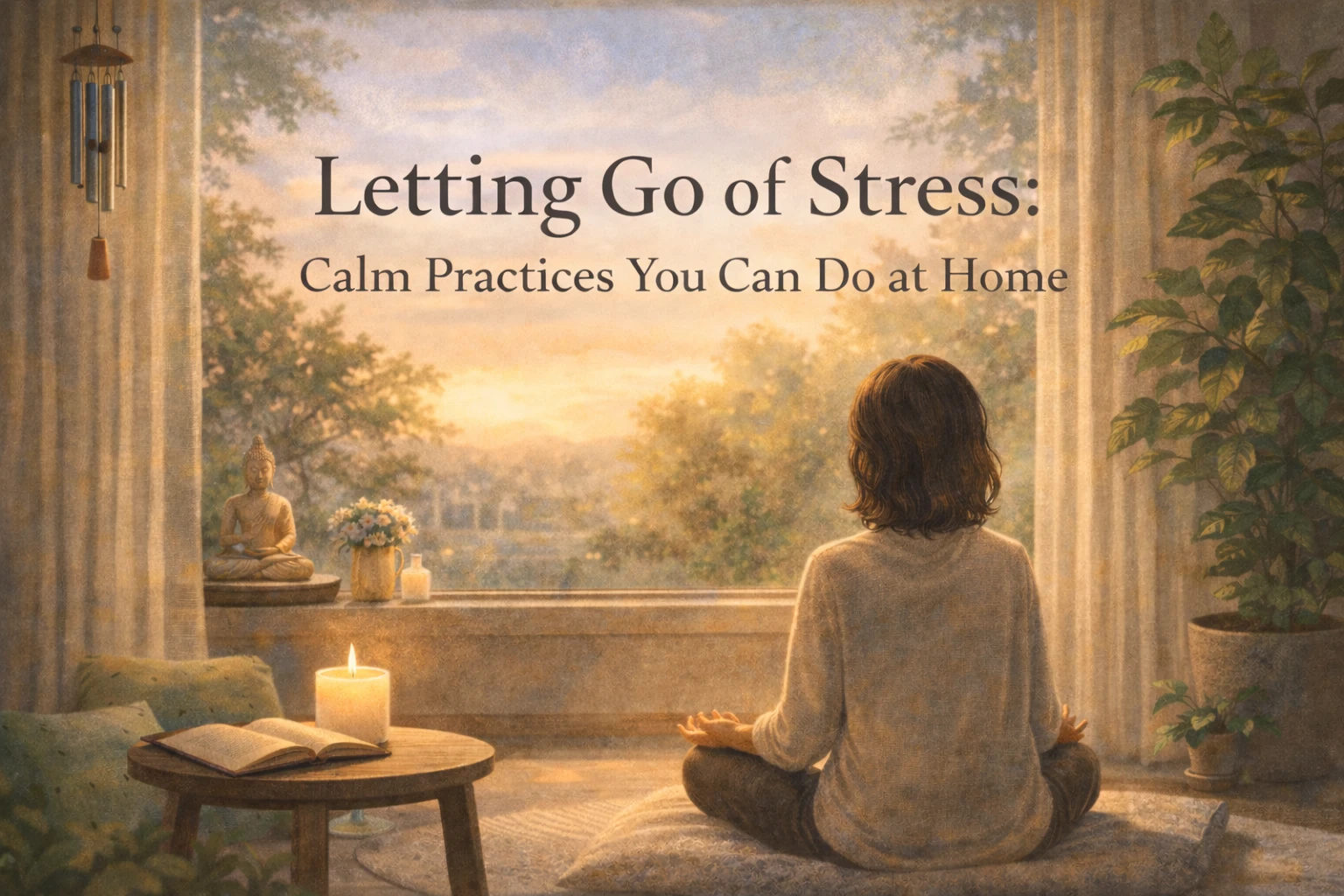
Letting Go of Stress: Calm Practices You Can Do at Home

Letting go of stress with calm practices at home – peaceful interior for emotional wellbeing
Creating small moments of calm at home can help release stress and restore emotional balance.

🌿 Letting Go of Stress: Calm Practices You Can Do at Home

Modern life rarely slows down on its own.

Between responsibilities, digital noise, emotional demands, and constant mental stimulation, stress can quietly become the background rhythm of everyday living. Many people adapt to this tension without realizing how deeply it affects their sleep, mood, relationships, and overall sense of wellbeing.

But here is something important to remember:

Stress is not meant to be carried forever.

The human nervous system is designed to move between activation and recovery. When we intentionally create moments of calm — especially at home — we help the body return to balance.

Letting go of stress is not about escaping life.
It is about learning how to soften within it. 🤍

This in-depth guide explores gentle, science-informed practices you can use at home to release emotional pressure, restore inner steadiness, and build a calmer daily experience.


🧠 Why Learning to Release Stress Is Essential for Emotional Health

Stress is more than a feeling — it is a full-body biological response.

When your brain perceives pressure or threat, it activates the sympathetic nervous system, releasing hormones like cortisol and adrenaline. This response is helpful in short bursts, but when stress becomes chronic, the body struggles to return to baseline.

Over time, prolonged stress may contribute to:

  • Mental fatigue
  • Irritability
  • Difficulty concentrating
  • Shallow sleep
  • Emotional reactivity
  • Persistent tension

Research consistently shows that supportive environments and calming routines help regulate the nervous system and improve emotional resilience.

Letting go of stress is not a luxury.

It is a form of self-protection.


🌱 The Misconception That Stress Relief Requires Big Life Changes

Many people assume they need dramatic solutions:

  • A long vacation
  • A new job
  • A complete lifestyle reset
  • Perfect morning routines

But emotional regulation rarely responds to intensity — it responds to consistency.

Small daily signals of safety teach the brain that it does not need to remain on high alert.

If you’ve explored
👉 Everyday Rituals That Support Emotional Wellbeing,
you already know that emotional stability is built through repeated, gentle habits rather than extreme transformations.

Stress release follows the same principle.


🏡 Why Home Is One of the Most Powerful Places to Reduce Stress

Your nervous system is always asking one silent question:

“Am I safe enough to relax?”

A thoughtfully supportive home answers that question without words.

Elements that encourage relaxation include:

  • Predictable rhythms
  • Comfortable lighting
  • Familiar sensory cues
  • Emotional safety
  • Reduced overstimulation

When these factors are present, the brain begins to shift out of survival mode.

This is why designing supportive spaces — as discussed in
👉 Creating Comfort at Home Through Thoughtful Daily Routines
plays such a crucial role in long-term emotional balance.

Comfort is not accidental.
It is created through intention.


🌸 Gentle Yet Powerful Practices to Let Go of Stress

You do not need complicated systems to begin feeling better.

Often, the most effective practices are also the simplest — because the nervous system responds best to clarity and repetition.


🌬️ 1. Use Breath to Signal Safety to Your Body

Breathing patterns directly influence the autonomic nervous system.

One particularly effective technique is the physiological sigh, which research suggests can reduce stress quickly.

Try this:

  1. Inhale slowly through your nose
  2. Take a second shorter inhale
  3. Exhale gently through your mouth

Repeat for one to three minutes.

Longer exhales activate the parasympathetic nervous system — the body’s natural calming mechanism.

Simple breathing is often the fastest bridge back to emotional steadiness.


🕯️ 2. Create a Daily “Transition Ritual”

One hidden cause of chronic stress is the absence of psychological boundaries between roles.

When work energy flows directly into evening life, the brain never fully powers down.

A transition ritual helps your body shift from doing → being.

Examples include:

  • Changing into comfortable clothes
  • Washing your hands or face
  • Lighting a candle
  • Making herbal tea
  • Playing soft music

These small acts communicate something powerful to your brain:

You are allowed to slow down now.

This gentle unwinding process closely supports
👉 Emotional Healing: Simple Practices to Restore Inner Calm,
because healing begins when the nervous system senses safety.


🌿 3. Reduce Visual and Sensory Overload

Your brain processes more environmental information than you consciously notice.

Clutter, harsh lighting, constant background noise — all of it keeps the mind subtly activated.

You do not need a perfectly minimalist home.

Instead, aim to reduce friction.

Start small:

  • Clear one surface
  • Soften one light source
  • Quiet one noisy corner
  • Create one calm area

Even minor environmental shifts can help your mental state settle.


🧘‍♀️ 4. Relearn the Skill of Doing Nothing

Modern culture often equates rest with laziness.

But emotionally healthy nervous systems require pauses.

Doing nothing is not wasted time — it is recovery.

Sit near a window.
Stretch slowly.
Watch the light change.
Breathe without agenda.

If stillness feels unfamiliar, you may find guidance in
👉 How to Find Inner Balance in a Busy and Noisy World,
which explores how calm can exist even when life remains full.

Stillness is not the absence of productivity.
It is the presence of regulation.


💛 5. Soften Your Inner Dialogue

External stress is only part of the equation.

Internal pressure often magnifies it.

Notice the tone of your thoughts. Are they supportive — or demanding?

Instead of saying:

  • “I should be handling this better.”
  • “Why am I so overwhelmed?”

Try:

  • “Today asked a lot of me.”
  • “It makes sense that I feel tired.”
  • “Rest is allowed.”

Self-talk shapes emotional physiology more than many people realize.

This compassionate approach is central to
👉 Self-Care at Home: Gentle Ways to Care for Your Mind and Heart,
where caring for yourself begins with how you speak to yourself.


🌙 6. Protect Your Evenings From Excess Stimulation

Many people unintentionally extend their stress late into the night through bright screens, intense media, and constant information.

Your brain interprets stimulation as a cue to stay alert.

Instead, consider creating a softer evening rhythm:

  • Dim the lights
  • Lower screen brightness
  • Avoid distressing news
  • Choose calming audio
  • Move more slowly

Better nights often create calmer mornings.


🌼 Subtle Signs You’re Successfully Letting Go of Stress

Progress is rarely dramatic — but it is noticeable.

You may observe:

  • Falling asleep more easily
  • Feeling less reactive
  • Recovering faster from difficult moments
  • Thinking more clearly
  • Experiencing longer stretches of calm

Stress relief tends to feel quiet.

But quiet change is still powerful change.


🌱 Letting Go Is Not a One-Time Decision — It Is a Practice

Stress will always be part of human life.

The goal is not elimination.

The goal is resilience — becoming someone who knows how to return to calm again and again.

Over time, your home can become associated with restoration rather than stimulation.

And once your nervous system trusts that safety exists somewhere, emotional balance becomes far more accessible.


❓ Frequently Asked Questions (FAQ)

💬 What is the fastest way to calm stress at home?

Slow breathing, stepping away from stimulation, and creating sensory calm are among the quickest methods for regulating the nervous system.


💬 Can small habits really reduce stress?

Yes. Research shows that predictable routines help lower baseline stress and improve emotional regulation.


💬 How long does it take to feel less stressed?

Some practices create immediate relief, while deeper nervous system changes develop gradually through repetition.


💬 Is all stress harmful?

Not necessarily. Short-term stress can be adaptive. Chronic, unresolved stress is what tends to impact long-term health.


💬 Do I need a perfectly peaceful home?

No. Emotional safety matters far more than aesthetic perfection.

A home feels calming when it supports your humanity — not when it looks flawless.


🌿 Final Thoughts

Letting go of stress is not about controlling every circumstance life brings.

It is about learning how to support yourself within those circumstances.

Through gentle routines, calming environments, and compassionate awareness, your home can become more than a place you live.

It can become a place that restores you. 🤍

And the more often your body experiences that restoration, the easier it becomes to access calm — even in a noisy world.


📚 Authoritative Sources & References

American Psychological Association (APA)
Stress effects and coping strategies
👉 https://www.apa.org/topics/stress

National Institute of Mental Health (NIMH)
Understanding stress and mental health
👉 https://www.nimh.nih.gov/health/topics/stress

Harvard Health Publishing
Mind-body approaches to stress management
👉 https://www.health.harvard.edu/mind-and-mood

Cleveland Clinic — Stress Management
Medical guidance on reducing stress
👉 https://my.clevelandclinic.org/health/articles/8133-stress-management

Greater Good Science Center – UC Berkeley
Science-based practices for emotional wellbeing
👉 https://greatergood.berkeley.edu


✅ Personalized Amazon Product Recommendations

DatingAdviceA1

The 5 Love Languages: The Secret to Love that Lasts
Click to visit Amazon


DatingAdviceA2

Attached: The New Science of Adult Attachment and How It Can Help You Find–and Keep–Love
Click to visit Amazon


DatingAdviceA3

BestSelf Relationship Deck – 150 Discussion Prompts to Create Real Conversations – Perfect Couples Games, Card Games for Adults, and Amazing Gifts for Wife

Click to visit Amazon


CustomHomeA4

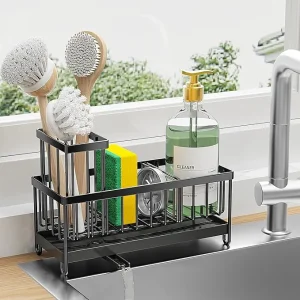
Electric Spin Scrubber, Cordless Cleaning Brush Scrubber for Home, 8 Replaceable Brush Heads-90Mins Work Time, 3 Adjustable Size, 2 Speeds for Bathroom Shower Bathtub Glass Car
Click to visit Amazon


CustomHomeA5

Cisily Black Sponge Holder for Kitchen Sink, Sink Caddy Organizer with High Brush Holder, Kitchen Countertop Organizers and Storage Essentials, Rustproof 304 Stainless Steel, Soap Dispenser Organize

Click to visit Amazon


Recommended Articles:

Welcome – love a happy home

Everyday Rituals That Support Emotional Wellbeing

Everyday rituals that support emotional wellbeing — calm morning routine by a peaceful lake

Everyday Rituals That Support Emotional Wellbeing 🌿

Simple Daily Practices That Help You Feel Calmer, Safer, and More Emotionally Balanced

Emotional wellbeing is rarely the result of one big life change.

More often, it is shaped quietly — through the small things you do every day.

The way you wake up.
The pauses you allow.
The kindness you show yourself.
The safety you create at home.

In a fast-moving world filled with constant stimulation, everyday rituals offer something deeply restorative: predictability.

And predictability tells the nervous system:

You are safe.
You can slow down.
You can breathe.

This guide explores gentle, research-supported rituals that help regulate emotions, reduce stress, and cultivate inner steadiness — without requiring perfection, complicated routines, or major lifestyle changes. 🤍

Because emotional wellbeing is not something you chase.

It is something you practice.


🌱 What Are Everyday Rituals?

Everyday rituals are small, intentional actions performed with awareness and care. Unlike productivity habits, rituals focus less on achievement and more on emotional experience.

They create rhythm in your day — and rhythm creates psychological safety.

Examples include:

  • Opening the curtains each morning
  • Drinking tea slowly
  • Taking a quiet breath before switching tasks
  • Dimming lights in the evening
  • Writing down lingering thoughts

These moments may appear ordinary, yet their emotional impact is profound.

Research in behavioral psychology suggests that predictable routines help regulate the stress response system, making it easier for the brain to move out of survival mode.

Over time, calm becomes more familiar — and familiarity reduces anxiety.

If you’re beginning a deeper emotional reset, you may also benefit from reading
👉 Emotional Healing: Simple Practices to Restore Inner Calm, which explores how emotional recovery starts with safety rather than self-pressure.


🧠 Why Rituals Are Powerful for Emotional Health

Your brain constantly scans for cues of danger or safety — a process known as neuroception.

When life feels chaotic, the brain stays alert.

But small, repeated rituals send a different signal:

Nothing is threatening right now.

This allows your nervous system to downshift.

Daily rituals can help:

✅ Lower baseline stress
✅ Improve emotional regulation
✅ Reduce reactivity
✅ Support clearer thinking
✅ Encourage self-trust
✅ Improve sleep quality

Most importantly, rituals shift emotional care from something occasional into something lived.

Not dramatic.
Not overwhelming.
Just steady.


🌸 Start Small — Because Small Is Sustainable

One of the biggest misconceptions about emotional wellbeing is that it requires major change.

It doesn’t.

The nervous system responds more strongly to consistency than intensity.

A single slow breath practiced daily is more regulating than an occasional weekend reset.

Instead of redesigning your life overnight, focus on gentle repetition.

Small rituals become emotional anchors — especially during uncertain seasons.

If your life currently feels overstimulating, consider exploring
👉 How to Find Inner Balance in a Busy and Noisy World, where practical strategies help you regain steadiness without withdrawing from life.


🌞 Morning Rituals That Set an Emotional Tone

Your morning does more than start your schedule — it establishes your emotional baseline.

A rushed beginning trains the brain toward vigilance.

A gentle beginning encourages regulation.


☀️ 1. Wake Without Immediate Input

Before reaching for your phone, allow your mind to arrive.

Try:

  • Taking one deep breath
  • Stretching slowly
  • Noticing natural light
  • Sitting up gradually

This brief transition reduces the cortisol spike linked to sudden stimulation.

Think of it as emotional buffering.


🌿 2. Let Natural Light Guide Your Brain Awake

Morning light plays a crucial role in regulating circadian rhythms and serotonin production.

Whenever possible:

  • Open curtains early
  • Step outside for a minute
  • Sit near a window

Light is one of the simplest emotional regulators available — and one many people overlook.


🧘‍♀️ 3. Practice a 60-Second Emotional Check-In

Ask gently:

How am I arriving today?

You don’t need solutions.

Awareness alone reduces emotional suppression, which research links to increased stress.

Naming feelings helps the brain organize them — making them less overwhelming.


🏡 Midday Rituals That Prevent Emotional Build-Up

Emotional exhaustion often isn’t caused by one big stressor.

It’s caused by unreleased micro-stress accumulating throughout the day.

Small resets prevent overload.


🌬️ 4. Insert Micro-Pauses Between Tasks

Instead of rushing forward, pause for 10–20 seconds.

Relax your jaw.
Drop your shoulders.
Exhale longer than you inhale.

These brief moments regulate the autonomic nervous system more than you might expect.

If your environment feels overstimulating, you may find guidance in
👉 How to Create a Peaceful Home Environment That Feels Calm and Safe.

Your surroundings shape your emotional state — often quietly.


🍵 5. Turn an Ordinary Activity Into a Ritual

Choose something you already do daily:

  • Brewing coffee
  • Washing dishes
  • Preparing lunch
  • Watering plants

Now slow it slightly.

Notice textures.
Temperatures.
Movement.

Presence transforms routine into restoration.


💛 6. Practice Supportive Self-Talk

Your inner voice becomes the emotional climate you live inside.

Try shifting from criticism to support:

Instead of:
I should be handling this better.

Try:
This is a lot. It makes sense I feel stretched.

Gentle internal language creates psychological safety.

For deeper guidance, explore
👉 Self-Care at Home: Gentle Ways to Care for Your Mind and Heart.


🌙 Evening Rituals That Help the Mind Release the Day

Many people attempt sleep without first allowing their brain to decompress.

But the nervous system needs a bridge from alertness to rest.

Evening rituals provide that bridge.


🕯️ 7. Dim the Lights and Soften the Atmosphere

Bright lighting signals alertness.

Softer lighting encourages melatonin production and emotional unwinding.

Your home does not need perfection — only gentleness.

If you’re building a calmer lifestyle overall,
👉 Simple Living Ideas for a Cozy and Joyful Home offers deeper inspiration.


✍️ 8. Externalize Lingering Thoughts

Before bed, write down:

  • What felt heavy
  • What can wait
  • What went well

This reduces rumination — one of the biggest disruptors of emotional recovery.

You don’t need polished journaling.

Just honesty.


🌌 9. Create a Predictable Wind-Down Cue

Consistency conditions the brain for rest.

Examples:

  • Herbal tea
  • Gentle stretching
  • Soft music
  • Reading

Eventually, your body begins calming automatically when the ritual begins.

This is emotional conditioning at work.

Quiet — yet powerful.


🌼 Signs Your Emotional Wellbeing Is Strengthening

Progress is often subtle, but meaningful.

You may notice:

  • Faster recovery from stress
  • Fewer emotional spikes
  • Greater patience
  • Improved sleep
  • Feeling safer at home
  • Less inner urgency

These shifts indicate nervous system regulation — the true foundation of emotional health.


⚠️ What Rituals Are NOT

Let’s remove unnecessary pressure.

Rituals are not:

❌ rigid schedules
❌ productivity hacks
❌ aesthetic performances
❌ proof of discipline

They are acts of self-support.

Nothing more is required.


🌱 Emotional Wellbeing Is Built Through Return — Not Perfection

You will skip days.

Life will interrupt.

That is not failure.

Emotional resilience is strengthened each time you gently return.

Start with one ritual.

Let it become familiar.

Then let familiarity become safety.

Over time, your daily life itself begins to feel more supportive.

And that changes everything.


❓ Frequently Asked Questions (FAQ)

💬 What are everyday rituals for emotional wellbeing?

They are small, consistent practices that help regulate emotions, reduce stress, and create a sense of psychological safety.

💬 How long does it take to feel the benefits?

Many people notice subtle emotional shifts within a few weeks when rituals are practiced consistently.

💬 Do rituals need to happen at the same time daily?

Predictability helps, but gentleness matters more than precision.

💬 Can small rituals really reduce anxiety?

Yes. Research shows predictable behaviors increase perceived control, lowering stress responses.

💬 What if I forget or miss a day?

Nothing is lost. Emotional wellbeing grows through repetition — not perfection.


🌸 Final Thoughts

Emotional wellbeing is not reserved for slower seasons of life.

It is something you can nurture — even on busy days.

Through small rituals, compassionate awareness, and supportive environments, your everyday life can become a place where calm feels possible again.

You don’t need to change everything.

Just begin with one quiet moment.

And return to it tomorrow. 🤍


📚 Authoritative Sources & References

American Psychological Association (APA)
Stress, resilience, and emotional health
🔗 https://www.apa.org/topics/stress

National Institute of Mental Health (NIMH)
Mental health and emotional regulation
🔗 https://www.nimh.nih.gov/health

Greater Good Science Center — UC Berkeley
Research on mindfulness and emotional wellbeing
🔗 https://greatergood.berkeley.edu

Harvard Health Publishing
Daily habits that support psychological health
🔗 https://www.health.harvard.edu/mind-and-mood

Journal of Environmental Psychology
Environmental predictability and stress reduction
🔗 https://www.journals.elsevier.com/journal-of-environmental-psychology

Frontiers in Psychology
Habit formation and emotional regulation
🔗 https://www.frontiersin.org/journals/psychology


✅ Personalized Amazon Product Recommendations

DatingAdviceA1

The 5 Love Languages: The Secret to Love that Lasts

Click to visit Amazon


DatingAdviceA2

Attached: The New Science of Adult Attachment and How It Can Help You Find–and Keep–Love

Click to visit Amazon


DatingAdviceA3

BestSelf Relationship Deck – 150 Discussion Prompts to Create Real Conversations – Perfect Couples Games, Card Games for Adults, and Amazing Gifts for Wife

Click to visit Amazon


CustomHomeA4

Electric Spin Scrubber, Cordless Cleaning Brush Scrubber for Home, 8 Replaceable Brush Heads-90Mins Work Time, 3 Adjustable Size, 2 Speeds for Bathroom Shower Bathtub Glass Car

Click to visit Amazon


CustomHomeA5

Cisily Black Sponge Holder for Kitchen Sink, Sink Caddy Organizer with High Brush Holder, Kitchen Countertop Organizers and Storage Essentials, Rustproof 304 Stainless Steel, Soap Dispenser Organize

Click to visit Amazon


Recommended Articles:

Welcome – love a happy home

How to Find Inner Balance in a Busy and Noisy World

How to find inner balance in a busy and noisy world — peaceful indoor moment overlooking a city

How to Find Inner Balance in a Busy and Noisy World 🌿

In today’s fast-paced world, it’s easy to feel pulled in a hundred directions at once. Between work, family, social obligations, and the constant hum of digital devices, our minds can feel overstimulated and scattered. Finding inner balance isn’t about escaping life — it’s about learning to navigate it with calm, intention, and emotional clarity. 🤍

This guide explores practical strategies, gentle habits, and mindful routines to help you restore balance in your everyday life, even amid the chaos.


🌱 What Inner Balance Really Means

Inner balance is a state where your mind, body, and emotions feel aligned. It doesn’t mean perfection or total control — it means:

  • Emotional awareness: Understanding what you feel and why
  • Mental clarity: Being able to focus without mental clutter
  • Physical calm: Feeling grounded and rested
  • Spiritual or emotional alignment: Being connected to your values and priorities

Inner balance allows you to respond rather than react, find peace in small moments, and approach challenges with steadiness.

💡 Tip: Many people begin cultivating balance by integrating self-care at home routines into their daily life. Learn more here.


🧠 Why Finding Balance Matters

Living in a noisy, busy environment without balance can lead to:

  • Stress and anxiety
  • Emotional overwhelm
  • Difficulty focusing or sleeping
  • Strained relationships

Research shows that consistent self-care, emotional awareness, and supportive home routines improve mental health and resilience. (APA, NIMH)

Inner balance isn’t a luxury — it’s a foundation for thriving, not just surviving.


🌸 Simple Practices to Restore Balance

You don’t need drastic changes. Small, repeatable habits are often more effective than major life overhauls.


🧘‍♀️ 1. Daily Emotional Check-Ins

Pause a few times each day and ask:

  • How am I feeling right now?
  • What thoughts or emotions are taking up space?

Acknowledge feelings without judgment. This practice strengthens emotional regulation and self-awareness.

💡 Internal Link: Pair this with emotional healing practices to restore calm and resilience. Read more here.


🌿 2. Create Predictable Daily Routines

Consistency signals safety to your nervous system:

  • Morning rituals: Stretch, drink tea, set intentions
  • Evening wind-down: Journaling, gentle lighting, calm music
  • Scheduled breaks: Step away from screens or social media

Routine helps your mind and body anticipate calm periods, reducing overall stress.


🕯️ 3. Design a Supportive Home Environment

Your environment greatly impacts inner balance:

  • Reduce visual and mental clutter
  • Use warm, soft lighting
  • Incorporate natural elements like plants or wood
  • Create cozy spaces for rest

A balanced home complements your inner calm. Check Creating Comfort at Home for practical tips. Explore here.


🌬️ 4. Practice Mindful Breathing and Meditation

Simple breathing techniques can reset your nervous system:

  • Inhale gently for 4 seconds
  • Exhale slowly for 6–8 seconds
  • Repeat for 2–5 minutes

Combine with guided meditation or mindful observation to deepen focus and reduce mental noise.


✍️ 5. Gentle Journaling

Writing thoughts and emotions allows for reflection without judgment:

  • Note feelings of overwhelm
  • Identify patterns in stress triggers
  • Record small wins and gratitude moments

💡 Journaling naturally pairs with self-care at home routines to create structure and emotional awareness. Learn more.


🌙 6. Limit Digital Noise

Constant notifications and social media can disrupt balance:

  • Schedule phone-free periods
  • Mute non-essential notifications
  • Create a calming evening routine away from screens

Even small boundaries create a mental sanctuary.


💛 7. Cultivate Mindful Connections

Relationships can be nourishing or draining. To maintain balance:

  • Engage in meaningful conversations
  • Set gentle emotional boundaries
  • Prioritize quality over quantity in social interactions

🌼 Small Signs That Balance Is Working

  • Feeling calmer amid daily tasks
  • Improved focus and productivity
  • Better sleep and less fatigue
  • Less reactivity to stressful events
  • Greater emotional clarity

❓ Frequently Asked Questions (FAQ)

💬 How long does it take to find inner balance?
There’s no fixed timeline. Small daily practices accumulate over weeks and months to create lasting calm.

💬 Can inner balance be achieved without therapy?
Yes. While therapy is helpful, emotional healing and self-care routines at home can foster significant balance.

💬 How do I start if I’m constantly busy?
Start with 5–10 minutes of any daily practice, such as mindful breathing, journaling, or a calm evening ritual.

💬 Is inner balance the same as happiness?
Not exactly. Balance is about steadiness and presence, while happiness is an emotion that fluctuates naturally.

💬 Can my home environment really affect my balance?
Absolutely. A supportive, decluttered, and nurturing home environment helps your mind settle and strengthens emotional resilience.


🌱 Final Thoughts

Inner balance is about returning to yourself amidst life’s noise. By combining:

  • Gentle emotional awareness
  • Mindful routines
  • Supportive home environment

…you create a foundation of calm that lasts. Remember, it’s not about perfection — it’s about steady, compassionate steps. 🤍

Internal Links Recap:


📚 Authoritative Sources & References


✅ Personalized Amazon Product Recommendations

DatingAdviceA1

The 5 Love Languages: The Secret to Love that Lasts

Click to visit Amazon


DatingAdviceA2

Attached: The New Science of Adult Attachment and How It Can Help You Find–and Keep–Love

Click to visit Amazon


DatingAdviceA3

BestSelf Relationship Deck – 150 Discussion Prompts to Create Real Conversations – Perfect Couples Games, Card Games for Adults, and Amazing Gifts for Wife

Click to visit Amazon


CustomHomeA4

Electric Spin Scrubber, Cordless Cleaning Brush Scrubber for Home, 8 Replaceable Brush Heads-90Mins Work Time, 3 Adjustable Size, 2 Speeds for Bathroom Shower Bathtub Glass Car

Click to visit Amazon


CustomHomeA5

Cisily Black Sponge Holder for Kitchen Sink, Sink Caddy Organizer with High Brush Holder, Kitchen Countertop Organizers and Storage Essentials, Rustproof 304 Stainless Steel, Soap Dispenser Organize

Click to visit Amazon


Recommended Articles:

Welcome – love a happy home

Self-Care at Home: Gentle Ways to Care for Your Mind and Heart

Self-CareAtHomeA1
Self-CareAtHomeA1

Self-Care at Home: Gentle Ways to Care for Your Mind and Heart 🤍

Self-care doesn’t have to be expensive, time-consuming, or perfect.
Often, the most meaningful care begins quietly — right at home.

Self-care at home is about creating small moments of gentleness that support your mind and heart through everyday life. It’s not about doing more. It’s about caring better. 🌿

Gentle self-care at home often begins with emotional healing practices that help you process feelings and begin restoring inner calm in a safe, supportive way.

This guide explores simple, nurturing ways to practice self-care at home, helping you feel calmer, more supported, and more connected to yourself.


🌱 What Self-Care at Home Really Means

Self-care at home is not a checklist or productivity hack.
It’s the practice of responding to your needs with kindness.

This kind of care is closely connected to gentle emotional healing, especially when stress or emotional fatigue has built up over time.

True self-care includes:

  • Emotional awareness
  • Mental rest
  • Gentle routines
  • A supportive environment

It’s less about fixing yourself — and more about being on your own side.


🧠 Why Home Is the Best Place for Self-Care

Your home is where your nervous system spends the most time.

A calm, supportive home environment can:

  • Lower stress levels
  • Improve emotional regulation
  • Support better sleep
  • Encourage self-reflection and rest

Research in psychology shows that familiar, predictable environments help the mind feel safer — making emotional care easier and more natural. 🏡


🌸 Gentle Self-Care Practices for the Mind

Mental self-care doesn’t require constant positivity.
It starts with creating space.

🧘‍♀️ 1. Allow Quiet Moments Without Stimulation

Constant noise keeps the mind tense.

Try:

  • Sitting quietly for a few minutes
  • Turning off background media
  • Letting your thoughts slow naturally

Silence can feel uncomfortable at first — but it’s often where calm begins.


✍️ 2. Practice Gentle Emotional Awareness

Once a day, ask:

  • What am I carrying today?

Write it down or simply acknowledge it mentally.
No problem-solving required.

Being heard — even by yourself — is deeply regulating.

Practices like this are often part of broader emotional healing practices that support long-term emotional balance.


🌬️ 3. Use Breath as Emotional Support

Slow breathing sends a safety signal to the brain.

A simple rhythm:

  • Inhale gently for 4
  • Exhale slowly for 6

Just a few rounds can ease emotional tension.


💛 Gentle Self-Care Practices for the Heart

Caring for your heart means honoring your emotional needs.

🕯️ 4. Create Emotional Comfort Rituals

Small rituals can feel deeply comforting:

  • Lighting a candle in the evening
  • Drinking a warm beverage slowly
  • Playing soft music before bed

These moments remind your heart that it’s allowed to rest.


🤍 5. Speak to Yourself With Kindness

Notice how you talk to yourself at home.

Try replacing harsh thoughts with:

  • I’m doing my best today.
  • It’s okay to move slowly.
  • I don’t have to earn rest.

Kind self-talk is one of the most powerful forms of self-care.


🌱 6. Set Gentle Emotional Boundaries

Self-care also means knowing when to pause.

At home, this can look like:

  • Saying no to unnecessary demands
  • Allowing yourself quiet time
  • Limiting emotional overload

Boundaries protect your energy — they don’t diminish your care for others.


🏡 Creating a Home That Supports Self-Care

Your environment can either support or drain you.

Supportive home self-care includes:

  • Soft lighting instead of harsh glare
  • Reduced clutter in resting areas
  • Comfortable, familiar spaces
  • A sense of emotional safety

A nurturing home doesn’t need to be perfect — it needs to feel kind.

Creating this kind of environment also supports restoring inner calm, especially when emotional stress has been present for a long time.


🌙 Self-Care Is a Daily Relationship, Not a One-Time Act

Some days you’ll feel balanced.
Other days you’ll feel tired again.

That’s normal.

Self-care works best when it’s:

  • Gentle
  • Consistent
  • Forgiving

Caring for your mind and heart is an ongoing conversation — not a task to complete.


🌼 Small Signs Your Self-Care Is Working

You may notice:

  • More emotional steadiness
  • Feeling calmer at home
  • Improved sleep quality
  • Less self-criticism
  • Greater emotional clarity

These changes are subtle — but meaningful.


❓ Frequently Asked Questions (FAQ)

💬 What is self-care at home?

Self-care at home involves gentle daily practices that support emotional, mental, and physical wellbeing within your own living space.


💬 Do I need a strict routine for self-care?

No. Flexible, supportive habits are more effective than rigid schedules.


💬 Is self-care selfish?

No. Self-care helps you maintain emotional balance, which improves your ability to care for others.


💬 Can self-care really reduce stress?

Yes. Research shows that calm environments, emotional awareness, and restorative routines help regulate stress.


💬 What if I don’t have much time?

Self-care doesn’t require extra time — it often means changing how you use the time you already have.


🌱 Final Thoughts

Self-care at home is not about becoming someone new.
It’s about gently supporting who you already are.

Through small rituals, emotional awareness, and kindness toward yourself, your home can become a place where your mind feels calmer and your heart feels held. 🤍

You deserve care — especially from yourself.


📚 Authoritative Sources & References

American Psychological Association (APA)
Stress management, emotional wellbeing, and self-care
🔗 https://www.apa.org/topics/stress

National Institute of Mental Health (NIMH)
Mental health, self-care, and emotional balance
🔗 https://www.nimh.nih.gov/health/topics/caring-for-your-mental-health

Greater Good Science Center – UC Berkeley
Science-based research on emotional wellbeing and self-compassion
🔗 https://greatergood.berkeley.edu

Psychology Today – Self-Care
Psychological perspectives on emotional self-care
🔗 https://www.psychologytoday.com/us/basics/self-care

Journal of Behavioral Medicine
Research on daily habits, stress reduction, and emotional health
🔗 https://link.springer.com/journal/10865


✅ Personalized Amazon Product Recommendations

DatingAdviceA1

The 5 Love Languages: The Secret to Love that Lasts

Click to visit Amazon


DatingAdviceA2

Attached: The New Science of Adult Attachment and How It Can Help You Find–and Keep–Love

Click to visit Amazon


DatingAdviceA3

BestSelf Relationship Deck – 150 Discussion Prompts to Create Real Conversations – Perfect Couples Games, Card Games for Adults, and Amazing Gifts for Wife

Click to visit Amazon


CustomHomeA4

Electric Spin Scrubber, Cordless Cleaning Brush Scrubber for Home, 8 Replaceable Brush Heads-90Mins Work Time, 3 Adjustable Size, 2 Speeds for Bathroom Shower Bathtub Glass Car

Click to visit Amazon


CustomHomeA5

Cisily Black Sponge Holder for Kitchen Sink, Sink Caddy Organizer with High Brush Holder, Kitchen Countertop Organizers and Storage Essentials, Rustproof 304 Stainless Steel, Soap Dispenser Organize

Click to visit Amazon


Recommended Articles:

Welcome – love a happy home

Emotional Healing: Simple Practices to Restore Inner Calm

EmotionalHealingInnerCalmA1

Emotional Healing: Simple Practices to Restore Inner Calm 🌿

Emotional healing is not about fixing yourself.
It’s about gently returning to a state of balance, safety, and inner calm.

In a world that constantly asks us to move faster, do more, and feel less, emotional healing invites us to slow down, listen inward, and reconnect with what truly matters. 🤍

This guide explores simple, everyday practices that help restore emotional calm — without pressure, perfection, or complicated routines.

Many of these practices can be integrated into self-care at home routines, helping you nurture your mind and heart gently every day.


🌱 What Is Emotional Healing?

Emotional healing is the process of acknowledging, understanding, and gently releasing emotional tension that builds up through daily life.

It doesn’t require:

  • Reliving painful memories
  • Constant self-analysis
  • “Positive thinking” your feelings away

Instead, emotional healing happens when you create space, safety, and consistency for your emotions to settle naturally.

Healing is often quiet.
And that’s exactly why it works.


🧠 Why Inner Calm Matters More Than We Think

When emotional stress remains unresolved, it can show up as:

  • Constant mental noise
  • Emotional exhaustion
  • Difficulty relaxing
  • Feeling disconnected from yourself or others

Research in psychology shows that emotional regulation and calm environments support:

  • Better sleep
  • Lower stress levels
  • Improved relationships
  • Greater emotional resilience

Inner calm isn’t a luxury — it’s a foundation. 🌿


🌸 Simple Practices That Support Emotional Healing

You don’t need to change your entire life to begin healing.
Small, repeated actions are far more powerful than dramatic changes.

🧘‍♀️ 1. Create Gentle Emotional Check-Ins

Once or twice a day, pause and ask:

  • How am I feeling right now — really?

No fixing. No judging. Just noticing.

This simple act builds emotional awareness and reduces suppressed stress over time.


🌿 2. Build Predictable, Comforting Routines

Emotional safety grows through consistency.

Simple routines like:

  • A calm morning start
  • An evening wind-down ritual
  • Drinking tea at the same time each day

signal to your nervous system that you are safe.

Consistency is calming — even when life isn’t.


🕯️ 3. Create a Calm Physical Environment

Your surroundings deeply influence emotional healing.

Support inner calm by:

  • Reducing visual clutter
  • Using warm, soft lighting
  • Adding natural elements like plants or wood

A peaceful environment helps your emotions settle without effort.


🌬️ 4. Practice Slow, Intentional Breathing

You don’t need complex breathing techniques.

Try this:

  • Inhale slowly through your nose for 4 seconds
  • Exhale gently for 6 seconds

A longer exhale activates the body’s natural calming response.

Just a few minutes can reset your emotional state.


✍️ 5. Release Emotions Through Gentle Expression

Emotional healing doesn’t require explanation — it requires expression.

Simple options include:

These methods often overlap with daily self-care at home practices, where consistent gentle routines support emotional processing.

  • Writing freely without structure
  • Talking aloud when alone
  • Creative outlets like drawing or music

Expression allows emotions to move instead of staying trapped.


🌙 Emotional Healing Is Not Linear

Some days will feel lighter.
Others may feel heavy again.

This doesn’t mean you’re failing.

Healing often looks like:

  • Progress
  • Pause
  • Re-adjustment
  • Gentle return

Self-compassion is part of the healing process.


💛 Emotional Healing at Home

Your home can either support healing or quietly drain you.

A healing-friendly home includes:

  • Emotional safety
  • Gentle routines
  • Permission to rest
  • Space to feel without judgment

Healing doesn’t always happen in therapy rooms.

Integrating self-care at home routines into your living space can make emotional healing more natural and sustainable.
Often, it happens in everyday life — right where you are. 🏡


🌼 Small Signs That Emotional Healing Is Working

You may notice:

  • Feeling calmer more often
  • Reacting less intensely
  • Sleeping more deeply
  • Feeling more present

Healing is subtle — but meaningful.


❓ Frequently Asked Questions (FAQ)

💬 What is emotional healing in simple terms?

Emotional healing means allowing your emotions to be felt, understood, and released gently over time — without forcing change.


💬 How long does emotional healing take?

There’s no fixed timeline. Healing happens gradually through consistent, supportive practices.


💬 Can emotional healing happen without therapy?

Yes. While therapy can help, many people experience healing through daily routines, emotional awareness, and supportive environments.


💬 Is emotional healing the same as self-care?

Self-care supports emotional healing, but healing also involves emotional understanding, expression, and acceptance.


💬 What if I feel worse before I feel better?

This can happen when emotions surface after being ignored. Go gently and seek support if needed.


🌱 Final Thoughts

Emotional healing doesn’t ask you to become someone new.
It invites you to return to yourself.

Through small practices, gentle routines, and emotional awareness, inner calm becomes something you build — not chase. 🤍

Practicing self-care at home daily reinforces these gentle routines and helps sustain your emotional balance.

You are allowed to heal slowly.
You are allowed to rest.
And you are allowed to feel calm again.


📚 Authoritative Sources & References

American Psychological Association (APA)
Emotion regulation, stress reduction, and emotional wellbeing
🔗 https://www.apa.org/topics/emotion

National Institute of Mental Health (NIMH)
Mental health, emotional balance, and self-care
🔗 https://www.nimh.nih.gov/health/topics/caring-for-your-mental-health

Greater Good Science Center – UC Berkeley
Science-backed research on calm, resilience, and emotional wellbeing
🔗 https://greatergood.berkeley.edu

Psychology Today – Emotional Healing
Insights into emotional recovery and inner balance
🔗 https://www.psychologytoday.com/us/basics/emotional-health

Journal of Affective Disorders
Research on emotional regulation and mental wellbeing
🔗 https://www.sciencedirect.com/journal/journal-of-affective-disorders


✅ Personalized Amazon Product Recommendations

DatingAdviceA1

The 5 Love Languages: The Secret to Love that Lasts

Click to visit Amazon


DatingAdviceA2

Attached: The New Science of Adult Attachment and How It Can Help You Find–and Keep–Love

Click to visit Amazon


DatingAdviceA3

BestSelf Relationship Deck – 150 Discussion Prompts to Create Real Conversations – Perfect Couples Games, Card Games for Adults, and Amazing Gifts for Wife

Click to visit Amazon


CustomHomeA4

Electric Spin Scrubber, Cordless Cleaning Brush Scrubber for Home, 8 Replaceable Brush Heads-90Mins Work Time, 3 Adjustable Size, 2 Speeds for Bathroom Shower Bathtub Glass Car

Click to visit Amazon


CustomHomeA5

Cisily Black Sponge Holder for Kitchen Sink, Sink Caddy Organizer with High Brush Holder, Kitchen Countertop Organizers and Storage Essentials, Rustproof 304 Stainless Steel, Soap Dispenser Organize

Click to visit Amazon


Recommended Articles:

Welcome – love a happy home