
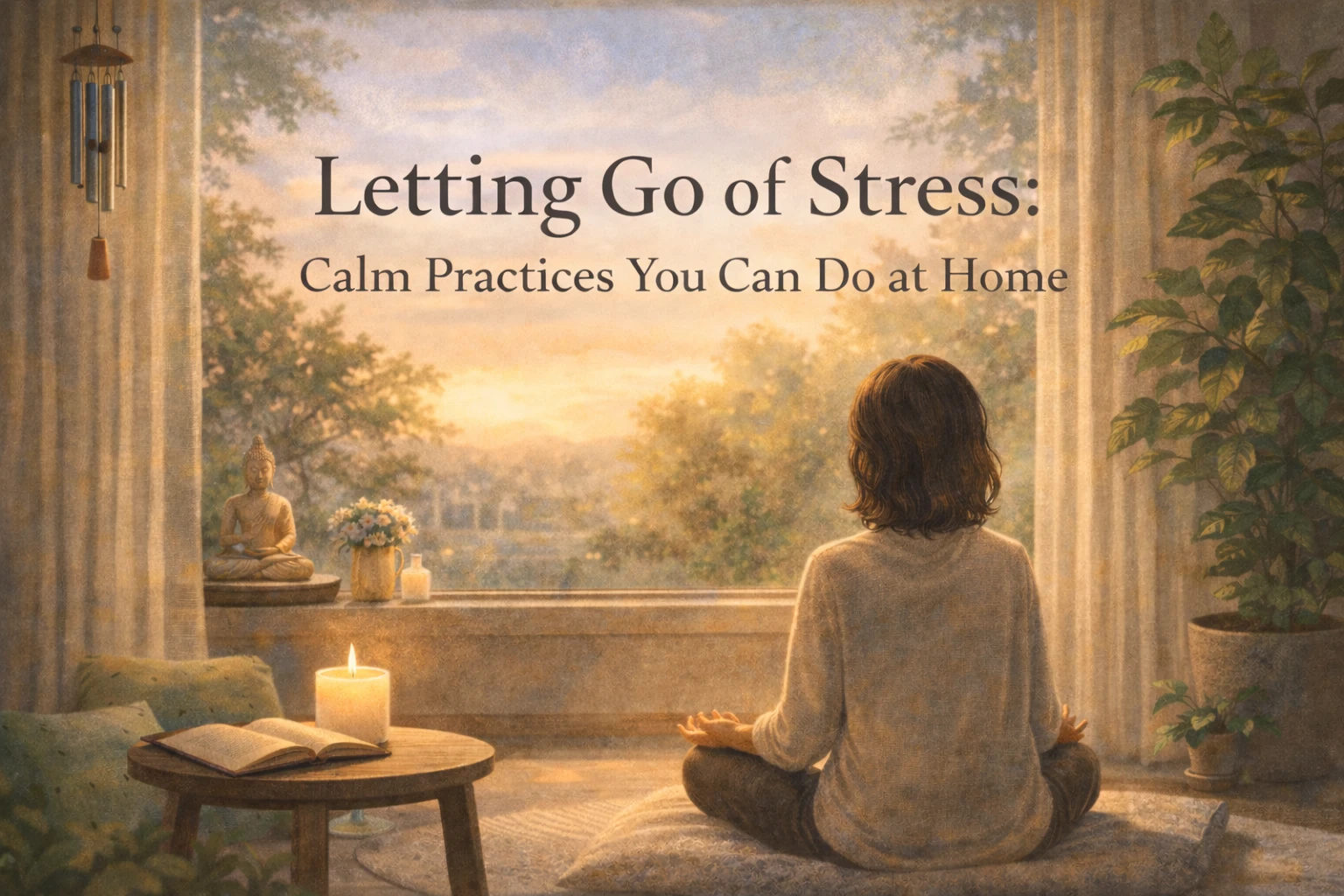

This is my little online home where we celebrate life's real magic - the warm connections, simple self-care rituals, and those quiet moments that stay with you.
What I do here:
• Craft stories and tips to brighten your everyday
• Build a space where everyone feels welcome
• Make each visit worth your while - whether you need quick advice or food for thought
My superpowers? Turning ordinary moments into something special through words that actually mean something.
Off-screen, I'm probably:
☕ Curled up with a book that changes my perspective
🎨 Trying some new creative hobby
🌿 Noticing the small wonders we usually rush past
So glad you're here - let's make something meaningful together!
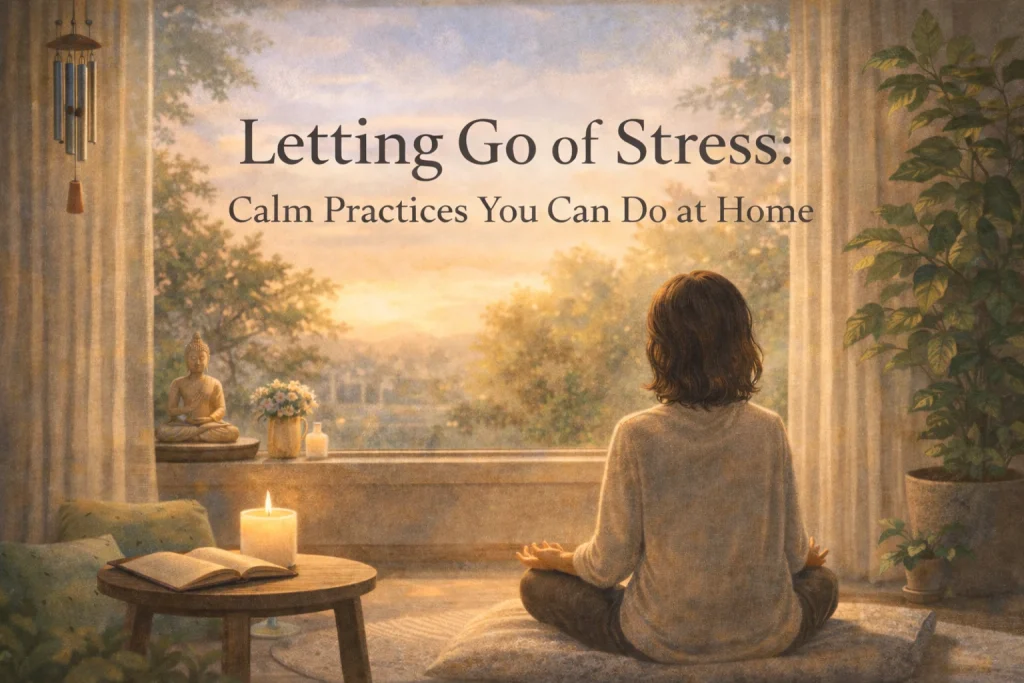
Table of Contents
🌿 Letting Go of Stress: Calm Practices You Can Do at Home
Modern life rarely slows down on its own.
Between responsibilities, digital noise, emotional demands, and constant mental stimulation, stress can quietly become the background rhythm of everyday living. Many people adapt to this tension without realizing how deeply it affects their sleep, mood, relationships, and overall sense of wellbeing.
But here is something important to remember:
Stress is not meant to be carried forever.
The human nervous system is designed to move between activation and recovery. When we intentionally create moments of calm — especially at home — we help the body return to balance.
Letting go of stress is not about escaping life.
It is about learning how to soften within it. 🤍
This in-depth guide explores gentle, science-informed practices you can use at home to release emotional pressure, restore inner steadiness, and build a calmer daily experience.
🧠 Why Learning to Release Stress Is Essential for Emotional Health
Stress is more than a feeling — it is a full-body biological response.
When your brain perceives pressure or threat, it activates the sympathetic nervous system, releasing hormones like cortisol and adrenaline. This response is helpful in short bursts, but when stress becomes chronic, the body struggles to return to baseline.
Over time, prolonged stress may contribute to:
- Mental fatigue
- Irritability
- Difficulty concentrating
- Shallow sleep
- Emotional reactivity
- Persistent tension
Research consistently shows that supportive environments and calming routines help regulate the nervous system and improve emotional resilience.
Letting go of stress is not a luxury.
It is a form of self-protection.
🌱 The Misconception That Stress Relief Requires Big Life Changes
Many people assume they need dramatic solutions:
- A long vacation
- A new job
- A complete lifestyle reset
- Perfect morning routines
But emotional regulation rarely responds to intensity — it responds to consistency.
Small daily signals of safety teach the brain that it does not need to remain on high alert.
If you’ve explored
👉 Everyday Rituals That Support Emotional Wellbeing,
you already know that emotional stability is built through repeated, gentle habits rather than extreme transformations.
Stress release follows the same principle.
🏡 Why Home Is One of the Most Powerful Places to Reduce Stress
Your nervous system is always asking one silent question:
“Am I safe enough to relax?”
A thoughtfully supportive home answers that question without words.
Elements that encourage relaxation include:
- Predictable rhythms
- Comfortable lighting
- Familiar sensory cues
- Emotional safety
- Reduced overstimulation
When these factors are present, the brain begins to shift out of survival mode.
This is why designing supportive spaces — as discussed in
👉 Creating Comfort at Home Through Thoughtful Daily Routines —
plays such a crucial role in long-term emotional balance.
Comfort is not accidental.
It is created through intention.
🌸 Gentle Yet Powerful Practices to Let Go of Stress
You do not need complicated systems to begin feeling better.
Often, the most effective practices are also the simplest — because the nervous system responds best to clarity and repetition.
🌬️ 1. Use Breath to Signal Safety to Your Body
Breathing patterns directly influence the autonomic nervous system.
One particularly effective technique is the physiological sigh, which research suggests can reduce stress quickly.
Try this:
- Inhale slowly through your nose
- Take a second shorter inhale
- Exhale gently through your mouth
Repeat for one to three minutes.
Longer exhales activate the parasympathetic nervous system — the body’s natural calming mechanism.
Simple breathing is often the fastest bridge back to emotional steadiness.
🕯️ 2. Create a Daily “Transition Ritual”
One hidden cause of chronic stress is the absence of psychological boundaries between roles.
When work energy flows directly into evening life, the brain never fully powers down.
A transition ritual helps your body shift from doing → being.
Examples include:
- Changing into comfortable clothes
- Washing your hands or face
- Lighting a candle
- Making herbal tea
- Playing soft music
These small acts communicate something powerful to your brain:
You are allowed to slow down now.
This gentle unwinding process closely supports
👉 Emotional Healing: Simple Practices to Restore Inner Calm,
because healing begins when the nervous system senses safety.
🌿 3. Reduce Visual and Sensory Overload
Your brain processes more environmental information than you consciously notice.
Clutter, harsh lighting, constant background noise — all of it keeps the mind subtly activated.
You do not need a perfectly minimalist home.
Instead, aim to reduce friction.
Start small:
- Clear one surface
- Soften one light source
- Quiet one noisy corner
- Create one calm area
Even minor environmental shifts can help your mental state settle.
🧘♀️ 4. Relearn the Skill of Doing Nothing
Modern culture often equates rest with laziness.
But emotionally healthy nervous systems require pauses.
Doing nothing is not wasted time — it is recovery.
Sit near a window.
Stretch slowly.
Watch the light change.
Breathe without agenda.
If stillness feels unfamiliar, you may find guidance in
👉 How to Find Inner Balance in a Busy and Noisy World,
which explores how calm can exist even when life remains full.
Stillness is not the absence of productivity.
It is the presence of regulation.
💛 5. Soften Your Inner Dialogue
External stress is only part of the equation.
Internal pressure often magnifies it.
Notice the tone of your thoughts. Are they supportive — or demanding?
Instead of saying:
- “I should be handling this better.”
- “Why am I so overwhelmed?”
Try:
- “Today asked a lot of me.”
- “It makes sense that I feel tired.”
- “Rest is allowed.”
Self-talk shapes emotional physiology more than many people realize.
This compassionate approach is central to
👉 Self-Care at Home: Gentle Ways to Care for Your Mind and Heart,
where caring for yourself begins with how you speak to yourself.
🌙 6. Protect Your Evenings From Excess Stimulation
Many people unintentionally extend their stress late into the night through bright screens, intense media, and constant information.
Your brain interprets stimulation as a cue to stay alert.
Instead, consider creating a softer evening rhythm:
- Dim the lights
- Lower screen brightness
- Avoid distressing news
- Choose calming audio
- Move more slowly
Better nights often create calmer mornings.
🌼 Subtle Signs You’re Successfully Letting Go of Stress
Progress is rarely dramatic — but it is noticeable.
You may observe:
- Falling asleep more easily
- Feeling less reactive
- Recovering faster from difficult moments
- Thinking more clearly
- Experiencing longer stretches of calm
Stress relief tends to feel quiet.
But quiet change is still powerful change.
🌱 Letting Go Is Not a One-Time Decision — It Is a Practice
Stress will always be part of human life.
The goal is not elimination.
The goal is resilience — becoming someone who knows how to return to calm again and again.
Over time, your home can become associated with restoration rather than stimulation.
And once your nervous system trusts that safety exists somewhere, emotional balance becomes far more accessible.
❓ Frequently Asked Questions (FAQ)
💬 What is the fastest way to calm stress at home?
Slow breathing, stepping away from stimulation, and creating sensory calm are among the quickest methods for regulating the nervous system.
💬 Can small habits really reduce stress?
Yes. Research shows that predictable routines help lower baseline stress and improve emotional regulation.
💬 How long does it take to feel less stressed?
Some practices create immediate relief, while deeper nervous system changes develop gradually through repetition.
💬 Is all stress harmful?
Not necessarily. Short-term stress can be adaptive. Chronic, unresolved stress is what tends to impact long-term health.
💬 Do I need a perfectly peaceful home?
No. Emotional safety matters far more than aesthetic perfection.
A home feels calming when it supports your humanity — not when it looks flawless.
🌿 Final Thoughts
Letting go of stress is not about controlling every circumstance life brings.
It is about learning how to support yourself within those circumstances.
Through gentle routines, calming environments, and compassionate awareness, your home can become more than a place you live.
It can become a place that restores you. 🤍
And the more often your body experiences that restoration, the easier it becomes to access calm — even in a noisy world.
📚 Authoritative Sources & References
American Psychological Association (APA)
Stress effects and coping strategies
👉 https://www.apa.org/topics/stress
National Institute of Mental Health (NIMH)
Understanding stress and mental health
👉 https://www.nimh.nih.gov/health/topics/stress
Harvard Health Publishing
Mind-body approaches to stress management
👉 https://www.health.harvard.edu/mind-and-mood
Cleveland Clinic — Stress Management
Medical guidance on reducing stress
👉 https://my.clevelandclinic.org/health/articles/8133-stress-management
Greater Good Science Center – UC Berkeley
Science-based practices for emotional wellbeing
👉 https://greatergood.berkeley.edu
✅ Personalized Amazon Product Recommendations

The 5 Love Languages: The Secret to Love that Lasts
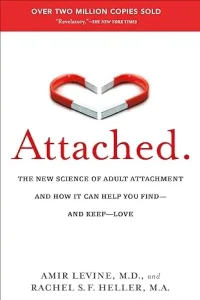
Attached: The New Science of Adult Attachment and How It Can Help You Find–and Keep–Love
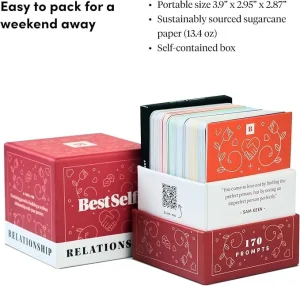
BestSelf Relationship Deck – 150 Discussion Prompts to Create Real Conversations – Perfect Couples Games, Card Games for Adults, and Amazing Gifts for Wife
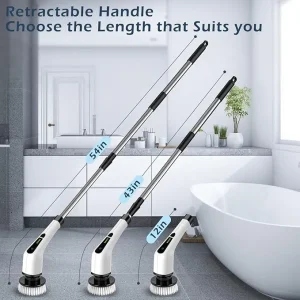
Electric Spin Scrubber, Cordless Cleaning Brush Scrubber for Home, 8 Replaceable Brush Heads-90Mins Work Time, 3 Adjustable Size, 2 Speeds for Bathroom Shower Bathtub Glass Car
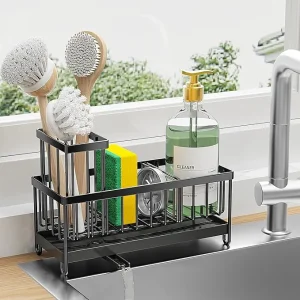
Cisily Black Sponge Holder for Kitchen Sink, Sink Caddy Organizer with High Brush Holder, Kitchen Countertop Organizers and Storage Essentials, Rustproof 304 Stainless Steel, Soap Dispenser Organize
Recommended Articles:
- Letting Go of Stress: Calm Practices You Can Do at Home
- Everyday Rituals That Support Emotional Wellbeing

- How to Find Inner Balance in a Busy and Noisy World
- Self-Care at Home That Actually Helps
- Emotional Healing: Simple Practices to Restore Inner Calm
💬 Why Tip? It’s Not Just Money — It’s Motivation ❤️
| 😊 What You Got | 🎁 What I Get | 🔗 What You Can Do |
|---|---|---|
| ✔️ A smile or laugh | ✔️ A reason to keep creating | 👉 Buy me a coffee ☕️ |
| ✔️ Useful tips, insights, or ideas | ✔️ Proof that this content helps | 👉 Click the support button 💸 |
| ✔️ Fun, relatable content | ✔️ Motivation to go deeper & better | 👉 Leave a tip + kind feedback 🙌 |
| ✔️ Ad-free reading experience | ✔️ A little financial breathing room | 👉 $1 isn’t too little, $10 isn’t too much 🎉 |
| ✔️ A sense of connection | ✔️ The joy of being seen and supported | 👉 Let me know you’re out there 👀 |
❤️ If you made it this far, maybe that’s your sign to support? Every tip matters!