

This is my little online home where we celebrate life's real magic - the warm connections, simple self-care rituals, and those quiet moments that stay with you.
What I do here:
• Craft stories and tips to brighten your everyday
• Build a space where everyone feels welcome
• Make each visit worth your while - whether you need quick advice or food for thought
My superpowers? Turning ordinary moments into something special through words that actually mean something.
Off-screen, I'm probably:
☕ Curled up with a book that changes my perspective
🎨 Trying some new creative hobby
🌿 Noticing the small wonders we usually rush past
So glad you're here - let's make something meaningful together!
Table of Contents
Last Updated: September 16, 2026
By David Yang
Quick Answer: How Do You Create a Peaceful Home Environment?
A peaceful home environment is created by reducing unnecessary friction and making your space easier to rest, connect, and live in. You can start by decluttering visible areas, controlling unnecessary noise and digital distractions, improving lighting and comfort, creating simple routines, protecting personal space, and communicating respectfully with the people you live with.
You do not need a perfect minimalist home. You also do not need an expensive renovation.
The most useful changes are usually small: clearing one stressful surface, creating a quiet period, establishing a simple evening reset, making one room easier to use, or setting a boundary around screens.
A peaceful home is not a home without mess, conflict, or difficult emotions. It is a home designed to make everyday life a little easier to handle.
Introduction: When Home Doesn’t Feel Peaceful
Home is supposed to be where you recover from the demands of the outside world.
But sometimes you walk through the front door and feel more overwhelmed instead of less.
The kitchen needs cleaning.
Your phone keeps buzzing.
The television is playing in the background.
There are clothes waiting to be put away.
Someone wants to talk when you desperately need ten minutes alone.
Tomorrow’s responsibilities are already waiting in your head.
Nothing is necessarily wrong.
And yet your home does not feel restful.
This is an important distinction.
A home can be beautiful and still feel stressful.
A home can be small and still feel deeply comfortable.
A home can be imperfect and still provide a strong sense of belonging.
The goal of creating a peaceful home environment is therefore not to create an Instagram-perfect house.
It is to create surroundings and routines that support the people who actually live there.
Current guidance from NIMH emphasizes practical habits such as adequate sleep, regular physical activity, relaxing activities, manageable priorities, and supportive social connection as parts of caring for mental health. Your home can make some of those habits easier—or harder—to maintain. (NIMH)
This guide shows you how to make those changes without turning your home into another exhausting project.
What Is a Peaceful Home Environment?
A peaceful home environment is not necessarily silent, spotless, expensive, or minimalist.
It is a space where the physical environment, daily routines, and relationships generally support rest and everyday functioning.
In practical terms, that may mean:
- you can find the things you regularly need
- shared spaces are reasonably functional
- there is somewhere to sit and rest
- unnecessary noise is limited when possible
- screens do not dominate every part of the day
- people have reasonable personal space
- household responsibilities are clear enough to avoid constant confusion
- communication is generally respectful
- there are routines that make busy days easier
Notice what is missing from that list.
Perfection.
Because peace is not the same thing as control.
A Peaceful Home Has Three Layers
It helps to think about your home in three connected layers.
1. The Physical Environment
This includes:
- clutter
- cleanliness
- lighting
- noise
- temperature
- furniture layout
- storage
- comfort
These factors influence how easy or difficult it is to use your home.
2. The Social and Emotional Environment
This includes:
- communication
- respect
- privacy
- support
- conflict
- connection
A beautifully decorated house can still feel stressful if the people inside it are constantly criticizing, fighting, or ignoring one another.
3. The Daily Systems
This includes:
- morning routines
- evening routines
- cleaning habits
- household responsibilities
- screen boundaries
- ways of dealing with incoming clutter
These systems determine how much effort it takes to keep the home functioning.
A peaceful home usually comes from improving all three layers gradually rather than trying to perfect one of them.
Why Your Home May Feel Stressful
Before changing anything, identify the actual source of friction.
Your home might feel stressful because of:
- too many possessions
- unfinished household tasks
- constant background noise
- too much screen use
- poor sleep routines
- unclear responsibilities
- lack of privacy
- relationship tension
- too many decisions
- lack of comfortable places to rest
You do not need to fix every item on this list.
Ask yourself:
“What is the one thing about my home that creates the most unnecessary stress?”
Start there.
15 Simple Ways to Create a Peaceful Home Environment
1. Declutter the Areas You See Every Day
Decluttering is one of the most obvious places to begin because excess possessions create ongoing decisions about where things should go.
But do not attempt to declutter your entire house at once.
Start with the places that affect your daily experience most:
- kitchen counters
- dining table
- entryway
- bedside table
- desk
- coffee table
Remove things you no longer need, return misplaced items, and leave some usable space open.
For a complete step-by-step decluttering system, see How to Declutter Your Home: 15 Easy Ways to Create a Clean & Stress-Free Space.
Research has found associations between home clutter and psychological well-being, although the relationship is complex and current evidence does not mean that every messy home causes mental-health problems. ([Journal of Environmental Psychology](https://doi.org/10.1016/j.jenvp.2025.102672))
2. Create a 10-Minute Evening Reset
A peaceful home does not stay peaceful by accident.
Instead of waiting for clutter to become overwhelming, spend about 10 minutes resetting the most important areas before bed.
You might:
- return objects to their usual places
- clear the kitchen counter
- put away clothes
- prepare tomorrow’s essentials
- remove obvious trash
- reset the living room
You do not have to finish everything.
The purpose is to make tomorrow slightly easier.
3. Reduce Unnecessary Background Noise
Many homes are rarely quiet.
Television plays even when nobody is watching.
Music runs continuously.
Phones produce notifications.
Household appliances hum in the background.
None of these things is automatically harmful.
But if you are already mentally tired, reducing unnecessary stimulation may make your environment feel easier to settle into.
Try creating specific periods of quieter time.
For example:
- no television during meals
- quiet first 20 minutes after arriving home
- lower-volume evenings
- notification-free periods
- quiet reading time
Peace does not always require silence.
Sometimes it simply means having more control over what you hear.
4. Make One Room Your Main Resting Space
You do not need an entire peaceful house.
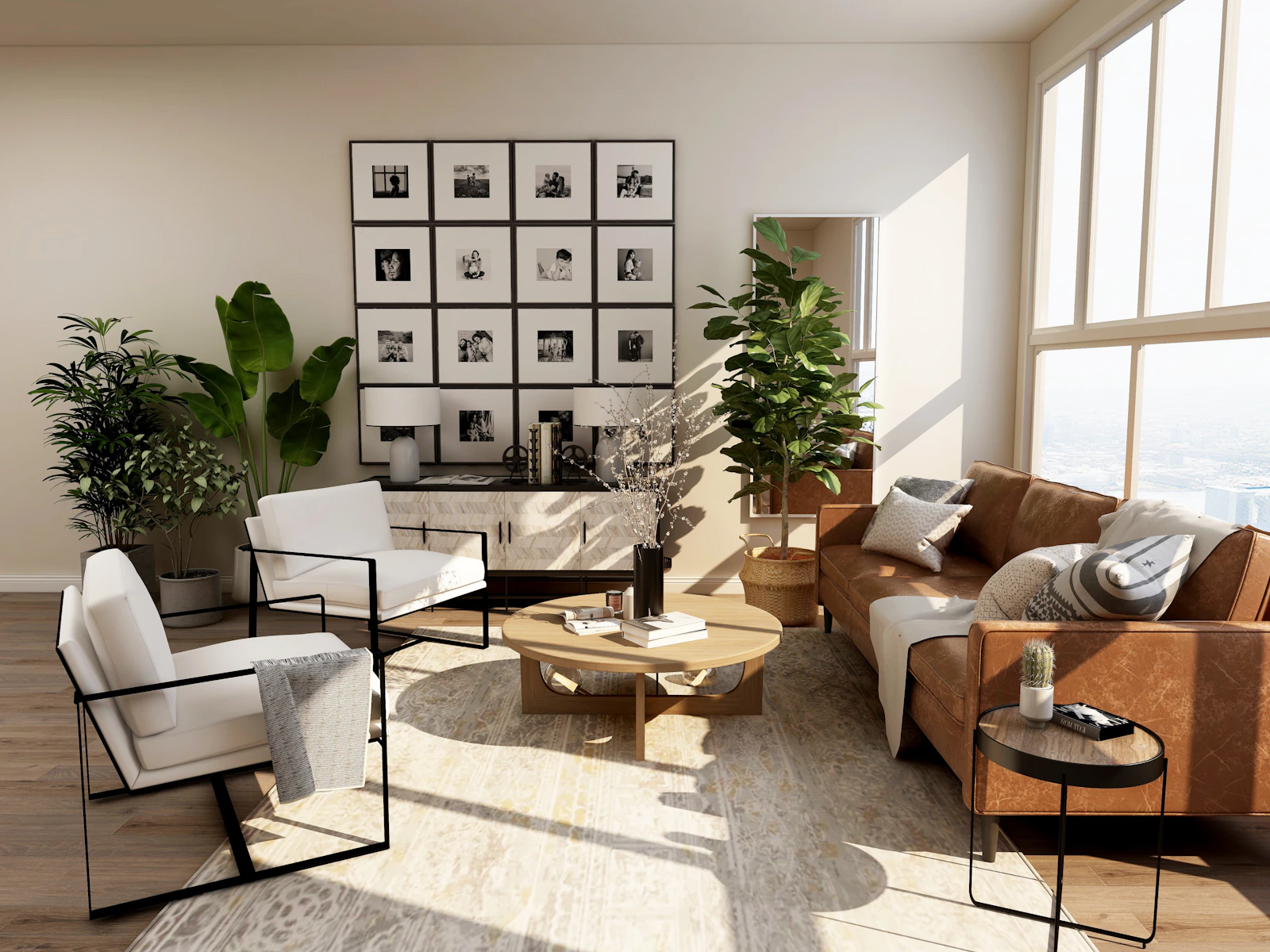
Choose one room or corner where relaxation is the priority.
It might contain:
- a comfortable chair
- a reading lamp
- a blanket
- a small table
- a plant
- books
- soft textures
Keep the space relatively simple.
The purpose is not to create a meditation retreat.
It is simply to have somewhere that does not constantly remind you of unfinished work.
5. Improve Lighting for Different Times of Day
Lighting affects how a room looks and functions.
Instead of relying on one bright overhead light for everything, use different sources where practical:
- natural daylight during the day
- task lighting for reading or work
- lamps for evening activities
- lower-intensity lighting when you are winding down
This is especially useful when the same room serves multiple purposes.
A home office may need focused lighting during working hours but a softer setup when the workday ends.
The goal is not “soft light equals relaxation.”
The goal is to make lighting fit the activity and time of day.
6. Bring Some Natural Elements Into Your Space
Natural elements can make a room feel more comfortable and visually interesting.
Consider:
- houseplants
- flowers
- wood
- natural fabrics
- views of outdoor greenery
- natural daylight
You do not need to spend much money.
A small plant on a shelf can be enough.
If keeping plants alive is difficult, even natural textures or a clear view toward a window can help create a more pleasant environment.
7. Create Clear Homes for Frequently Used Items
Peace is difficult when ordinary objects are constantly missing.
Create simple locations for things you use every day:
- keys
- wallet
- bags
- shoes
- chargers
- cleaning supplies
The best location is not necessarily the most beautiful.
It is the one that people will actually use.
If returning an item requires several steps, simplify the system.
8. Create a Screen-Free Zone or Time
Phones are useful, but constant digital interruption can make it difficult to feel mentally “off duty.”
Instead of trying to eliminate screens, create boundaries around them.
For example:
- keep phones away from the dining table
- turn off unnecessary notifications
- avoid work messages during personal time when possible
- create a screen-free bedroom if practical
- choose one short period each evening without scrolling
NIMH recommends making sleep a priority and notes that reducing blue-light exposure from devices before bedtime may make it easier to fall asleep. ([NIMH](https://www.nimh.nih.gov/health/topics/caring-for-your-mental-health))
The larger goal is not to fear technology.
It is to make sure technology does not automatically control the atmosphere of your home.
9. Make Your Bedroom About Sleep and Rest
Your bedroom does not need to look like a hotel.
But if possible, make it easy to associate the room with rest.
Consider:
- reducing unnecessary clutter
- keeping work materials elsewhere when possible
- making the bed comfortable
- reducing disruptive light
- reducing unnecessary noise
- keeping the temperature comfortable
Sleep is an important part of mental and physical health, and NIMH specifically recommends making sleep a priority and maintaining a consistent schedule. ([NIMH](https://www.nimh.nih.gov/health/topics/caring-for-your-mental-health))
10. Make Household Responsibilities Visible
Some homes feel stressful because people are constantly wondering:
“Who is supposed to do this?”
Instead of relying on assumptions, make recurring responsibilities clear.
This might include:
- cooking
- shopping
- laundry
- cleaning
- trash and recycling
- childcare
- pet care
- administrative tasks
The division does not have to be mathematically equal every day.
What matters is that the arrangement is visible, discussed, and adjusted when circumstances change.
This can prevent small practical frustrations from becoming repeated personal criticism.
11. Create a Transition Ritual Between Work and Home
For many people, the hardest part of the day is not work itself.
It is carrying work directly into the evening.
If you work from home, this can be especially difficult.
Create a simple transition between “work mode” and “home mode.”
For example:
- close your laptop
- change clothes
- take a short walk
- shower
- make tea
- tidy your workspace
- listen to music
- spend five quiet minutes outside
The activity itself is not magic.
It simply gives your day a clearer boundary.
For more ideas, see Everyday Rituals That Support Emotional Wellbeing.
12. Protect Personal Space
A peaceful home needs connection—but it also needs boundaries.
People living together do not necessarily need the same amount of social interaction.
One person may need conversation after work.
Another may need silence.
One person may relax by watching television.
Another may need to read alone.
Instead of interpreting these differences as rejection, talk about them.
You can ask:
“Do you want company, help, or some quiet time?”
Respectful personal space can be especially valuable in busy households.
13. Make Everyday Communication More Respectful
A peaceful physical environment cannot compensate for constant interpersonal tension.
Pay attention to how people speak to one another.
Try to:
- listen without immediately interrupting
- avoid unnecessary sarcasm
- express needs clearly
- criticize a problem rather than a person’s character
- take a pause when a conversation becomes too heated
- return to difficult conversations later when possible
CDC guidance on emotional well-being recommends communicating feelings honestly and respectfully, listening actively, and showing care and empathy. ([CDC](https://www.cdc.gov/emotional-well-being/improve-your-emotional-well-being/index.html))
A peaceful home is not one where nobody disagrees.
It is one where disagreement does not automatically become disrespect.
For more relationship-specific guidance, read How to Improve Communication in Relationships.
14. Create Small Moments of Connection
Quiet does not automatically equal peaceful.
A home can be extremely quiet and still feel lonely.
Connection is another important part of a supportive home.
It can be as simple as:
- having dinner together
- asking about someone’s day
- making tea for someone
- taking a short walk
- watching something together
- sharing a joke
- sitting together without needing to talk
CDC guidance emphasizes that supportive social connections can help people cope with stress and support emotional and physical well-being. ([CDC](https://www.cdc.gov/social-connectedness/about/))
For deeper ideas, explore Building Emotional Intimacy Through Small Daily Moments.
15. Let Go of the Idea of a Perfect Home
This may be the most important habit.
There will be dishes.
There will be laundry.
There will be toys.
There will be busy weeks.
There will be arguments.
There will be days when the house gets completely out of control.
That does not mean you failed.
A peaceful home is not a permanently perfect home.
It is a home that can recover from ordinary life.
When you stop demanding perfection, it becomes easier to focus on what actually improves daily life.
What a Peaceful Home Does Not Mean
It is easy to turn the idea of a peaceful home into another unrealistic standard.
A peaceful home does not have to mean:
- every room is spotless
- everyone is happy all day
- children are always quiet
- couples never disagree
- the home contains very few possessions
- you own expensive furniture
- you follow a complicated morning routine
- you never feel stressed at home
Stress is part of life.
NCCIH describes stress as a normal physical and emotional response to challenges, while noting that long-term stress can contribute to or worsen health problems. Relaxation techniques may help some people manage stress, but they are not a substitute for appropriate medical or mental-health care. ([NCCIH](https://www.nccih.nih.gov/health/stress))
So the goal is not to eliminate stress from your home.
The goal is to reduce unnecessary sources of stress and make recovery easier.
How to Create a Peaceful Home When You Are Very Busy
If your schedule is already full, do not add another long checklist.
Use the “one-one-one” approach:
One Physical Change
Clear one surface or improve one frequently used area.
One Relationship Change
Have one uninterrupted conversation with someone you care about.
One Recovery Change
Create one small period of quiet, rest, or screen-free time.
That is enough for one day.
Repeat it tomorrow if it helps.
A Simple 7-Day Peaceful Home Reset
| Day | Focus | Simple Action |
|---|---|---|
| Day 1 | Visual clutter | Clear one highly visible surface |
| Day 2 | Noise | Create 30 minutes of quieter time |
| Day 3 | Digital boundaries | Choose one screen-free period |
| Day 4 | Lighting | Improve one room’s lighting for evening use |
| Day 5 | Routine | Create a 10-minute evening reset |
| Day 6 | Connection | Have one phone-free conversation |
| Day 7 | Personal space | Create or improve one quiet corner |
Do not judge the week by whether your house looks dramatically different.
Ask:
“Is my home easier to live in than it was seven days ago?”
How to Maintain a Peaceful Home Without Constant Cleaning
The secret is not cleaning constantly.
It is creating systems that reduce the amount of work required.
Daily
- return frequently used items to their homes
- clear the most important surface
- handle obvious trash
- complete a short evening reset
Weekly
- review problem areas
- clean key shared spaces
- restock essential household items
- discuss upcoming responsibilities
Monthly
- review accumulating clutter
- remove things no longer needed
- adjust systems that are not working
- look at whether household responsibilities still feel reasonable
The best home system is not the most sophisticated one.
It is the one people can still follow on a difficult Tuesday.
What If Your Home Still Feels Stressful?
Sometimes changing the environment is not enough.
Your home may feel stressful because the real problem is:
- relationship conflict
- financial pressure
- work stress
- caregiving responsibilities
- poor sleep
- persistent anxiety
- depression
- loneliness
- an unsafe or abusive relationship
In those situations, candles, plants, decluttering, or better lighting cannot solve the underlying issue.
They may make the environment more comfortable, but they are not substitutes for appropriate support.
NIMH advises seeking professional help when severe or distressing symptoms persist for two weeks or more, including significant sleep problems, difficulty functioning, loss of interest, concentration problems, or persistent irritability or restlessness. ([NIMH](https://www.nimh.nih.gov/health/topics/caring-for-your-mental-health))
If there is violence, intimidation, coercive control, or immediate danger in the home, prioritize safety and appropriate local support rather than simply trying to make the environment feel calmer.
How to Make a Peaceful Home Feel More Loving
Peace and connection should not be treated as opposites.
A home can be quiet and still feel emotionally cold.
A home can be lively and still feel deeply supportive.
Try combining environmental calm with small acts of connection:
- eat together without phones
- ask someone how their day really went
- make tea for another person
- notice when someone is tired
- respect someone’s need for quiet
- offer help without turning it into criticism
- say thank you for ordinary contributions
Supportive social connections are associated with better ability to manage stress and with broader health and well-being. ([CDC](https://www.cdc.gov/social-connectedness/about/))
If you want to build the bigger picture, read How to Create a Loving and Happy Home: 15 Simple Habits for a Peaceful Life.
Frequently Asked Questions
What is a peaceful home environment?
A peaceful home environment is a space that supports rest, comfort, connection, and everyday functioning. It does not need to be perfectly clean or completely quiet. It usually combines a manageable physical environment, respectful relationships, and simple routines.
How can I make my home peaceful quickly?
Start with one highly visible source of friction. Clear one surface, reduce unnecessary noise, put away obvious clutter, or create a short screen-free period. Small environmental changes can make the space easier to use without requiring a complete home makeover.
Why does my home feel stressful even when it is clean?
Cleanliness is only one part of the home environment. Noise, digital distractions, lack of privacy, poor routines, work pressure, relationship tension, and insufficient rest can all contribute to a stressful experience.
Does decluttering reduce stress?
Research has found associations between home clutter and psychological well-being, but the relationship is complex. Decluttering may make a home more functional and reduce practical friction, but it should not be presented as a treatment for anxiety or other mental-health conditions.
How can I make my home calmer without spending money?
Start by removing unnecessary visual clutter, reducing background noise, turning off unnecessary notifications, rearranging furniture for better function, creating a quiet corner, opening curtains for daylight, and establishing a simple evening reset.
How do I create a peaceful home with children?
Focus on realistic systems rather than expecting constant quiet. Create predictable routines, simple storage, designated activity areas, reasonable screen boundaries, and opportunities for children to participate in age-appropriate household tasks.
How can couples create a more peaceful home?
Discuss household responsibilities, protect personal space, listen without immediately interrupting, avoid unnecessary criticism, and create small periods of intentional connection. A peaceful home requires both environmental and relationship habits.
Can a peaceful home improve mental health?
A supportive home environment can contribute to everyday well-being, but it is not a substitute for mental-health treatment. Sleep, physical activity, relaxation, priorities, and supportive relationships are also important parts of mental-health care. If significant symptoms persist or interfere with daily life, professional support may be appropriate.
What should I change first?
Change the source of stress you notice most often. If clutter bothers you, declutter. If noise is exhausting, create quiet periods. If household conflict is the problem, work on communication. If you never get time alone, create a personal-space boundary.
Does a peaceful home have to be minimalist?
No. A peaceful home can contain books, children’s toys, hobbies, collections, artwork, and personal belongings. The important question is whether your possessions and systems support the way you live.
How long does it take to create a peaceful home?
There is no universal timeline. Some changes, such as clearing a stressful surface or reducing notifications, can be immediate. Deeper changes involving routines and relationships generally require repeated practice.
Build Your Complete LoveAHH Home & Well-Being System
A peaceful home is only one part of a healthy and happy life.
Once the environment is more manageable, you can work on the other layers of home well-being:
- How to Declutter Your Home — reduce unnecessary possessions and visual clutter.
- How to Create a Loving and Happy Home — build connection, appreciation, communication, and supportive household habits.
- Self-Care at Home That Actually Helps — create realistic practices that support everyday well-being.
- Everyday Rituals That Support Emotional Wellbeing — build small repeatable routines.
- Letting Go of Stress — explore practical ways to manage everyday stress.
- How to Find Inner Balance in a Busy and Noisy World — work on attention, priorities, stress, and emotional balance.
- Emotional Healing: Simple Practices to Restore Inner Calm — explore emotional well-being and inner calm.
Authoritative Sources & References
- National Institute of Mental Health — Caring for Your Mental Health
https://www.nimh.nih.gov/health/topics/caring-for-your-mental-health - National Institute of Mental Health — My Mental Health: Do I Need Help?
https://www.nimh.nih.gov/health/publications/my-mental-health-do-i-need-help - National Center for Complementary and Integrative Health — Stress
https://www.nccih.nih.gov/health/stress - NCCIH — 5 Things To Know About Relaxation Techniques for Stress
https://www.nccih.nih.gov/health/tips/things-to-know-about-relaxation-techniques-for-stress - Centers for Disease Control and Prevention — Social Connection
https://www.cdc.gov/social-connectedness/about/ - CDC — Improve Your Emotional Well-Being
https://www.cdc.gov/emotional-well-being/improve-your-emotional-well-being/index.html - Journal of Environmental Psychology — Home Clutter and Psychological Well-Being
https://doi.org/10.1016/j.jenvp.2025.102672
Final Thoughts: Peace at Home Is Built, Not Bought
You do not need a larger house.
You do not need expensive furniture.
You do not need to become a minimalist.
You do not need a complicated morning routine.
And you do not need to eliminate every source of stress.
A peaceful home is created through smaller choices.
Clear the surface that constantly bothers you.
Turn off the television when nobody is watching.
Put your phone away for a conversation.
Give yourself somewhere comfortable to sit.
Make responsibilities clearer.
Protect someone’s need for quiet.
Repair a difficult conversation.
Make tomorrow a little easier.
These actions may look ordinary.
That is precisely the point.
A peaceful home is not built through one dramatic transformation. It is built through hundreds of small decisions that make daily life a little more comfortable, connected, and manageable.
Your home will still get messy.
Your family will still have difficult days.
You will still feel stressed sometimes.
That is normal.
The goal is not to create a home where life never feels difficult.
The goal is to create a home that helps you recover when life is difficult.
Start with one room.
Choose one habit.
Make one small change today.
Then let peace grow gradually from there.
Recommended Articles:
- How to Create a Peaceful Home: A Practical, Evidence-Informed Guide to Calm Living
- Why Do I Feel Like I Can’t Relax at Home? 11 Hidden Causes & Fixes
- Why Do I Feel Unhappy at Home? Hidden Causes, What It Means & How to Feel Better
- How to Declutter Your Home: 15 Easy Ways to Create a Clean & Stress-Free Space

- How to Create a Loving and Happy Home: 15 Simple Habits for a Peaceful Life

- What Makes a Happy Home? Simple Lessons That Truly Matter

- Creating Comfort at Home: Thoughtful Daily Routines That Truly Calm & Support You

- Small Changes That Transform Your Home: 25 Simple Ways to Make Your Home Feel Better

- Simple Living Ideas for a Cozy & Joyful Home: A Practical Guide to Living With Less Stress and More Meaning

- Daily Habits for a Happier Home: 15 Simple Habits That Build Connection, Calm & Everyday Joy

- Create a Peaceful Home Environment: 15 Simple Ways to Reduce Stress and Feel Calm Every Day

- What Is a Homemaker? A Modern Guide to Homemaking, Household Work & Family Life