

This is my little online home where we celebrate life's real magic - the warm connections, simple self-care rituals, and those quiet moments that stay with you.
What I do here:
• Craft stories and tips to brighten your everyday
• Build a space where everyone feels welcome
• Make each visit worth your while - whether you need quick advice or food for thought
My superpowers? Turning ordinary moments into something special through words that actually mean something.
Off-screen, I'm probably:
☕ Curled up with a book that changes my perspective
🎨 Trying some new creative hobby
🌿 Noticing the small wonders we usually rush past
So glad you're here - let's make something meaningful together!
Table of Contents
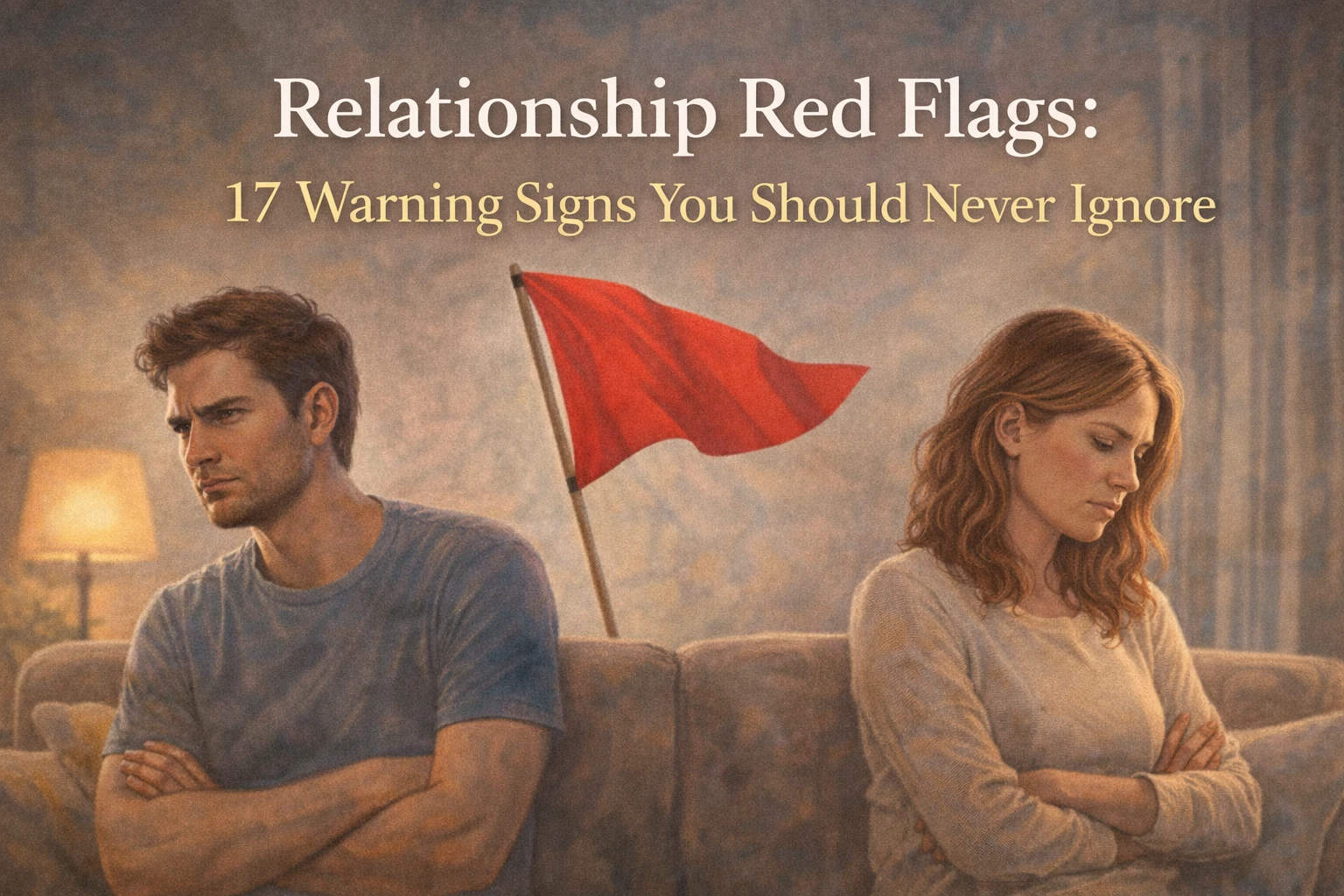
🚩 Relationship Red Flags: Warning Signs You Should Never Ignore
At the beginning of a relationship, everything can feel exciting, hopeful, and full of possibility.
Yet even the strongest emotional connections can hide subtle warning signs.
Red flags rarely appear as dramatic moments.
More often, they show up as patterns — behaviors that quietly create emotional instability, anxiety, or self-doubt.
Recognizing these signals early is one of the most powerful ways to protect your emotional wellbeing.
Because here is a truth many people learn too late:
👉 Healthy love feels safe.
Unhealthy love feels confusing.
This guide will help you clearly identify relationship red flags so you can make wiser, calmer, and more self-supportive decisions.
🌱 What Is a Relationship Red Flag?
A red flag is not a single bad day.
It is a repeated behavior that signals potential emotional harm, imbalance, or psychological insecurity within the relationship.
Everyone makes mistakes.
But patterns reveal character.
Common red flags often involve:
- Emotional unpredictability
- Control
- Disrespect
- Manipulation
- Lack of accountability
- Poor communication
To understand what healthy dynamics look like by contrast, you may find this foundational guide helpful:
👉 The Foundation of Healthy Relationships: Emotional Safety, Communication, and Trust
Clarity grows when you can see both sides.
🧠 Why People Often Miss Red Flags
Red flags are not always obvious — especially when emotions are involved.
Psychology shows that early attraction can temporarily reduce our threat perception.
People may overlook warning signs because of:
- Strong chemistry
- Fear of starting over
- Hope the person will change
- Emotional attachment
- Loneliness
- Investment of time
Awareness is not about becoming hyper-critical.
It is about becoming emotionally informed.
🚨 17 Relationship Red Flags You Should Never Ignore
(Yes — longer lists often rank better and capture more search variations.)
Let’s walk through the most important warning signs recognized in relationship psychology.
🔥 1. You Constantly Feel Anxious Around Them
Your nervous system is incredibly intelligent.
If you frequently feel:
- On edge
- Unsure what mood they’ll be in
- Afraid of saying the wrong thing
your body may already be recognizing emotional instability.
Healthy relationships tend to bring calm — not chronic tension.
If inner steadiness is something you’re learning to cultivate, consider reading:
👉 How to Find Inner Balance in a Busy and Noisy World
Because internal clarity helps you recognize external misalignment.
🧊 2. Communication Feels Unsafe
Do conversations quickly turn into:
- Defensiveness
- Blame
- Stonewalling
- Criticism
Strong relationships rely on respectful dialogue.
You can explore healthier communication patterns here:
👉 How to Communicate with Love and Understanding in Everyday Relationships
Communication is not just a skill — it is a relational safety system.
🎭 3. They Are Charming in Public — Different in Private
Inconsistent personality is a major psychological warning sign.
If someone is warm socially but dismissive or cold when alone with you, pay attention.
Authenticity does not require an audience.
⚖️ 4. The Effort Feels One-Sided
Ask yourself gently:
👉 Am I carrying this relationship emotionally?
Healthy partnerships show mutual investment.
Not necessarily equal every day — but balanced over time.
For a deeper look at what balanced love feels like:
👉 Signs of a Healthy Relationship: How to Know If Your Connection Is Truly Strong
Contrast creates clarity.
🧨 5. Small Issues Escalate Quickly
Emotional volatility is exhausting.
Frequent overreactions may signal difficulty with emotional regulation.
Over time, this unpredictability can erode your sense of safety.
🧠 6. They Avoid Accountability
Watch how someone responds to mistakes.
Red flag responses include:
- Blaming others
- Minimizing your feelings
- Rewriting events
- Refusing to apologize
Accountability is one of the strongest predictors of relationship longevity.
🌙 7. You Start Shrinking Yourself
One of the quietest — yet most serious — red flags.
Notice if you begin:
- Holding back opinions
- Walking on eggshells
- Making yourself smaller
- Avoiding honesty
Healthy love expands you.
It does not silence you.
🔒 8. Controlling Behavior Appears
Control can be subtle.
Examples include:
- Monitoring your time
- Creating guilt for independence
- Isolating you from others
- Excessive jealousy
Control is not protection.
It is insecurity seeking dominance.
💔 9. Your Emotional Needs Are Regularly Dismissed
If vulnerability is met with:
- Eye-rolling
- Irritation
- Mockery
- Indifference
your emotional world is not being respected.
Emotional safety is non-negotiable.
You can deepen emotional awareness through:
👉 Building Emotional Intimacy Through Small Daily Moments
Because intimacy cannot grow where emotions are ignored.
🎢 10. The Relationship Feels Like an Emotional Rollercoaster
High highs.
Low lows.
Intense closeness followed by distance.
This intermittent reinforcement pattern can create powerful — and unhealthy — attachment loops.
Stability is far more sustaining than intensity.
🌼 11. Gaslighting Occurs
Gaslighting involves making you question your perception of reality.
Common phrases:
- “You’re too sensitive.”
- “That never happened.”
- “You’re imagining things.”
Over time, this can deeply impact psychological wellbeing.
Trust your perception.
🌫️ 12. You Feel More Confused Than Secure
Confusion is rarely the language of healthy love.
Clarity supports nervous system regulation.
Confusion destabilizes it.
🧱 13. Boundaries Are Ignored
When you express a limit, a respectful partner listens.
Repeated boundary violations signal disregard.
Boundaries protect mental health.
🕯️ 14. Apologies Never Lead to Change
Words matter less than behavioral shifts.
Without change, apologies become emotional placeholders.
🌿 15. Your Wellbeing Declines
Pay attention to subtle life changes:
- Poor sleep
- Increased stress
- Emotional exhaustion
- Reduced confidence
Your body often notices relationship harm before your mind accepts it.
Support your emotional health with:
👉 Emotional Healing: Simple Practices to Restore Inner Calm
Your wellbeing deserves protection.
👨👩👧 16. Loved Ones Express Concern
Sometimes those outside the relationship see patterns more clearly.
While decisions remain yours, consistent concern is worth reflecting on.
You may also appreciate:
👉 Simple Ways to Strengthen Family Relationships at Home
Strong external connections provide perspective.
🌧️ 17. You Stay Mostly Because Leaving Feels Scary
Pause here gently.
Are you staying because of love…
or because of fear?
Healthy relationships are chosen — not endured.
⚠️ Red Flags vs Normal Relationship Challenges
Not every difficulty signals incompatibility.
All relationships experience:
- Misunderstandings
- Stressful seasons
- Emotional learning curves
The key difference?
👉 Healthy partners move toward repair.
Unhealthy patterns repeat without growth.
🌱 What To Do If You Notice Red Flags
First — do not panic.
Awareness is empowering.
Consider:
- Observing patterns objectively
- Communicating concerns calmly
- Seeking trusted perspective
- Protecting emotional boundaries
- Consulting a therapist if needed
You are allowed to prioritize emotional safety.
Always.
❓ Frequently Asked Questions (FAQ)
💬 Should I leave immediately if I see a red flag?
Not always. Context matters. But repeated harmful patterns deserve serious attention.
💬 Can red flags change?
People can grow — if they are self-aware and willing to change.
Without willingness, patterns typically persist.
💬 Why are red flags easy to ignore early on?
Early attraction activates reward pathways in the brain, which can temporarily reduce critical evaluation.
💬 What is the biggest relationship red flag?
Consistent emotional unsafety.
When you cannot relax psychologically, something important is being signaled.
💬 How do I trust my intuition?
Notice how your body feels.
Calm often signals alignment.
Chronic tension often signals misalignment.
🌿 Final Thoughts
Red flags are not invitations to judge harshly.
They are invitations to see clearly.
Love should not require the constant sacrifice of your emotional wellbeing.
The right relationship will not demand that you abandon yourself to keep it.
Remember:
👉 You are not asking for too much when you ask for respect, safety, and consistency.
You are asking for what healthy love is built upon.
Choose relationships that support your nervous system — not strain it.
Because the safest love is the love that allows you to breathe.
❤️
📚 Authoritative Sources & References
Gottman Institute
Predictors of relationship success and breakdown
https://www.gottman.com
American Psychological Association (APA)
Psychological health and interpersonal relationships
https://www.apa.org/topics/relationships
National Institute of Mental Health (NIMH)
Emotional wellbeing and mental health
https://www.nimh.nih.gov
Greater Good Science Center – UC Berkeley
Research on emotional intelligence and empathy
https://greatergood.berkeley.edu
Journal of Marriage and Family
Peer-reviewed relationship research
https://onlinelibrary.wiley.com
✅ Personalized Amazon Product Recommendations

The 5 Love Languages: The Secret to Love that Lasts
Attached: The New Science of Adult Attachment and How It Can Help You Find–and Keep–Love
BestSelf Relationship Deck – 150 Discussion Prompts to Create Real Conversations – Perfect Couples Games, Card Games for Adults, and Amazing Gifts for Wife
Electric Spin Scrubber, Cordless Cleaning Brush Scrubber for Home, 8 Replaceable Brush Heads-90Mins Work Time, 3 Adjustable Size, 2 Speeds for Bathroom Shower Bathtub Glass Car
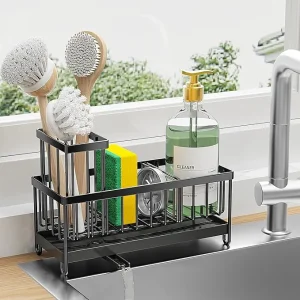
Cisily Black Sponge Holder for Kitchen Sink, Sink Caddy Organizer with High Brush Holder, Kitchen Countertop Organizers and Storage Essentials, Rustproof 304 Stainless Steel, Soap Dispenser Organize
Recommended Articles:
- Healthy Communication Habits That Bring Families Closer
- How to Create a Loving and Supportive Family Environment
- How to Improve Communication in Relationships
- Building Emotional Intimacy Through Small Daily Moments
- The Foundation of Healthy Relationships: Emotional Safety, Communication, and Trust
- Signs of a Healthy Relationship: How to Know If Your Connection Is Truly Strong
- Relationship Red Flags: Warning Signs You Should Never Ignore
- Simple Ways to Strengthen Family Relationships at Home
- How to Communicate with Love and Understanding in Everyday Relationships
💬 Why Tip? It’s Not Just Money — It’s Motivation ❤️
| 😊 What You Got | 🎁 What I Get | 🔗 What You Can Do |
|---|---|---|
| ✔️ A smile or laugh | ✔️ A reason to keep creating | 👉 Buy me a coffee ☕️ |
| ✔️ Useful tips, insights, or ideas | ✔️ Proof that this content helps | 👉 Click the support button 💸 |
| ✔️ Fun, relatable content | ✔️ Motivation to go deeper & better | 👉 Leave a tip + kind feedback 🙌 |
| ✔️ Ad-free reading experience | ✔️ A little financial breathing room | 👉 $1 isn’t too little, $10 isn’t too much 🎉 |
| ✔️ A sense of connection | ✔️ The joy of being seen and supported | 👉 Let me know you’re out there 👀 |
❤️ If you made it this far, maybe that’s your sign to support? Every tip matters!