

This is my little online home where we celebrate life's real magic - the warm connections, simple self-care rituals, and those quiet moments that stay with you.
What I do here:
• Craft stories and tips to brighten your everyday
• Build a space where everyone feels welcome
• Make each visit worth your while - whether you need quick advice or food for thought
My superpowers? Turning ordinary moments into something special through words that actually mean something.
Off-screen, I'm probably:
☕ Curled up with a book that changes my perspective
🎨 Trying some new creative hobby
🌿 Noticing the small wonders we usually rush past
So glad you're here - let's make something meaningful together!
Table of Contents
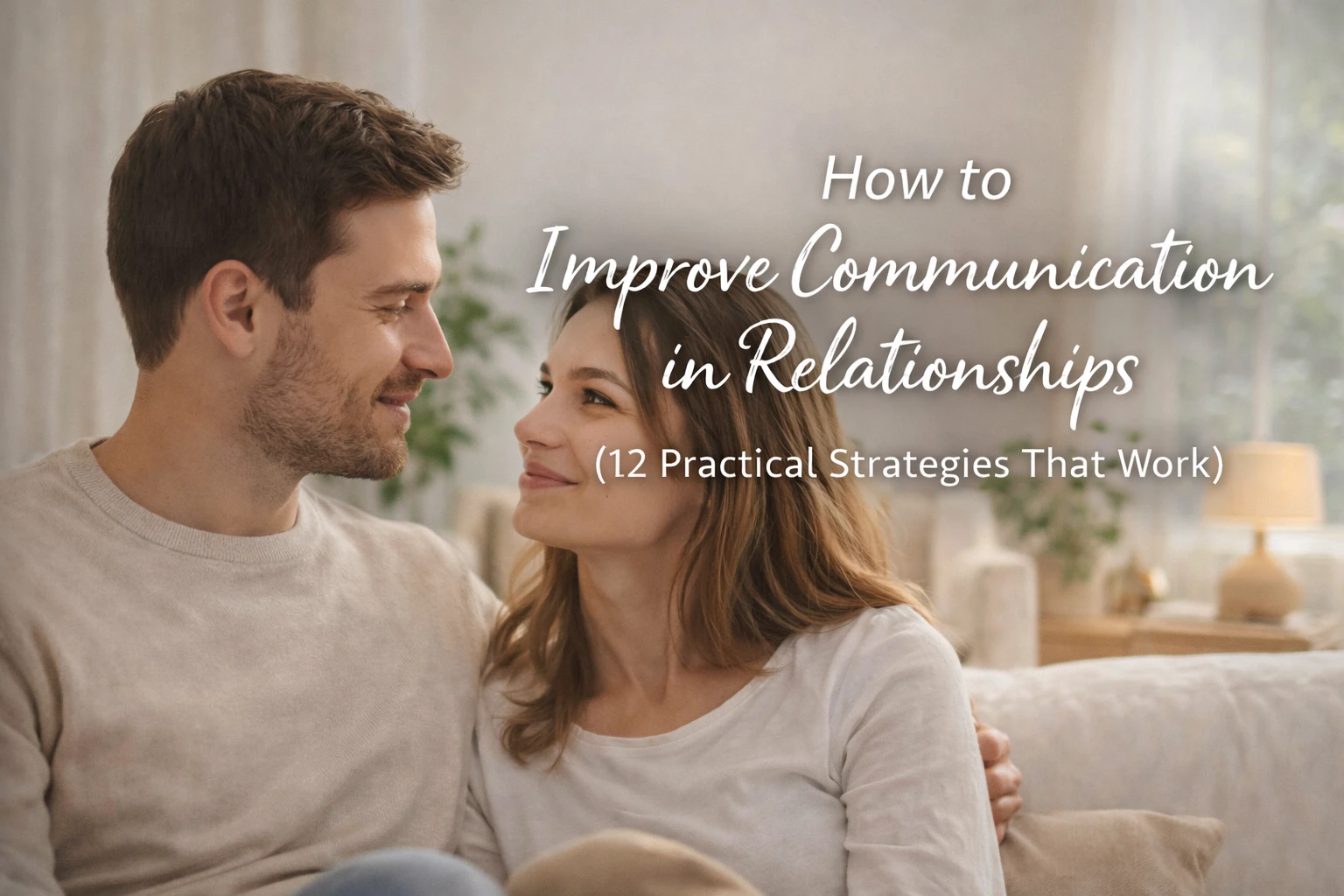
How to Improve Communication in Relationships 💬❤️
A Practical Guide to Building Understanding, Trust, and Emotional Safety
Healthy relationships are not built on perfection.
They are built on communication.
When communication feels safe and open, connection deepens.
When communication breaks down, even strong relationships begin to feel distant.
The truth is simple:
👉 Most relationship problems are not caused by lack of love — but by misunderstandings, emotional reactivity, and unspoken needs.
The good news? Communication is a skill. And skills can be learned.
This guide will show you how to improve communication in relationships using practical, research-supported strategies you can start today.
🌱 Why Communication Matters So Much in Relationships
Communication is more than talking.
It includes:
- How you listen
- How you respond
- How you express needs
- How you handle conflict
- How safe the other person feels while speaking
According to relationship research from institutions like the Gottman Institute, communication patterns are one of the strongest predictors of long-term relationship satisfaction and stability.
When communication improves:
- Emotional intimacy increases
- Conflict becomes manageable
- Trust strengthens
- Resentment decreases
- Both partners feel heard
If you’re working on emotional closeness as well, you may also find this helpful:
👉 Building Emotional Intimacy Through Small Daily Moments
Because communication and intimacy grow together.
🧠 Common Communication Mistakes That Damage Relationships
Before improving communication, it’s important to understand what quietly harms it.
1️⃣ Listening to Reply Instead of Listening to Understand
Many people prepare their response while the other person is still speaking.
This creates disconnection.
True listening means:
- Maintaining eye contact
- Avoiding interruptions
- Reflecting back what you heard
2️⃣ Becoming Defensive Too Quickly
When someone shares a concern, it can feel like criticism.
But defensiveness blocks resolution.
Instead of saying:
“That’s not true.”
Try:
“Can you help me understand what you felt in that moment?”
Curiosity builds bridges. Defensiveness builds walls.
3️⃣ Avoiding Difficult Conversations
Silence feels easier short-term.
But unspoken frustration turns into emotional distance.
Healthy communication means addressing issues early — calmly and respectfully.
4️⃣ Using Blame Language
Blame triggers the brain’s threat response.
Instead of:
“You never listen to me.”
Try:
“I feel unheard when we talk about this.”
“I” statements reduce emotional escalation.
🌸 12 Practical Ways to Improve Communication in Relationships
These strategies are simple — but powerful when practiced consistently.
💬 1. Practice Active Listening
After your partner speaks, reflect:
“What I’m hearing is…”
This confirms understanding and prevents misinterpretation.
Active listening is one of the fastest ways to improve communication.
🤍 2. Validate Emotions Before Solving Problems
Most people want understanding before advice.
Try:
“That sounds really frustrating.”
Validation does not mean agreement.
It means acknowledging emotion.
👀 3. Maintain Calm Body Language
Communication is not only verbal.
Notice:
- Tone of voice
- Facial expression
- Posture
Relaxed body language signals safety.
🧘♀️ 4. Regulate Yourself Before Responding
If emotions feel intense:
- Pause
- Breathe slowly
- Step away briefly if needed
Emotional regulation protects the relationship.
You may also benefit from:
👉 Emotional Healing: Simple Practices to Restore Inner Calm
Because calmer individuals communicate more effectively.
🕯️ 5. Create Weekly Check-In Rituals
Set aside 20–30 minutes weekly to discuss:
- How you’re feeling
- What’s going well
- What needs attention
Regular check-ins prevent small issues from becoming large conflicts.
🌿 6. Reduce Digital Distractions
Put phones away during important conversations.
Presence improves emotional safety.
This also connects with mindful living principles:
👉 Mindfulness for Everyday Life: Simple Ways to Stay Present at Home
Being present strengthens communication naturally.
💞 7. Express Appreciation Frequently
Communication is not only about solving problems.
Say:
- “Thank you.”
- “I appreciate you.”
- “I value what you do.”
Gratitude strengthens bonds.
🔄 8. Clarify Instead of Assuming
Instead of assuming intent, ask:
“When you said that, did you mean…?”
Assumptions damage trust. Clarification builds understanding.
🌼 9. Stay Solution-Focused During Conflict
Instead of revisiting past mistakes, ask:
“What can we do differently next time?”
Forward-thinking conversations create progress.
🏡 10. Protect Emotional Safety at Home
Avoid:
- Mocking
- Name-calling
- Sarcasm during conflict
Emotional safety is the foundation of healthy communication.
For deeper work on relationship safety, see:
👉 The Foundation of Healthy Relationships: Emotional Safety, Communication, and Trust
🕊️ 11. Practice Repair Attempts
After tension:
- Offer a gentle touch
- Say “I’m sorry”
- Acknowledge misunderstanding
Quick repair attempts prevent emotional buildup.
✍️ 12. Be Clear About Your Needs
Many communication issues come from unexpressed expectations.
Say:
“I need reassurance.”
“I need time to think.”
“I need help with this.”
Clarity reduces frustration.
🚨 What Happens When Communication Improves?
Over time, you may notice:
- Fewer escalated conflicts
- More laughter
- Greater emotional openness
- Increased physical affection
- Stronger teamwork
Improved communication creates emotional stability.
And emotional stability strengthens love.
🌙 Long-Term Communication Growth
Communication is not fixed.
It evolves with:
- Life stress
- Career changes
- Family dynamics
- Personal growth
The goal is not perfect communication.
The goal is continuous improvement.
Small changes practiced consistently create long-term transformation.
❓ Frequently Asked Questions (FAQ)
💬 What is the most important communication skill in relationships?
Active listening is often considered the most impactful skill because it makes the other person feel understood and valued.
💬 How can I communicate better during conflict?
Pause before responding, use “I” statements, and focus on solutions instead of blame.
💬 Can communication problems ruin a relationship?
Yes — unresolved communication patterns can create emotional distance over time. However, many issues improve significantly when communication skills are learned and practiced.
💬 How often should couples have meaningful conversations?
Weekly check-ins are highly recommended, but daily small conversations also strengthen connection.
💬 Is communication more important than compatibility?
Even compatible partners struggle without healthy communication. Skills often matter more than personality differences.
🌱 Final Thoughts
Improving communication in relationships does not require dramatic change.
It requires:
Presence.
Patience.
Practice.
When two people feel heard, respected, and emotionally safe, love becomes stronger — not because conflict disappears, but because it becomes manageable.
Communication is not about winning arguments.
It is about protecting connection. ❤️
📚 Authoritative Sources & References
American Psychological Association (APA)
Relationship communication and emotional health
https://www.apa.org/topics/relationships
The Gottman Institute
Evidence-based research on communication patterns and marital stability
https://www.gottman.com
Greater Good Science Center – UC Berkeley
Research on empathy, gratitude, and emotional intelligence
https://greatergood.berkeley.edu
Harvard Study of Adult Development
Long-term research on relationships and wellbeing
https://adultdevelopmentstudy.org
Journal of Marriage and Family
Peer-reviewed research on communication and relationship outcomes
https://onlinelibrary.wiley.com/journal/17413737
Recommended Articles:
- How to Reconnect with Your Partner: Rebuilding Emotional Intimacy One Step at a Time
- How to Feel Emotionally Safe in a Relationship: 10 Ways to Build Trust & Connection
- Why Do I Feel Distant From My Partner? 11 Hidden Reasons You’re Drifting Apart
- Before I Do Scan Review 2026: Is This AI Relationship Health Check Worth Your Time?
- Parallel Vows Review: Can This App Truly Heal Relationship Drift?
- Why Do I Feel Insecure in My Relationship? Understanding Trust Issues, Fear of Loss, and Attachment Anxiety
- Why Do I Feel Disconnected From My Partner? A Deep, Honest Guide to Rebuilding Emotional Connection
- Why Do I Feel Lonely in a Relationship? Understanding Emotional Disconnect and Finding Real Connection
- Healthy Communication Habits That Bring Families Closer

- How to Create a Loving and Supportive Family Environment

- How to Improve Communication in Relationships

- Building Emotional Intimacy Through Small Daily Moments

- The Foundation of Healthy Relationships: Emotional Safety, Communication, and Trust
- Signs of a Healthy Relationship: How to Know If Your Connection Is Truly Strong

- Relationship Red Flags: Warning Signs You Should Never Ignore

- Simple Ways to Strengthen Family Relationships at Home

- How to Communicate with Love and Understanding in Everyday Relationships