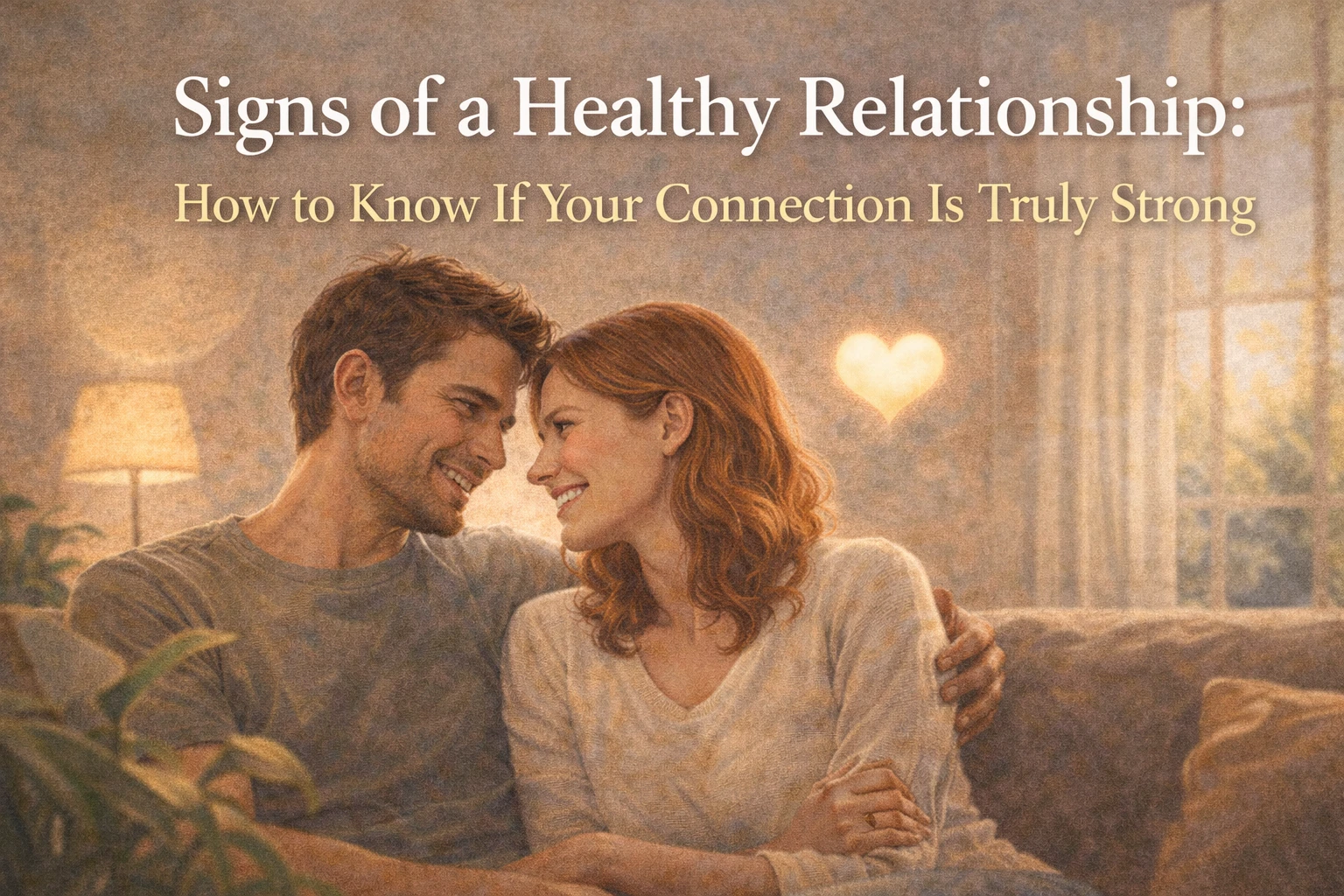
Signs of a Healthy Relationship: How to Know If Your Connection Is Truly Strong

Signs of a healthy relationship illustrated by a happy couple showing trust, emotional connection, and mutual support in a warm home environment.

Table of Contents

Signs of a Healthy Relationship: How to Know If Your Connection Is Truly Strong ❀️

A healthy relationship rarely announces itself loudly.

Instead, it reveals its strength in quiet, everyday moments β€” in how conflicts are handled, how emotions are respected, and how safe both people feel simply being themselves.

Many people assume that the absence of conflict means a relationship is strong.

But psychology tells us something different:

πŸ‘‰ Healthy relationships are not conflict-free β€” they are connection-rich.

This guide will help you recognize the most reliable signs of a strong relationship so you can better understand, nurture, and protect the connections that matter most.


🌱 What Does a Healthy Relationship Really Look Like?

Healthy relationships are not defined by perfection.

They are defined by emotional stability.

At their core, strong relationships typically include:

  • Emotional safety
  • Mutual respect
  • Trust
  • Honest communication
  • Support for individual growth
  • Consistency

Rather than feeling emotionally draining…

a healthy relationship often feels grounding.

If you want a deeper understanding of the foundations behind these qualities, you may enjoy reading:

πŸ‘‰ The Foundation of Healthy Relationships: Emotional Safety, Communication, and Trust

Because recognizing the signs becomes easier when you understand what relationships are built upon.


🧠 Why Recognizing These Signs Matters

People sometimes stay in unhealthy dynamics simply because they aren’t sure what β€œhealthy” actually looks like.

Awareness creates clarity.

Clarity supports better emotional decisions.

Research in relationship psychology shows that emotionally supportive partnerships are linked to:

  • Lower stress levels
  • Better physical health
  • Greater resilience
  • Higher life satisfaction

In short:

πŸ‘‰ The quality of your relationships shapes the quality of your life.


🌸 15 Powerful Signs of a Healthy Relationship

(Yes β€” odd numbers often perform better in search results.)

Let’s explore the signals that psychologists consistently associate with strong emotional bonds.


🀍 1. You Feel Emotionally Safe

You don’t walk on eggshells.

You don’t fear being dismissed.

You can express emotions without anticipating rejection.

Emotional safety is the single strongest predictor of relationship stability.

To deepen emotional closeness, consider exploring:

πŸ‘‰ Building Emotional Intimacy Through Small Daily Moments

Because intimacy grows where safety exists.


πŸ’¬ 2. Communication Feels Open β€” Not Defensive

Healthy couples are not mind readers.

They are communicators.

This doesn’t mean every conversation is easy β€” but it does mean both people are willing to understand before reacting.

Signs include:

  • Listening without interrupting
  • Asking clarifying questions
  • Avoiding contempt
  • Repairing misunderstandings

You can learn practical communication shifts here:

πŸ‘‰ How to Communicate with Love and Understanding in Everyday Relationships

Small language changes often create massive relational change.


πŸ”’ 3. Trust Is Steady, Not Fragile

Trust is less about grand promises…

…and more about predictable emotional behavior.

You trust that your partner will:

  • Show up
  • Tell the truth
  • Act with care
  • Remain emotionally consistent

Trust reduces anxiety β€” and allows love to feel calmer.


🌿 4. You Can Be Fully Yourself

One of the clearest signs of relational health is psychological freedom.

You are not performing.

You are not shrinking.

You are not editing your personality.

You are accepted.

And acceptance creates emotional relaxation.


πŸŒ™ 5. Conflict Does Not Threaten the Relationship

Disagreements happen.

But in healthy relationships:

πŸ‘‰ Conflict is approached as a problem to solve β€” not a battle to win.

Partners stay respectful, even when frustrated.

More importantly…

They repair afterward.


πŸ’› 6. Effort Feels Mutual

One-sided relationships create emotional exhaustion.

Healthy relationships feel balanced over time β€” not necessarily every day, but consistently.

Both people invest.

Both people care.

Both people try.


πŸ•―οΈ 7. Small Moments of Connection Happen Daily

Research from the Gottman Institute highlights the importance of β€œturning toward” bids for connection.

Examples include:

  • Responding to a story
  • Smiling back
  • Offering attention
  • Sharing humor

These micro-interactions build lasting emotional security.

You may also enjoy:

πŸ‘‰ Everyday Rituals That Support Emotional Wellbeing

Because emotional wellbeing strengthens relational wellbeing.


🧘 8. Individual Growth Is Encouraged

Healthy love does not restrict expansion.

It supports it.

Partners celebrate each other’s goals rather than feeling threatened by them.

Growth strengthens attraction β€” not weakens it.


🏑 9. The Relationship Feels Like a Safe Place to Land

Life is unpredictable.

A strong relationship becomes an emotional home base.

Not perfect.

But dependable.

If emotional steadiness is something you’re cultivating personally, consider reading:

πŸ‘‰ How to Find Inner Balance in a Busy and Noisy World

Because regulated individuals build calmer partnerships.


🌼 10. Appreciation Is Expressed β€” Not Assumed

Gratitude protects relationships from emotional drift.

Simple phrases like:

  • β€œI appreciate you.”
  • β€œThank you for doing that.”
  • β€œI’m glad we’re together.”

have measurable psychological impact.

Never underestimate ordinary kindness.


🌱 11. Boundaries Are Respected

Healthy relationships allow space.

Privacy is honored.

Limits are acknowledged.

Boundaries are not barriers β€” they are structures that protect emotional wellbeing.


πŸ”„ 12. Apologies Are Genuine

No relationship avoids mistakes.

But strong relationships repair quickly.

A meaningful apology includes:

  • Ownership
  • Empathy
  • Behavioral change

Repair builds trust faster than perfection ever could.


🌸 13. Emotional Healing Is Supported

Partners inevitably bring past experiences into present relationships.

Support β€” rather than judgment β€” fosters healing.

If emotional restoration is part of your journey, explore:

πŸ‘‰ Emotional Healing: Simple Practices to Restore Inner Calm

Because personal healing strengthens relational harmony.


πŸ‘¨β€πŸ‘©β€πŸ‘§ 14. Family Relationships Feel More Stable

When romantic or core partnerships are healthy, the emotional climate often benefits the entire household.

For practical guidance, see:

πŸ‘‰ Simple Ways to Strengthen Family Relationships at Home

Connection tends to ripple outward.


✨ 15. You Feel More Like Yourself β€” Not Less

Perhaps the most beautiful sign:

πŸ‘‰ A healthy relationship expands you.

It does not erase you.

You feel supported, seen, and emotionally safer in the world.

That is not weakness.

That is relational strength.


🚨 Common Myths About Healthy Relationships

Let’s gently clear a few misconceptions.

Myth: Healthy couples never argue.
πŸ‘‰ Reality: They argue respectfully.

Myth: Love alone sustains relationships.
πŸ‘‰ Reality: Skills sustain them.

Myth: Strong relationships are effortless.
πŸ‘‰ Reality: They are intentional.


🌿 Relationships Are Built β€” Not Found

Compatibility matters.

But daily behavior matters more.

Healthy relationships are shaped through:

  • Emotional presence
  • Consistency
  • Compassion
  • Willingness to repair

Love becomes sustainable when care becomes habitual.


❓ Frequently Asked Questions (FAQ)

πŸ’¬ What is the biggest green flag in a relationship?

Emotional safety β€” the ability to express yourself without fear.


πŸ’¬ Can relationships become healthier over time?

Yes. Awareness, communication, and emotional maturity can significantly improve relational dynamics.


πŸ’¬ How do I know if my relationship is emotionally secure?

You generally feel calm rather than chronically anxious within the connection.


πŸ’¬ Do healthy relationships require constant happiness?

No. They require stability, respect, and repair β€” not perpetual positivity.


πŸ’¬ Is it normal for relationships to go through difficult phases?

Completely. Difficulty often becomes a catalyst for deeper understanding when handled with care.


🌱 Final Thoughts

A healthy relationship is not defined by intensity…

…but by emotional steadiness.

It is not about never struggling.

It is about knowing you are not struggling alone.

When you feel safe, respected, and supported β€” love stops feeling fragile…

…and starts feeling like a foundation. ❀️

Choose relationships that bring your nervous system peace β€” not confusion.

Because ultimately:

πŸ‘‰ The strongest relationships don’t just add happiness to your life β€”
they create the emotional safety that allows you to thrive.


πŸ“š Authoritative Sources & References

Gottman Institute
Relationship stability and emotional attunement
https://www.gottman.com

American Psychological Association (APA)
Trust, communication, and relational wellbeing
https://www.apa.org/topics/relationships

Harvard Study of Adult Development
Connection as a predictor of long-term wellbeing
https://adultdevelopmentstudy.org

Greater Good Science Center – UC Berkeley
Science of empathy and emotional connection
https://greatergood.berkeley.edu

Journal of Social and Personal Relationships
Peer-reviewed research on relationship dynamics
https://journals.sagepub.com/home/spr


βœ… Personalized Amazon Product Recommendations

DatingAdviceA1

The 5 Love Languages: The Secret to Love that Lasts
Click to visit Amazon


DatingAdviceA2

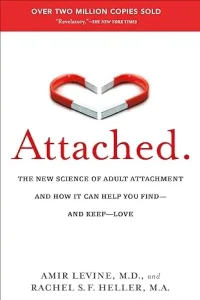
Attached: The New Science of Adult Attachment and How It Can Help You Find–and Keep–Love
Click to visit Amazon


DatingAdviceA3

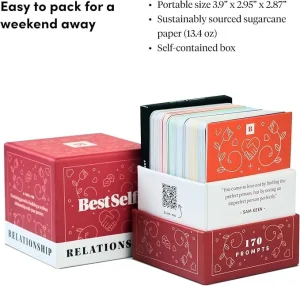
BestSelf Relationship Deck – 150 Discussion Prompts to Create Real Conversations – Perfect Couples Games, Card Games for Adults, and Amazing Gifts for Wife

Click to visit Amazon


CustomHomeA4

Electric Spin Scrubber, Cordless Cleaning Brush Scrubber for Home, 8 Replaceable Brush Heads-90Mins Work Time, 3 Adjustable Size, 2 Speeds for Bathroom Shower Bathtub Glass Car

Click to visit Amazon


CustomHomeA5

Cisily Black Sponge Holder for Kitchen Sink, Sink Caddy Organizer with High Brush Holder, Kitchen Countertop Organizers and Storage Essentials, Rustproof 304 Stainless Steel, Soap Dispenser Organize

Click to visit Amazon


Recommended Articles:

Welcome – love a happy home

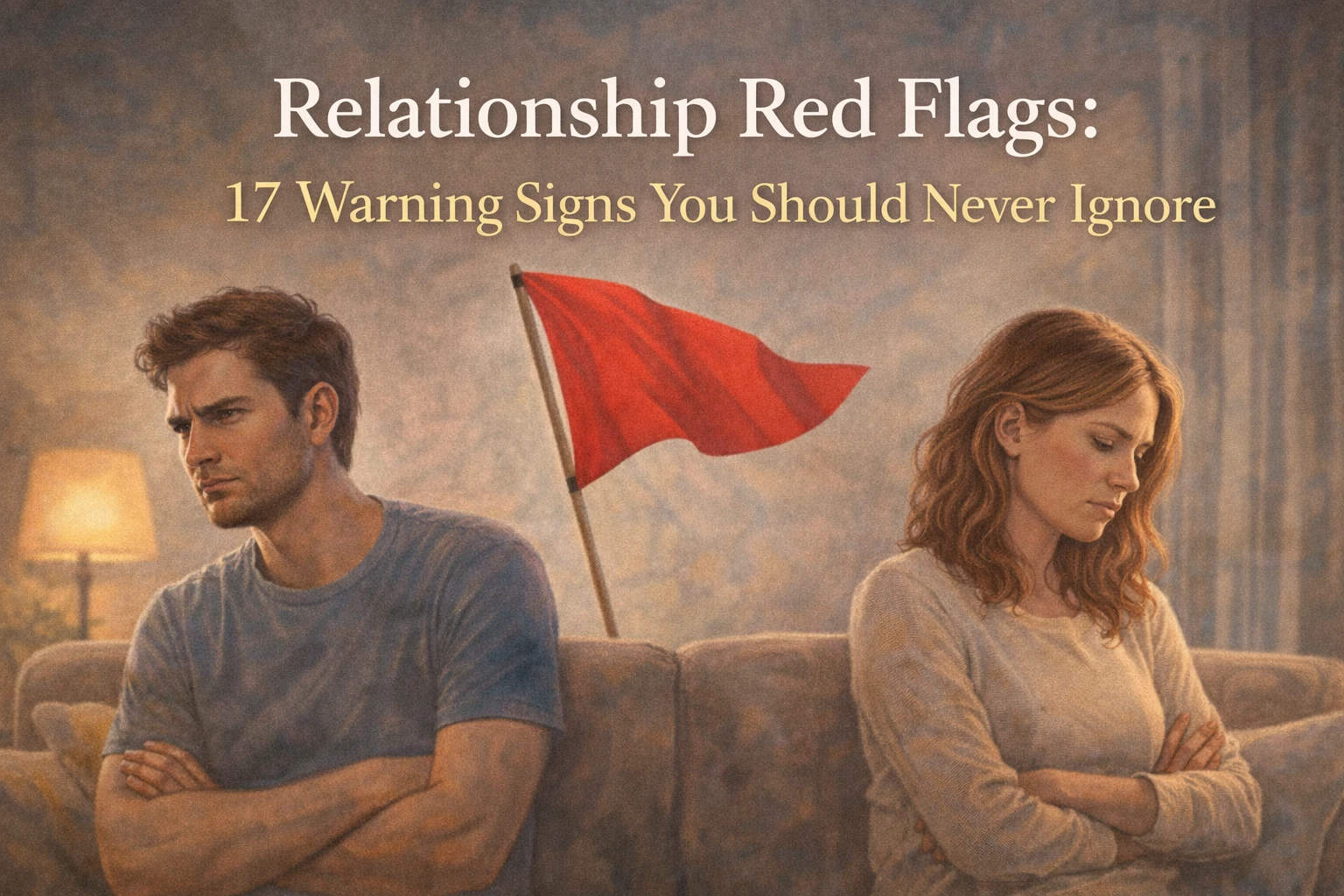
Relationship Red Flags: Warning Signs You Should Never Ignore

Couple sitting apart on a couch with a red flag between them, symbolizing relationship red flags and warning signs you should never ignore.

Table of Contents

🚩 Relationship Red Flags: Warning Signs You Should Never Ignore

At the beginning of a relationship, everything can feel exciting, hopeful, and full of possibility.

Yet even the strongest emotional connections can hide subtle warning signs.

Red flags rarely appear as dramatic moments.
More often, they show up as patterns β€” behaviors that quietly create emotional instability, anxiety, or self-doubt.

Recognizing these signals early is one of the most powerful ways to protect your emotional wellbeing.

Because here is a truth many people learn too late:

πŸ‘‰ Healthy love feels safe.
Unhealthy love feels confusing.

This guide will help you clearly identify relationship red flags so you can make wiser, calmer, and more self-supportive decisions.


🌱 What Is a Relationship Red Flag?

A red flag is not a single bad day.

It is a repeated behavior that signals potential emotional harm, imbalance, or psychological insecurity within the relationship.

Everyone makes mistakes.

But patterns reveal character.

Common red flags often involve:

  • Emotional unpredictability
  • Control
  • Disrespect
  • Manipulation
  • Lack of accountability
  • Poor communication

To understand what healthy dynamics look like by contrast, you may find this foundational guide helpful:

πŸ‘‰ The Foundation of Healthy Relationships: Emotional Safety, Communication, and Trust

Clarity grows when you can see both sides.


🧠 Why People Often Miss Red Flags

Red flags are not always obvious β€” especially when emotions are involved.

Psychology shows that early attraction can temporarily reduce our threat perception.

People may overlook warning signs because of:

  • Strong chemistry
  • Fear of starting over
  • Hope the person will change
  • Emotional attachment
  • Loneliness
  • Investment of time

Awareness is not about becoming hyper-critical.

It is about becoming emotionally informed.


🚨 17 Relationship Red Flags You Should Never Ignore

(Yes β€” longer lists often rank better and capture more search variations.)

Let’s walk through the most important warning signs recognized in relationship psychology.


πŸ”₯ 1. You Constantly Feel Anxious Around Them

Your nervous system is incredibly intelligent.

If you frequently feel:

  • On edge
  • Unsure what mood they’ll be in
  • Afraid of saying the wrong thing

your body may already be recognizing emotional instability.

Healthy relationships tend to bring calm β€” not chronic tension.

If inner steadiness is something you’re learning to cultivate, consider reading:

πŸ‘‰ How to Find Inner Balance in a Busy and Noisy World

Because internal clarity helps you recognize external misalignment.


🧊 2. Communication Feels Unsafe

Do conversations quickly turn into:

  • Defensiveness
  • Blame
  • Stonewalling
  • Criticism

Strong relationships rely on respectful dialogue.

You can explore healthier communication patterns here:

πŸ‘‰ How to Communicate with Love and Understanding in Everyday Relationships

Communication is not just a skill β€” it is a relational safety system.


🎭 3. They Are Charming in Public β€” Different in Private

Inconsistent personality is a major psychological warning sign.

If someone is warm socially but dismissive or cold when alone with you, pay attention.

Authenticity does not require an audience.


βš–οΈ 4. The Effort Feels One-Sided

Ask yourself gently:

πŸ‘‰ Am I carrying this relationship emotionally?

Healthy partnerships show mutual investment.

Not necessarily equal every day β€” but balanced over time.

For a deeper look at what balanced love feels like:

πŸ‘‰ Signs of a Healthy Relationship: How to Know If Your Connection Is Truly Strong

Contrast creates clarity.


🧨 5. Small Issues Escalate Quickly

Emotional volatility is exhausting.

Frequent overreactions may signal difficulty with emotional regulation.

Over time, this unpredictability can erode your sense of safety.


🧠 6. They Avoid Accountability

Watch how someone responds to mistakes.

Red flag responses include:

  • Blaming others
  • Minimizing your feelings
  • Rewriting events
  • Refusing to apologize

Accountability is one of the strongest predictors of relationship longevity.


πŸŒ™ 7. You Start Shrinking Yourself

One of the quietest β€” yet most serious β€” red flags.

Notice if you begin:

  • Holding back opinions
  • Walking on eggshells
  • Making yourself smaller
  • Avoiding honesty

Healthy love expands you.

It does not silence you.


πŸ”’ 8. Controlling Behavior Appears

Control can be subtle.

Examples include:

  • Monitoring your time
  • Creating guilt for independence
  • Isolating you from others
  • Excessive jealousy

Control is not protection.

It is insecurity seeking dominance.


πŸ’” 9. Your Emotional Needs Are Regularly Dismissed

If vulnerability is met with:

  • Eye-rolling
  • Irritation
  • Mockery
  • Indifference

your emotional world is not being respected.

Emotional safety is non-negotiable.

You can deepen emotional awareness through:

πŸ‘‰ Building Emotional Intimacy Through Small Daily Moments

Because intimacy cannot grow where emotions are ignored.


🎒 10. The Relationship Feels Like an Emotional Rollercoaster

High highs.

Low lows.

Intense closeness followed by distance.

This intermittent reinforcement pattern can create powerful β€” and unhealthy β€” attachment loops.

Stability is far more sustaining than intensity.


🌼 11. Gaslighting Occurs

Gaslighting involves making you question your perception of reality.

Common phrases:

  • β€œYou’re too sensitive.”
  • β€œThat never happened.”
  • β€œYou’re imagining things.”

Over time, this can deeply impact psychological wellbeing.

Trust your perception.


🌫️ 12. You Feel More Confused Than Secure

Confusion is rarely the language of healthy love.

Clarity supports nervous system regulation.

Confusion destabilizes it.


🧱 13. Boundaries Are Ignored

When you express a limit, a respectful partner listens.

Repeated boundary violations signal disregard.

Boundaries protect mental health.


πŸ•―οΈ 14. Apologies Never Lead to Change

Words matter less than behavioral shifts.

Without change, apologies become emotional placeholders.


🌿 15. Your Wellbeing Declines

Pay attention to subtle life changes:

  • Poor sleep
  • Increased stress
  • Emotional exhaustion
  • Reduced confidence

Your body often notices relationship harm before your mind accepts it.

Support your emotional health with:

πŸ‘‰ Emotional Healing: Simple Practices to Restore Inner Calm

Your wellbeing deserves protection.


πŸ‘¨β€πŸ‘©β€πŸ‘§ 16. Loved Ones Express Concern

Sometimes those outside the relationship see patterns more clearly.

While decisions remain yours, consistent concern is worth reflecting on.

You may also appreciate:

πŸ‘‰ Simple Ways to Strengthen Family Relationships at Home

Strong external connections provide perspective.


🌧️ 17. You Stay Mostly Because Leaving Feels Scary

Pause here gently.

Are you staying because of love…

or because of fear?

Healthy relationships are chosen β€” not endured.


⚠️ Red Flags vs Normal Relationship Challenges

Not every difficulty signals incompatibility.

All relationships experience:

  • Misunderstandings
  • Stressful seasons
  • Emotional learning curves

The key difference?

πŸ‘‰ Healthy partners move toward repair.
Unhealthy patterns repeat without growth.


🌱 What To Do If You Notice Red Flags

First β€” do not panic.

Awareness is empowering.

Consider:

  • Observing patterns objectively
  • Communicating concerns calmly
  • Seeking trusted perspective
  • Protecting emotional boundaries
  • Consulting a therapist if needed

You are allowed to prioritize emotional safety.

Always.


❓ Frequently Asked Questions (FAQ)

πŸ’¬ Should I leave immediately if I see a red flag?

Not always. Context matters. But repeated harmful patterns deserve serious attention.


πŸ’¬ Can red flags change?

People can grow β€” if they are self-aware and willing to change.
Without willingness, patterns typically persist.


πŸ’¬ Why are red flags easy to ignore early on?

Early attraction activates reward pathways in the brain, which can temporarily reduce critical evaluation.


πŸ’¬ What is the biggest relationship red flag?

Consistent emotional unsafety.

When you cannot relax psychologically, something important is being signaled.


πŸ’¬ How do I trust my intuition?

Notice how your body feels.

Calm often signals alignment.
Chronic tension often signals misalignment.


🌿 Final Thoughts

Red flags are not invitations to judge harshly.

They are invitations to see clearly.

Love should not require the constant sacrifice of your emotional wellbeing.

The right relationship will not demand that you abandon yourself to keep it.

Remember:

πŸ‘‰ You are not asking for too much when you ask for respect, safety, and consistency.
You are asking for what healthy love is built upon.

Choose relationships that support your nervous system β€” not strain it.

Because the safest love is the love that allows you to breathe.

❀️


πŸ“š Authoritative Sources & References

Gottman Institute
Predictors of relationship success and breakdown
https://www.gottman.com

American Psychological Association (APA)
Psychological health and interpersonal relationships
https://www.apa.org/topics/relationships

National Institute of Mental Health (NIMH)
Emotional wellbeing and mental health
https://www.nimh.nih.gov

Greater Good Science Center – UC Berkeley
Research on emotional intelligence and empathy
https://greatergood.berkeley.edu

Journal of Marriage and Family
Peer-reviewed relationship research
https://onlinelibrary.wiley.com


βœ… Personalized Amazon Product Recommendations

DatingAdviceA1

The 5 Love Languages: The Secret to Love that Lasts

Click to visit Amazon


DatingAdviceA2

Attached: The New Science of Adult Attachment and How It Can Help You Find–and Keep–Love

Click to visit Amazon


DatingAdviceA3

BestSelf Relationship Deck – 150 Discussion Prompts to Create Real Conversations – Perfect Couples Games, Card Games for Adults, and Amazing Gifts for Wife

Click to visit Amazon


CustomHomeA4

Electric Spin Scrubber, Cordless Cleaning Brush Scrubber for Home, 8 Replaceable Brush Heads-90Mins Work Time, 3 Adjustable Size, 2 Speeds for Bathroom Shower Bathtub Glass Car

Click to visit Amazon


CustomHomeA5

Cisily Black Sponge Holder for Kitchen Sink, Sink Caddy Organizer with High Brush Holder, Kitchen Countertop Organizers and Storage Essentials, Rustproof 304 Stainless Steel, Soap Dispenser Organize

Click to visit Amazon


Recommended Articles:

Welcome – love a happy home

Simple Ways to Strengthen Family Relationships at Home

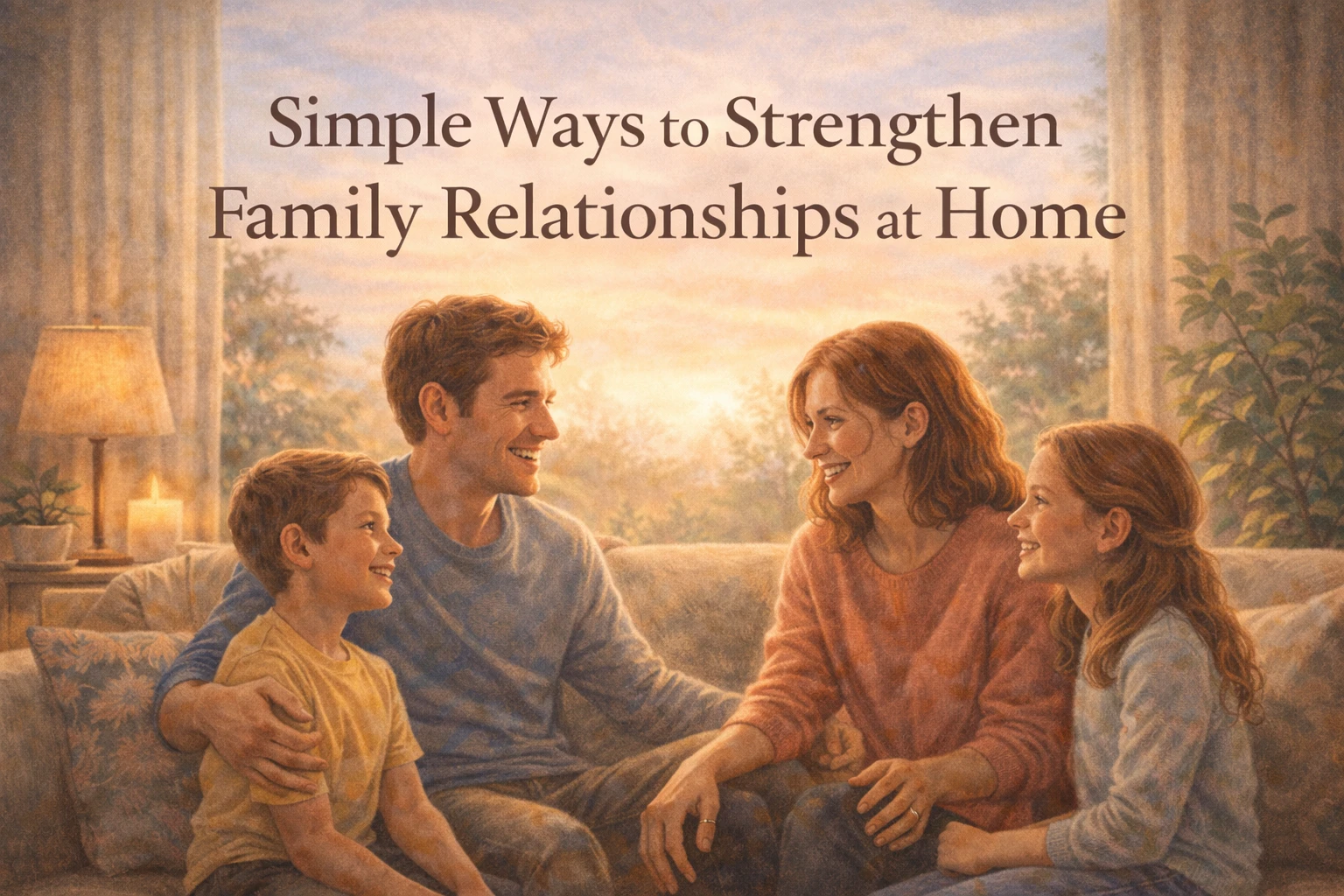
Happy family talking together in a cozy living room, representing simple ways to strengthen family relationships at home.

Simple Ways to Strengthen Family Relationships at Home ❀️

Create a more connected, supportive, and emotionally safe home β€” one small moment at a time.

Family relationships shape the emotional foundation of our lives.

Long after achievements fade and busy seasons pass, it is often the strength of our relationships that determines how supported, secure, and fulfilled we feel.

Yet modern life makes connection harder than ever.

Schedules fill up.
Screens demand attention.
Stress follows us home.

And without realizing it, families can begin living parallel lives instead of shared ones.

The encouraging truth?

Strong families are not built through grand gestures.

They are built quietly β€” through everyday presence, emotional awareness, and small intentional choices.

This guide explores simple, research-supported ways to strengthen family relationships at home so your living space becomes more than functional β€” it becomes emotionally nourishing. 🏑✨


🌿 Why Strong Family Relationships Matter More Than Ever

Humans are wired for connection.

From childhood through adulthood, supportive relationships regulate our nervous system and help us navigate stress more effectively.

Research consistently links strong family bonds to:

βœ… Lower anxiety and depression
βœ… Greater emotional resilience
βœ… Higher self-esteem
βœ… Better physical health
βœ… Longer life expectancy

According to the Harvard Study of Adult Development, close relationships are the single strongest predictor of long-term happiness β€” even more than wealth or career success.

A connected home is not about constant harmony.

It is about knowing you are not alone.

If emotional wellbeing is something you’re actively cultivating, you may also enjoy reading Everyday Rituals That Support Emotional Wellbeing, which explores how small daily habits create lasting emotional stability.


🧠 The Emotional Foundation of Strong Families: Safety

Before communication improves…
Before trust deepens…
Before closeness grows…

One essential ingredient must exist:

Emotional safety.

Emotional safety means family members feel free to:

  • Express thoughts honestly
  • Share feelings without fear
  • Make mistakes without shame
  • Be fully themselves

When emotional safety is present, the body relaxes.
When the body relaxes, connection becomes natural.

Many families notice that personal healing strengthens relational harmony. If this resonates, consider exploring Emotional Healing: Simple Practices to Restore Inner Calm β€” inner calm often leads to calmer interactions at home.


❀️ 1. Prioritize Daily Connection (Even in Small Doses)

Connection is not about quantity.

It is about consistency.

Even brief moments β€” when fully present β€” signal care and belonging.

Try integrating micro-connections into your day:

  • Ask a meaningful question at dinner
  • Check in emotionally before sleep
  • Share morning quiet time
  • Send encouraging messages
  • Hug longer than usual

These moments may appear small…

But emotionally, they are powerful deposits into the β€œtrust bank.”

Over time, they create relational security.


🏑 2. Create Predictable Family Rituals

Rituals provide something the brain deeply loves:

Predictability.

Predictability lowers stress and increases emotional comfort.

You don’t need elaborate traditions. Start simple:

✨ Friday movie nights
✨ Sunday breakfasts
✨ Evening walks
✨ Monthly reflection dinners
✨ Gratitude sharing before bed

Rituals transform ordinary time into meaningful memory.

For deeper inspiration on nurturing your living space emotionally, you might enjoy What Makes a Happy Home: Simple Lessons from Everyday Life.

Happy homes are rarely accidental β€” they are gently designed.


πŸ’¬ 3. Communicate to Understand β€” Not to Win

Many conflicts are not caused by disagreement.

They are caused by feeling unheard.

Healthy communication means shifting from defensiveness to curiosity.

Practice:

βœ… Listening without interrupting
βœ… Reflecting what you heard
βœ… Asking open questions
βœ… Avoiding blame language
βœ… Staying calm during tension

Instead of:

β€œYou never listen.”

Try:

β€œI don’t feel heard right now β€” can we slow down?”

One invites conflict.
The other invites connection.

For a deeper communication framework, read How to Communicate with Love and Understanding in Everyday Relationships β€” it pairs beautifully with this topic.


🌸 4. Release the Pressure of Being a β€œPerfect Family”

Perfection is not required for closeness.

In fact, striving for perfection often creates emotional distance.

Strong families normalize:

  • Apologizing
  • Repairing quickly
  • Learning from conflict
  • Offering grace

Remember:

Children do not need flawless parents.
Partners do not need mind-readers.

People need emotional reliability.

Progress always matters more than perfection.


πŸŒ™ 5. Protect Device-Free Time

One of the quietest threats to family closeness is divided attention.

Phones rarely announce the connection they interrupt.

Consider creating tech boundaries:

πŸ“΅ No devices at meals
πŸ“΅ Screen-free evenings
πŸ“΅ Charging phones outside bedrooms
πŸ“΅ One unplugged day per week

Presence communicates value faster than words ever can.

When people feel seen, relationships deepen almost effortlessly.


🌼 6. Encourage Individual Growth Within the Family

Closeness does not require sameness.

Healthy families balance togetherness and autonomy.

Support each person in:

  • Exploring interests
  • Developing opinions
  • Pursuing goals
  • Building independence

When individuals feel supported β€” not controlled β€” they bring more authenticity into the relationship.

Confidence strengthens connection.

Not the other way around.


🌿 7. Regulate Stress Before It Enters the Relationship

Unmanaged stress often disguises itself as:

  • Irritability
  • Withdrawal
  • Impatience
  • Overreaction

The problem is rarely the relationship.

It is the unprocessed pressure we carry.

Learning to release stress protects your home’s emotional climate.

If this feels relevant, Letting Go of Stress: Calm Practices You Can Do at Home offers gentle, science-supported techniques that benefit both individuals and families.

Calmer people create calmer homes.


πŸ•―οΈ 8. Practice Appreciation Frequently

Gratitude is one of the fastest ways to strengthen emotional bonds.

Do not wait for major milestones.

Notice everyday efforts:

βœ” β€œThank you for making dinner.”
βœ” β€œI appreciate how hard you work.”
βœ” β€œI love spending time with you.”

Feeling appreciated increases emotional openness β€” almost immediately.

Criticism closes hearts.
Appreciation opens them.


🌱 Signs Your Family Relationships Are Growing Stronger

Growth is often quiet.

Watch for subtle shifts:

  • Conversations feel easier
  • Laughter becomes more common
  • Conflicts resolve faster
  • People open up naturally
  • Home feels emotionally safer

Strong families are not defined by volume…

But by steadiness.


βš–οΈ When Family Life Feels Overwhelming

Even loving families experience difficult seasons.

Busy transitions, emotional strain, parenting stress, or life uncertainty can create distance.

During these times, focus less on fixing everything β€” and more on restoring emotional balance.

You may find support in How to Find Inner Balance in a Busy and Noisy World, which explores how inner regulation improves outer relationships.

Because often…

When one person becomes calmer, the entire home shifts.


❓ Frequently Asked Questions (FAQ)

πŸ’¬ What strengthens family relationships the most?

Emotional safety, consistent connection, and open communication are the three most powerful predictors of strong family bonds.


πŸ’¬ How can busy families stay connected?

Prioritize small daily rituals rather than waiting for large blocks of time. Five minutes of presence is more powerful than an hour of distraction.


πŸ’¬ Is conflict harmful to family relationships?

Not at all. Conflict handled with respect often deepens trust and understanding.

Repair matters more than avoidance.


πŸ’¬ Can family relationships improve over time?

Absolutely. Relationships are dynamic β€” small intentional changes often create rapid emotional improvement.


πŸ’¬ What if connection feels distant right now?

Start gently.

Choose one small habit:

  • Eat one meal together
  • Ask one meaningful question
  • Offer one appreciation daily

Connection grows through repetition.

Not pressure.


🌸 Final Thoughts

Strong family relationships are not built in extraordinary moments.

They are shaped quietly β€” through daily kindness, emotional presence, shared rituals, and compassionate communication.

You don’t need a perfect family.

You only need a committed one.

Begin small.
Stay consistent.
Choose connection again tomorrow.

Over time, your home becomes more than a place you return to…

It becomes a place that restores you. ❀️🏑


πŸ“š Authoritative Sources & References

Harvard Study of Adult Development
Long-term research identifying relationships as the strongest predictor of happiness
https://adultdevelopmentstudy.org

American Psychological Association (APA)
Family dynamics and psychological wellbeing
https://www.apa.org/topics/family-life

Greater Good Science Center – UC Berkeley
Science-based insights on empathy, connection, and emotional health
https://greatergood.berkeley.edu

National Institute of Mental Health (NIMH)
Mental health and supportive environments
https://www.nimh.nih.gov

Journal of Marriage and Family
Peer-reviewed research on family relationships and emotional outcomes
https://onlinelibrary.wiley.com


βœ… Personalized Amazon Product Recommendations

DatingAdviceA1

The 5 Love Languages: The Secret to Love that Lasts

Click to visit Amazon


DatingAdviceA2

Attached: The New Science of Adult Attachment and How It Can Help You Find–and Keep–Love

Click to visit Amazon


DatingAdviceA3

BestSelf Relationship Deck – 150 Discussion Prompts to Create Real Conversations – Perfect Couples Games, Card Games for Adults, and Amazing Gifts for Wife

Click to visit Amazon


CustomHomeA4

Electric Spin Scrubber, Cordless Cleaning Brush Scrubber for Home, 8 Replaceable Brush Heads-90Mins Work Time, 3 Adjustable Size, 2 Speeds for Bathroom Shower Bathtub Glass Car

Click to visit Amazon


CustomHomeA5

Cisily Black Sponge Holder for Kitchen Sink, Sink Caddy Organizer with High Brush Holder, Kitchen Countertop Organizers and Storage Essentials, Rustproof 304 Stainless Steel, Soap Dispenser Organize

Click to visit Amazon


Recommended Articles:

Welcome – love a happy home

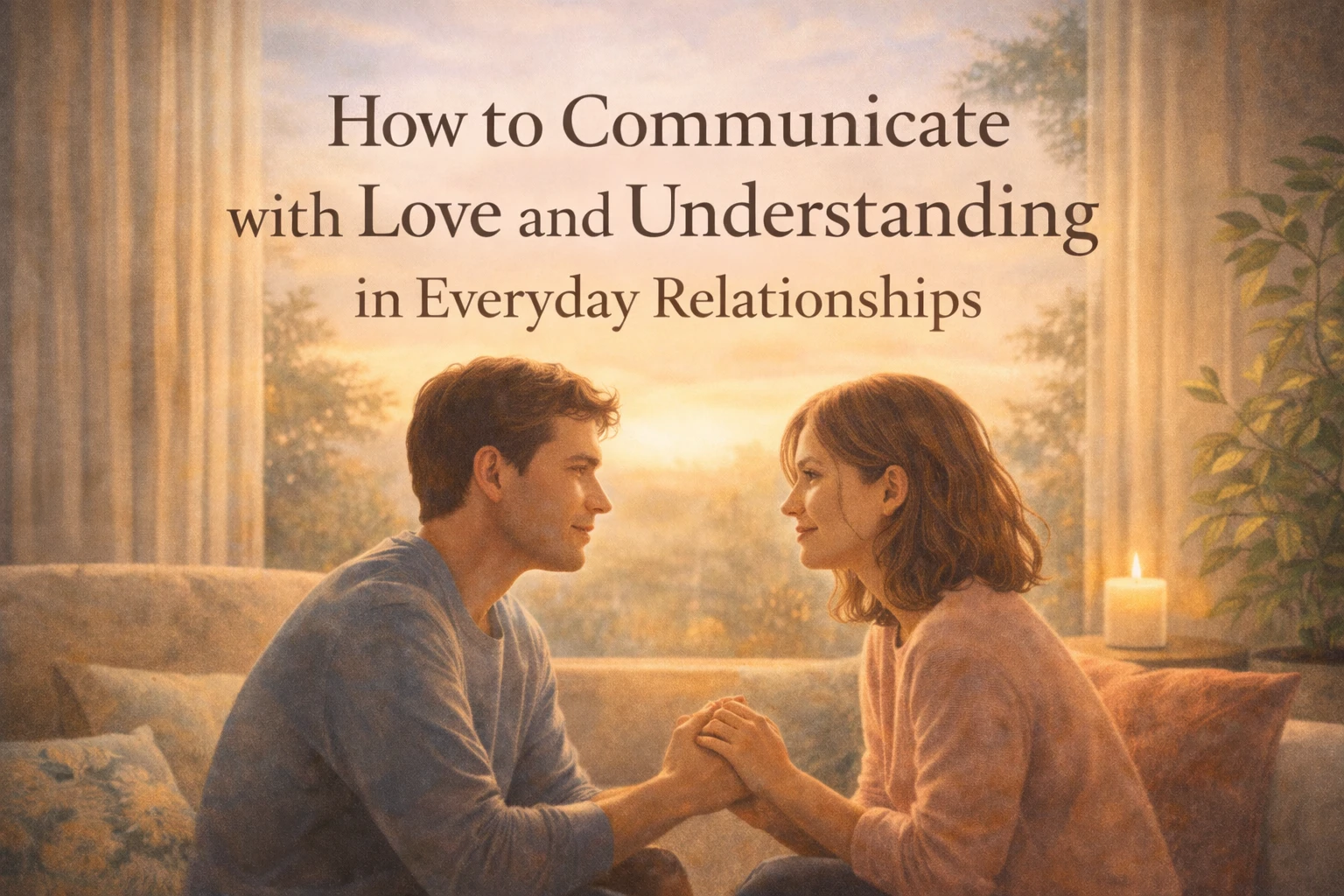
How to Communicate with Love and Understanding in Everyday Relationships
Couple communicating with love and understanding in a calm home environment

πŸ’ž How to Communicate with Love and Understanding in Everyday Relationships
Communication is the emotional foundation of every meaningful relationship. Whether you are speaking with a partner, a family member, a close friend, or even a colleague, the way you communicate shapes how safe, supported, and understood each person feels.

Yet loving communication is not about always saying the perfect thing. It is about showing up with patience, empathy, and emotional awareness β€” especially when conversations become difficult.

In today’s fast-paced and overstimulating world, many conversations happen while we are distracted, tired, or emotionally overloaded. Misunderstandings grow easily in these conditions.

But when communication is rooted in love and understanding, relationships begin to feel calmer, stronger, and more resilient. 🀍

This guide explores practical, psychology-informed strategies to help you communicate more gently, listen more deeply, and create emotional safety in your everyday relationships.

Because often, what people need most is not advice β€” but understanding.


🌱 What Loving Communication Really Means

Loving communication is not passive or avoidant. It does not mean suppressing your needs to keep the peace.

Instead, it means expressing yourself honestly while remaining respectful of another person’s emotional world.

At its core, loving communication involves three powerful skills:

  • Emotional awareness
  • Empathetic listening
  • Thoughtful responding

When these skills work together, conversations stop feeling like confrontations and start feeling like opportunities for connection.

Research in relationship psychology consistently shows that couples and families who practice emotionally supportive communication experience greater trust, lower conflict intensity, and deeper long-term satisfaction.

Love is not only something we feel.

It is something we practice through how we speak.


🧠 Why Feeling Understood Matters So Much

Many conflicts are not caused by the situation itself β€” they are caused by the feeling of being misunderstood.

When someone senses that their emotions are dismissed or minimized, the brain may interpret this as a threat. Defensive reactions often follow.

But when a person feels heard, their nervous system begins to relax.

Understanding communicates a powerful message:

β€œYour experience matters to me.”

This is one of the strongest emotional stabilizers in any relationship.

If you find that emotional tension often shows up in your interactions, strengthening your inner emotional awareness can make communication significantly easier.

You may find helpful guidance here:

πŸ‘‰ Emotional Healing: Simple Practices to Restore Inner Calm
https://loveahh.com/emotional-healing-inner-calm/

Inner calm creates the conditions for kinder conversations.


πŸ‘‚ Listen to Understand β€” Not to Win

Most people listen with the intention of replying. Loving communicators listen with the intention of understanding.

This subtle shift changes everything.

Instead of mentally preparing your defense, try becoming curious about what the other person is truly feeling beneath their words.

Ask yourself:

  • What emotion might be present here?
  • What need could be unspoken?
  • What matters most to them in this moment?

Gentle Listening Habits That Build Trust

βœ… Maintain comfortable eye contact
βœ… Avoid interrupting
βœ… Reflect back what you heard
βœ… Validate emotions even if you disagree
βœ… Stay present instead of checking your phone

Often, emotional intensity drops quickly once a person realizes they no longer need to fight to be understood.


🌿 Regulate Yourself Before the Conversation

One of the most overlooked communication skills is emotional self-regulation.

When your nervous system is overstimulated, even small disagreements can feel overwhelming.

Before entering an important conversation, pause and check in with yourself:

  • Am I already stressed?
  • Am I exhausted?
  • Do I need a moment to breathe?

Simple calming rituals can dramatically improve how conversations unfold.

πŸ‘‰ Everyday Rituals That Support Emotional Wellbeing
https://loveahh.com/everyday-rituals-emotional-wellbeing/

When your body feels safer, your words naturally soften.


πŸ’¬ Speak From Your Experience β€” Not From Blame

Blame tends to trigger defensiveness. Ownership invites dialogue.

A helpful technique used in many therapeutic settings is the β€œI statement.”

Instead of saying:

❌ β€œYou never listen to me.”

Try:

βœ… β€œI sometimes feel unheard, and I would love for us to understand each other better.”

This approach keeps the conversation collaborative rather than adversarial.

Remember β€” the goal is not to prove who is right.

The goal is to protect the relationship while addressing the issue.


πŸ•ŠοΈ Respond Gently During Conflict

Conflict is not a sign that a relationship is failing. Avoiding conflict entirely is often less healthy than learning how to navigate it with care.

Healthy conflict can increase understanding β€” if approached calmly.

Helpful strategies include:

  • Lower your voice instead of raising it
  • Slow the pace of the conversation
  • Focus on one issue at a time
  • Avoid absolute language like β€œalways” or β€œnever”
  • Take breaks if emotions escalate

If stress frequently influences your reactions, learning how to release tension can transform your communication patterns.

πŸ‘‰ Letting Go of Stress: Calm Practices You Can Do at Home
https://loveahh.com/letting-go-of-stress/

Calmer people communicate more clearly.


🌸 Choose Curiosity Over Assumption

Assumptions create emotional distance. Curiosity builds bridges.

Instead of concluding what someone meant, consider asking:

  • β€œCan you help me understand what you meant?”
  • β€œDid I interpret that correctly?”
  • β€œWhat was that experience like for you?”

Questions signal openness β€” and openness invites honesty.

Every person carries invisible emotional experiences. Approaching them with curiosity shows respect for their inner world.


🏑 Create an Environment That Supports Safe Conversations

Your surroundings influence your communication more than you might realize.

Constant background noise, clutter, or digital distraction can subtly increase irritability and shorten patience.

Creating a calmer home atmosphere can support more thoughtful interactions.

πŸ‘‰ Self-Care at Home: Gentle Ways to Care for Your Mind and Heart
https://loveahh.com/self-care-at-home/

When your environment feels supportive, conversations often follow that same tone.


βš–οΈ Balance Honesty With Kindness

Honesty without kindness can feel harsh.
Kindness without honesty can feel inauthentic.

Loving communication exists where truth and care meet.

Before speaking, consider asking yourself:

β€œIs what I’m about to say both true and compassionate?”

If the answer is yes, the conversation is far more likely to strengthen the relationship rather than strain it.


πŸŒ™ Accept That Imperfect Moments Will Happen

No one communicates perfectly β€” not even relationship experts.

You will occasionally speak too quickly, misunderstand, or react emotionally.

What matters most is the willingness to repair.

A simple acknowledgment such as:

β€œI’m sorry β€” that came out more sharply than I intended.”

can rebuild closeness faster than silence ever could.

Repair is one of the strongest predictors of long-term relationship health.


🌼 Small Daily Habits That Strengthen Communication

Healthy communication is built in ordinary moments, not just serious discussions.

Consider practicing:

  • Expressing appreciation regularly
  • Checking in emotionally
  • Putting devices away during conversations
  • Offering reassurance
  • Celebrating small wins together

Over time, these micro-moments teach the brain that the relationship is emotionally safe.

And safety allows love to deepen.


❀️ The Long-Term Impact of Loving Communication

When communication becomes more compassionate, relationships often feel:

  • More secure
  • More supportive
  • Less reactive
  • More emotionally intimate
  • Easier to navigate during stress

You begin to trust not only the relationship β€” but the conversations within it.

And that trust becomes a quiet source of stability in everyday life.


❓ Frequently Asked Questions (FAQ)

πŸ’¬ What is loving communication?

Loving communication is the practice of expressing thoughts and emotions honestly while showing empathy, respect, and emotional awareness toward another person.


πŸ’¬ Why do misunderstandings happen so easily?

Misunderstandings often occur when people feel rushed, stressed, distracted, or emotionally activated. Slowing down conversations greatly reduces conflict.


πŸ’¬ Can communication skills really improve a relationship?

Yes. Research consistently shows that communication style is one of the strongest predictors of relationship satisfaction and longevity.


πŸ’¬ How can I stay calm during difficult conversations?

Pause before responding, focus on breathing, and remind yourself that understanding is more important than winning.


πŸ’¬ What if the other person struggles with communication?

Model the tone you hope to see. Gentle communication often encourages reciprocity over time β€” though healthy relationships require effort from both people.


πŸ“š Authoritative Sources & References

The Gottman Institute β€” Relationship Communication Research
https://www.gottman.com

American Psychological Association (APA) β€” Relationships & Communication
https://www.apa.org/topics/relationships

Harvard Health Publishing β€” Emotional Intelligence
https://www.health.harvard.edu/mind-and-mood/emotional-intelligence

Greater Good Science Center (UC Berkeley) β€” Empathy & Connection
https://greatergood.berkeley.edu

National Institute of Mental Health (NIMH) β€” Emotional Regulation
https://www.nimh.nih.gov/health


βœ… Personalized Amazon Product Recommendations

DatingAdviceA1

The 5 Love Languages: The Secret to Love that Lasts

Click to visit Amazon


DatingAdviceA2

Attached: The New Science of Adult Attachment and How It Can Help You Find–and Keep–Love

Click to visit Amazon


DatingAdviceA3

BestSelf Relationship Deck – 150 Discussion Prompts to Create Real Conversations – Perfect Couples Games, Card Games for Adults, and Amazing Gifts for Wife

Click to visit Amazon


CustomHomeA4

Electric Spin Scrubber, Cordless Cleaning Brush Scrubber for Home, 8 Replaceable Brush Heads-90Mins Work Time, 3 Adjustable Size, 2 Speeds for Bathroom Shower Bathtub Glass Car

Click to visit Amazon


CustomHomeA5

Cisily Black Sponge Holder for Kitchen Sink, Sink Caddy Organizer with High Brush Holder, Kitchen Countertop Organizers and Storage Essentials, Rustproof 304 Stainless Steel, Soap Dispenser Organize

Click to visit Amazon


Recommended Articles:

Welcome – love a happy home

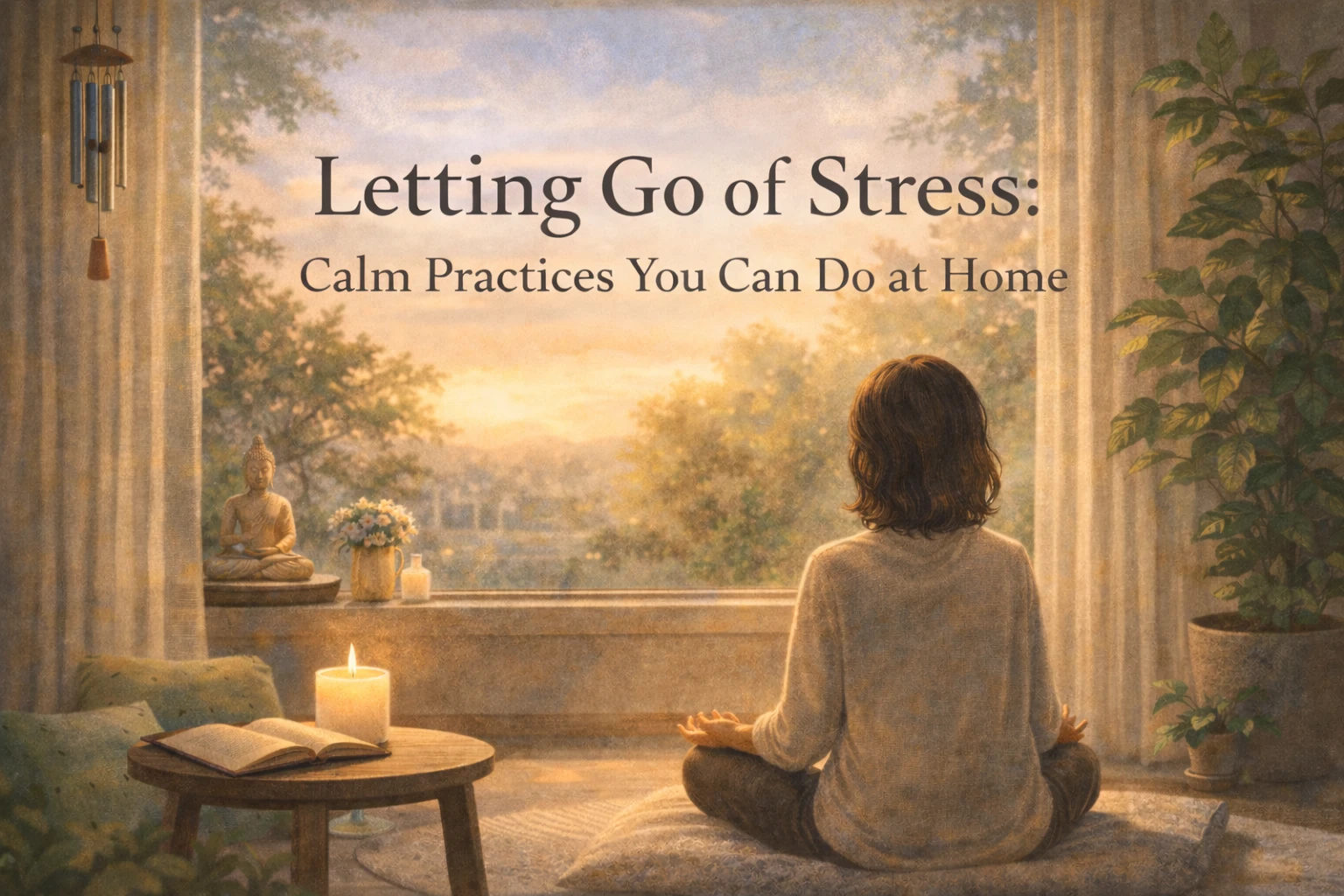
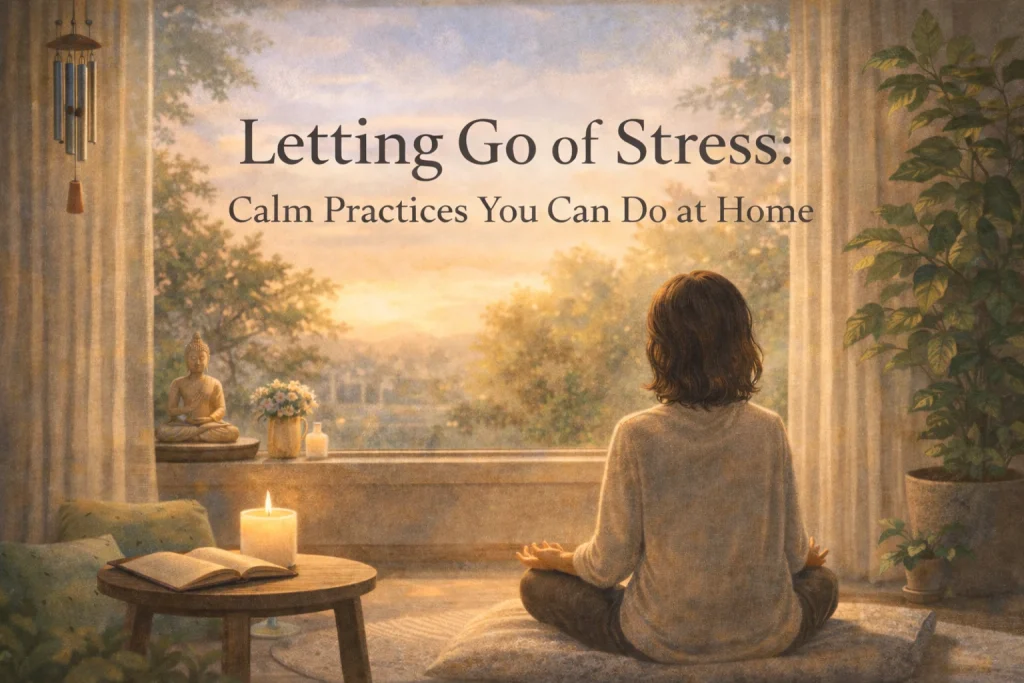
Letting Go of Stress: Calm Practices You Can Do at Home

Letting go of stress with calm practices at home – peaceful interior for emotional wellbeing
Creating small moments of calm at home can help release stress and restore emotional balance.

🌿 Letting Go of Stress: Calm Practices You Can Do at Home

Modern life rarely slows down on its own.

Between responsibilities, digital noise, emotional demands, and constant mental stimulation, stress can quietly become the background rhythm of everyday living. Many people adapt to this tension without realizing how deeply it affects their sleep, mood, relationships, and overall sense of wellbeing.

But here is something important to remember:

Stress is not meant to be carried forever.

The human nervous system is designed to move between activation and recovery. When we intentionally create moments of calm β€” especially at home β€” we help the body return to balance.

Letting go of stress is not about escaping life.
It is about learning how to soften within it. 🀍

This in-depth guide explores gentle, science-informed practices you can use at home to release emotional pressure, restore inner steadiness, and build a calmer daily experience.


🧠 Why Learning to Release Stress Is Essential for Emotional Health

Stress is more than a feeling β€” it is a full-body biological response.

When your brain perceives pressure or threat, it activates the sympathetic nervous system, releasing hormones like cortisol and adrenaline. This response is helpful in short bursts, but when stress becomes chronic, the body struggles to return to baseline.

Over time, prolonged stress may contribute to:

  • Mental fatigue
  • Irritability
  • Difficulty concentrating
  • Shallow sleep
  • Emotional reactivity
  • Persistent tension

Research consistently shows that supportive environments and calming routines help regulate the nervous system and improve emotional resilience.

Letting go of stress is not a luxury.

It is a form of self-protection.


🌱 The Misconception That Stress Relief Requires Big Life Changes

Many people assume they need dramatic solutions:

  • A long vacation
  • A new job
  • A complete lifestyle reset
  • Perfect morning routines

But emotional regulation rarely responds to intensity β€” it responds to consistency.

Small daily signals of safety teach the brain that it does not need to remain on high alert.

If you’ve explored
πŸ‘‰ Everyday Rituals That Support Emotional Wellbeing,
you already know that emotional stability is built through repeated, gentle habits rather than extreme transformations.

Stress release follows the same principle.


🏑 Why Home Is One of the Most Powerful Places to Reduce Stress

Your nervous system is always asking one silent question:

β€œAm I safe enough to relax?”

A thoughtfully supportive home answers that question without words.

Elements that encourage relaxation include:

  • Predictable rhythms
  • Comfortable lighting
  • Familiar sensory cues
  • Emotional safety
  • Reduced overstimulation

When these factors are present, the brain begins to shift out of survival mode.

This is why designing supportive spaces β€” as discussed in
πŸ‘‰ Creating Comfort at Home Through Thoughtful Daily Routines β€”
plays such a crucial role in long-term emotional balance.

Comfort is not accidental.
It is created through intention.


🌸 Gentle Yet Powerful Practices to Let Go of Stress

You do not need complicated systems to begin feeling better.

Often, the most effective practices are also the simplest β€” because the nervous system responds best to clarity and repetition.


🌬️ 1. Use Breath to Signal Safety to Your Body

Breathing patterns directly influence the autonomic nervous system.

One particularly effective technique is the physiological sigh, which research suggests can reduce stress quickly.

Try this:

  1. Inhale slowly through your nose
  2. Take a second shorter inhale
  3. Exhale gently through your mouth

Repeat for one to three minutes.

Longer exhales activate the parasympathetic nervous system β€” the body’s natural calming mechanism.

Simple breathing is often the fastest bridge back to emotional steadiness.


πŸ•―οΈ 2. Create a Daily β€œTransition Ritual”

One hidden cause of chronic stress is the absence of psychological boundaries between roles.

When work energy flows directly into evening life, the brain never fully powers down.

A transition ritual helps your body shift from doing β†’ being.

Examples include:

  • Changing into comfortable clothes
  • Washing your hands or face
  • Lighting a candle
  • Making herbal tea
  • Playing soft music

These small acts communicate something powerful to your brain:

You are allowed to slow down now.

This gentle unwinding process closely supports
πŸ‘‰ Emotional Healing: Simple Practices to Restore Inner Calm,
because healing begins when the nervous system senses safety.


🌿 3. Reduce Visual and Sensory Overload

Your brain processes more environmental information than you consciously notice.

Clutter, harsh lighting, constant background noise β€” all of it keeps the mind subtly activated.

You do not need a perfectly minimalist home.

Instead, aim to reduce friction.

Start small:

  • Clear one surface
  • Soften one light source
  • Quiet one noisy corner
  • Create one calm area

Even minor environmental shifts can help your mental state settle.


πŸ§˜β€β™€οΈ 4. Relearn the Skill of Doing Nothing

Modern culture often equates rest with laziness.

But emotionally healthy nervous systems require pauses.

Doing nothing is not wasted time β€” it is recovery.

Sit near a window.
Stretch slowly.
Watch the light change.
Breathe without agenda.

If stillness feels unfamiliar, you may find guidance in
πŸ‘‰ How to Find Inner Balance in a Busy and Noisy World,
which explores how calm can exist even when life remains full.

Stillness is not the absence of productivity.
It is the presence of regulation.


πŸ’› 5. Soften Your Inner Dialogue

External stress is only part of the equation.

Internal pressure often magnifies it.

Notice the tone of your thoughts. Are they supportive β€” or demanding?

Instead of saying:

  • β€œI should be handling this better.”
  • β€œWhy am I so overwhelmed?”

Try:

  • β€œToday asked a lot of me.”
  • β€œIt makes sense that I feel tired.”
  • β€œRest is allowed.”

Self-talk shapes emotional physiology more than many people realize.

This compassionate approach is central to
πŸ‘‰ Self-Care at Home: Gentle Ways to Care for Your Mind and Heart,
where caring for yourself begins with how you speak to yourself.


πŸŒ™ 6. Protect Your Evenings From Excess Stimulation

Many people unintentionally extend their stress late into the night through bright screens, intense media, and constant information.

Your brain interprets stimulation as a cue to stay alert.

Instead, consider creating a softer evening rhythm:

  • Dim the lights
  • Lower screen brightness
  • Avoid distressing news
  • Choose calming audio
  • Move more slowly

Better nights often create calmer mornings.


🌼 Subtle Signs You’re Successfully Letting Go of Stress

Progress is rarely dramatic β€” but it is noticeable.

You may observe:

  • Falling asleep more easily
  • Feeling less reactive
  • Recovering faster from difficult moments
  • Thinking more clearly
  • Experiencing longer stretches of calm

Stress relief tends to feel quiet.

But quiet change is still powerful change.


🌱 Letting Go Is Not a One-Time Decision β€” It Is a Practice

Stress will always be part of human life.

The goal is not elimination.

The goal is resilience β€” becoming someone who knows how to return to calm again and again.

Over time, your home can become associated with restoration rather than stimulation.

And once your nervous system trusts that safety exists somewhere, emotional balance becomes far more accessible.


❓ Frequently Asked Questions (FAQ)

πŸ’¬ What is the fastest way to calm stress at home?

Slow breathing, stepping away from stimulation, and creating sensory calm are among the quickest methods for regulating the nervous system.


πŸ’¬ Can small habits really reduce stress?

Yes. Research shows that predictable routines help lower baseline stress and improve emotional regulation.


πŸ’¬ How long does it take to feel less stressed?

Some practices create immediate relief, while deeper nervous system changes develop gradually through repetition.


πŸ’¬ Is all stress harmful?

Not necessarily. Short-term stress can be adaptive. Chronic, unresolved stress is what tends to impact long-term health.


πŸ’¬ Do I need a perfectly peaceful home?

No. Emotional safety matters far more than aesthetic perfection.

A home feels calming when it supports your humanity β€” not when it looks flawless.


🌿 Final Thoughts

Letting go of stress is not about controlling every circumstance life brings.

It is about learning how to support yourself within those circumstances.

Through gentle routines, calming environments, and compassionate awareness, your home can become more than a place you live.

It can become a place that restores you. 🀍

And the more often your body experiences that restoration, the easier it becomes to access calm β€” even in a noisy world.


πŸ“š Authoritative Sources & References

American Psychological Association (APA)
Stress effects and coping strategies
πŸ‘‰ https://www.apa.org/topics/stress

National Institute of Mental Health (NIMH)
Understanding stress and mental health
πŸ‘‰ https://www.nimh.nih.gov/health/topics/stress

Harvard Health Publishing
Mind-body approaches to stress management
πŸ‘‰ https://www.health.harvard.edu/mind-and-mood

Cleveland Clinic β€” Stress Management
Medical guidance on reducing stress
πŸ‘‰ https://my.clevelandclinic.org/health/articles/8133-stress-management

Greater Good Science Center – UC Berkeley
Science-based practices for emotional wellbeing
πŸ‘‰ https://greatergood.berkeley.edu


βœ… Personalized Amazon Product Recommendations

DatingAdviceA1

The 5 Love Languages: The Secret to Love that Lasts

Click to visit Amazon


DatingAdviceA2

Attached: The New Science of Adult Attachment and How It Can Help You Find–and Keep–Love

Click to visit Amazon


DatingAdviceA3

BestSelf Relationship Deck – 150 Discussion Prompts to Create Real Conversations – Perfect Couples Games, Card Games for Adults, and Amazing Gifts for Wife

Click to visit Amazon


CustomHomeA4

Electric Spin Scrubber, Cordless Cleaning Brush Scrubber for Home, 8 Replaceable Brush Heads-90Mins Work Time, 3 Adjustable Size, 2 Speeds for Bathroom Shower Bathtub Glass Car

Click to visit Amazon


CustomHomeA5

Cisily Black Sponge Holder for Kitchen Sink, Sink Caddy Organizer with High Brush Holder, Kitchen Countertop Organizers and Storage Essentials, Rustproof 304 Stainless Steel, Soap Dispenser Organize

Click to visit Amazon


Recommended Articles:

Welcome – love a happy home

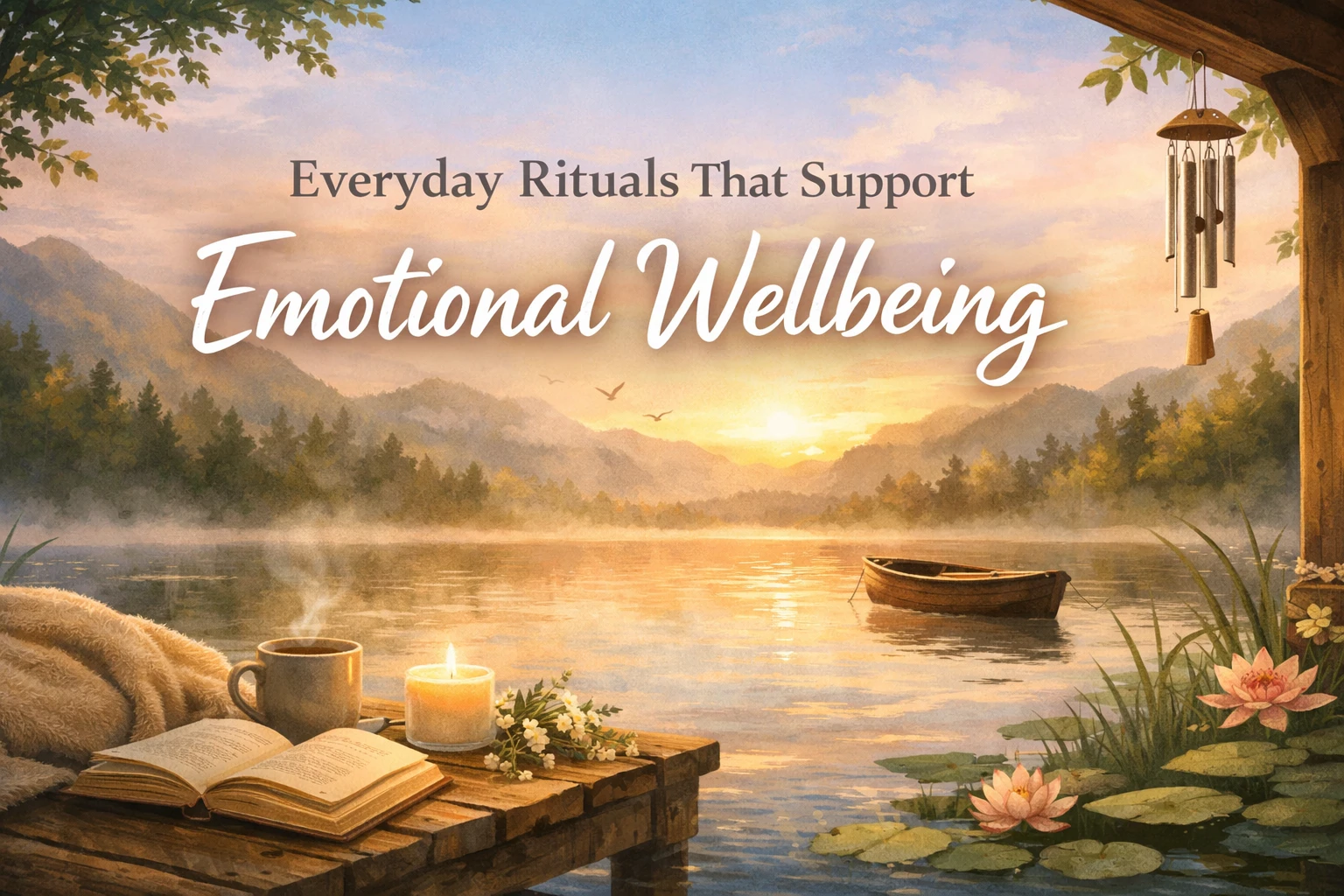
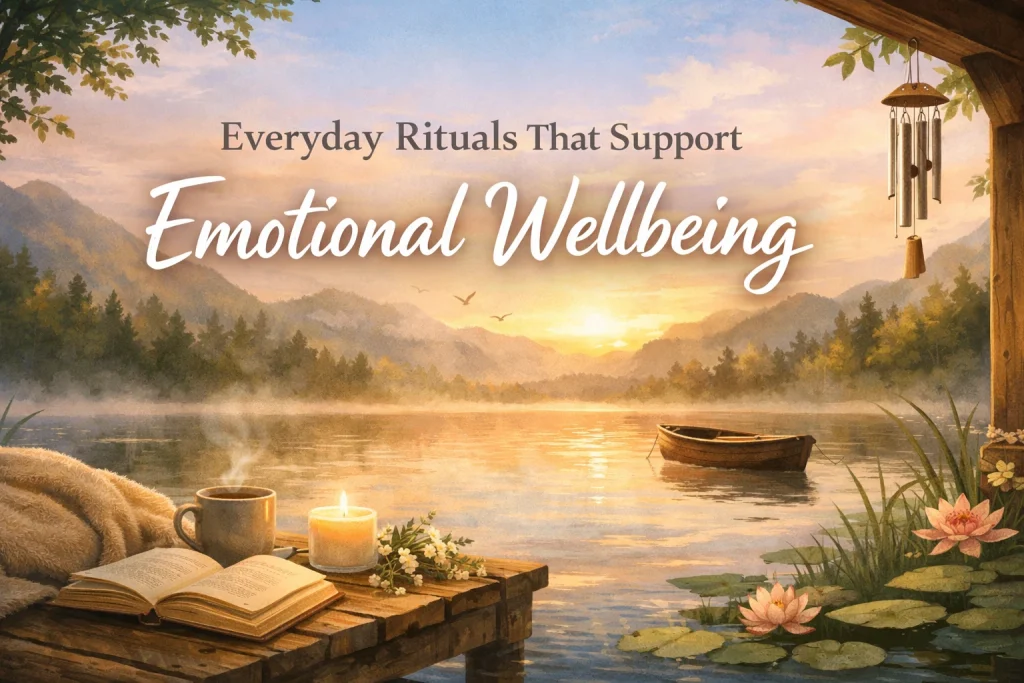
Everyday Rituals That Support Emotional Wellbeing

Everyday rituals that support emotional wellbeing β€” calm morning routine by a peaceful lake

Everyday Rituals That Support Emotional Wellbeing 🌿

Simple Daily Practices That Help You Feel Calmer, Safer, and More Emotionally Balanced

Emotional wellbeing is rarely the result of one big life change.

More often, it is shaped quietly β€” through the small things you do every day.

The way you wake up.
The pauses you allow.
The kindness you show yourself.
The safety you create at home.

In a fast-moving world filled with constant stimulation, everyday rituals offer something deeply restorative: predictability.

And predictability tells the nervous system:

You are safe.
You can slow down.
You can breathe.

This guide explores gentle, research-supported rituals that help regulate emotions, reduce stress, and cultivate inner steadiness β€” without requiring perfection, complicated routines, or major lifestyle changes. 🀍

Because emotional wellbeing is not something you chase.

It is something you practice.


🌱 What Are Everyday Rituals?

Everyday rituals are small, intentional actions performed with awareness and care. Unlike productivity habits, rituals focus less on achievement and more on emotional experience.

They create rhythm in your day β€” and rhythm creates psychological safety.

Examples include:

  • Opening the curtains each morning
  • Drinking tea slowly
  • Taking a quiet breath before switching tasks
  • Dimming lights in the evening
  • Writing down lingering thoughts

These moments may appear ordinary, yet their emotional impact is profound.

Research in behavioral psychology suggests that predictable routines help regulate the stress response system, making it easier for the brain to move out of survival mode.

Over time, calm becomes more familiar β€” and familiarity reduces anxiety.

If you’re beginning a deeper emotional reset, you may also benefit from reading
πŸ‘‰ Emotional Healing: Simple Practices to Restore Inner Calm, which explores how emotional recovery starts with safety rather than self-pressure.


🧠 Why Rituals Are Powerful for Emotional Health

Your brain constantly scans for cues of danger or safety β€” a process known as neuroception.

When life feels chaotic, the brain stays alert.

But small, repeated rituals send a different signal:

Nothing is threatening right now.

This allows your nervous system to downshift.

Daily rituals can help:

βœ… Lower baseline stress
βœ… Improve emotional regulation
βœ… Reduce reactivity
βœ… Support clearer thinking
βœ… Encourage self-trust
βœ… Improve sleep quality

Most importantly, rituals shift emotional care from something occasional into something lived.

Not dramatic.
Not overwhelming.
Just steady.


🌸 Start Small β€” Because Small Is Sustainable

One of the biggest misconceptions about emotional wellbeing is that it requires major change.

It doesn’t.

The nervous system responds more strongly to consistency than intensity.

A single slow breath practiced daily is more regulating than an occasional weekend reset.

Instead of redesigning your life overnight, focus on gentle repetition.

Small rituals become emotional anchors β€” especially during uncertain seasons.

If your life currently feels overstimulating, consider exploring
πŸ‘‰ How to Find Inner Balance in a Busy and Noisy World, where practical strategies help you regain steadiness without withdrawing from life.


🌞 Morning Rituals That Set an Emotional Tone

Your morning does more than start your schedule β€” it establishes your emotional baseline.

A rushed beginning trains the brain toward vigilance.

A gentle beginning encourages regulation.


β˜€οΈ 1. Wake Without Immediate Input

Before reaching for your phone, allow your mind to arrive.

Try:

  • Taking one deep breath
  • Stretching slowly
  • Noticing natural light
  • Sitting up gradually

This brief transition reduces the cortisol spike linked to sudden stimulation.

Think of it as emotional buffering.


🌿 2. Let Natural Light Guide Your Brain Awake

Morning light plays a crucial role in regulating circadian rhythms and serotonin production.

Whenever possible:

  • Open curtains early
  • Step outside for a minute
  • Sit near a window

Light is one of the simplest emotional regulators available β€” and one many people overlook.


πŸ§˜β€β™€οΈ 3. Practice a 60-Second Emotional Check-In

Ask gently:

How am I arriving today?

You don’t need solutions.

Awareness alone reduces emotional suppression, which research links to increased stress.

Naming feelings helps the brain organize them β€” making them less overwhelming.


🏑 Midday Rituals That Prevent Emotional Build-Up

Emotional exhaustion often isn’t caused by one big stressor.

It’s caused by unreleased micro-stress accumulating throughout the day.

Small resets prevent overload.


🌬️ 4. Insert Micro-Pauses Between Tasks

Instead of rushing forward, pause for 10–20 seconds.

Relax your jaw.
Drop your shoulders.
Exhale longer than you inhale.

These brief moments regulate the autonomic nervous system more than you might expect.

If your environment feels overstimulating, you may find guidance in
πŸ‘‰ How to Create a Peaceful Home Environment That Feels Calm and Safe.

Your surroundings shape your emotional state β€” often quietly.


🍡 5. Turn an Ordinary Activity Into a Ritual

Choose something you already do daily:

  • Brewing coffee
  • Washing dishes
  • Preparing lunch
  • Watering plants

Now slow it slightly.

Notice textures.
Temperatures.
Movement.

Presence transforms routine into restoration.


πŸ’› 6. Practice Supportive Self-Talk

Your inner voice becomes the emotional climate you live inside.

Try shifting from criticism to support:

Instead of:
❌ I should be handling this better.

Try:
βœ… This is a lot. It makes sense I feel stretched.

Gentle internal language creates psychological safety.

For deeper guidance, explore
πŸ‘‰ Self-Care at Home: Gentle Ways to Care for Your Mind and Heart.


πŸŒ™ Evening Rituals That Help the Mind Release the Day

Many people attempt sleep without first allowing their brain to decompress.

But the nervous system needs a bridge from alertness to rest.

Evening rituals provide that bridge.


πŸ•―οΈ 7. Dim the Lights and Soften the Atmosphere

Bright lighting signals alertness.

Softer lighting encourages melatonin production and emotional unwinding.

Your home does not need perfection β€” only gentleness.

If you’re building a calmer lifestyle overall,
πŸ‘‰ Simple Living Ideas for a Cozy and Joyful Home offers deeper inspiration.


✍️ 8. Externalize Lingering Thoughts

Before bed, write down:

  • What felt heavy
  • What can wait
  • What went well

This reduces rumination β€” one of the biggest disruptors of emotional recovery.

You don’t need polished journaling.

Just honesty.


🌌 9. Create a Predictable Wind-Down Cue

Consistency conditions the brain for rest.

Examples:

  • Herbal tea
  • Gentle stretching
  • Soft music
  • Reading

Eventually, your body begins calming automatically when the ritual begins.

This is emotional conditioning at work.

Quiet β€” yet powerful.


🌼 Signs Your Emotional Wellbeing Is Strengthening

Progress is often subtle, but meaningful.

You may notice:

  • Faster recovery from stress
  • Fewer emotional spikes
  • Greater patience
  • Improved sleep
  • Feeling safer at home
  • Less inner urgency

These shifts indicate nervous system regulation β€” the true foundation of emotional health.


⚠️ What Rituals Are NOT

Let’s remove unnecessary pressure.

Rituals are not:

❌ rigid schedules
❌ productivity hacks
❌ aesthetic performances
❌ proof of discipline

They are acts of self-support.

Nothing more is required.


🌱 Emotional Wellbeing Is Built Through Return β€” Not Perfection

You will skip days.

Life will interrupt.

That is not failure.

Emotional resilience is strengthened each time you gently return.

Start with one ritual.

Let it become familiar.

Then let familiarity become safety.

Over time, your daily life itself begins to feel more supportive.

And that changes everything.


❓ Frequently Asked Questions (FAQ)

πŸ’¬ What are everyday rituals for emotional wellbeing?

They are small, consistent practices that help regulate emotions, reduce stress, and create a sense of psychological safety.

πŸ’¬ How long does it take to feel the benefits?

Many people notice subtle emotional shifts within a few weeks when rituals are practiced consistently.

πŸ’¬ Do rituals need to happen at the same time daily?

Predictability helps, but gentleness matters more than precision.

πŸ’¬ Can small rituals really reduce anxiety?

Yes. Research shows predictable behaviors increase perceived control, lowering stress responses.

πŸ’¬ What if I forget or miss a day?

Nothing is lost. Emotional wellbeing grows through repetition β€” not perfection.


🌸 Final Thoughts

Emotional wellbeing is not reserved for slower seasons of life.

It is something you can nurture β€” even on busy days.

Through small rituals, compassionate awareness, and supportive environments, your everyday life can become a place where calm feels possible again.

You don’t need to change everything.

Just begin with one quiet moment.

And return to it tomorrow. 🀍


πŸ“š Authoritative Sources & References

American Psychological Association (APA)
Stress, resilience, and emotional health
πŸ”— https://www.apa.org/topics/stress

National Institute of Mental Health (NIMH)
Mental health and emotional regulation
πŸ”— https://www.nimh.nih.gov/health

Greater Good Science Center β€” UC Berkeley
Research on mindfulness and emotional wellbeing
πŸ”— https://greatergood.berkeley.edu

Harvard Health Publishing
Daily habits that support psychological health
πŸ”— https://www.health.harvard.edu/mind-and-mood

Journal of Environmental Psychology
Environmental predictability and stress reduction
πŸ”— https://www.journals.elsevier.com/journal-of-environmental-psychology

Frontiers in Psychology
Habit formation and emotional regulation
πŸ”— https://www.frontiersin.org/journals/psychology


βœ… Personalized Amazon Product Recommendations

DatingAdviceA1

The 5 Love Languages: The Secret to Love that Lasts

Click to visit Amazon


DatingAdviceA2

Attached: The New Science of Adult Attachment and How It Can Help You Find–and Keep–Love

Click to visit Amazon


DatingAdviceA3

BestSelf Relationship Deck – 150 Discussion Prompts to Create Real Conversations – Perfect Couples Games, Card Games for Adults, and Amazing Gifts for Wife

Click to visit Amazon


CustomHomeA4

Electric Spin Scrubber, Cordless Cleaning Brush Scrubber for Home, 8 Replaceable Brush Heads-90Mins Work Time, 3 Adjustable Size, 2 Speeds for Bathroom Shower Bathtub Glass Car

Click to visit Amazon


CustomHomeA5

Cisily Black Sponge Holder for Kitchen Sink, Sink Caddy Organizer with High Brush Holder, Kitchen Countertop Organizers and Storage Essentials, Rustproof 304 Stainless Steel, Soap Dispenser Organize

Click to visit Amazon


Recommended Articles:

Welcome – love a happy home

How to Find Inner Balance in a Busy and Noisy World

How to find inner balance in a busy and noisy world β€” peaceful indoor moment overlooking a city

How to Find Inner Balance in a Busy and Noisy World 🌿

In today’s fast-paced world, it’s easy to feel pulled in a hundred directions at once. Between work, family, social obligations, and the constant hum of digital devices, our minds can feel overstimulated and scattered. Finding inner balance isn’t about escaping life β€” it’s about learning to navigate it with calm, intention, and emotional clarity. 🀍

This guide explores practical strategies, gentle habits, and mindful routines to help you restore balance in your everyday life, even amid the chaos.


🌱 What Inner Balance Really Means

Inner balance is a state where your mind, body, and emotions feel aligned. It doesn’t mean perfection or total control β€” it means:

  • Emotional awareness: Understanding what you feel and why
  • Mental clarity: Being able to focus without mental clutter
  • Physical calm: Feeling grounded and rested
  • Spiritual or emotional alignment: Being connected to your values and priorities

Inner balance allows you to respond rather than react, find peace in small moments, and approach challenges with steadiness.

πŸ’‘ Tip: Many people begin cultivating balance by integrating self-care at home routines into their daily life. Learn more here.


🧠 Why Finding Balance Matters

Living in a noisy, busy environment without balance can lead to:

  • Stress and anxiety
  • Emotional overwhelm
  • Difficulty focusing or sleeping
  • Strained relationships

Research shows that consistent self-care, emotional awareness, and supportive home routines improve mental health and resilience. (APA, NIMH)

Inner balance isn’t a luxury β€” it’s a foundation for thriving, not just surviving.


🌸 Simple Practices to Restore Balance

You don’t need drastic changes. Small, repeatable habits are often more effective than major life overhauls.


πŸ§˜β€β™€οΈ 1. Daily Emotional Check-Ins

Pause a few times each day and ask:

  • How am I feeling right now?
  • What thoughts or emotions are taking up space?

Acknowledge feelings without judgment. This practice strengthens emotional regulation and self-awareness.

πŸ’‘ Internal Link: Pair this with emotional healing practices to restore calm and resilience. Read more here.


🌿 2. Create Predictable Daily Routines

Consistency signals safety to your nervous system:

  • Morning rituals: Stretch, drink tea, set intentions
  • Evening wind-down: Journaling, gentle lighting, calm music
  • Scheduled breaks: Step away from screens or social media

Routine helps your mind and body anticipate calm periods, reducing overall stress.


πŸ•―οΈ 3. Design a Supportive Home Environment

Your environment greatly impacts inner balance:

  • Reduce visual and mental clutter
  • Use warm, soft lighting
  • Incorporate natural elements like plants or wood
  • Create cozy spaces for rest

A balanced home complements your inner calm. Check Creating Comfort at Home for practical tips. Explore here.


🌬️ 4. Practice Mindful Breathing and Meditation

Simple breathing techniques can reset your nervous system:

  • Inhale gently for 4 seconds
  • Exhale slowly for 6–8 seconds
  • Repeat for 2–5 minutes

Combine with guided meditation or mindful observation to deepen focus and reduce mental noise.


✍️ 5. Gentle Journaling

Writing thoughts and emotions allows for reflection without judgment:

  • Note feelings of overwhelm
  • Identify patterns in stress triggers
  • Record small wins and gratitude moments

πŸ’‘ Journaling naturally pairs with self-care at home routines to create structure and emotional awareness. Learn more.


πŸŒ™ 6. Limit Digital Noise

Constant notifications and social media can disrupt balance:

  • Schedule phone-free periods
  • Mute non-essential notifications
  • Create a calming evening routine away from screens

Even small boundaries create a mental sanctuary.


πŸ’› 7. Cultivate Mindful Connections

Relationships can be nourishing or draining. To maintain balance:

  • Engage in meaningful conversations
  • Set gentle emotional boundaries
  • Prioritize quality over quantity in social interactions

🌼 Small Signs That Balance Is Working

  • Feeling calmer amid daily tasks
  • Improved focus and productivity
  • Better sleep and less fatigue
  • Less reactivity to stressful events
  • Greater emotional clarity

❓ Frequently Asked Questions (FAQ)

πŸ’¬ How long does it take to find inner balance?
There’s no fixed timeline. Small daily practices accumulate over weeks and months to create lasting calm.

πŸ’¬ Can inner balance be achieved without therapy?
Yes. While therapy is helpful, emotional healing and self-care routines at home can foster significant balance.

πŸ’¬ How do I start if I’m constantly busy?
Start with 5–10 minutes of any daily practice, such as mindful breathing, journaling, or a calm evening ritual.

πŸ’¬ Is inner balance the same as happiness?
Not exactly. Balance is about steadiness and presence, while happiness is an emotion that fluctuates naturally.

πŸ’¬ Can my home environment really affect my balance?
Absolutely. A supportive, decluttered, and nurturing home environment helps your mind settle and strengthens emotional resilience.


🌱 Final Thoughts

Inner balance is about returning to yourself amidst life’s noise. By combining:

  • Gentle emotional awareness
  • Mindful routines
  • Supportive home environment

…you create a foundation of calm that lasts. Remember, it’s not about perfection β€” it’s about steady, compassionate steps. 🀍

Internal Links Recap:


πŸ“š Authoritative Sources & References


βœ… Personalized Amazon Product Recommendations

DatingAdviceA1

The 5 Love Languages: The Secret to Love that Lasts

Click to visit Amazon


DatingAdviceA2

Attached: The New Science of Adult Attachment and How It Can Help You Find–and Keep–Love

Click to visit Amazon


DatingAdviceA3

BestSelf Relationship Deck – 150 Discussion Prompts to Create Real Conversations – Perfect Couples Games, Card Games for Adults, and Amazing Gifts for Wife

Click to visit Amazon


CustomHomeA4

Electric Spin Scrubber, Cordless Cleaning Brush Scrubber for Home, 8 Replaceable Brush Heads-90Mins Work Time, 3 Adjustable Size, 2 Speeds for Bathroom Shower Bathtub Glass Car

Click to visit Amazon


CustomHomeA5

Cisily Black Sponge Holder for Kitchen Sink, Sink Caddy Organizer with High Brush Holder, Kitchen Countertop Organizers and Storage Essentials, Rustproof 304 Stainless Steel, Soap Dispenser Organize

Click to visit Amazon


Recommended Articles:

Welcome – love a happy home

Self-Care at Home That Actually Helps

Self-CareAtHomeA1

Self-Care at Home That Actually Helps 🀍

Self-care doesn’t have to be expensive, time-consuming, or perfect.
Often, the most meaningful care begins quietly β€” right at home.

Self-care at home is about creating small moments of gentleness that support your mind and heart through everyday life. It’s not about doing more. It’s about caring better. 🌿

Gentle self-care at home often begins with emotional healing practices that help you process feelings and begin restoring inner calm in a safe, supportive way.

This guide explores simple, nurturing ways to practice self-care at home, helping you feel calmer, more supported, and more connected to yourself.


🌱 What Self-Care at Home Really Means

Self-care at home is not a checklist or productivity hack.
It’s the practice of responding to your needs with kindness.

This kind of care is closely connected to gentle emotional healing, especially when stress or emotional fatigue has built up over time.

True self-care includes:

  • Emotional awareness
  • Mental rest
  • Gentle routines
  • A supportive environment

It’s less about fixing yourself β€” and more about being on your own side.


🧠 Why Home Is the Best Place for Self-Care

Your home is where your nervous system spends the most time.

A calm, supportive home environment can:

  • Lower stress levels
  • Improve emotional regulation
  • Support better sleep
  • Encourage self-reflection and rest

Research in psychology shows that familiar, predictable environments help the mind feel safer β€” making emotional care easier and more natural. 🏑


🌸 Gentle Self-Care Practices for the Mind

Mental self-care doesn’t require constant positivity.
It starts with creating space.

πŸ§˜β€β™€οΈ 1. Allow Quiet Moments Without Stimulation

Constant noise keeps the mind tense.

Try:

  • Sitting quietly for a few minutes
  • Turning off background media
  • Letting your thoughts slow naturally

Silence can feel uncomfortable at first β€” but it’s often where calm begins.


✍️ 2. Practice Gentle Emotional Awareness

Once a day, ask:

  • What am I carrying today?

Write it down or simply acknowledge it mentally.
No problem-solving required.

Being heard β€” even by yourself β€” is deeply regulating.

Practices like this are often part of broader emotional healing practices that support long-term emotional balance.


🌬️ 3. Use Breath as Emotional Support

Slow breathing sends a safety signal to the brain.

A simple rhythm:

  • Inhale gently for 4
  • Exhale slowly for 6

Just a few rounds can ease emotional tension.


πŸ’› Gentle Self-Care Practices for the Heart

Caring for your heart means honoring your emotional needs.

πŸ•―οΈ 4. Create Emotional Comfort Rituals

Small rituals can feel deeply comforting:

  • Lighting a candle in the evening
  • Drinking a warm beverage slowly
  • Playing soft music before bed

These moments remind your heart that it’s allowed to rest.


🀍 5. Speak to Yourself With Kindness

Notice how you talk to yourself at home.

Try replacing harsh thoughts with:

  • I’m doing my best today.
  • It’s okay to move slowly.
  • I don’t have to earn rest.

Kind self-talk is one of the most powerful forms of self-care.


🌱 6. Set Gentle Emotional Boundaries

Self-care also means knowing when to pause.

At home, this can look like:

  • Saying no to unnecessary demands
  • Allowing yourself quiet time
  • Limiting emotional overload

Boundaries protect your energy β€” they don’t diminish your care for others.


🏑 Creating a Home That Supports Self-Care

Your environment can either support or drain you.

Supportive home self-care includes:

  • Soft lighting instead of harsh glare
  • Reduced clutter in resting areas
  • Comfortable, familiar spaces
  • A sense of emotional safety

A nurturing home doesn’t need to be perfect β€” it needs to feel kind.

Creating this kind of environment also supports restoring inner calm, especially when emotional stress has been present for a long time.


πŸŒ™ Self-Care Is a Daily Relationship, Not a One-Time Act

Some days you’ll feel balanced.
Other days you’ll feel tired again.

That’s normal.

Self-care works best when it’s:

  • Gentle
  • Consistent
  • Forgiving

Caring for your mind and heart is an ongoing conversation β€” not a task to complete.


🌼 Small Signs Your Self-Care Is Working

You may notice:

  • More emotional steadiness
  • Feeling calmer at home
  • Improved sleep quality
  • Less self-criticism
  • Greater emotional clarity

These changes are subtle β€” but meaningful.


❓ Frequently Asked Questions (FAQ)

πŸ’¬ What is self-care at home?

Self-care at home involves gentle daily practices that support emotional, mental, and physical wellbeing within your own living space.


πŸ’¬ Do I need a strict routine for self-care?

No. Flexible, supportive habits are more effective than rigid schedules.


πŸ’¬ Is self-care selfish?

No. Self-care helps you maintain emotional balance, which improves your ability to care for others.


πŸ’¬ Can self-care really reduce stress?

Yes. Research shows that calm environments, emotional awareness, and restorative routines help regulate stress.


πŸ’¬ What if I don’t have much time?

Self-care doesn’t require extra time β€” it often means changing how you use the time you already have.


🌱 Final Thoughts

Self-care at home is not about becoming someone new.
It’s about gently supporting who you already are.

Through small rituals, emotional awareness, and kindness toward yourself, your home can become a place where your mind feels calmer and your heart feels held. 🀍

You deserve care β€” especially from yourself.


πŸ“š Authoritative Sources & References

American Psychological Association (APA)
Stress management, emotional wellbeing, and self-care
πŸ”— https://www.apa.org/topics/stress

National Institute of Mental Health (NIMH)
Mental health, self-care, and emotional balance
πŸ”— https://www.nimh.nih.gov/health/topics/caring-for-your-mental-health

Greater Good Science Center – UC Berkeley
Science-based research on emotional wellbeing and self-compassion
πŸ”— https://greatergood.berkeley.edu

Psychology Today – Self-Care
Psychological perspectives on emotional self-care
πŸ”— https://www.psychologytoday.com/us/basics/self-care

Journal of Behavioral Medicine
Research on daily habits, stress reduction, and emotional health
πŸ”— https://link.springer.com/journal/10865


Recommended Articles:

Welcome – love a happy home

Emotional Healing: Simple Practices to Restore Inner Calm

EmotionalHealingInnerCalmA1

Emotional Healing: Simple Practices to Restore Inner Calm 🌿

Emotional healing is not about fixing yourself.
It’s about gently returning to a state of balance, safety, and inner calm.

In a world that constantly asks us to move faster, do more, and feel less, emotional healing invites us to slow down, listen inward, and reconnect with what truly matters. 🀍

This guide explores simple, everyday practices that help restore emotional calm β€” without pressure, perfection, or complicated routines.

Many of these practices can be integrated into self-care at home routines, helping you nurture your mind and heart gently every day.


🌱 What Is Emotional Healing?

Emotional healing is the process of acknowledging, understanding, and gently releasing emotional tension that builds up through daily life.

It doesn’t require:

  • Reliving painful memories
  • Constant self-analysis
  • β€œPositive thinking” your feelings away

Instead, emotional healing happens when you create space, safety, and consistency for your emotions to settle naturally.

Healing is often quiet.
And that’s exactly why it works.


🧠 Why Inner Calm Matters More Than We Think

When emotional stress remains unresolved, it can show up as:

  • Constant mental noise
  • Emotional exhaustion
  • Difficulty relaxing
  • Feeling disconnected from yourself or others

Research in psychology shows that emotional regulation and calm environments support:

  • Better sleep
  • Lower stress levels
  • Improved relationships
  • Greater emotional resilience

Inner calm isn’t a luxury β€” it’s a foundation. 🌿


🌸 Simple Practices That Support Emotional Healing

You don’t need to change your entire life to begin healing.
Small, repeated actions are far more powerful than dramatic changes.

πŸ§˜β€β™€οΈ 1. Create Gentle Emotional Check-Ins

Once or twice a day, pause and ask:

  • How am I feeling right now β€” really?

No fixing. No judging. Just noticing.

This simple act builds emotional awareness and reduces suppressed stress over time.


🌿 2. Build Predictable, Comforting Routines

Emotional safety grows through consistency.

Simple routines like:

  • A calm morning start
  • An evening wind-down ritual
  • Drinking tea at the same time each day

signal to your nervous system that you are safe.

Consistency is calming β€” even when life isn’t.


πŸ•―οΈ 3. Create a Calm Physical Environment

Your surroundings deeply influence emotional healing.

Support inner calm by:

  • Reducing visual clutter
  • Using warm, soft lighting
  • Adding natural elements like plants or wood

A peaceful environment helps your emotions settle without effort.


🌬️ 4. Practice Slow, Intentional Breathing

You don’t need complex breathing techniques.

Try this:

  • Inhale slowly through your nose for 4 seconds
  • Exhale gently for 6 seconds

A longer exhale activates the body’s natural calming response.

Just a few minutes can reset your emotional state.


✍️ 5. Release Emotions Through Gentle Expression

Emotional healing doesn’t require explanation β€” it requires expression.

Simple options include:

These methods often overlap with daily self-care at home practices, where consistent gentle routines support emotional processing.

  • Writing freely without structure
  • Talking aloud when alone
  • Creative outlets like drawing or music

Expression allows emotions to move instead of staying trapped.


πŸŒ™ Emotional Healing Is Not Linear

Some days will feel lighter.
Others may feel heavy again.

This doesn’t mean you’re failing.

Healing often looks like:

  • Progress
  • Pause
  • Re-adjustment
  • Gentle return

Self-compassion is part of the healing process.


πŸ’› Emotional Healing at Home

Your home can either support healing or quietly drain you.

A healing-friendly home includes:

  • Emotional safety
  • Gentle routines
  • Permission to rest
  • Space to feel without judgment

Healing doesn’t always happen in therapy rooms.

Integrating self-care at home routines into your living space can make emotional healing more natural and sustainable.
Often, it happens in everyday life β€” right where you are. 🏑


🌼 Small Signs That Emotional Healing Is Working

You may notice:

  • Feeling calmer more often
  • Reacting less intensely
  • Sleeping more deeply
  • Feeling more present

Healing is subtle β€” but meaningful.


❓ Frequently Asked Questions (FAQ)

πŸ’¬ What is emotional healing in simple terms?

Emotional healing means allowing your emotions to be felt, understood, and released gently over time β€” without forcing change.


πŸ’¬ How long does emotional healing take?

There’s no fixed timeline. Healing happens gradually through consistent, supportive practices.


πŸ’¬ Can emotional healing happen without therapy?

Yes. While therapy can help, many people experience healing through daily routines, emotional awareness, and supportive environments.


πŸ’¬ Is emotional healing the same as self-care?

Self-care supports emotional healing, but healing also involves emotional understanding, expression, and acceptance.


πŸ’¬ What if I feel worse before I feel better?

This can happen when emotions surface after being ignored. Go gently and seek support if needed.


🌱 Final Thoughts

Emotional healing doesn’t ask you to become someone new.
It invites you to return to yourself.

Through small practices, gentle routines, and emotional awareness, inner calm becomes something you build β€” not chase. 🀍

Practicing self-care at home daily reinforces these gentle routines and helps sustain your emotional balance.

You are allowed to heal slowly.
You are allowed to rest.
And you are allowed to feel calm again.


πŸ“š Authoritative Sources & References

American Psychological Association (APA)
Emotion regulation, stress reduction, and emotional wellbeing
πŸ”— https://www.apa.org/topics/emotion

National Institute of Mental Health (NIMH)
Mental health, emotional balance, and self-care
πŸ”— https://www.nimh.nih.gov/health/topics/caring-for-your-mental-health

Greater Good Science Center – UC Berkeley
Science-backed research on calm, resilience, and emotional wellbeing
πŸ”— https://greatergood.berkeley.edu

Psychology Today – Emotional Healing
Insights into emotional recovery and inner balance
πŸ”— https://www.psychologytoday.com/us/basics/emotional-health

Journal of Affective Disorders
Research on emotional regulation and mental wellbeing
πŸ”— https://www.sciencedirect.com/journal/journal-of-affective-disorders


βœ… Personalized Amazon Product Recommendations

DatingAdviceA1

The 5 Love Languages: The Secret to Love that Lasts

Click to visit Amazon


DatingAdviceA2

Attached: The New Science of Adult Attachment and How It Can Help You Find–and Keep–Love

Click to visit Amazon


DatingAdviceA3

BestSelf Relationship Deck – 150 Discussion Prompts to Create Real Conversations – Perfect Couples Games, Card Games for Adults, and Amazing Gifts for Wife

Click to visit Amazon


CustomHomeA4

Electric Spin Scrubber, Cordless Cleaning Brush Scrubber for Home, 8 Replaceable Brush Heads-90Mins Work Time, 3 Adjustable Size, 2 Speeds for Bathroom Shower Bathtub Glass Car

Click to visit Amazon


CustomHomeA5

Cisily Black Sponge Holder for Kitchen Sink, Sink Caddy Organizer with High Brush Holder, Kitchen Countertop Organizers and Storage Essentials, Rustproof 304 Stainless Steel, Soap Dispenser Organize

Click to visit Amazon


Recommended Articles:

Welcome – love a happy home

What Actually Makes a Home Feel Happy?

WhatMakesAHappyHomeA1

🌿 What Actually Makes a Home Feel Happy?

A happy home isn’t defined by perfection, luxury furniture, or Instagram-worthy interiors. Instead, it grows quietly from everyday moments β€” shared routines, emotional safety, and the small choices we make each day. 🏑✨

In this article, we’ll explore what truly makes a home feel happy, grounded in simple, realistic lessons from daily life. These ideas are not about doing more β€” they’re about living with more intention, warmth, and presence.

Whether you live alone, with family, or with loved ones, happiness at home is something you can gently cultivate.


πŸ’› What Does a β€œHappy Home” Really Mean?

A happy home is not a place without stress β€” it’s a place where stress feels manageable.

At its core, a happy home offers:

  • Emotional safety
  • A sense of belonging
  • Predictable comfort
  • Space to rest and reset
  • Room for individuality and connection

Research in environmental psychology shows that our living environments strongly influence mood, behavior, and emotional well-being. When home supports us emotionally, we recover faster from stress and feel more resilient overall. 🧠🌱


πŸ•―οΈ Lesson 1: Consistency Creates Emotional Safety

Happiness thrives on predictability.

Simple, repeatable routines β€” morning light, evening tea, quiet moments before bed β€” help the nervous system feel safe. When your home has rhythms, your body learns: I’m okay here.

Examples:

  • Waking up and opening the same window each morning β˜€οΈ
  • Lighting a candle after dinner πŸ•―οΈ
  • A nightly β€œreset” where clutter is gently put away

These small habits anchor us emotionally, especially during uncertain times.


🧘 Lesson 2: Calm Is More Important Than Aesthetics

A home does not need to be perfectly styled to feel good.

In fact, visual overload β€” too much clutter, noise, or competing decor β€” can subtly increase anxiety. A happy home prioritizes calm over appearance.

Try this:

  • Leave open space on shelves
  • Reduce background noise
  • Choose soft, neutral colors that feel restful
  • Let one room be intentionally β€œsimple”

Peaceful homes don’t impress β€” they support. 🌿


πŸ›‹οΈ Lesson 3: Comfort Is Personal, Not Universal

There is no single formula for comfort.

For some, it’s warm lighting and quiet evenings.
For others, it’s music playing while cooking or colorful art on the walls.

A happy home reflects who you are, not who you think you should be.

Ask yourself:

  • What makes me relax instantly?
  • What helps me feel like myself?
  • What feels heavy or unnecessary?

Then adjust your home accordingly β€” without guilt.


🀍 Lesson 4: Emotional Atmosphere Matters More Than Objects

You can feel tension the moment you walk into a room.

Homes absorb emotions. Stress, kindness, patience, and warmth all leave traces in how a space feels.

Ways to soften emotional atmosphere:

  • Speak gently at home when possible
  • Allow silence without filling it
  • Resolve conflicts calmly or pause them intentionally
  • Create β€œsoft landing” moments after long days

A happy home is emotionally breathable. 🌬️


🌞 Lesson 5: Natural Elements Quietly Boost Happiness

Nature soothes us β€” even indoors.

Simple ways to bring nature home:

  • Open windows daily for fresh air
  • Add plants or dried flowers 🌱
  • Use natural materials (wood, linen, cotton)
  • Let sunlight touch your space whenever possible

Studies show that natural light and greenery improve mood, reduce stress, and support better sleep.


🍽️ Lesson 6: Shared Moments Build Lasting Warmth

Happiness grows in ordinary shared moments.

Not big events β€” but:

  • Eating together without phones 🍲
  • Casual conversations in the kitchen
  • Checking in with β€œHow are you really?”
  • Laughing over small mistakes

A happy home values presence over productivity.


πŸ•ŠοΈ Lesson 7: A Happy Home Allows Imperfection

Homes are lived in β€” not staged.

Mess happens. Bad days happen. Silence happens.

A truly happy home allows:

  • Rest without guilt
  • Emotions without judgment
  • Change without pressure

When home feels forgiving, happiness follows naturally.


🌱 How to Gently Build a Happier Home (No Overhaul Needed)

You don’t need to start over. Try one small shift:

  • Change lighting in one room
  • Introduce one calming routine
  • Remove one item that feels heavy
  • Add one comforting ritual

Small changes, repeated daily, reshape how home feels over time.


❓ Frequently Asked Questions (FAQ)

What makes a home truly happy?

A happy home offers emotional safety, comfort, and consistency. It supports well-being through routines, calm spaces, and meaningful connections.

Can a small home still feel happy?

Absolutely. Happiness is not about size β€” it’s about atmosphere, intention, and how the space supports your daily life.

How do daily habits affect happiness at home?

Daily habits create rhythm and predictability, which help reduce stress and increase emotional stability.

Does decluttering really improve happiness?

Yes. Reduced clutter often leads to lower stress levels and improved focus, making a home feel lighter and calmer.

How long does it take to feel a difference?

Often immediately. Even small changes β€” like lighting or routines β€” can shift how a home feels within days.


πŸ“š Authoritative Sources & References


🌼 Final Thoughts

A happy home isn’t built in a weekend.

It’s shaped slowly β€” through kindness, intention, and everyday choices. When your home feels supportive, life feels lighter.

You don’t need more things.
You need more presence, gentleness, and care β€” and those are always within reach. 🀍


Recommended Articles:

Welcome – love a happy home