
This is my little online home where we celebrate life's real magic - the warm connections, simple self-care rituals, and those quiet moments that stay with you.
What I do here:
• Craft stories and tips to brighten your everyday
• Build a space where everyone feels welcome
• Make each visit worth your while - whether you need quick advice or food for thought
My superpowers? Turning ordinary moments into something special through words that actually mean something.
Off-screen, I'm probably:
☕ Curled up with a book that changes my perspective
🎨 Trying some new creative hobby
🌿 Noticing the small wonders we usually rush past
So glad you're here - let's make something meaningful together!
Table of Contents
How to Find Inner Balance in a Busy World: Practical Tips for Calm & Focus

Last Updated: September 15, 2026
By David Yang
Quick Answer
Finding inner balance in a busy world does not mean eliminating stress or creating a perfectly calm life. It means learning how to manage your attention, energy, emotions, priorities, and daily routines so that constant demands do not completely control your day.
Practical ways to build more inner balance include protecting sleep, creating realistic priorities, taking intentional breaks, limiting unnecessary digital stimulation, moving your body, noticing emotions without immediately reacting to them, practicing simple relaxation techniques, staying connected with supportive people, and making time for activities that genuinely restore you.
Introduction: You Do Not Need a Quiet Life to Feel More Balanced
Modern life rarely becomes quiet on its own.
There are messages to answer.
Work to finish.
Family responsibilities to manage.
News to process.
Notifications competing for your attention.
And somewhere underneath all of it, there may be a quiet question:
“When do I actually get to slow down?”
You may have a full life and still feel mentally scattered.
You may love your family but feel overstimulated by constant demands.
You may be successful at work but struggle to switch off when the day ends.
You may even have time to rest but find that your mind continues working.
This is where the idea of inner balance becomes useful.
Inner balance is not about creating a life without pressure. It is about developing enough awareness and structure to recognize when you are becoming overloaded and make adjustments before everything feels like too much.
And importantly, balance is not another performance goal.
You do not need to become calm all the time.
You need to become better at returning to what matters.
What Does Inner Balance Actually Mean?
“Inner balance” is not a formal medical diagnosis or a precise psychological state.
It is a useful way of describing a sense of steadiness in how you manage competing demands, emotions, attention, and energy.
A balanced person can still:
- feel stressed;
- become frustrated;
- have difficult days;
- feel sad or disappointed;
- change their mind;
- need help;
- experience periods of uncertainty.
The difference is that difficult emotions and external demands do not necessarily dictate every decision.
Inner balance may look like:
- recognizing when you are becoming overwhelmed;
- knowing what deserves your attention now;
- letting some things wait;
- recovering after stressful moments;
- protecting sleep and basic physical needs;
- staying connected to your values;
- responding rather than automatically reacting;
- making room for both responsibility and rest.
In other words:
Balance is not having everything under control. It is knowing what to do when life is not under control.
Inner Balance Is Not the Same as Happiness
This distinction is important.
Happiness is an emotion. It naturally changes.
Inner balance is more about how you navigate those changes.
You can feel sad and still be balanced.
You can feel nervous before an important event and still be balanced.
You can be angry about something unfair and still respond thoughtfully.
You can have a difficult week without deciding that your entire life is falling apart.
So the goal is not:
“I should feel peaceful all the time.”
A more realistic goal is:
“I want to have enough steadiness to handle whatever I am feeling without letting it control everything.”
Why Inner Balance Becomes Difficult in a Busy World
Overload does not always come from one dramatic problem.
It can come from accumulation.
A demanding job.
Interrupted sleep.
Too many open tasks.
Constant notifications.
Relationship tension.
Little time alone.
Too much information.
Not enough recovery.
Each individual demand may seem manageable.
Together, they can leave you feeling mentally crowded.
Common signs of overload may include:
- difficulty concentrating;
- feeling rushed even when nothing urgent is happening;
- irritability over small things;
- difficulty relaxing;
- frequent checking of your phone;
- sleep problems;
- feeling emotionally drained;
- forgetfulness;
- difficulty deciding what to do first;
- feeling disconnected from things you normally enjoy.
These experiences can have many causes, so they should not automatically be interpreted as a lack of emotional balance. Persistent or severe symptoms may require professional assessment.
12 Practical Ways to Find More Inner Balance
1. Start by Noticing What Is Actually Overloading You
Before changing your life, identify the pressure.
Ask yourself:
- What is taking most of my mental energy right now?
- What keeps interrupting my attention?
- What am I worried about repeatedly?
- What responsibilities are genuinely necessary?
- What am I doing mainly because I feel guilty?
Sometimes the problem is not that you need better relaxation.
You may simply have too much on your plate.
If your schedule is overloaded, adding another meditation routine may not solve the underlying issue.
You may need to remove something.
2. Decide What Actually Matters Today
Inner balance becomes difficult when everything feels equally urgent.
Try dividing today’s responsibilities into three categories:
| Category | Question |
|---|---|
| Must do | What genuinely needs attention today? |
| Should do | What would be helpful but can wait? |
| Could do | What would be nice but is not necessary? |
This simple distinction can reduce the pressure to treat every task as an emergency.
NIMH recommends setting goals and priorities, deciding what needs attention now, and learning to say no when you begin taking on too much. NIMH: Caring for Your Mental Health
3. Protect Your Attention
Your attention is a limited resource.
If you constantly switch between email, social media, messages, work, news, and conversations, your day can feel busy even when you accomplish very little.
Try creating periods of single-tasking.
For example:
- work on one task for 25–45 minutes;
- keep unnecessary notifications muted;
- check messages at designated times;
- keep your phone away during important conversations;
- avoid starting the morning with an endless stream of social media.
You do not need to eliminate technology.
You need to stop letting every notification decide where your attention goes.
4. Build Small Transitions Into Your Day
One reason people struggle to feel calm is that they move directly from one role to another.
Work ends.
Family responsibilities begin.
Dinner happens.
Messages arrive.
Then suddenly it is bedtime.
There is no transition.
Try creating small pauses between activities.
For example:
- take a five-minute walk after work;
- change clothes when you arrive home;
- sit quietly before starting the evening routine;
- take several slow breaths before entering a difficult conversation;
- write tomorrow’s priorities before ending your workday.
These pauses do not guarantee calm, but they can make the day feel less like one continuous demand.
5. Create a Consistent Sleep Rhythm
Inner balance becomes much harder when you are chronically exhausted.
Protecting sleep is therefore one of the least glamorous but most important forms of self-care.
Consider:
- keeping a reasonably consistent sleep schedule;
- creating a short wind-down period;
- reducing stimulating screen use before bed;
- keeping the bedroom comfortable for sleep;
- avoiding turning bedtime into an extension of your workday.
NIMH specifically recommends making sleep a priority and maintaining a sleep schedule as part of caring for mental health. NIMH mental health self-care guidance
If you have persistent sleep problems, do not assume you simply need more discipline. Ongoing sleep difficulties can have medical or psychological causes worth discussing with a healthcare professional.
6. Use Short Relaxation Practices Instead of Waiting for a Perfect Break
You do not need an hour of meditation to create a moment of calm.
Try one to three minutes.
Sit comfortably.
Relax your shoulders.
Breathe normally and comfortably.
Pay attention to the sensation of breathing.
When your mind wanders, gently return your attention.
That is enough.
NCCIH notes that relaxation techniques include practices such as deep breathing, progressive muscle relaxation, guided imagery, and other methods designed to encourage a relaxation response. Evidence varies depending on the technique and health outcome, so these practices should be viewed as supportive tools rather than universal treatments. NCCIH: Relaxation Techniques for Stress
7. Move Your Body Regularly
Movement can be one of the simplest ways to interrupt a day dominated by sitting, screens, and mental work.
You do not need an intense exercise program.
Try:
- a short walk;
- stretching;
- cycling;
- gardening;
- dancing;
- household activities;
- another physical activity you genuinely enjoy.
NIMH notes that regular exercise can support mental health and that smaller amounts of activity can still add up when a longer workout is not realistic. NIMH: Caring for Your Mental Health
The most useful movement is often the movement you can keep doing.
8. Learn to Notice Emotions Before Acting on Them
Inner balance does not mean suppressing emotion.
It means creating enough space between feeling something and automatically acting on it.
Try this simple sequence:
Notice → Name → Pause → Choose.
For example:
Notice: “I am becoming angry.”
Name: “I feel disrespected and frustrated.”
Pause: “I don’t need to respond immediately.”
Choose: “I will explain what bothered me after I calm down.”
This is not about becoming emotionally detached.
It is about giving yourself a little more choice.
For deeper work around emotional recovery, see Emotional Healing: Simple Practices to Restore Inner Calm.
9. Create a Home Environment That Supports Recovery
Your environment cannot guarantee emotional wellbeing, but it can make certain habits easier.
Look for small improvements:
- keep your bedroom comfortable and uncluttered enough to rest;
- create one place where you can sit without a screen;
- reduce unnecessary noise during your wind-down period;
- keep frequently used items organized;
- make healthy choices convenient;
- let natural light into your living spaces when practical.
You do not need to redesign your entire house.
Choose one area that currently creates friction and make it easier to use.
For practical ideas, see Creating Comfort at Home.
10. Protect Some Time That Has No Productivity Goal
One subtle source of imbalance is the belief that every free minute should accomplish something.
You exercise to improve yourself.
You read to learn.
You meditate to become calmer.
You clean to become more organized.
You listen to podcasts while cooking so the time is not “wasted.”
There is nothing wrong with any of these activities.
But you also need moments that do not have to produce an outcome.
Drink tea.
Look outside.
Listen to music.
Talk with someone.
Take a slow walk.
Rest.
Rest does not have to justify its existence.
11. Stay Connected to People Who Help You Feel Like Yourself
Inner balance does not mean becoming completely self-sufficient.
Humans need connection.
A supportive conversation can sometimes accomplish something that another hour of solitary overthinking cannot.
Consider maintaining a small circle of people with whom you can:
- be honest;
- ask for help;
- share ordinary experiences;
- laugh;
- talk about difficult things;
- simply spend time without performing.
NIMH recommends staying connected with friends or family who can provide emotional support and practical help. NIMH: Caring for Your Mental Health
12. Reconnect With Your Values
Sometimes people feel “out of balance” because their calendar no longer reflects what matters to them.
Ask:
- What kind of person do I want to be?
- What relationships matter most to me?
- What do I want my home to feel like?
- What am I spending too much time on?
- What important thing have I been repeatedly postponing?
You may discover that the solution is not simply “more relaxation.”
You may need to make your life more consistent with your priorities.
Inner Balance and Digital Overload
Technology can be useful, but constant connectivity can make it difficult to experience genuine mental downtime.
You do not need to delete every app.
Try creating boundaries around when technology gets your attention.
Morning
Delay nonessential notifications until after you have decided what matters that day.
During Work
Mute unnecessary alerts and create periods of focused work.
During Conversations
Put the phone away when another person deserves your attention.
Evening
Create a period when entertainment and communication become less stimulating.
Before Bed
Give your mind a transition instead of moving directly from scrolling into sleep.
The goal is not digital abstinence.
It is intentional use.
Inner Balance and the “Always Busy” Trap
Being busy can become an identity.
You may start measuring your worth by how much you accomplish.
Then rest feels uncomfortable.
You feel guilty when you are not productive.
You fill every empty space with another task.
Eventually, even relaxing can feel like work.
If that sounds familiar, try changing the question.
Instead of asking:
“What else can I get done?”
ask:
“What deserves my energy?”
Those are very different questions.
Inner Balance Does Not Mean Avoiding Difficult Emotions
A common mistake is to interpret calm as the absence of uncomfortable emotions.
But sadness, anger, fear, disappointment, and grief are part of ordinary human experience.
Trying to eliminate every uncomfortable feeling can actually create another layer of stress:
“Why am I still anxious?”
“Why can’t I just be positive?”
“Why am I not healed yet?”
A more useful approach is:
“This feeling is here. What does it need from me?”
Sometimes the answer is rest.
Sometimes it is a conversation.
Sometimes it is a boundary.
Sometimes it is action.
Sometimes it is simply time.
What Inner Balance Looks Like in Real Life
Inner balance is often much less dramatic than people imagine.
| Without Much Balance | With More Balance |
|---|---|
| Every task feels urgent. | You distinguish priorities. |
| You react immediately when upset. | You create a pause before responding. |
| You fill every free moment. | You allow some unstructured time. |
| Your phone controls your attention. | You choose when to check it. |
| You sacrifice sleep for productivity. | You treat rest as part of functioning. |
| You keep stress inside. | You talk with trusted people. |
| You try to fix everything. | You accept that some things can wait. |
| You judge difficult emotions. | You notice them without immediately fighting them. |
How to Find Balance When You Are Extremely Busy
If your schedule is already full, do not create a complicated “balance routine.”
Use existing transitions.
While Making Coffee
Take three slow breaths and decide your most important task.
During Your Commute
Use part of the journey to transition rather than consuming more information.
Between Meetings
Stand up, stretch, drink water, and look away from the screen.
After Work
Create a short transition before moving into family or household responsibilities.
Before Bed
Write down tomorrow’s priorities so your brain does not have to keep rehearsing them.
Balance does not always require additional time.
Sometimes it requires using existing moments differently.
A 10-Minute Inner Balance Reset
When you feel scattered, try this short sequence.
Minutes 1–2: Stop
Put down whatever you are doing and sit or stand still.
Minutes 3–4: Breathe
Take comfortable, unforced breaths and notice the physical sensation of breathing.
Minutes 5–6: Name
Identify the strongest emotion or source of pressure you are experiencing.
Minutes 7–8: Prioritize
Choose the one thing that actually matters next.
Minutes 9–10: Act
Take one small step.
Send the message.
Drink the water.
Start the task.
Take the walk.
Ask for help.
Or go to bed.
The reset is not supposed to solve your entire life.
It is supposed to help you make the next decision with a little more clarity.
A 7-Day Inner Balance Reset
Day 1 — Notice
Write down the three biggest sources of mental pressure in your life right now.
Day 2 — Simplify
Remove one unnecessary task from today’s schedule.
Day 3 — Move
Take a short walk or do another form of physical activity you can sustain.
Day 4 — Disconnect
Create at least 30 minutes without unnecessary digital stimulation.
Day 5 — Connect
Talk with someone you trust without multitasking.
Day 6 — Restore
Protect an evening period for rest rather than productivity.
Day 7 — Reflect
Ask yourself:
- What made me feel more grounded?
- What consistently drained me?
- What can I change next week?
Do not try to keep every practice.
Choose the one or two that genuinely fit your life.
How Do You Know Your Inner Balance Is Improving?
Progress may not feel like permanent peace.
Look for smaller changes.
- You notice stress earlier.
- You recover more quickly after difficult moments.
- You can concentrate for longer periods.
- You check your phone less automatically.
- You sleep more consistently.
- You are less reactive during conflict.
- You can say no without excessive guilt.
- You make decisions more deliberately.
- You have more patience with people you care about.
- You feel less pressure to make every moment productive.
One of the most useful signs may be this:
You begin to notice that you have a choice.
You can pause.
You can wait.
You can say no.
You can ask for help.
You can change direction.
Inner Balance and Relationships
Our internal state can affect how we communicate with other people.
When you are exhausted and overloaded, a small disagreement may feel much larger than it otherwise would.
That does not mean relationship problems are caused by your lack of inner balance.
Relationships have their own dynamics.
But taking care of your emotional and physical capacity can give you more room to communicate thoughtfully.
If relationship stress is part of what is disturbing your sense of balance, explore:
- How to Improve Communication in Relationships
- How to Communicate With Love and Understanding
- Building Emotional Intimacy Through Small Daily Moments
- The Foundation of Healthy Relationships
Inner Balance and Self-Care
Inner balance is closely connected with self-care, but the two concepts are not identical.
Self-care asks:
“What can I do to support my wellbeing today?”
Inner balance asks:
“How can I organize my attention, energy, emotions, and priorities so that I can live more steadily?”
That is why these two LoveAHH articles work well together:
Self-Care at Home for Emotional Wellbeing focuses on practical everyday care, while this article focuses more on maintaining steadiness within a busy life.
When Inner Balance Becomes a Mental Health Concern
Sometimes feeling overwhelmed is not simply a lifestyle problem.
If you are experiencing severe or distressing symptoms that persist, especially problems with sleep, appetite, concentration, interest in activities, daily functioning, or persistent irritability or restlessness, it may be time to seek professional help.
NIMH recommends seeking professional support when significant symptoms last for two weeks or more or interfere with daily life. NIMH: Caring for Your Mental Health
Self-care and professional care are not opposites.
You can use healthy routines while also working with a qualified professional.
And if you feel that you may harm yourself or someone else, seek urgent help through appropriate local emergency or crisis services.
Frequently Asked Questions About Inner Balance
What does inner balance mean?
Inner balance is a practical way of describing steadiness in how you manage emotions, attention, energy, priorities, and everyday demands. It does not mean being calm or happy all the time.
How do I find inner balance when life is busy?
Start by identifying what is consuming your attention and energy. Then simplify priorities, protect sleep, create small transitions, limit unnecessary digital stimulation, move regularly, make time for supportive relationships, and allow periods of genuine rest.
Can inner balance reduce stress?
Healthy routines and stress-management practices may help you cope with stress, although no single practice works for everyone. Sleep, exercise, relaxation techniques, realistic priorities, and social connection are among the approaches recommended by NIMH and other health organizations.
How long does it take to find inner balance?
There is no universal timeline. Some changes may feel helpful immediately, while building sustainable habits and changing an overloaded lifestyle can take much longer.
Is inner balance the same as emotional healing?
No. Emotional healing generally focuses more on recovering from emotional pain, difficult experiences, or prolonged distress. Inner balance is broader and includes managing everyday attention, energy, emotions, priorities, and stress.
Can meditation help with inner balance?
Mindfulness and meditation may help some people manage stress, anxiety, and sleep difficulties. Evidence varies, however, and these practices should be viewed as supportive tools rather than guaranteed treatments.
What if I am too busy to practice self-care?
Start with existing moments rather than creating a large routine. A short walk, a few minutes of quiet, a better bedtime, turning off unnecessary notifications, or saying no to one unnecessary task can be enough to begin.
When should I seek professional help?
Consider professional support when distress is severe, lasts for two weeks or more, worsens, or interferes with sleep, concentration, daily responsibilities, relationships, or activities you normally enjoy.
Final Thoughts: Balance Is a Practice, Not a Destination
You probably cannot create a life without noise.
There will always be deadlines.
People will sometimes disappoint you.
Your plans will change.
Some weeks will be exhausting.
Some seasons of life will demand more from you than others.
Inner balance does not require you to control all of that.
It asks something more realistic:
Can you notice when you are losing your footing and gently find your way back?
Maybe that means sleeping earlier.
Maybe it means putting your phone down.
Maybe it means saying no.
Maybe it means taking a walk.
Maybe it means having an honest conversation.
Maybe it means doing less.
And sometimes it means asking for professional help.
There is no perfect formula.
The goal is not to become someone who never feels overwhelmed.
The goal is to build a life in which you have reliable ways to return to yourself when things become overwhelming.
Calm is not the absence of a busy life. It is the ability to create moments of clarity, recovery, and choice within it.
Authoritative Sources & References
- National Institute of Mental Health (NIMH) — Caring for Your Mental Health
- National Institute of Mental Health (NIMH) — My Mental Health: Do I Need Help?
- National Center for Complementary and Integrative Health (NCCIH) — Stress
- NCCIH — 5 Things To Know About Relaxation Techniques for Stress
- NCCIH — Meditation and Mindfulness: Effectiveness and Safety
- American Psychological Association — Stress
- American Psychological Association — Emotions
- Greater Good Science Center, UC Berkeley — Mindfulness
Recommended Articles:
- How to Stop Feeling Empty: A Gentle Path to Wholeness
- How to Feel Happy Again: Gentle Steps to Rediscover Joy After Pain
- How to Stop Overthinking: A Practical Guide to Quieting a Busy Mind
- Anxiety Relief at Home: Creating a Space That Helps You Breathe Easier
- How to Calm Anxiety at Home Naturally (12 Proven Ways)
- Why Do I Feel Restless All the Time? Causes, What It Means & How to Feel Calmer
- Why Do I Feel Overwhelmed in My Relationship? 12 Hidden Sources of Emotional Pressure
- Why Do I Feel Sad at Night? 13 Hidden Reasons Your Heart Aches After Dark
- Why Do I Feel Empty After Social Media? 10 Hidden Causes Behind the Scroll
- Why Do I Feel Like Something Is Missing in My Life? 12 Hidden Reasons Behind the Emptiness
- Why Do I Feel Drained After Talking to People? 10 Hidden Causes of Social Fatigue
- When Home Doesn’t Feel Safe: Why Do I Feel Anxious in My Own House?
- When You Don’t Recognize Yourself in the Mirror: Why Do I Feel Disconnected from Myself?
- Why Do I Feel Stuck in Life? 11 Root Causes & How to Move Forward
- When Life Loses Its Spark: Why Do I Feel Bored With My Life?
- Why Do I Feel Like I Don’t Belong Anywhere? 9 Hidden Reasons and the Path to True Connection
- The Silent Question That Haunts Your Heart: Why Do I Feel Like I’m Not Good Enough?
- Why Do I Feel Like I’m Not Good Enough? Understanding Low Self-Worth
- Why Do I Feel Emotionally Exhausted? Causes & Healing
- Why Do I Feel Overwhelmed by Simple Things? Understanding Emotional Overload and Stress Sensitivity
- Why Do I Feel Unmotivated and Tired? Understanding Low Energy, Burnout, and Lack of Drive
- Why Do I Feel Mentally Drained Every Day? Understanding Burnout, Fatigue, and Emotional Exhaustion
- Why Do I Feel Lost in Life Right Now? A Gentle Guide to Finding Your Direction, Purpose, and Self Again
- Why Do I Feel Unhappy for No Reason? Understanding the Hidden Causes of Unexplained Sadness
- Why Do I Feel Anxious at Home? Understanding Home Anxiety and How to Reclaim Your Safe Space
- Why Do I Feel Emotionally Numb All the Time? Understanding Emotional Numbness and How to Feel Again
- How to Calm Anxiety at Home: Gentle, Science-Backed Ways to Create Anxiety Relief in Your Safe Space
- Letting Go of Stress: Calm Practices You Can Do at Home
- Everyday Rituals That Support Emotional Wellbeing

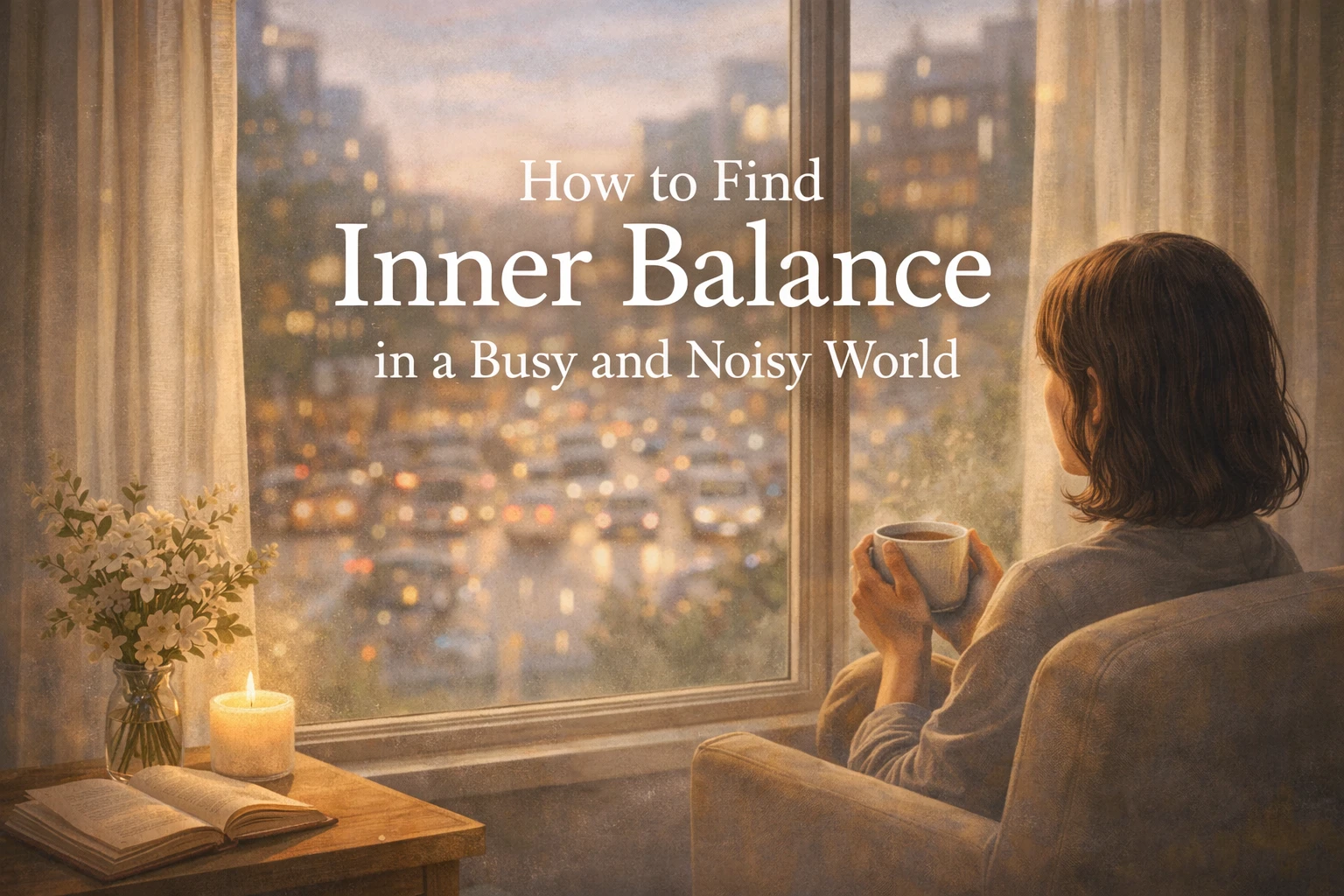
- How to Find Inner Balance in a Busy and Noisy World
- Self-Care at Home That Actually Helps

- Emotional Healing: Simple Practices to Restore Inner Calm