

This is my little online home where we celebrate life's real magic - the warm connections, simple self-care rituals, and those quiet moments that stay with you.
What I do here:
• Craft stories and tips to brighten your everyday
• Build a space where everyone feels welcome
• Make each visit worth your while - whether you need quick advice or food for thought
My superpowers? Turning ordinary moments into something special through words that actually mean something.
Off-screen, I'm probably:
☕ Curled up with a book that changes my perspective
🎨 Trying some new creative hobby
🌿 Noticing the small wonders we usually rush past
So glad you're here - let's make something meaningful together!
Table of Contents
Quick Answer: Before I Do Scan is designed around an increasingly common idea: using AI to help people examine relationship patterns, compatibility questions, and areas they may need to discuss before making a major commitment. It can be useful as a structured conversation starter, but it should not be treated as a scientific compatibility test, a relationship diagnosis, or a substitute for premarital counseling. The most valuable part of an AI relationship scan is often not the score or report itself, but the questions it encourages you and your partner to discuss honestly.
If you are thinking about getting engaged, moving in together, getting married, or simply taking your relationship more seriously, there is a particular kind of question that can be difficult to ask:
“Are we actually ready for the life we are planning together?”
It is an uncomfortable question because love can make us optimistic.
When you are deeply attached to someone, it is easy to focus on what works and assume that the difficult subjects will eventually sort themselves out.
Maybe you have not really discussed children.
Maybe you have different ideas about money.
Maybe one of you wants to live near family while the other wants to move somewhere completely different.
Maybe you argue differently.
Maybe one person needs frequent reassurance while the other needs more independence.
Or perhaps everything seems fine, but there are a few questions you keep quietly avoiding.
That is the space where tools such as Before I Do Scan become interesting.
An AI relationship assessment cannot tell you whether someone is “the one.” It cannot see the future. And a numerical score should never be confused with scientific certainty.
But a structured assessment can sometimes do something simpler and more useful:
It can make couples talk about things they might otherwise leave unspoken.

What Is Before I Do Scan?
Before I Do Scan is positioned as an AI-based relationship assessment designed to help people reflect on their relationship before a major commitment.
The basic concept is straightforward.
Instead of relying only on a traditional personality quiz or a generic list of compatibility questions, an AI-based relationship tool can use a person’s responses to organize reflection around areas such as communication, emotional connection, values, expectations, conflict, and future plans.
That concept is appealing because relationships are complicated.
A couple can be highly compatible in some areas and significantly different in others.
For example, two people might have strong emotional chemistry while having completely different expectations about:
- Having children
- Money and spending
- Career priorities
- Where they want to live
- Relationships with extended family
- Household responsibilities
- Religion or personal values
- Sexual expectations
- Conflict and communication
- Personal independence
- Long-term financial planning
A useful relationship assessment should therefore do more than ask:
“Do you love each other?”
The more important questions are often:
“How do you handle disagreement?”
“What does commitment mean to each of you?”
“What kind of life are you actually planning to build together?”
What This Review Can and Cannot Tell You
There is an important distinction between reviewing a relationship tool and endorsing its conclusions.
Before I Do Scan may be useful as a reflection tool, but consumers should be careful about treating AI-generated relationship assessments as clinically validated measurements.
Unless a product publishes independent validation showing that its particular assessment predicts relationship outcomes reliably, its results should be interpreted as structured feedback rather than scientific diagnosis.
This distinction matters because AI can produce language that sounds remarkably confident.
Confident language does not necessarily mean accurate measurement.
An AI system can organize your answers, identify themes, summarize patterns, and suggest questions. But it does not automatically acquire the ability to know your relationship better than you do.
That is why the healthiest way to use an AI relationship assessment is:
Use the result to start a conversation, not end one.
Why Couples Are Turning to AI Relationship Tools
The appeal is understandable.
Traditional couples counseling can be expensive, intimidating, difficult to schedule, or emotionally uncomfortable.
Some couples also do not believe their relationship is “bad enough” to need therapy.
They may simply want to check in.
An AI tool offers a lower-friction alternative.
You can explore questions privately and at your own pace.
You can think about subjects that might otherwise never come up.
And you can potentially discover that the issue you thought was important is not actually the biggest issue at all.
That does not make AI a replacement for a therapist.
It makes it potentially useful as an additional layer of relationship education and self-reflection.
What Should a Good AI Relationship Assessment Examine?
Whether you use Before I Do Scan or another relationship tool, there are several areas worth examining.
1. Communication
Can you talk openly when something is wrong?
Do you listen to understand, or mostly prepare your response?
Can each person express disappointment without being punished for it?
Do disagreements eventually get repaired?
These questions are much more useful than simply asking whether you “communicate well.”
2. Conflict
Every long-term relationship will eventually involve disagreement.
The important question is not whether you disagree.
It is how you behave when you do.
Look for patterns such as:
- Escalating arguments
- Withdrawal
- Contempt
- Blaming
- Defensiveness
- Repeated unresolved conflicts
- Difficulty apologizing
- Difficulty accepting repair attempts
A relationship assessment that asks about conflict is more useful than one that focuses primarily on shared interests.
3. Emotional Intimacy
Emotional intimacy is the ability to feel known, understood, accepted, and emotionally supported.
Ask yourself:
- Can I tell my partner when I am struggling?
- Do I feel safe being vulnerable?
- Do I know what my partner is currently worried about?
- Can we talk about difficult emotions without immediately trying to fix them?
You can live together and still be emotionally distant.
4. Money
Money is one of the most important subjects to discuss before marriage.
Compatibility does not mean earning the same amount or having identical spending habits.
It means understanding each other’s expectations.
Discuss:
- Saving and spending
- Debt
- Joint versus separate accounts
- Financial support for family members
- Career priorities
- Home ownership
- Major purchases
- Emergency savings
- Financial independence
If an AI scan prompts a couple to have these conversations before marriage, that alone can make the exercise worthwhile.
5. Children and Parenting
Do you both want children?
If so, how many?
What happens if having children becomes difficult?
How would you divide childcare?
What kind of discipline do you believe in?
Would one parent stay home?
How involved should grandparents be?
These questions can feel premature when you are in love.
They become much less premature when you are planning a shared life.
6. Family Boundaries
Marriage does not only join two people.
It often creates a relationship between two family systems.
Before committing, discuss:
- How often you expect to see relatives
- How much family members should be involved in decisions
- Financial support for parents
- Holiday traditions
- Privacy
- Boundaries with in-laws
- What happens when your families disagree
7. Lifestyle and Future Plans
Love does not automatically eliminate differences in life goals.
Where do you want to live?
What does success mean to you?
How important is career advancement?
Do you want to travel frequently?
Do you want a quiet home or a highly social lifestyle?
How do you imagine retirement?
These are not boring questions.
They are questions about the life you are actually going to share.
8. Trust and Boundaries
Trust is not simply about whether someone has cheated.
It also involves reliability, honesty, boundaries, transparency, and whether each partner feels respected.
Important conversations include:
- What counts as emotional infidelity?
- What boundaries do you have with ex-partners?
- What does privacy mean inside a relationship?
- How do you handle friendships with people you could potentially be attracted to?
- What behaviors would seriously damage trust?
Before I Do Scan vs. a Traditional Relationship Quiz
One reason AI-powered assessments are attractive is that they can potentially offer more flexible interaction than a fixed multiple-choice quiz.
A traditional relationship quiz might ask:
“Do you and your partner communicate well?”
That question is easy to answer.
It is also vague.
A more useful assessment might encourage you to explain what happens during an actual disagreement.
For example:
“When you disagree about something important, what usually happens next?”
The second question gives you something concrete to examine.
That is where conversational AI can potentially add value.
However, more sophisticated language does not automatically mean better psychological measurement.
A beautiful AI-generated report can still be based on incomplete or biased information.
The Biggest Limitation: AI Only Sees What You Give It
This is probably the most important limitation to understand.
An AI relationship assessment does not sit at your dinner table.
It does not watch what happens when you disagree about money.
It does not see whether someone rolls their eyes when the other person speaks.
It does not know whether an apology was sincere.
It cannot independently verify whether both partners are telling the truth.
It sees the information provided to it.
That means the quality of the result depends heavily on the quality and honesty of the input.
If one partner minimizes problems, the report may underestimate them.
If someone exaggerates problems because they are angry, the report may overestimate them.
If both people answer according to what they think a “good couple” should say, the assessment may tell them more about their idealized relationship than their real one.
This is not necessarily a flaw unique to AI.
Self-report is a limitation of many relationship questionnaires.
It simply means the results should be interpreted carefully.
Can an AI Tell You Whether You Are Compatible?
Not with certainty.
Compatibility is not a single measurable property.
Two people can be different in personality and still build a strong marriage.
Two people can have remarkably similar personalities and still have a painful relationship.
Long-term relationship quality depends on many interacting factors, including communication, commitment, conflict patterns, circumstances, expectations, and how partners respond to each other over time.
That is why you should be cautious about any tool that claims it can definitively predict whether your relationship will succeed.
A compatibility score can be interesting.
It should not become a life decision.
What Relationship Science Can Actually Teach Us
The strongest reason to use a relationship assessment is not that AI has magical insight.
It is that relationship science already gives us useful areas to examine.
Research on couples has repeatedly emphasized factors such as communication, conflict patterns, responsiveness, commitment, expectations, and relationship quality.
The Gottman Institute’s work, for example, has focused extensively on observable interaction patterns, including destructive conflict behaviors and the ways couples respond to one another during everyday interactions.
Premarital education programs also commonly encourage couples to discuss expectations around communication, finances, family, intimacy, conflict, and future goals before marriage.
That means the useful question is not:
“Is Before I Do Scan scientifically magical?”
It is:
“Does using this tool help me have better, more honest conversations about subjects that matter?”
That is a much more realistic standard.
Potential Benefits of Before I Do Scan
It Can Help You Notice Blind Spots
Sometimes you do not realize how many assumptions you have made until someone asks you to explain them.
For example:
“Of course we’ll both work after we have children.”
But have you actually discussed it?
“Of course we will live near my parents.”
Have you actually agreed on that?
“Of course we will combine our finances.”
Does your partner agree?
Good assessment questions make assumptions visible.
It Can Make Difficult Conversations Easier to Start
Some couples know they need to discuss something but do not know how to begin.
A structured prompt can remove some of that awkwardness.
Instead of saying:
“We need to talk about money.”
you can begin with:
“Let’s see what we actually expect from each other financially.”
That small change can lower the emotional barrier.
It Can Encourage Proactive Relationship Maintenance
Many people seek relationship help only after a crisis.
But you do not have to wait until a relationship is falling apart to examine it.
Regular relationship conversations can be preventive rather than reactive.
It Can Be a Low-Pressure First Step
For someone who feels nervous about couples therapy, an online assessment may feel more approachable.
It can help you identify what you want to discuss before speaking with a counselor.
That can make a later professional conversation more focused.
Potential Drawbacks and Limitations
AI Can Sound More Certain Than It Should
This is one of the biggest concerns with AI-generated advice.
A polished explanation can create the impression that the system has made a scientific determination.
It may not have.
Always separate:
“The AI identified a possible pattern.”
from:
“The AI proved that this pattern is true.”
Those are very different claims.
A Score Can Oversimplify a Relationship
People naturally like numbers.
A score of 82 feels easier to understand than three pages of nuanced observations.
But relationships are not school exams.
A couple who scores highly today may experience a major life change six months later.
A couple with several areas of disagreement may still have excellent skills for repairing conflict.
Numbers can summarize.
They cannot replace judgment.
One Partner May Use the Results as Ammunition
This is a particularly unhealthy use of relationship technology.
Imagine saying:
“See? The AI says you’re emotionally unavailable.”
That is unlikely to create intimacy.
The healthier response is:
“This result made me think about something. Do you see it the same way?”
The difference is enormous.
Privacy Matters
Relationship assessments can involve highly sensitive information.
Before entering private relationship details into any AI service, review the company’s current privacy policy and terms.
Pay attention to:
- What information is collected
- Whether conversations are stored
- How long information is retained
- Whether data is used to improve models
- Whether third parties receive data
- Whether you can delete your information
- Whether reports are linked to an account
Do not assume that “AI” automatically means private.
Privacy claims should be checked against the provider’s current documentation.
Who Should Consider Using a Relationship Scan?
An AI relationship assessment may be most useful for:
- Couples considering engagement
- People preparing for marriage
- Couples moving in together
- Partners discussing children
- Couples going through a major life transition
- People who want to identify difficult topics before counseling
- Individuals who want to organize their thoughts before having a difficult relationship conversation
Who Should Not Rely on an AI Relationship Scan?
There are situations where an AI assessment is not an adequate response.
Do not treat a scan as a substitute for professional support if there is:
- Physical violence
- Threats or intimidation
- Sexual coercion
- Coercive control
- Serious emotional abuse
- Fear of your partner
- Severe addiction affecting the relationship
- Active crisis involving safety
- Severe mental health concerns
In those circumstances, the priority is safety and appropriate professional support.
An AI cannot determine whether you are safe.
How to Use Before I Do Scan Responsibly
1. Answer Honestly
Do not answer the way you think a perfect couple should answer.
Answer according to what is actually happening.
2. Do Not Take It During a Fight
If you are extremely angry, hurt, or frightened, wait until you are emotionally settled enough to reflect.
3. Consider Completing It Independently
Independent reflection can sometimes reveal differences that disappear when partners influence each other’s answers.
4. Compare Perspectives Rather Than Scores
If you and your partner see something differently, that difference is often more interesting than the numerical result.
Ask:
“Why do we experience this so differently?”
5. Pick One Issue to Discuss
Do not attempt to fix your entire relationship in one evening.
Choose one subject and explore it properly.
6. Treat Unexpected Results as Questions
If the assessment identifies something you do not recognize, do not immediately accept or reject it.
Ask:
“What evidence do I have that this is true?”
Then discuss it with your partner.
7. Use Professional Help When Appropriate
If the scan reveals serious concerns, consider taking those concerns to a licensed couples therapist.
The goal is not to make AI the final authority.
The goal is to use technology to help you identify what deserves human attention.
Before I Do Scan vs. Premarital Counseling
| Feature | AI Relationship Scan | Premarital Counseling |
|---|---|---|
| Convenience | Usually high | Depends on therapist availability |
| Human interaction | No therapist involved | Direct professional guidance |
| Cost | Often lower | Usually higher |
| Personalization | Depends on the tool | High |
| Body language and live interaction | Not available | Can be observed |
| Professional clinical judgment | No | Available when provided by a qualified clinician |
| Best use | Reflection and conversation starting | Deeper relationship education and professional support |
The two should not necessarily be viewed as competitors.
A thoughtful couple could use an AI assessment to identify subjects they want to explore and then discuss those subjects more deeply with a counselor.
Questions You Should Discuss Before Marriage — With or Without AI
If you are considering Before I Do Scan, these questions may be even more valuable than the final score.
Money
What does financial security mean to each of us?
Children
Do we both want children, and what do we imagine parenting will look like?
Conflict
What happens when one of us is angry?
Family
How much involvement should our families have in our lives?
Career
What happens if one person’s career requires a major move?
Home
How should household work be divided?
Sex and Intimacy
Can we talk openly about changing needs and boundaries?
Faith and Values
Are there important beliefs or traditions that we have assumed we agree about?
Independence
How much individual time and privacy does each person need?
Commitment
What does marriage actually mean to each of us?
These conversations are not signs that you are doubting your relationship.
They are signs that you are taking the relationship seriously.
Is Before I Do Scan Worth It?
It can be — if you use it for the right purpose.
If you are looking for an algorithm to tell you whether you should marry someone, I would not rely on it.
If you want a structured way to think about important relationship questions that you may not otherwise discuss, the concept is much more useful.
The value of a relationship scan should therefore be measured by what happens after the assessment.
Did you discover a subject you had been avoiding?
Did you realize that you and your partner have different expectations about money?
Did you finally discuss children?
Did you understand why the same argument keeps happening?
Did you become more curious about your partner?
If yes, the assessment has already accomplished something worthwhile.
If you simply received a score, felt reassured for five minutes, and never discussed anything afterward, its practical value is much smaller.
Our Verdict
Before I Do Scan is best viewed as a relationship reflection tool, not a relationship verdict.
That distinction is the most important part of this review.
AI is becoming increasingly good at organizing information, identifying language patterns, summarizing responses, and generating personalized questions.
Those capabilities can be useful in relationships.
But relationships contain something that an algorithm cannot fully capture: two complicated human beings changing over time.
A scan can tell you what you said.
It can help organize what you think.
It can potentially reveal subjects worth discussing.
It cannot live your relationship for you.
It cannot make your partner honest.
It cannot create trust where there is none.
And it cannot decide whether you should spend your life with another person.
That decision remains yours.
Final Thoughts: The Best Relationship Test Is What Happens After the Test
There is something tempting about the idea of a relationship scan.
Give an AI some answers.
Receive a report.
Get a score.
Know where you stand.
But healthy relationships rarely work that neatly.
The most useful outcome is not a perfect compatibility score.
It is a better conversation.
Maybe the scan helps you finally discuss money.
Maybe it reveals that you have very different expectations about family.
Maybe it reassures you that the differences you were worried about are manageable.
Maybe it surfaces a serious issue that deserves professional attention.
All of those outcomes can be useful.
What matters is what you do with the information.
If you are considering marriage, do not ask only:
“Are we compatible?”
Ask:
“Can we be honest with each other?”
“Can we disagree without destroying each other?”
“Can we repair after we hurt each other?”
“Can we build a future that both of us genuinely want?”
“Can we keep learning about each other as we change?”
Those questions are much harder than a score.
They are also much more important.
And that is ultimately where any Before I Do Scan review should lead you: not toward an algorithm’s final answer, but toward a clearer understanding of the person you are choosing to build a life with.
Authoritative Sources & References
- American Psychological Association — Marriage and Relationships
- The Gottman Institute — Relationship Research and Education
- Mayo Clinic — Premarital Counseling
- American Association for Marriage and Family Therapy
- American Psychological Association — Healthy Relationships
Editorial note: Product features, pricing, privacy practices, availability, and AI capabilities can change over time. Before using any relationship assessment, review the provider’s current website, terms, and privacy policy. LoveAHH does not treat an AI-generated assessment as a clinical diagnosis or a definitive measure of relationship compatibility.
Recommended Articles:
- How to Build Emotional Connection: A Guide to Feeling Close
- Loneliness in the Elderly: How to Reconnect and Help
- How to Reconnect with Your Partner: Rebuilding Emotional Intimacy One Step at a Time
- How to Feel Emotionally Safe in a Relationship: 10 Keys to Trust
- Why Do I Feel Distant From My Partner? 11 Reasons and How to Reconnect
- Before I Do Scan Review: Is This AI Relationship Tool Worth It?
- Parallel Vows Review: Can This App Truly Heal Relationship Drift?
- Why Do I Feel Insecure in My Relationship? Understanding Trust Issues, Fear of Loss, and Attachment Anxiety
- Why Do I Feel Disconnected From My Partner? Real Causes and Practical Ways to Reconnect
- Why Do I Feel Lonely in a Relationship? Understanding Emotional Disconnect and Finding Real Connection
- Healthy Communication Habits That Bring Families Closer

- How to Create a Loving and Supportive Family Environment

- How to Improve Communication in Relationships: 12 Practical Strategies That Work
- Building Emotional Intimacy Through Small Daily Moments

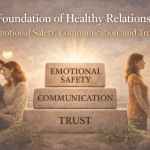
- The Foundation of Healthy Relationships: Emotional Safety, Communication, and Trust
- 15 Signs of a Healthy Relationship: What to Look For

- Relationship Red Flags: 17 Warning Signs You Should Never Ignore

- Simple Ways to Strengthen Family Relationships at Home: 12 Practical Strategies
- How to Communicate with Love and Understanding in Everyday Relationships
- 100 Best Anniversary Gifts 2026: The Ultimate Guide for Every Couple, Budget & Love Story