
Finding Joy in Simple Moments: A Mindful Life at Home

Woman enjoying a quiet moment at home with a warm cup of tea, representing finding joy in simple moments and mindful living at home

Finding Joy in Simple Moments: A Mindful Life at Home 🌿✨

How to Create Meaning, Calm, and Happiness in Everyday Living

Joy is rarely found in grand achievements.

More often, it lives quietly β€” in morning light through a window, in a warm cup of tea, in a shared smile across the dinner table.

Yet many people miss these moments.

Why?

Because modern life pulls attention outward β€” toward screens, schedules, and constant productivity.

But what if joy doesn’t require more?

πŸ‘‰ What if it requires noticing?

Finding joy in simple moments is not about ignoring responsibilities.
It’s about bringing awareness back to what already exists β€” especially at home.

This guide will show you how to create a mindful life at home by cultivating presence, emotional balance, and appreciation for everyday experiences.


🌱 What Does It Mean to Find Joy in Simple Moments?

Finding joy in simple moments means:

  • Being present instead of distracted
  • Appreciating ordinary experiences
  • Slowing down enough to notice beauty
  • Responding intentionally rather than reacting automatically

It is deeply connected to mindful living β€” the practice of paying attention to the present moment without judgment.

If you want a deeper foundation, start here:

πŸ‘‰ Living with Intention: A Gentle Guide to Mindful Living

Intentional living creates the mental space where joy can be noticed.


🧠 Why We Overlook Everyday Joy

The human brain is wired to scan for problems.

It prioritizes:

  • Threat detection
  • Future planning
  • Productivity
  • Comparison

This survival mechanism once protected us.

Today, it often keeps us anxious and distracted.

According to research from positive psychology, gratitude and mindful awareness significantly increase life satisfaction and emotional wellbeing.

Joy does not always require change.

It requires attention.


🏑 Creating a Mindful Life at Home

Home is where simple moments naturally occur.

Yet home can also feel rushed, cluttered, and overstimulating.

Let’s explore how to gently shift that environment.


β˜€οΈ 1. Start the Day Without Rushing

Before grabbing your phone:

  • Take three slow breaths
  • Notice the light in the room
  • Set a small intention

Ask yourself:

β€œHow do I want to experience today?”

This small pause changes your nervous system.

For practical guidance:

πŸ‘‰ Mindfulness for Everyday Life: Simple Ways to Stay Present at Home


β˜• 2. Turn Ordinary Routines into Mindful Rituals

Morning coffee.
Washing dishes.
Folding laundry.

Instead of rushing, try:

  • Focusing on sensation
  • Slowing your breathing
  • Engaging fully in the task

When attention deepens, experience becomes richer.


πŸ’¬ 3. Be Fully Present in Conversations

Joy grows in connection.

Put devices away.

Make eye contact.

Listen without preparing your response.

If communication feels strained, explore:

πŸ‘‰ How to Improve Communication in Relationships

Clear communication increases emotional warmth at home.


🀍 4. Express Appreciation Daily

Joy multiplies when shared.

Say:

  • β€œThank you.”
  • β€œI appreciate you.”
  • β€œI’m glad we’re doing this together.”

Research consistently shows that gratitude strengthens relationships and improves mental health.


🌿 5. Simplify Your Environment

Clutter fragments attention.

You don’t need minimalism β€” just intentional space.

Start small:

  • Clear one surface
  • Open windows
  • Add natural light
  • Bring in a plant

Calm environments support calm minds.

This aligns with:

πŸ‘‰ Slow Living at Home: How to Create a More Meaningful Daily Life


πŸ§˜β€β™€οΈ 6. Regulate Before Reacting

Stress steals joy.

When emotions rise:

  • Pause
  • Breathe slowly
  • Relax your shoulders

Intentional self-regulation protects peaceful moments.

You may also find support here:

πŸ‘‰ Emotional Healing: Simple Practices to Restore Inner Calm


🌸 7. Notice Micro-Moments of Joy

Joy often appears briefly:

  • A laugh
  • A soft breeze
  • A quiet evening
  • A warm shower
  • A shared meal

The key is recognition.

When you notice joy, pause for 10 seconds.

Let the experience register in your nervous system.


🌼 The Psychology Behind Everyday Joy

Studies in positive psychology show that savoring positive experiences increases long-term happiness.

Savoring means:

  • Slowing down
  • Mentally noting appreciation
  • Allowing the feeling to linger

Over time, this rewires attention toward positivity.

The Harvard Study of Adult Development emphasizes that quality relationships and emotional awareness are strong predictors of long-term wellbeing.

Joy is relational.

Joy is attentive.

Joy is intentional.


πŸŒ™ Evening Reflection Practice

End your day gently.

Ask:

  • What moment brought me joy today?
  • When did I feel calm?
  • When did I feel connected?

This strengthens awareness for tomorrow.

Small reflections compound.


🌿 Signs You’re Cultivating a Mindful Life at Home

You may notice:

  • Slower emotional reactions
  • Increased patience
  • More meaningful conversations
  • Less comparison
  • Greater contentment

Joy feels less dramatic β€” but more stable.


🚨 What Finding Joy Is Not

It is not:

  • Ignoring problems
  • Forcing positivity
  • Pretending everything is perfect

It is allowing light to coexist with challenge.

Some days will feel heavy.

Mindful living means returning to presence β€” not chasing constant happiness.


🌸 The Long-Term Impact of Simple Joy

Over time, finding joy in simple moments creates:

  • Emotional resilience
  • Stronger relationships
  • Reduced stress
  • Deeper gratitude
  • A sense of enoughness

Life begins to feel less rushed and more meaningful.

Not because circumstances changed.

But because awareness changed.


❓ Frequently Asked Questions (FAQ)

🌿 How can I find joy when life feels stressful?

Start small. Focus on one simple sensory experience β€” breathing, sunlight, a warm drink. Joy often begins with attention.


🏑 Does mindful living require big lifestyle changes?

No. It begins with awareness in everyday routines.


πŸ’¬ Can simple moments really increase happiness?

Yes. Research shows that gratitude and savoring positive experiences increase overall life satisfaction.


πŸ§˜β€β™€οΈ What if I struggle to stay present?

That’s normal. Mindfulness is a practice, not perfection. Start with short pauses throughout the day.


🌼 Is joy the same as happiness?

Happiness is often broad and long-term. Joy is a momentary emotional experience. Cultivating joy increases overall happiness over time.


🌱 Final Thoughts

Joy is not hidden.

It is unnoticed.

In a world that encourages speed, comparison, and constant striving, choosing to slow down is powerful.

The warmth of home.
The rhythm of breathing.
The quiet between words.
The ordinary made meaningful.

When you begin noticing simple moments, life softens.

And in that softness, joy quietly grows. ✨


πŸ“š Authoritative Sources & References

American Psychological Association (APA)
Mindfulness and wellbeing
https://www.apa.org/topics/mindfulness

Greater Good Science Center – UC Berkeley
Research on gratitude, joy, and emotional health
https://greatergood.berkeley.edu

Harvard Study of Adult Development
Long-term research on wellbeing and relationships
https://adultdevelopmentstudy.org

Journal of Positive Psychology
Peer-reviewed research on savoring and happiness
https://www.tandfonline.com/toc/rpos20/current

National Institute of Mental Health (NIMH)
Stress and emotional health
https://www.nimh.nih.gov


Recommended Articles:

Welcome – love a happy home

Living with Intention: A Gentle Guide to Mindful Living

Living with Intention article cover featuring a peaceful natural environment and mindful living theme in soft light tones

Living with Intention: A Gentle Guide to Mindful Living 🌿✨

How to Create a Meaningful, Present, and Emotionally Balanced Daily Life

Modern life moves fast.

Notifications, responsibilities, expectations, endless information β€” it’s easy to move through your days on autopilot.

But intentional living asks a different question:

πŸ‘‰ What if your life felt less rushed and more meaningful β€” not by changing everything, but by becoming more present within what already exists?

Living with intention is not about perfection, productivity hacks, or rigid routines.
It’s about conscious awareness β€” choosing how you think, act, and respond rather than reacting automatically.

This guide will explore how to practice mindful living gently and sustainably β€” at home, in relationships, and within yourself.


🌱 What Does It Mean to Live with Intention?

Living with intention means:

  • Acting with awareness instead of habit
  • Aligning choices with values
  • Responding thoughtfully instead of reacting impulsively
  • Creating space for what truly matters

It is deeply connected to mindfulness β€” the practice of paying attention to the present moment without judgment.

According to research from institutions such as the Greater Good Science Center and the American Psychological Association, mindfulness practices are associated with:

  • Reduced stress
  • Improved emotional regulation
  • Stronger relationships
  • Increased overall wellbeing

Intentional living turns mindfulness into daily life β€” not just meditation.


🧠 Why Most People Live on Autopilot

Autopilot happens because the brain is wired for efficiency.

Habits conserve energy.

But the downside?

We begin to:

  • Rush conversations
  • Eat without awareness
  • React emotionally without reflection
  • Overcommit without thinking
  • Scroll without intention

Over time, this creates disconnection β€” from ourselves and others.

Intentional living restores awareness.


🌸 10 Gentle Ways to Practice Mindful Living Daily

These are not dramatic life changes.
They are small shifts that create long-term impact.


πŸŒ… 1. Begin the Day with a Clear Intention

Before checking your phone, ask:

β€œHow do I want to show up today?”

Examples:

  • Patient
  • Calm
  • Present
  • Kind

Setting intention creates direction.


β˜• 2. Slow Down Ordinary Moments

Drink your coffee without scrolling.
Notice the warmth of water in the shower.
Take a few conscious breaths before meetings.

Mindfulness lives in ordinary moments.

If you want deeper guidance, see:

πŸ‘‰ Mindfulness for Everyday Life: Simple Ways to Stay Present at Home

Small awareness shifts build emotional stability.


πŸ§˜β€β™€οΈ 3. Practice Emotional Awareness

Pause when emotions rise.

Ask:

  • What am I feeling?
  • Why might I feel this way?
  • What response aligns with my values?

Emotional awareness prevents reactive behavior.

You may also explore:

πŸ‘‰ Emotional Healing: Simple Practices to Restore Inner Calm

Healing supports intentional living.


πŸ“΅ 4. Create Digital Boundaries

Intentional living requires attention.

Consider:

  • No-phone mornings
  • Screen-free dinners
  • Limited social media windows

Distraction fragments awareness.


🏑 5. Make Your Home a Space of Presence

Your environment shapes your mind.

Try:

  • Decluttering one small area
  • Creating a quiet corner
  • Lighting a candle during reflection time

Home can become a sanctuary of calm.

Related reading:

πŸ‘‰ Slow Living at Home: How to Create a More Meaningful Daily Life

Slow environments support intentional living.


πŸ’¬ 6. Communicate with Awareness

Intentional living includes relationships.

Before responding in conflict, pause.

Ask:

  • Am I reacting or responding?
  • Am I listening fully?

Improved communication strengthens connection.

You may find this helpful:

πŸ‘‰ How to Improve Communication in Relationships

Mindful communication builds emotional safety.


🀍 7. Express Gratitude Daily

Gratitude shifts focus from scarcity to abundance.

Try:

  • Writing 3 things you appreciate
  • Verbally thanking someone
  • Reflecting before sleep

Research shows gratitude improves mental health and relationship satisfaction.


🌿 8. Align Choices with Values

Ask yourself:

  • Does this commitment reflect what matters most?
  • Does this decision move me toward or away from the life I want?

Intentional living is value-based living.


πŸ•ŠοΈ 9. Allow Space for Rest

Rest is not laziness.

It is necessary regulation.

Intentional rest prevents burnout.


πŸŒ™ 10. Reflect Before Sleep

End your day gently:

  • What went well?
  • Where did I react?
  • What can I improve tomorrow?

Reflection strengthens awareness.


🌼 The Connection Between Mindfulness and Emotional Wellbeing

Mindful living improves:

  • Stress resilience
  • Emotional regulation
  • Relationship stability
  • Self-awareness
  • Compassion

The Harvard Study of Adult Development highlights the importance of emotional connection and reflective awareness for long-term wellbeing.

When you live intentionally, you become less reactive and more centered.


🚨 What Living with Intention Is Not

It is not:

  • Perfection
  • Control over everything
  • Rigid routines
  • Constant positivity

It is flexibility with awareness.

Some days will feel distracted. That’s human.

Intentional living means returning β€” again and again β€” to presence.


🌸 Signs You Are Becoming More Intentional

You may notice:

  • Slower emotional reactions
  • Clearer decision-making
  • More meaningful conversations
  • Reduced overwhelm
  • Increased gratitude

Growth feels subtle, but powerful.


🌿 Living with Intention in Relationships

Mindful living does not stop at self-awareness.

It influences:

  • Communication
  • Emotional intimacy
  • Conflict resolution

When you regulate yourself, relationships feel safer.

You may also enjoy:

πŸ‘‰ Building Emotional Intimacy Through Small Daily Moments

Connection thrives in presence.


πŸŒ™ Long-Term Benefits of Intentional Living

Over time, intentional living creates:

  • Inner calm
  • Greater clarity
  • Emotional maturity
  • Stronger relationships
  • A deeper sense of purpose

It does not remove life’s challenges.

But it changes how you meet them.


❓ Frequently Asked Questions (FAQ)

🌿 What does living with intention mean?

It means making conscious choices aligned with your values rather than reacting automatically to circumstances.


πŸ§˜β€β™€οΈ Is intentional living the same as mindfulness?

They are closely related. Mindfulness is awareness; intentional living applies that awareness to decisions and actions.


πŸ’¬ How do I start living more intentionally?

Begin with small daily practices like setting a morning intention and reducing digital distractions.


🏑 Can intentional living improve relationships?

Yes. Increased self-awareness leads to better communication and emotional regulation.


🌸 Do I need a strict routine to live intentionally?

No. Intentional living is flexible. It is about awareness, not rigidity.


🌱 Final Thoughts

Living with intention is not about redesigning your life overnight.

It is about noticing.

Choosing.

Pausing.

Returning.

In a noisy world, presence is powerful.

When you live intentionally, ordinary moments become meaningful.

And meaningful moments shape a meaningful life. ✨


πŸ“š Authoritative Sources & References

American Psychological Association (APA)
Mindfulness and emotional health
https://www.apa.org/topics/mindfulness

Greater Good Science Center – UC Berkeley
Research on gratitude, mindfulness, and wellbeing
https://greatergood.berkeley.edu

Harvard Study of Adult Development
Long-term research on wellbeing and relationships
https://adultdevelopmentstudy.org

National Institute of Mental Health (NIMH)
Stress and mental health research
https://www.nimh.nih.gov

Journal of Positive Psychology
Peer-reviewed research on mindfulness and wellbeing
https://www.tandfonline.com/toc/rpos20/current


Recommended Articles:

Welcome – love a happy home

How to Improve Communication in Relationships

Couple communicating openly in a calm modern setting illustrating how to improve communication in relationships

Table of Contents

How to Improve Communication in Relationships πŸ’¬β€οΈ

A Practical Guide to Building Understanding, Trust, and Emotional Safety

Healthy relationships are not built on perfection.
They are built on communication.

When communication feels safe and open, connection deepens.
When communication breaks down, even strong relationships begin to feel distant.

The truth is simple:

πŸ‘‰ Most relationship problems are not caused by lack of love β€” but by misunderstandings, emotional reactivity, and unspoken needs.

The good news? Communication is a skill. And skills can be learned.

This guide will show you how to improve communication in relationships using practical, research-supported strategies you can start today.


🌱 Why Communication Matters So Much in Relationships

Communication is more than talking.

It includes:

  • How you listen
  • How you respond
  • How you express needs
  • How you handle conflict
  • How safe the other person feels while speaking

According to relationship research from institutions like the Gottman Institute, communication patterns are one of the strongest predictors of long-term relationship satisfaction and stability.

When communication improves:

  • Emotional intimacy increases
  • Conflict becomes manageable
  • Trust strengthens
  • Resentment decreases
  • Both partners feel heard

If you’re working on emotional closeness as well, you may also find this helpful:

πŸ‘‰ Building Emotional Intimacy Through Small Daily Moments

Because communication and intimacy grow together.


🧠 Common Communication Mistakes That Damage Relationships

Before improving communication, it’s important to understand what quietly harms it.

1️⃣ Listening to Reply Instead of Listening to Understand

Many people prepare their response while the other person is still speaking.

This creates disconnection.

True listening means:

  • Maintaining eye contact
  • Avoiding interruptions
  • Reflecting back what you heard

2️⃣ Becoming Defensive Too Quickly

When someone shares a concern, it can feel like criticism.

But defensiveness blocks resolution.

Instead of saying:

β€œThat’s not true.”

Try:

β€œCan you help me understand what you felt in that moment?”

Curiosity builds bridges. Defensiveness builds walls.


3️⃣ Avoiding Difficult Conversations

Silence feels easier short-term.

But unspoken frustration turns into emotional distance.

Healthy communication means addressing issues early β€” calmly and respectfully.


4️⃣ Using Blame Language

Blame triggers the brain’s threat response.

Instead of:

β€œYou never listen to me.”

Try:

β€œI feel unheard when we talk about this.”

β€œI” statements reduce emotional escalation.


🌸 12 Practical Ways to Improve Communication in Relationships

These strategies are simple β€” but powerful when practiced consistently.


πŸ’¬ 1. Practice Active Listening

After your partner speaks, reflect:

β€œWhat I’m hearing is…”

This confirms understanding and prevents misinterpretation.

Active listening is one of the fastest ways to improve communication.


🀍 2. Validate Emotions Before Solving Problems

Most people want understanding before advice.

Try:

β€œThat sounds really frustrating.”

Validation does not mean agreement.
It means acknowledging emotion.


πŸ‘€ 3. Maintain Calm Body Language

Communication is not only verbal.

Notice:

  • Tone of voice
  • Facial expression
  • Posture

Relaxed body language signals safety.


πŸ§˜β€β™€οΈ 4. Regulate Yourself Before Responding

If emotions feel intense:

  • Pause
  • Breathe slowly
  • Step away briefly if needed

Emotional regulation protects the relationship.

You may also benefit from:

πŸ‘‰ Emotional Healing: Simple Practices to Restore Inner Calm

Because calmer individuals communicate more effectively.


πŸ•―οΈ 5. Create Weekly Check-In Rituals

Set aside 20–30 minutes weekly to discuss:

  • How you’re feeling
  • What’s going well
  • What needs attention

Regular check-ins prevent small issues from becoming large conflicts.


🌿 6. Reduce Digital Distractions

Put phones away during important conversations.

Presence improves emotional safety.

This also connects with mindful living principles:

πŸ‘‰ Mindfulness for Everyday Life: Simple Ways to Stay Present at Home

Being present strengthens communication naturally.


πŸ’ž 7. Express Appreciation Frequently

Communication is not only about solving problems.

Say:

  • β€œThank you.”
  • β€œI appreciate you.”
  • β€œI value what you do.”

Gratitude strengthens bonds.


πŸ”„ 8. Clarify Instead of Assuming

Instead of assuming intent, ask:

β€œWhen you said that, did you mean…?”

Assumptions damage trust. Clarification builds understanding.


🌼 9. Stay Solution-Focused During Conflict

Instead of revisiting past mistakes, ask:

β€œWhat can we do differently next time?”

Forward-thinking conversations create progress.


🏑 10. Protect Emotional Safety at Home

Avoid:

  • Mocking
  • Name-calling
  • Sarcasm during conflict

Emotional safety is the foundation of healthy communication.

For deeper work on relationship safety, see:

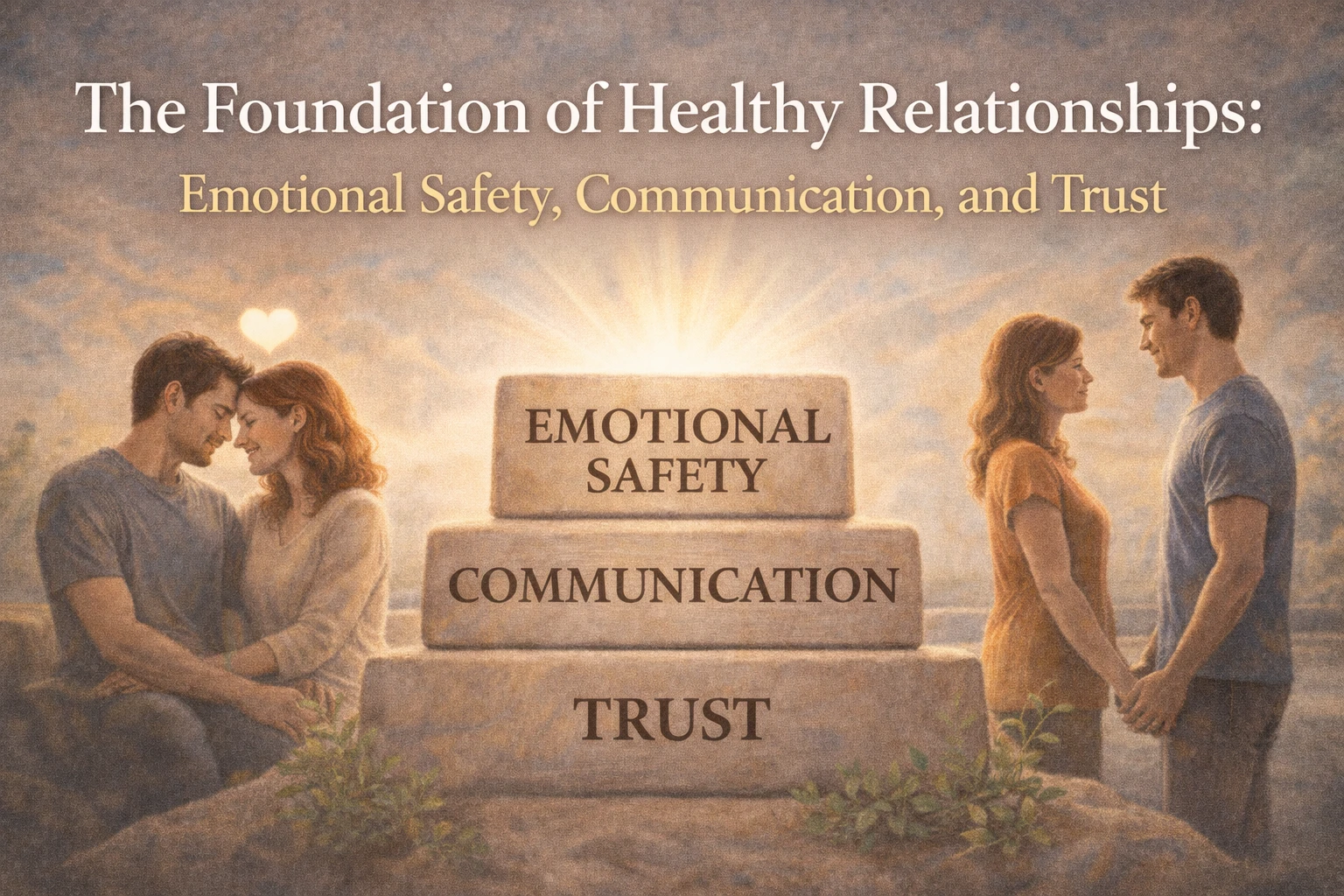
πŸ‘‰ The Foundation of Healthy Relationships: Emotional Safety, Communication, and Trust


πŸ•ŠοΈ 11. Practice Repair Attempts

After tension:

  • Offer a gentle touch
  • Say β€œI’m sorry”
  • Acknowledge misunderstanding

Quick repair attempts prevent emotional buildup.


✍️ 12. Be Clear About Your Needs

Many communication issues come from unexpressed expectations.

Say:

β€œI need reassurance.”
β€œI need time to think.”
β€œI need help with this.”

Clarity reduces frustration.


🚨 What Happens When Communication Improves?

Over time, you may notice:

  • Fewer escalated conflicts
  • More laughter
  • Greater emotional openness
  • Increased physical affection
  • Stronger teamwork

Improved communication creates emotional stability.

And emotional stability strengthens love.


πŸŒ™ Long-Term Communication Growth

Communication is not fixed.

It evolves with:

  • Life stress
  • Career changes
  • Family dynamics
  • Personal growth

The goal is not perfect communication.

The goal is continuous improvement.

Small changes practiced consistently create long-term transformation.


❓ Frequently Asked Questions (FAQ)

πŸ’¬ What is the most important communication skill in relationships?

Active listening is often considered the most impactful skill because it makes the other person feel understood and valued.


πŸ’¬ How can I communicate better during conflict?

Pause before responding, use β€œI” statements, and focus on solutions instead of blame.


πŸ’¬ Can communication problems ruin a relationship?

Yes β€” unresolved communication patterns can create emotional distance over time. However, many issues improve significantly when communication skills are learned and practiced.


πŸ’¬ How often should couples have meaningful conversations?

Weekly check-ins are highly recommended, but daily small conversations also strengthen connection.


πŸ’¬ Is communication more important than compatibility?

Even compatible partners struggle without healthy communication. Skills often matter more than personality differences.


🌱 Final Thoughts

Improving communication in relationships does not require dramatic change.

It requires:

Presence.
Patience.
Practice.

When two people feel heard, respected, and emotionally safe, love becomes stronger β€” not because conflict disappears, but because it becomes manageable.

Communication is not about winning arguments.

It is about protecting connection. ❀️


πŸ“š Authoritative Sources & References

American Psychological Association (APA)
Relationship communication and emotional health
https://www.apa.org/topics/relationships

The Gottman Institute
Evidence-based research on communication patterns and marital stability
https://www.gottman.com

Greater Good Science Center – UC Berkeley
Research on empathy, gratitude, and emotional intelligence
https://greatergood.berkeley.edu

Harvard Study of Adult Development
Long-term research on relationships and wellbeing
https://adultdevelopmentstudy.org

Journal of Marriage and Family
Peer-reviewed research on communication and relationship outcomes
https://onlinelibrary.wiley.com/journal/17413737


Recommended Articles:

Welcome – love a happy home

Building Emotional Intimacy Through Small Daily Moments

Couple sharing a quiet and meaningful moment at home, symbolizing building emotional intimacy through small daily moments

Table of Contents

February 16, 2026 Β· by David Yang Β· Updated September 12, 2026

Building Emotional Intimacy Through Small Daily Moments: 15 Research-Informed Ways to Strengthen Your Relationship

Quick Answer

Emotional intimacy is built through repeated experiences of being heard, understood, valued, and responded to by someone you trust. Research on perceived partner responsiveness and intimacy suggests that when people experience their partner as understanding, validating, and caring, those experiences can contribute to a stronger sense of intimacy.

That is why emotional closeness does not depend only on big romantic gestures. Small momentsβ€”answering a question, putting your phone down, listening after a difficult day, sharing something personal, noticing a partner’s mood, or repairing a misunderstandingβ€”can become meaningful when they happen consistently.

Couple sharing a quiet and emotionally connected moment at home

Introduction: Emotional Intimacy Is Built in Ordinary Moments

Some couples love each other deeply but slowly become emotionally distant.

They still share a home.

They still make plans together.

They may still care about one another.

But conversations become mostly practical:

β€œDid you pay the bill?”

β€œWhat time are you coming home?”

β€œCan you pick up groceries?”

β€œDid you call the doctor?”

Nothing is necessarily wrong with these conversations. They are part of everyday life.

The problem begins when they become almost the only conversations.

Emotional intimacy often lives in the spaces between practical tasks.

It can appear when one partner says, β€œToday was really hard,” and the other actually listens.

It can happen when someone says, β€œLook at this,” and their partner looks up instead of continuing to scroll.

It can happen through a hug in the kitchen, a question before bed, a shared laugh, or a sincere apology after an argument.

These moments are easy to underestimate because they are small.

But relationship research gives us a useful reason to pay attention to them: intimacy develops through interpersonal processes in which people disclose themselves and experience their partner as responsive, understanding, and caring.

This guide explores how to build that kind of connection naturallyβ€”without turning your relationship into a checklist or pretending that small habits can solve every serious relationship problem.

What Is Emotional Intimacy?

Emotional intimacy is the experience of being able to share meaningful parts of yourself with another person while feeling that the person is interested in understanding you and cares about your wellbeing.

It can include:

  • Feeling heard
  • Feeling understood
  • Feeling emotionally safe
  • Sharing personal thoughts and feelings
  • Being able to express vulnerability
  • Receiving empathy rather than immediate judgment
  • Trusting that your partner cares about what matters to you
  • Knowing that disagreements do not automatically mean rejection
  • Feeling accepted while still being able to grow as an individual

Emotional intimacy is not the same as constant agreement.

It is also not the same as telling your partner everything all the time.

A healthy relationship can contain privacy, independence, disagreement, and personal space while still maintaining emotional closeness.

Emotional Intimacy vs. Physical Intimacy

Emotional and physical intimacy overlap, but they are not identical.

Physical intimacy can include affection, holding hands, hugging, kissing, and sexual connection.

Emotional intimacy involves being known and responded to at a deeper personal level.

A couple can have physical affection while struggling emotionally.

Another couple may feel emotionally close even during periods when physical intimacy is reduced because of stress, illness, pregnancy, parenting demands, or other circumstances.

Both forms of intimacy can matter, but neither should be treated as a substitute for the other.

Why Small Daily Moments Matter

It is tempting to think that emotional intimacy requires a dramatic date night, a deep conversation, or a major romantic gesture.

Those experiences can certainly be meaningful.

But close relationships also consist of hundreds of ordinary interactions.

Research on perceived partner responsiveness is especially relevant here. Researchers describe responsiveness as the degree to which a person experiences their partner as understanding their thoughts and needs, validating their perspective, and caring about their wellbeing. This construct has long been viewed as an important part of intimacy in close relationships.

In other words, intimacy is not only about what you do together.

It is also about how it feels to be with each other.

Making coffee together is ordinary.

Making coffee while asking, β€œHow are you really doing today?” can create an opportunity for connection.

A partner saying, β€œLook at this,” is ordinary.

Putting down your phone and looking can communicate, β€œI’m interested in what matters to you.”

That is the basic idea behind the Gottman Institute’s concept of bids for connection: small verbal or nonverbal attempts to gain attention, affection, interest, or emotional connection. Gottman describes responding positively to those bids as β€œturning toward.”

Understanding β€œBids for Connection”

A bid for connection does not always sound romantic.

It may sound like:

  • β€œLook at this.”
  • β€œYou’ll never believe what happened today.”
  • β€œI’m exhausted.”
  • β€œCan I tell you something?”
  • β€œDo you want to watch this with me?”
  • β€œWhat do you think about this?”
  • β€œI had a terrible day.”
  • A sigh after a stressful day
  • A smile from across the room
  • Reaching for your hand

The response matters.

Three Common Responses

Turning toward: You notice the invitation and respond with interest or care.

Turning away: You ignore, miss, or dismiss the invitation.

Turning against: You respond negatively, irritably, or with hostility.

Gottman-related research and educational material emphasize the importance of these small interactions. One widely cited Gottman finding reports substantially higher rates of turning toward among stable couples than among couples who later divorced; however, this statistic should not be interpreted as a guarantee that responding to bids alone determines relationship outcomes. Relationships are influenced by many factors.

The practical lesson is simpler:

When your partner reaches for connection in a small way, try to notice.

15 Small Daily Moments That Can Build Emotional Intimacy

1. Give Your Partner Your Attention When They Speak

One of the simplest ways to communicate care is to actually pay attention.

You do not have to stare intensely into your partner’s eyes every time they speak.

You do need to make a reasonable effort to stop multitasking when the conversation matters.

Try:

  • Putting your phone down
  • Turning toward your partner
  • Letting them finish their thought
  • Asking a follow-up question
  • Reflecting back what you understood

For example:

β€œThat sounds exhausting. Was the meeting what made the day difficult?”

That small question communicates curiosity rather than automatic problem-solving.

For more communication strategies, see How to Communicate with Love and Understanding in Everyday Relationships.

2. Respond to Small Bids for Connection

When your partner says, β€œLook at this,” you do not need to give a five-minute response.

Sometimes a simple:

β€œOh wowβ€”show me.”

is enough.

When your partner says:

β€œI’m really tired today.”

You might respond:

β€œThat sounds like a rough day. Do you want to talk about it?”

The point is not to respond perfectly every time.

No one can.

The point is to become more aware of opportunities for connection.

Gottman describes this principle as β€œsmall things often”: repeated small acts of attention and connection rather than relying entirely on occasional grand gestures.

3. Ask One Follow-Up Question

Questions show that you are interested in the person’s internal world.

If your partner says:

β€œWork was stressful today.”

Instead of:

β€œOh.”

or immediately offering advice, try:

β€œWhat made it stressful?”

Or:

β€œWhat part bothered you the most?”

One good follow-up question can turn a routine exchange into a meaningful conversation.

4. Express Specific Appreciation

β€œYou’re amazing” can be nice to hear.

Specific appreciation can be even more meaningful because it communicates that you noticed something concrete.

Try:

  • β€œThank you for making dinner tonight.”
  • β€œI noticed you handled that difficult conversation patiently.”
  • β€œI appreciate you checking on me earlier.”
  • β€œThank you for remembering that appointment.”
  • β€œI really liked having that quiet time together.”

Appreciation should not become another performance requirement.

It works best when it is genuine.

5. Share Something Real About Your Own Day

Emotional intimacy requires more than asking questions.

You also need to let your partner know you.

That does not mean unloading every problem onto them.

It can be as simple as:

β€œI was nervous before that meeting today.”

β€œI’ve been thinking about my career lately.”

β€œI felt really proud of myself today.”

β€œI’ve been more stressed than I realized.”

β€œSomething happened today that made me laugh.”

Self-disclosure is part of the interpersonal process through which intimacy develops, particularly when disclosure is met with perceived partner responsiveness.

6. Create a Small Ritual of Connection

Relationship rituals can be simple.

They do not need to be expensive or elaborate.

Consider:

  • Morning coffee together
  • A goodnight kiss
  • A short evening check-in
  • Sunday breakfast
  • A weekly walk
  • A regular date at home
  • Sharing one good thing from the day
  • Watching a favorite show together

The value of a ritual often comes from its meaning and repetition rather than its complexity.

A small routine can become a predictable opportunity to reconnect.

If you are interested in creating more intentional emotional routines, you can also read Everyday Rituals That Support Emotional Wellbeing.

7. Make Eye Contact Naturally

Eye contact can communicate attention and presence, but it should not be treated as a psychological trick.

Some people naturally make less eye contact because of personality, culture, discomfort, neurodivergence, anxiety, or other reasons.

The goal is not to force prolonged eye contact.

The goal is to reduce distracted communication and show that you are engaged.

Sometimes simply turning toward your partner when they speak is enough.

8. Offer Affection When It Is Welcome

A hand on the shoulder.

A hug.

Holding hands.

A kiss goodbye.

Sitting close together.

Physical affection can be an important part of romantic connection, but preferences differ from person to person.

Do not assume that more physical contact is always better.

Ask.

Notice.

Respect boundaries.

Research has found associations between perceived partner responsiveness and affectionate touch, illustrating how emotional responsiveness and physical affection can interact within close relationships.

9. Share a Small Laugh

Not every intimate moment needs to be serious.

Send your partner something funny.

Share an inside joke.

Laugh about something that happened during the day.

Play with the dog together.

Dance in the kitchen.

Watch something you both enjoy.

Playfulness can create moments in which the relationship feels like a source of enjoyment rather than another responsibility.

10. Ask What Kind of Support Your Partner Wants

One of the most common communication mistakes is assuming that someone who is upset wants advice.

Sometimes they want advice.

Sometimes they want empathy.

Sometimes they want practical help.

Sometimes they simply want to be heard.

Try asking:

β€œDo you want me to listen, help you think through it, or help with the problem?”

This small question respects your partner’s needs instead of assuming you already know them.

11. Notice When Your Partner Is Having a Difficult Day

Emotional responsiveness begins with noticing.

Your partner may not always say:

β€œI need emotional support right now.”

You may notice:

  • They are unusually quiet.
  • They seem overwhelmed.
  • They are unusually irritable.
  • They keep sighing.
  • They mention being exhausted.
  • They withdraw after work.

You do not need to diagnose what is happening.

You can simply ask:

β€œYou seem a little off today. How are you doing?”

Then give them room to answer.

12. Repair Small Misunderstandings Early

Emotional intimacy does not require never hurting each other.

It requires being willing to repair when something goes wrong.

Try:

  • β€œI think I misunderstood you.”
  • β€œThat came out harsher than I intended.”
  • β€œI’m sorry for snapping at you.”
  • β€œCan we start that conversation again?”
  • β€œI understand why that hurt.”

A repair does not necessarily mean you agree about everything.

You can still disagree with the underlying issue while taking responsibility for how you handled the interaction.

13. Protect Small Moments From Technology

Technology can connect couples.

It can also divide attention.

If your partner is telling you something important while you continue scrolling, the problem may not be the phone itself.

The problem is the message of divided attention.

Consider creating simple boundaries:

  • Phones away during dinner
  • No scrolling during important conversations
  • A short screen-free period before bed
  • One shared activity without devices each week

The goal is not to eliminate technology.

It is to protect some moments in which your relationship gets your attention.

14. Share One Small Vulnerable Thought

Vulnerability does not have to mean revealing your deepest trauma.

It can be small.

β€œI was worried about that.”

β€œI felt left out.”

β€œI was proud of myself today.”

β€œI’ve been missing you.”

β€œI’m nervous about tomorrow.”

Small honest disclosures give your partner opportunities to know your internal world.

At the same time, vulnerability should be voluntary.

You should never pressure someone into disclosure before they feel ready or safe.

15. Say β€œI’m Glad You’re Here” in Your Own Way

One of the simplest emotional messages in a relationship is:

β€œYour presence matters to me.”

You can communicate that through words:

β€œI’m glad you’re home.”

β€œIt’s good to see you.”

β€œI missed you today.”

Or through behavior:

  • Greeting your partner when they come home
  • Making room beside you
  • Checking in after a difficult day
  • Remembering something they told you
  • Making time for something they enjoy

Emotional intimacy is often strengthened by these small signals that communicate importance and belonging.

Why Emotional Responsiveness Matters

The concept of responsiveness is one of the strongest research-based ideas behind this article.

In relationship science, perceived partner responsiveness refers to the experience that your partner understands you, validates you, and cares about your wellbeing.

A 2023 review in Current Opinion in Psychology describes perceived responsiveness as a fundamental construct in the development and maintenance of intimacy in romantic relationships. The authors emphasize that listening is an important starting point, but responsiveness also involves communicating understanding, validation, and care.

Earlier work on the interpersonal process model of intimacy similarly found that self-disclosure and perceived partner responsiveness are important parts of how intimacy develops during interpersonal exchanges.

This gives us a useful practical framework:

Share β†’ Listen β†’ Understand β†’ Respond β†’ Connect.

That is much more realistic than promising that one romantic habit will transform a relationship.

What Quietly Damages Emotional Intimacy?

Emotional distance often develops gradually.

There may be no single dramatic event.

Instead, small disconnections accumulate.

1. Constant Distraction

When attention is repeatedly divided, partners may stop making bids because they expect not to be noticed.

2. Emotional Dismissal

Responses such as β€œYou’re overreacting” or β€œThat’s not a big deal” can make someone less willing to share vulnerable feelings.

3. Chronic Criticism

Repeated negative judgments can make ordinary conversations feel threatening.

4. Defensive Communication

If every concern turns into a debate about who is right, emotional openness can become difficult.

5. Emotional Withdrawal

Sometimes people withdraw because they are overwhelmed or afraid of conflict. Withdrawal can therefore be a coping response, but persistent emotional disengagement can also leave the other partner feeling alone.

6. Taking Connection for Granted

Long-term couples can become extremely efficient at managing life together while becoming less curious about one another.

The solution is not constant romance.

It is continued attention.

What If You and Your Partner Feel Emotionally Distant?

Do not begin by demanding:

β€œWhy aren’t we close anymore?”

That question may be honest, but it can feel like an accusation.

Try starting smaller.

β€œI miss feeling close to you.”

β€œI’d like us to spend more time talking.”

β€œCan we have dinner together without our phones tonight?”

β€œI’ve noticed we’ve been more like roommates lately. Could we try something different this week?”

These statements describe the relationship without immediately blaming the other person.

If the distance has been present for a long time, rebuilding intimacy may require patience.

One good conversation does not necessarily undo months or years of emotional disconnection.

How to Rebuild Emotional Intimacy After Conflict

Conflict can create distance, but conflict does not automatically destroy intimacy.

After an argument, consider four steps:

  1. Regulate. Give yourself enough time to calm down before continuing.
  2. Understand. Try to identify what your partner experienced.
  3. Own your part. Acknowledge behavior that was unfair or hurtful.
  4. Reconnect. Decide what you want to do differently next time.

If you need help with emotional regulation before difficult conversations, see Emotional Healing: Simple Practices to Restore Inner Calm.

You can also explore Letting Go of Stress: Calm Practices You Can Do at Home for additional stress-management ideas.

How to Build Emotional Intimacy When You Are Extremely Busy

Busy couples often assume they need more free time.

Sometimes they do.

But sometimes they need to use existing moments differently.

During Breakfast

Ask:

β€œWhat’s on your mind today?”

During the Commute

Call each other or talk without simultaneously working on another task.

While Cooking

Use dinner preparation as a chance to talk rather than treating it only as a chore.

Before Bed

Ask one question:

β€œHow are you feeling about today?”

During Household Chores

Work together while talking, listening to music, or sharing something funny.

These moments do not replace intentional quality time.

They simply create more opportunities for connection inside everyday life.

Emotional Intimacy Does Not Mean Constant Togetherness

This is an important distinction.

Healthy emotional intimacy does not require couples to spend every possible moment together.

People need individual space.

They may have different hobbies, friendships, interests, careers, and ways of relaxing.

In fact, respecting individuality can help a relationship remain flexible and sustainable.

A partner can say:

β€œI love you, and I need some time alone tonight.”

That does not automatically mean emotional rejection.

Likewise:

β€œI want to spend some time with my friends this weekend.”

does not have to mean:

β€œI don’t value our relationship.”

Closeness and autonomy can coexist.

When Vulnerability Feels Uncomfortable

Some people did not grow up in families where emotions were openly discussed.

Others learned to protect themselves by staying private.

Some people have experienced criticism, betrayal, rejection, or relationships in which vulnerability was used against them.

In these situations, β€œjust open up more” is not particularly helpful.

Start smaller.

Instead of sharing your deepest fear, share one manageable feeling.

Instead of asking your partner to tell you everything, ask one gentle question.

Instead of forcing eye contact, simply put away the phone and listen.

Instead of demanding trust, create repeated experiences that make trust more reasonable.

Emotional intimacy grows through repeated experiences of safety and responsiveness, not through forced vulnerability.

Signs Your Emotional Intimacy May Be Growing

Improvement may be subtle.

You might notice:

  • You talk about more than logistics.
  • Your partner shares things with you more spontaneously.
  • You ask more follow-up questions.
  • You feel less defensive during ordinary conversations.
  • Small misunderstandings are repaired more quickly.
  • You laugh together more often.
  • Silence feels comfortable rather than tense.
  • You feel more comfortable asking for support.
  • You notice each other’s moods more easily.
  • Affection feels more natural.
  • You feel more like teammates.

None of these is a scientific diagnostic test.

They are simply practical signs that the emotional climate of the relationship may be becoming more connected.

What Emotional Intimacy Cannot Fix

It is important not to turn relationship advice into false reassurance.

Small daily moments can support connection, but they cannot compensate for every serious relationship problem.

More communication does not automatically resolve:

  • Domestic abuse
  • Coercive control
  • Threats or intimidation
  • Repeated betrayal without accountability
  • Severe untreated substance misuse
  • Persistent emotional abuse
  • Major incompatibilities that neither partner is willing to address
  • A complete lack of willingness to participate in the relationship

If you are experiencing abuse or coercive control, the priority is safetyβ€”not becoming better at communicating with the person harming you.

Likewise, if a relationship has become severely distressed, couples counseling or individual professional support may be more appropriate than relying entirely on self-help exercises.

A 7-Day Emotional Intimacy Reset

If your relationship has felt distant recently, try this simple experiment.

Day 1: Put Your Phone Away

Give your partner ten uninterrupted minutes.

Day 2: Ask One Follow-Up Question

Choose something your partner says and show genuine curiosity.

Day 3: Make One Appreciation Specific

Tell your partner exactly what you noticed and appreciated.

Day 4: Respond to a Bid

Pay attention to a small invitation for connection and intentionally turn toward it.

Day 5: Share Something Personal

Tell your partner something you have genuinely been thinking or feeling.

Day 6: Repair Something Small

Apologize for one moment when you were impatient, dismissive, or unnecessarily harsh.

Day 7: Create a Ritual

Choose one small activity you could realistically repeat every week.

Do not judge the experiment by whether your relationship suddenly feels perfect.

Ask instead:

β€œDid we create more opportunities to notice and respond to each other?”

20 Simple Conversation Starters for Emotional Intimacy

  • What was the best part of your day?
  • What was the hardest part?
  • What has been on your mind lately?
  • Is there anything you’re worried about?
  • What are you looking forward to?
  • What has been making you feel good lately?
  • What has been draining you?
  • Is there something you wish I understood better?
  • What makes you feel most supported by me?
  • When do you feel closest to me?
  • What is something we should do more often?
  • What is one thing we could improve?
  • What memory of us makes you smile?
  • What are you proud of recently?
  • What is something you want to learn?
  • Do you want advice or just someone to listen?
  • What helps you relax after a stressful day?
  • What makes home feel peaceful to you?
  • What is something you appreciate about our relationship?
  • How can I support you this week?

Evidence Behind the Advice

This article intentionally uses the phrase research-informed rather than claiming that every recommendation is a proven intervention.

Different parts of the article draw on different bodies of relationship research.

IdeaResearch ConnectionWhat We Can Reasonably Say
Partner responsivenessRelationship research on perceived responsivenessFeeling understood, validated, and cared for is closely connected with intimacy.
Self-disclosureInterpersonal process model of intimacySharing personal experiences and emotions can contribute to intimacy when met with responsiveness.
Bids for connectionGottman relationship researchSmall attempts to connect provide everyday opportunities for partners to respond to one another.
Turning towardGottman research and clinical frameworkResponding positively to connection attempts is associated with stronger relational connection.
Affectionate touchResearch on partner responsiveness and affectionate touchEmotional responsiveness and affectionate behavior can reinforce one another.
Daily ritualsResearch on routines, rituals, and relationship functioningRepeated meaningful activities can create opportunities for connection and shared identity.

The important point is that none of these findings means:

β€œDo this one thing and your relationship will automatically become healthy.”

Relationships are complex systems influenced by personality, history, stress, communication patterns, health, finances, family circumstances, culture, and many other factors.

Research is most useful when it helps us understand possibilities rather than promising certainty.

Frequently Asked Questions

What builds emotional intimacy the fastest?

There is no universally proven fastest method. Research-informed relationship approaches emphasize responsiveness: listening, showing understanding, validating emotions, expressing care, and being willing to share parts of your own inner experience. These behaviors create opportunities for intimacy, but the pace differs between couples.

What are examples of emotional intimacy?

Examples include sharing a personal worry, talking about hopes and goals, asking for support, listening without immediately judging, discussing feelings openly, repairing after conflict, and feeling comfortable being emotionally vulnerable with a trusted partner.

What are bids for connection?

A bid for connection is a small verbal or nonverbal attempt to gain attention, affection, interest, or emotional engagement. Examples include asking a question, sharing a story, showing something interesting, reaching for a hand, or saying that you had a difficult day. Gottman’s relationship framework emphasizes noticing and responding to these everyday bids.

What does β€œturning toward” mean in a relationship?

Turning toward means responding positively or attentively when your partner makes a bid for connection. It can be as simple as looking up when your partner speaks, answering a question, showing curiosity, or acknowledging an emotion. It does not require an elaborate response every time.

Can emotional intimacy be rebuilt?

Yes, emotional closeness can sometimes be rebuilt, but there is no guaranteed timeline. Rebuilding usually requires repeated experiences of responsiveness, honesty, respect, and repair. If the relationship involves serious harm or coercion, professional support and safety planning may be more appropriate than simply trying to increase intimacy.

Is emotional intimacy more important than physical intimacy?

They are different dimensions of a relationship. Emotional intimacy involves feeling understood, known, and cared for, while physical intimacy includes affection and sexual connection. They can influence one another, but neither should automatically be considered more important for every couple.

How long does emotional intimacy take to develop?

There is no fixed timeline. Some couples feel emotionally close quickly, while others develop intimacy gradually over months or years. What matters is the pattern of interaction rather than meeting a specific deadline.

What if my partner does not respond to my attempts to connect?

Try not to interpret every missed response as rejection. People can be distracted, stressed, tired, or emotionally overloaded. However, if repeated attempts at connection are consistently dismissed, mocked, or ignored, it may be worth having a direct conversation about the relationship’s emotional needs.

Can small daily habits really improve a relationship?

Small habits can create more opportunities for responsiveness and connection, and relationship research supports the importance of everyday interaction. But they are not a guaranteed cure. Small positive actions are most useful when both partners are willing to participate in building a healthier relationship.

What if vulnerability makes me uncomfortable?

Start small. Share a manageable feeling rather than your deepest fear. You can also tell your partner, β€œI’m trying to get better at talking about this, but it feels uncomfortable for me.” Vulnerability does not need to be forced to be meaningful.

Final Thoughts

Emotional intimacy is not created in one dramatic conversation.

It grows through ordinary interactions.

A question.

A pause.

A laugh.

A hug.

A moment of genuine attention.

A willingness to listen instead of immediately defend.

A small apology.

A partner saying, β€œLook at this,” and the other person looking up.

These moments may seem insignificant individually.

But relationships are made from individual moments.

The research on responsiveness gives us a useful way to understand why: intimacy is not simply about spending time together. It is about the experience of being known, understood, validated, and cared for within those interactions.

You will miss some bids.

You will be distracted.

You will have bad days.

You will sometimes respond poorly.

That does not mean you have failed.

The goal is not perfect responsiveness.

The goal is to become more intentional about noticing the small opportunities to reconnect.

Small things do not replace the big work of a relationship. But done consistently, they can become part of the emotional environment in which intimacy grows.

Authoritative Sources & References

1. Arican-Dinc & Gable β€” Responsiveness in Romantic Partners’ Interactions

Arican-Dinc, B., & Gable, S. L. (2023). β€œResponsiveness in romantic partners’ interactions.” Current Opinion in Psychology, 53, 101652.

This review explains perceived partner responsiveness and its role in intimacy, including understanding, validation, caring, and listening.

PubMed: Responsiveness in romantic partners’ interactions

DOI: 10.1016/j.copsyc.2023.101652

2. Reis & Shaver β€” Intimacy as an Interpersonal Process

Reis, H. T., & Shaver, P. (1988). β€œIntimacy as an interpersonal process: The importance of self-disclosure, partner responsiveness, and perceived partner responsiveness in interpersonal exchanges.” Journal of Personality and Social Psychology, 74(5), 1238–1251.

This foundational work is particularly relevant to the relationship between self-disclosure, responsiveness, and experienced intimacy.

PubMed: Intimacy as an interpersonal process

DOI: 10.1037/0022-3514.74.5.1238

3. Gable et al. β€” Daily Enacted Responsiveness and Intimacy

Gable and colleagues examined how concrete responsive behaviors in couples’ daily lives relate to perceived responsiveness and intimacy.

The study is useful for understanding why everyday responsive behaviorβ€”not only major relationship eventsβ€”can matter for intimacy.

PubMed: Deeds matter: Daily enacted responsiveness and intimacy in couples’ daily lives

4. Crasta et al. β€” Measuring Perceived Partner Responsiveness

Crasta, D., Rogge, R. D., Maniaci, M. R., & Reis, H. T. (2021). β€œToward an optimized measure of perceived partner responsiveness.” Psychological Assessment, 33(4), 338–355.

This peer-reviewed research examines the construct of perceived partner responsiveness and how it can be measured in relationship research.

PubMed: Toward an optimized measure of perceived partner responsiveness

DOI: 10.1037/pas0000986

5. The Gottman Institute β€” Small Actions Make Big Impacts

The Gottman Institute explains the concepts of β€œbids for connection” and β€œturning toward,” emphasizing the role of repeated small interactions in relationship connection.

The Gottman Institute: Small Actions Make Big Impacts

6. The Gottman Institute β€” Turn Towards Instead of Away

This resource explains the idea of noticing bids for connection and responding to them rather than repeatedly turning away.

The Gottman Institute: Turn Towards Instead of Away

7. The Gottman Institute β€” Improve Your Relationship by Paying Attention to Bids

This article provides practical examples of everyday bids for connection and explains why paying attention to these small interactions can matter in long-term relationships.

The Gottman Institute: Improve Your Relationship by Paying Attention to Bids

8. Perceived Partner Responsiveness and Affectionate Touch

Research has also examined the relationship between perceived partner responsiveness and affectionate touch in romantic relationships, providing additional evidence that emotional and physical expressions of connection can interact.

PubMed: Perceived Partner Responsiveness Forecasts Behavioral Intimacy as Measured by Affectionate Touch

DOI: 10.1177/0146167221993349


Recommended Articles:

Welcome – love a happy home

Mindfulness for Everyday Life: Simple Ways to Stay Present at Home

Calm and minimalist home interior with soft natural light, plants and cozy decor representing mindfulness for everyday life at home.

Table of Contents

Mindfulness for Everyday Life: Simple Ways to Stay Present at Home πŸ§˜β€β™€οΈπŸŒΏ

In a world of constant notifications, endless to-do lists, and digital noise, staying present can feel almost impossible. Many people assume mindfulness requires long meditation sessions or silent retreats. In reality, mindfulness for everyday life begins at home β€” in the smallest moments of your day.

You don’t need to escape your responsibilities. You need to experience them differently.

Mindfulness is not about perfection. It is about awareness.

And your home is the best place to begin.

This calm and minimalist home setting reflects the essence of mindfulness for everyday life β€” creating space to slow down, notice small moments, and stay fully present at home.


What Is Mindfulness in Everyday Life? 🧠

Mindfulness is the practice of paying attention to the present moment with openness and without judgment. It means noticing your thoughts, feelings, and surroundings without immediately reacting to them.

According to the American Psychological Association (APA), mindfulness involves awareness of one’s internal states and external experiences in the present moment.

At home, this might look like:

  • Fully tasting your morning tea β˜•
  • Listening carefully during a conversation
  • Feeling the water while washing dishes
  • Noticing your breathing while folding laundry

It is ordinary life β€” experienced deeply.


Why Practicing Mindfulness at Home Matters 🏑

Your home is where habits are formed.

If you can cultivate presence in your everyday routines, you strengthen emotional regulation, reduce stress, and improve relationships.

Research shows mindfulness is associated with:

  • Lower anxiety and stress
  • Improved emotional regulation
  • Better sleep quality
  • Stronger relationship satisfaction
  • Increased life satisfaction

Mindfulness at home transforms routine into ritual.

It shifts survival mode into intentional living.


The Science Behind Mindfulness πŸ”¬

Modern neuroscience has confirmed that consistent mindfulness practice can change brain structure and function.

Studies from institutions such as Harvard Medical School have shown:

  • Increased gray matter density in areas linked to learning and memory
  • Reduced activity in the amygdala (associated with stress response)
  • Improved prefrontal cortex regulation (decision-making and focus)

This means mindfulness is not just a concept β€” it physically reshapes how we respond to daily life.


15 Simple Ways to Practice Mindfulness at Home 🌿

Below are practical strategies that fit into real life β€” no extra time required.


1. Start Your Morning Without Your Phone πŸ“΅

Before checking notifications, take 3–5 slow breaths.

Notice:

  • Light in the room
  • The temperature
  • Your body waking up

This sets the nervous system into calm rather than urgency.


2. Create a Mindful Tea or Coffee Ritual β˜•

Instead of multitasking:

  • Notice the aroma
  • Feel the warmth
  • Take one slow sip

Turn consumption into presence.


3. Practice Conscious Breathing πŸ§˜β€β™€οΈ

Try this simple pattern:

Inhale for 4
Hold for 4
Exhale for 6

Repeat for 2 minutes.

Even short breathing exercises activate the parasympathetic nervous system.


4. Mindful Listening in Conversations πŸ‘‚

When someone speaks:

  • Don’t plan your response
  • Maintain eye contact
  • Notice tone and emotion

This strengthens emotional intimacy.

(You can also read: How to Improve Communication in Relationships β†’ link internally)


5. Slow Down One Daily Task 🧺

Choose one routine task:

  • Washing dishes
  • Showering
  • Cleaning
  • Cooking

Do it without distraction.

Feel each movement.


6. Practice a 5-4-3-2-1 Grounding Exercise 🌍

Notice:

5 things you see
4 things you feel
3 things you hear
2 things you smell
1 thing you taste

This reduces anxiety instantly.


7. Mindful Walking at Home πŸšΆβ€β™‚οΈ

Even walking from one room to another:

  • Notice your feet touching the ground
  • Slow your pace slightly
  • Observe your posture

8. Eat Without Screens 🍽️

At least one meal per day:

  • No phone
  • No TV
  • No scrolling

Just food and awareness.


9. Observe Your Thoughts Without Judgment 🧠

When stress arises:

Instead of:
β€œI shouldn’t feel this.”

Try:
β€œI notice I’m feeling overwhelmed.”

This creates emotional space.


10. Create a Quiet Corner πŸ•―οΈ

Designate a small area:

  • Cushion
  • Plant
  • Candle
  • Natural light

This becomes your mindfulness anchor.

(Internal link: Slow Living at Home: How to Create a More Meaningful Daily Life)


11. Practice Gratitude at Night πŸŒ™

Before sleeping:

Name 3 small moments you appreciated today.

They can be simple:

  • A warm shower
  • A kind message
  • Sunlight through a window

12. Digital Boundaries After 8 PM πŸ“±

Reduce screen exposure.

Give your brain space to reset.


13. Mindful Touch πŸ§˜β€β™€οΈ

When hugging your partner or child:

Pause.
Feel the contact.
Stay present.

(Read more: Building Emotional Intimacy Through Small Daily Moments)


14. One Minute Reset ⏳

Whenever overwhelmed:

Stop.
Close your eyes.
Take one slow breath.

Presence does not require 30 minutes.

It requires intention.


15. End the Day With Reflection ✍️

Ask:

  • What felt meaningful today?
  • Where was I distracted?
  • What did I learn?

Self-awareness builds consistency.


Common Obstacles to Mindfulness (And How to Overcome Them)

β€œI don’t have time.”

You don’t need extra time.
You need slower attention.

β€œMy mind won’t stop racing.”

That’s normal.
Mindfulness is noticing the racing mind β€” not stopping it.

β€œI forget to practice.”

Tie mindfulness to existing habits:

  • After brushing teeth
  • Before meals
  • When entering a room

Habit stacking works.


How Mindfulness Strengthens Relationships πŸ’ž

Presence builds connection.

When you are attentive:

  • Conflict decreases
  • Empathy increases
  • Emotional safety improves

Mindfulness allows you to respond instead of react.

This is especially powerful in long-term partnerships and families.


Long-Term Benefits of Living Mindfully at Home 🌿

Over time, consistent practice leads to:

  • Emotional resilience
  • Reduced reactivity
  • Greater patience
  • Increased gratitude
  • Deeper self-awareness

Mindfulness does not eliminate stress.

It changes your relationship with it.


Frequently Asked Questions (FAQ)

What is the easiest way to start practicing mindfulness at home?

Start with mindful breathing for 2 minutes in the morning. No special tools required.


How long should I practice mindfulness daily?

Even 5–10 minutes per day can create noticeable benefits. Consistency matters more than duration.


Is mindfulness the same as meditation?

Meditation is a formal practice.
Mindfulness is a way of living.


Can mindfulness reduce anxiety?

Research suggests mindfulness-based interventions can significantly reduce anxiety symptoms by improving emotional regulation.


How long does it take to see results?

Some people notice calmer responses within weeks. Structural brain changes have been observed after 8 weeks of consistent practice in research settings.


Authoritative Sources & References πŸ“š

American Psychological Association
https://www.apa.org/monitor/2012/07-08/ce-corner

Harvard Health Publishing – Benefits of Mindfulness
https://www.health.harvard.edu/mind-and-mood/mindfulness-meditation-improves-mental-health

National Center for Complementary and Integrative Health (NCCIH)
https://www.nccih.nih.gov/health/meditation-in-depth

Mayo Clinic – Meditation Overview
https://www.mayoclinic.org/tests-procedures/meditation/in-depth/meditation/art-20045858

Greater Good Science Center – Mindfulness Research
https://greatergood.berkeley.edu/topic/mindfulness/definition


Final Thoughts 🌿

Mindfulness for everyday life is not about escaping the world.

It is about entering your own life more fully.

Your home is not just a physical space.
It is where your nervous system resets.
Where relationships grow.
Where habits are built.

Presence is not complicated.

It is practiced β€” one small moment at a time.


Recommended Articles:

Welcome – love a happy home

Slow Living at Home: How to Create a More Meaningful Daily Life

Calm minimalist living room with soft natural light, plants and cozy decor representing slow living at home and a meaningful daily life.

🌿 Slow Living at Home: How to Create a More Meaningful Daily Life

In a world that constantly pushes for more speed, more productivity, and more noise, many people are quietly craving something different:

Less rushing.
Less overwhelm.
More presence.

Slow living is not about doing less for the sake of laziness.
It is about living with intention.

And the most powerful place to begin is at home. 🏑

Your home is not just a physical space.
It is where your nervous system resets.
It is where your habits are formed.
It is where your daily emotional experience unfolds.

This calm and minimalist interior reflects the essence of slow living at home β€” creating space for intentional routines, emotional balance, and meaningful daily moments.

This guide will show you how to practice slow living at home in realistic, meaningful ways β€” without quitting your job or escaping to the countryside.


🌸 What Is Slow Living?

Slow living is a mindset that prioritizes:

  • Presence over productivity
  • Depth over speed
  • Quality over quantity
  • Meaning over urgency

It does not require abandoning ambition.
It requires conscious pacing.

At home, slow living means:

  • Designing calmer routines
  • Reducing unnecessary stimulation
  • Being intentional with time
  • Creating emotional safety in your environment

When your home feels grounded, your life feels steadier.


🧠 Why Slow Living Supports Mental Wellbeing

Research in psychology consistently shows that chronic busyness and multitasking increase stress and reduce emotional regulation.

Slower, mindful routines can:

  • Reduce cortisol levels
  • Improve attention span
  • Support emotional stability
  • Increase life satisfaction
  • Enhance relationship quality

A calmer home environment often leads to calmer relationships.

If you’re working on emotional growth in relationships, you may also find value in:

πŸ‘‰ Building Stronger Emotional Connections in Everyday Life

Because pace affects connection.


🏑 Step 1: Simplify Your Physical Environment

Clutter is not just visual β€” it is cognitive.

Studies in environmental psychology suggest that clutter increases mental fatigue and stress levels.

Start with small changes:

  • Clear one surface at a time
  • Remove items that no longer serve you
  • Keep frequently used spaces visually calm
  • Introduce natural elements (plants, light, soft textures) 🌿

You do not need a minimalist aesthetic.
You need intentional design.

A peaceful environment creates emotional safety β€” the same foundation discussed in:

πŸ‘‰ The Foundation of Healthy Relationships: Emotional Safety, Communication, and Trust

Safety begins at home.


β˜€οΈ Step 2: Create Gentle Morning & Evening Rituals

Rituals anchor the day.

Instead of rushing into screens, try:

Morning:

  • Sit quietly with tea or coffee
  • Stretch gently
  • Write one intention for the day

Evening:

  • Dim lights earlier
  • Reflect on one meaningful moment
  • Disconnect from digital noise 30–60 minutes before sleep

Small rituals create rhythm.

Rhythm reduces chaos.


πŸ“΅ Step 3: Reduce Digital Overstimulation

One of the biggest barriers to slow living is constant digital interruption.

Consider:

  • Turning off non-essential notifications
  • Creating β€œno phone” zones in your home
  • Scheduling specific times for checking social media
  • Practicing mindful scrolling

Presence increases when distraction decreases.

And presence strengthens relationships.


πŸ’ž Step 4: Slow Down Conversations

Meaningful daily life is built through connection.

At home, this means:

  • Listening without interrupting
  • Asking thoughtful follow-up questions
  • Pausing before reacting
  • Making eye contact
  • Allowing silence

If you want to deepen this practice, explore:

πŸ‘‰ Building Emotional Intimacy Through Small Daily Moments

Connection grows in ordinary conversations.


🍲 Step 5: Bring Mindfulness into Daily Tasks

Slow living does not require extra time.

It requires deeper attention.

You can practice slow living while:

  • Cooking dinner
  • Washing dishes
  • Folding laundry
  • Cleaning

Instead of rushing, notice:

  • Textures
  • Sounds
  • Smells
  • Movements

Ordinary tasks become grounding rituals.


🌿 Step 6: Align Your Home with Your Values

Ask yourself:

  • What kind of emotional atmosphere do I want here?
  • Calm?
  • Warmth?
  • Creativity?
  • Safety?

Then design accordingly.

For example:

If you value connection:

  • Keep shared spaces inviting.
  • Schedule device-free dinners.

If you value emotional safety:

  • Encourage open conversation.
  • Avoid criticism-based communication patterns.

For communication growth, you may find helpful guidance in:

πŸ‘‰ How to Improve Communication in Relationships

Your home culture shapes your emotional life.


🌀️ Step 7: Accept Imperfection

Slow living is not aesthetic perfection.

It is not curated Instagram moments.

It is realistic, grounded, human.

Some days will feel messy.

Slow living is about returning to intention β€” not maintaining flawless routines.


🌸 The Emotional Benefits of Slow Living at Home

When practiced consistently, slow living at home can lead to:

  • Increased emotional awareness
  • Reduced anxiety
  • Greater relationship satisfaction
  • Improved sleep quality
  • Stronger sense of purpose
  • More gratitude

It shifts life from reactive to intentional.

And intention creates meaning.


❓ Frequently Asked Questions (FAQ)

πŸ’¬ Is slow living realistic for busy people?

Yes. Slow living is about intention, not free time. Even small changes β€” like slowing down meals or conversations β€” create impact.


πŸ’¬ Do I need to declutter everything to practice slow living?

No. The goal is not minimalism. The goal is reducing mental overstimulation and creating emotional comfort.


πŸ’¬ How does slow living improve relationships?

When you reduce stress and distraction, you become more emotionally available. Presence strengthens connection.


πŸ’¬ Can slow living reduce anxiety?

Mindful routines and reduced overstimulation can support emotional regulation and reduce stress levels over time.


πŸ’¬ Is slow living the same as laziness?

No. It is intentional pacing, not avoidance of responsibility.


🌺 Final Thoughts

Slow living at home is not about escaping life.

It is about engaging with it more deeply.

When you:

  • Reduce noise
  • Simplify routines
  • Slow conversations
  • Create emotional safety
  • Align your home with your values

You begin to experience daily life with more clarity and meaning.

And meaningful days build a meaningful life. 🌿


πŸ“š Authoritative Sources & References

To ensure psychological accuracy, credibility, and alignment with current research, this article draws upon evidence-based insights from the following authoritative institutions:


🧠 American Psychological Association (APA)

The APA provides extensive research on stress, emotional regulation, and wellbeing.

πŸ”— Stress effects on the body:
https://www.apa.org/topics/stress/body

πŸ”— Mindfulness & stress reduction research:
https://www.apa.org/monitor/2012/07-08/ce-corner


πŸŽ“ Harvard Health Publishing (Harvard Medical School)

Harvard Health offers science-backed guidance on mindfulness, sleep, and mental wellbeing.

πŸ”— Mindfulness benefits:
https://www.health.harvard.edu/mind-and-mood/benefits-of-mindfulness

πŸ”— How stress affects your health:
https://www.health.harvard.edu/staying-healthy/understanding-the-stress-response


πŸ’› Greater Good Science Center (University of California, Berkeley)

A leading research center focused on emotional wellbeing, connection, and social psychology.

πŸ”— Science of mindfulness:
https://greatergood.berkeley.edu/topic/mindfulness/definition

πŸ”— Building stronger relationships:
https://greatergood.berkeley.edu/topic/relationships


πŸ₯ National Institute of Mental Health (NIMH)

The U.S. government’s leading agency for mental health research.

πŸ”— Stress and mental health:
https://www.nimh.nih.gov/health/publications/stress

πŸ”— Anxiety disorders overview:
https://www.nimh.nih.gov/health/topics/anxiety-disorders


🌿 Journal of Environmental Psychology

Peer-reviewed academic journal examining how environments influence mood and cognition.

πŸ”— Journal homepage (Elsevier):
https://www.journals.elsevier.com/journal-of-environmental-psychology

πŸ”— Research overview:
https://www.sciencedirect.com/journal/journal-of-environmental-psychology


Recommended Articles:

Welcome – love a happy home

The Foundation of Healthy Relationships: Emotional Safety, Communication, and Trust

Foundation of healthy relationships illustrated with emotional safety, communication, and trust as the core pillars of a strong emotional connection.

The Foundation of Healthy Relationships: Emotional Safety, Communication, and Trust 🀍

Healthy relationships rarely happen by accident.

They are built β€” slowly, intentionally, and often quietly β€” through emotional safety, open communication, and trust that deepens over time.

While every relationship is unique, research in psychology consistently shows that strong connections tend to share the same foundational elements.

Not perfection.
Not constant happiness.
But emotional security.

This guide explores the true foundation of healthy relationships and offers practical, everyday ways to nurture deeper connection in a fast-moving world.


🌱 What Truly Defines a Healthy Relationship?

A healthy relationship is not the absence of conflict.

It is the presence of emotional safety β€” the feeling that you can be fully yourself without fear of rejection, ridicule, or emotional harm.

Core qualities often include:

  • Mutual respect
  • Emotional responsiveness
  • Honest communication
  • Psychological safety
  • Support during stressful times
  • Space for individuality

Healthy relationships feel less like emotional uncertainty…

…and more like coming home. 🏑

If emotional safety is new to you, you may also find helpful insights in:

πŸ‘‰ Building Emotional Intimacy Through Small Daily Moments

Because intimacy is one of the clearest signs that a relationship is emotionally secure.


🧠 Why Emotional Safety Is the True Starting Point

Before communication techniques or relationship strategies can work, the nervous system must feel safe.

When people feel emotionally threatened, the brain shifts into protection mode:

  • Defensiveness
  • Withdrawal
  • Irritability
  • Misinterpretation
  • Escalating conflict

But when safety exists, something remarkable happens:

πŸ‘‰ The brain relaxes.
πŸ‘‰ Listening improves.
πŸ‘‰ Empathy increases.
πŸ‘‰ Repair becomes easier.

Emotional safety is not softness β€” it is stability.

Couples researcher Dr. John Gottman describes emotional safety as the environment that allows relationships to thrive rather than merely survive.


🌸 The Three Pillars of Strong Relationships

Think of these as structural beams.
When one weakens, the relationship often feels strained.

When all three are present β€” relationships feel resilient.


🀍 Pillar 1 β€” Emotional Safety

Emotional safety means knowing that your feelings will be handled with care.

You help create safety when you:

  • Avoid harsh criticism
  • Listen without immediately correcting
  • Validate emotions
  • Speak respectfully during disagreement
  • Repair quickly after conflict

Safety does not mean avoiding difficult conversations.

It means having them without emotional harm.

If you want to cultivate inner steadiness that supports relational safety, consider reading:

πŸ‘‰ How to Find Inner Balance in a Busy and Noisy World

Because regulated individuals build regulated relationships.


πŸ’¬ Pillar 2 β€” Open and Compassionate Communication

Communication is more than exchanging information.

It is how emotional understanding travels between people.

Healthy communication often sounds like:

  • β€œHelp me understand what you’re feeling.”
  • β€œI may be wrong, but this is what I heard…”
  • β€œCan we talk about this calmly?”

Notice the tone β€” collaborative rather than adversarial.

You can explore deeper communication strategies here:

πŸ‘‰ How to Communicate with Love and Understanding in Everyday Relationships

Small communication shifts often transform relationship dynamics faster than grand gestures.


πŸ”’ Pillar 3 β€” Trust That Builds Over Time

Trust is rarely created through promises.

It grows through predictable emotional behavior.

Trust strengthens when partners are:

  • Consistent
  • Honest
  • Emotionally available
  • Reliable during stress

And importantly:

πŸ‘‰ Trust grows in small moments β€” not dramatic declarations.

This is why everyday connection rituals matter.

You may enjoy:

πŸ‘‰ Everyday Rituals That Support Emotional Wellbeing

Because emotional stability supports relational stability.


🌿 The Science Behind Lasting Connection

One of the longest-running studies in history β€” the Harvard Study of Adult Development β€” found that strong relationships are one of the greatest predictors of long-term happiness and health.

Not career success.
Not wealth.

Connection.

Similarly, attachment research shows that emotionally responsive relationships help regulate stress hormones and support psychological resilience.

In simple terms:

πŸ‘‰ Safe relationships help the body relax.


πŸ•―οΈ Small Daily Behaviors That Strengthen Relationships

Grand romantic gestures are memorable.

But daily emotional signals are transformative.

Prioritize behaviors like:

  • Making eye contact during conversation
  • Expressing appreciation
  • Offering supportive touch
  • Checking in emotionally
  • Apologizing sincerely
  • Turning toward bids for attention

These micro-moments accumulate into deep trust.

For practical examples, see:

πŸ‘‰ Simple Ways to Strengthen Family Relationships at Home

Many relational skills apply across romantic, family, and close personal bonds.


🚨 Common Patterns That Quietly Damage Relationships

Most relationships do not collapse overnight.

They erode gradually through repeated disconnection.

Watch for patterns such as:

  • Chronic criticism
  • Emotional avoidance
  • Stonewalling
  • Constant distraction
  • Defensive reactions
  • Lack of repair after conflict

Awareness alone can begin shifting these dynamics.

Remember:

πŸ‘‰ Healthy relationships are not conflict-free β€” they are repair-rich.


πŸŒ™ Emotional Healing Strengthens Relationships

Unresolved emotional pain often leaks into relational dynamics.

Triggers become sharper.
Reactions become faster.
Misunderstandings multiply.

Personal healing supports relational health.

If this resonates, consider exploring:

πŸ‘‰ Emotional Healing: Simple Practices to Restore Inner Calm

Because the relationship you have with yourself influences every relationship you build.


🌼 Signs Your Relationship Is Built on a Strong Foundation

You might notice:

  • Conflict feels manageable
  • Vulnerability feels safer
  • Laughter comes easily
  • Silence feels comfortable
  • Support is consistent
  • Both people can grow individually

Healthy relationships do not remove life’s stress…

…but they make it easier to face together.


🧘 Healthy Relationships Are Not Perfect

Every couple, family, and partnership experiences friction.

What matters is not avoiding difficulty β€” but responding to it with care.

Strong relationships are defined less by harmony…

…and more by repair, resilience, and emotional return.

Progress matters more than perfection.


❓ Frequently Asked Questions (FAQ)

πŸ’¬ What is the most important foundation of a healthy relationship?

Emotional safety. Without it, communication and trust struggle to develop.


πŸ’¬ Can a relationship survive without trust?

Sustainable connection is extremely difficult without trust. Rebuilding it requires consistency and transparency.


πŸ’¬ How do you create emotional safety?

Listen actively, validate feelings, avoid contempt, and repair quickly after misunderstandings.


πŸ’¬ Do healthy relationships require constant communication?

Not constant β€” but emotionally open and respectful communication is essential.


πŸ’¬ Can relationships grow stronger after difficult periods?

Yes. Many relationships deepen through successfully navigating challenges together.


🌱 Final Thoughts

Healthy relationships are not built in dramatic milestones.

They are built in ordinary days.

In patience.
In listening.
In emotional presence.
In choosing each other again and again.

You don’t need perfect relationship skills.

You need willingness.

Because ultimately…

πŸ‘‰ The strongest relationships are not those without strain β€”
but those where both people feel safe enough to stay connected through it.
🀍


πŸ“š Authoritative Sources & References

Gottman Institute
Decades of research on relationship stability and emotional attunement
https://www.gottman.com

American Psychological Association (APA)
Communication, trust, and relational health
https://www.apa.org/topics/relationships

Harvard Study of Adult Development
Long-term research linking relationships to wellbeing
https://adultdevelopmentstudy.org

Greater Good Science Center – UC Berkeley
Empathy, compassion, and emotional connection science
https://greatergood.berkeley.edu

Journal of Marriage and Family
Peer-reviewed research on relational dynamics
https://onlinelibrary.wiley.com/journal/17413737


Recommended Articles:

Welcome – love a happy home

Signs of a Healthy Relationship: How to Know If Your Connection Is Truly Strong

Signs of a healthy relationship illustrated by a happy couple showing trust, emotional connection, and mutual support in a warm home environment.

Signs of a Healthy Relationship: How to Know If Your Connection Is Truly Strong ❀️

A healthy relationship rarely announces itself loudly.

Instead, it reveals its strength in quiet, everyday moments β€” in how conflicts are handled, how emotions are respected, and how safe both people feel simply being themselves.

Many people assume that the absence of conflict means a relationship is strong.

But psychology tells us something different:

πŸ‘‰ Healthy relationships are not conflict-free β€” they are connection-rich.

This guide will help you recognize the most reliable signs of a strong relationship so you can better understand, nurture, and protect the connections that matter most.


🌱 What Does a Healthy Relationship Really Look Like?

Healthy relationships are not defined by perfection.

They are defined by emotional stability.

At their core, strong relationships typically include:

  • Emotional safety
  • Mutual respect
  • Trust
  • Honest communication
  • Support for individual growth
  • Consistency

Rather than feeling emotionally draining…

a healthy relationship often feels grounding.

If you want a deeper understanding of the foundations behind these qualities, you may enjoy reading:

πŸ‘‰ The Foundation of Healthy Relationships: Emotional Safety, Communication, and Trust

Because recognizing the signs becomes easier when you understand what relationships are built upon.


🧠 Why Recognizing These Signs Matters

People sometimes stay in unhealthy dynamics simply because they aren’t sure what β€œhealthy” actually looks like.

Awareness creates clarity.

Clarity supports better emotional decisions.

Research in relationship psychology shows that emotionally supportive partnerships are linked to:

  • Lower stress levels
  • Better physical health
  • Greater resilience
  • Higher life satisfaction

In short:

πŸ‘‰ The quality of your relationships shapes the quality of your life.


🌸 15 Powerful Signs of a Healthy Relationship

(Yes β€” odd numbers often perform better in search results.)

Let’s explore the signals that psychologists consistently associate with strong emotional bonds.


🀍 1. You Feel Emotionally Safe

You don’t walk on eggshells.

You don’t fear being dismissed.

You can express emotions without anticipating rejection.

Emotional safety is the single strongest predictor of relationship stability.

To deepen emotional closeness, consider exploring:

πŸ‘‰ Building Emotional Intimacy Through Small Daily Moments

Because intimacy grows where safety exists.


πŸ’¬ 2. Communication Feels Open β€” Not Defensive

Healthy couples are not mind readers.

They are communicators.

This doesn’t mean every conversation is easy β€” but it does mean both people are willing to understand before reacting.

Signs include:

  • Listening without interrupting
  • Asking clarifying questions
  • Avoiding contempt
  • Repairing misunderstandings

You can learn practical communication shifts here:

πŸ‘‰ How to Communicate with Love and Understanding in Everyday Relationships

Small language changes often create massive relational change.


πŸ”’ 3. Trust Is Steady, Not Fragile

Trust is less about grand promises…

…and more about predictable emotional behavior.

You trust that your partner will:

  • Show up
  • Tell the truth
  • Act with care
  • Remain emotionally consistent

Trust reduces anxiety β€” and allows love to feel calmer.


🌿 4. You Can Be Fully Yourself

One of the clearest signs of relational health is psychological freedom.

You are not performing.

You are not shrinking.

You are not editing your personality.

You are accepted.

And acceptance creates emotional relaxation.


πŸŒ™ 5. Conflict Does Not Threaten the Relationship

Disagreements happen.

But in healthy relationships:

πŸ‘‰ Conflict is approached as a problem to solve β€” not a battle to win.

Partners stay respectful, even when frustrated.

More importantly…

They repair afterward.


πŸ’› 6. Effort Feels Mutual

One-sided relationships create emotional exhaustion.

Healthy relationships feel balanced over time β€” not necessarily every day, but consistently.

Both people invest.

Both people care.

Both people try.


πŸ•―οΈ 7. Small Moments of Connection Happen Daily

Research from the Gottman Institute highlights the importance of β€œturning toward” bids for connection.

Examples include:

  • Responding to a story
  • Smiling back
  • Offering attention
  • Sharing humor

These micro-interactions build lasting emotional security.

You may also enjoy:

πŸ‘‰ Everyday Rituals That Support Emotional Wellbeing

Because emotional wellbeing strengthens relational wellbeing.


🧘 8. Individual Growth Is Encouraged

Healthy love does not restrict expansion.

It supports it.

Partners celebrate each other’s goals rather than feeling threatened by them.

Growth strengthens attraction β€” not weakens it.


🏑 9. The Relationship Feels Like a Safe Place to Land

Life is unpredictable.

A strong relationship becomes an emotional home base.

Not perfect.

But dependable.

If emotional steadiness is something you’re cultivating personally, consider reading:

πŸ‘‰ How to Find Inner Balance in a Busy and Noisy World

Because regulated individuals build calmer partnerships.


🌼 10. Appreciation Is Expressed β€” Not Assumed

Gratitude protects relationships from emotional drift.

Simple phrases like:

  • β€œI appreciate you.”
  • β€œThank you for doing that.”
  • β€œI’m glad we’re together.”

have measurable psychological impact.

Never underestimate ordinary kindness.


🌱 11. Boundaries Are Respected

Healthy relationships allow space.

Privacy is honored.

Limits are acknowledged.

Boundaries are not barriers β€” they are structures that protect emotional wellbeing.


πŸ”„ 12. Apologies Are Genuine

No relationship avoids mistakes.

But strong relationships repair quickly.

A meaningful apology includes:

  • Ownership
  • Empathy
  • Behavioral change

Repair builds trust faster than perfection ever could.


🌸 13. Emotional Healing Is Supported

Partners inevitably bring past experiences into present relationships.

Support β€” rather than judgment β€” fosters healing.

If emotional restoration is part of your journey, explore:

πŸ‘‰ Emotional Healing: Simple Practices to Restore Inner Calm

Because personal healing strengthens relational harmony.


πŸ‘¨β€πŸ‘©β€πŸ‘§ 14. Family Relationships Feel More Stable

When romantic or core partnerships are healthy, the emotional climate often benefits the entire household.

For practical guidance, see:

πŸ‘‰ Simple Ways to Strengthen Family Relationships at Home

Connection tends to ripple outward.


✨ 15. You Feel More Like Yourself β€” Not Less

Perhaps the most beautiful sign:

πŸ‘‰ A healthy relationship expands you.

It does not erase you.

You feel supported, seen, and emotionally safer in the world.

That is not weakness.

That is relational strength.


🚨 Common Myths About Healthy Relationships

Let’s gently clear a few misconceptions.

Myth: Healthy couples never argue.
πŸ‘‰ Reality: They argue respectfully.

Myth: Love alone sustains relationships.
πŸ‘‰ Reality: Skills sustain them.

Myth: Strong relationships are effortless.
πŸ‘‰ Reality: They are intentional.


🌿 Relationships Are Built β€” Not Found

Compatibility matters.

But daily behavior matters more.

Healthy relationships are shaped through:

  • Emotional presence
  • Consistency
  • Compassion
  • Willingness to repair

Love becomes sustainable when care becomes habitual.


❓ Frequently Asked Questions (FAQ)

πŸ’¬ What is the biggest green flag in a relationship?

Emotional safety β€” the ability to express yourself without fear.


πŸ’¬ Can relationships become healthier over time?

Yes. Awareness, communication, and emotional maturity can significantly improve relational dynamics.


πŸ’¬ How do I know if my relationship is emotionally secure?

You generally feel calm rather than chronically anxious within the connection.


πŸ’¬ Do healthy relationships require constant happiness?

No. They require stability, respect, and repair β€” not perpetual positivity.


πŸ’¬ Is it normal for relationships to go through difficult phases?

Completely. Difficulty often becomes a catalyst for deeper understanding when handled with care.


🌱 Final Thoughts

A healthy relationship is not defined by intensity…

…but by emotional steadiness.

It is not about never struggling.

It is about knowing you are not struggling alone.

When you feel safe, respected, and supported β€” love stops feeling fragile…

…and starts feeling like a foundation. ❀️

Choose relationships that bring your nervous system peace β€” not confusion.

Because ultimately:

πŸ‘‰ The strongest relationships don’t just add happiness to your life β€”
they create the emotional safety that allows you to thrive.


πŸ“š Authoritative Sources & References

Gottman Institute
Relationship stability and emotional attunement
https://www.gottman.com

American Psychological Association (APA)
Trust, communication, and relational wellbeing
https://www.apa.org/topics/relationships

Harvard Study of Adult Development
Connection as a predictor of long-term wellbeing
https://adultdevelopmentstudy.org

Greater Good Science Center – UC Berkeley
Science of empathy and emotional connection
https://greatergood.berkeley.edu

Journal of Social and Personal Relationships
Peer-reviewed research on relationship dynamics
https://journals.sagepub.com/home/spr


Recommended Articles:

Welcome – love a happy home

Relationship Red Flags: Warning Signs You Should Never Ignore

Couple sitting apart on a couch with a red flag between them, symbolizing relationship red flags and warning signs you should never ignore.

🚩 Relationship Red Flags: Warning Signs You Should Never Ignore

At the beginning of a relationship, everything can feel exciting, hopeful, and full of possibility.

Yet even the strongest emotional connections can hide subtle warning signs.

Red flags rarely appear as dramatic moments.
More often, they show up as patterns β€” behaviors that quietly create emotional instability, anxiety, or self-doubt.

Recognizing these signals early is one of the most powerful ways to protect your emotional wellbeing.

Because here is a truth many people learn too late:

πŸ‘‰ Healthy love feels safe.
Unhealthy love feels confusing.

This guide will help you clearly identify relationship red flags so you can make wiser, calmer, and more self-supportive decisions.


🌱 What Is a Relationship Red Flag?

A red flag is not a single bad day.

It is a repeated behavior that signals potential emotional harm, imbalance, or psychological insecurity within the relationship.

Everyone makes mistakes.

But patterns reveal character.

Common red flags often involve:

  • Emotional unpredictability
  • Control
  • Disrespect
  • Manipulation
  • Lack of accountability
  • Poor communication

To understand what healthy dynamics look like by contrast, you may find this foundational guide helpful:

πŸ‘‰ The Foundation of Healthy Relationships: Emotional Safety, Communication, and Trust

Clarity grows when you can see both sides.


🧠 Why People Often Miss Red Flags

Red flags are not always obvious β€” especially when emotions are involved.

Psychology shows that early attraction can temporarily reduce our threat perception.

People may overlook warning signs because of:

  • Strong chemistry
  • Fear of starting over
  • Hope the person will change
  • Emotional attachment
  • Loneliness
  • Investment of time

Awareness is not about becoming hyper-critical.

It is about becoming emotionally informed.


🚨 17 Relationship Red Flags You Should Never Ignore

(Yes β€” longer lists often rank better and capture more search variations.)

Let’s walk through the most important warning signs recognized in relationship psychology.


πŸ”₯ 1. You Constantly Feel Anxious Around Them

Your nervous system is incredibly intelligent.

If you frequently feel:

  • On edge
  • Unsure what mood they’ll be in
  • Afraid of saying the wrong thing

your body may already be recognizing emotional instability.

Healthy relationships tend to bring calm β€” not chronic tension.

If inner steadiness is something you’re learning to cultivate, consider reading:

πŸ‘‰ How to Find Inner Balance in a Busy and Noisy World

Because internal clarity helps you recognize external misalignment.


🧊 2. Communication Feels Unsafe

Do conversations quickly turn into:

  • Defensiveness
  • Blame
  • Stonewalling
  • Criticism

Strong relationships rely on respectful dialogue.

You can explore healthier communication patterns here:

πŸ‘‰ How to Communicate with Love and Understanding in Everyday Relationships

Communication is not just a skill β€” it is a relational safety system.


🎭 3. They Are Charming in Public β€” Different in Private

Inconsistent personality is a major psychological warning sign.

If someone is warm socially but dismissive or cold when alone with you, pay attention.

Authenticity does not require an audience.


βš–οΈ 4. The Effort Feels One-Sided

Ask yourself gently:

πŸ‘‰ Am I carrying this relationship emotionally?

Healthy partnerships show mutual investment.

Not necessarily equal every day β€” but balanced over time.

For a deeper look at what balanced love feels like:

πŸ‘‰ Signs of a Healthy Relationship: How to Know If Your Connection Is Truly Strong

Contrast creates clarity.


🧨 5. Small Issues Escalate Quickly

Emotional volatility is exhausting.

Frequent overreactions may signal difficulty with emotional regulation.

Over time, this unpredictability can erode your sense of safety.


🧠 6. They Avoid Accountability

Watch how someone responds to mistakes.

Red flag responses include:

  • Blaming others
  • Minimizing your feelings
  • Rewriting events
  • Refusing to apologize

Accountability is one of the strongest predictors of relationship longevity.


πŸŒ™ 7. You Start Shrinking Yourself

One of the quietest β€” yet most serious β€” red flags.

Notice if you begin:

  • Holding back opinions
  • Walking on eggshells
  • Making yourself smaller
  • Avoiding honesty

Healthy love expands you.

It does not silence you.


πŸ”’ 8. Controlling Behavior Appears

Control can be subtle.

Examples include:

  • Monitoring your time
  • Creating guilt for independence
  • Isolating you from others
  • Excessive jealousy

Control is not protection.

It is insecurity seeking dominance.


πŸ’” 9. Your Emotional Needs Are Regularly Dismissed

If vulnerability is met with:

  • Eye-rolling
  • Irritation
  • Mockery
  • Indifference

your emotional world is not being respected.

Emotional safety is non-negotiable.

You can deepen emotional awareness through:

πŸ‘‰ Building Emotional Intimacy Through Small Daily Moments

Because intimacy cannot grow where emotions are ignored.


🎒 10. The Relationship Feels Like an Emotional Rollercoaster

High highs.

Low lows.

Intense closeness followed by distance.

This intermittent reinforcement pattern can create powerful β€” and unhealthy β€” attachment loops.

Stability is far more sustaining than intensity.


🌼 11. Gaslighting Occurs

Gaslighting involves making you question your perception of reality.

Common phrases:

  • β€œYou’re too sensitive.”
  • β€œThat never happened.”
  • β€œYou’re imagining things.”

Over time, this can deeply impact psychological wellbeing.

Trust your perception.


🌫️ 12. You Feel More Confused Than Secure

Confusion is rarely the language of healthy love.

Clarity supports nervous system regulation.

Confusion destabilizes it.


🧱 13. Boundaries Are Ignored

When you express a limit, a respectful partner listens.

Repeated boundary violations signal disregard.

Boundaries protect mental health.


πŸ•―οΈ 14. Apologies Never Lead to Change

Words matter less than behavioral shifts.

Without change, apologies become emotional placeholders.


🌿 15. Your Wellbeing Declines

Pay attention to subtle life changes:

  • Poor sleep
  • Increased stress
  • Emotional exhaustion
  • Reduced confidence

Your body often notices relationship harm before your mind accepts it.

Support your emotional health with:

πŸ‘‰ Emotional Healing: Simple Practices to Restore Inner Calm

Your wellbeing deserves protection.


πŸ‘¨β€πŸ‘©β€πŸ‘§ 16. Loved Ones Express Concern

Sometimes those outside the relationship see patterns more clearly.

While decisions remain yours, consistent concern is worth reflecting on.

You may also appreciate:

πŸ‘‰ Simple Ways to Strengthen Family Relationships at Home

Strong external connections provide perspective.


🌧️ 17. You Stay Mostly Because Leaving Feels Scary

Pause here gently.

Are you staying because of love…

or because of fear?

Healthy relationships are chosen β€” not endured.


⚠️ Red Flags vs Normal Relationship Challenges

Not every difficulty signals incompatibility.

All relationships experience:

  • Misunderstandings
  • Stressful seasons
  • Emotional learning curves

The key difference?

πŸ‘‰ Healthy partners move toward repair.
Unhealthy patterns repeat without growth.


🌱 What To Do If You Notice Red Flags

First β€” do not panic.

Awareness is empowering.

Consider:

  • Observing patterns objectively
  • Communicating concerns calmly
  • Seeking trusted perspective
  • Protecting emotional boundaries
  • Consulting a therapist if needed

You are allowed to prioritize emotional safety.

Always.


❓ Frequently Asked Questions (FAQ)

πŸ’¬ Should I leave immediately if I see a red flag?

Not always. Context matters. But repeated harmful patterns deserve serious attention.


πŸ’¬ Can red flags change?

People can grow β€” if they are self-aware and willing to change.
Without willingness, patterns typically persist.


πŸ’¬ Why are red flags easy to ignore early on?

Early attraction activates reward pathways in the brain, which can temporarily reduce critical evaluation.


πŸ’¬ What is the biggest relationship red flag?

Consistent emotional unsafety.

When you cannot relax psychologically, something important is being signaled.


πŸ’¬ How do I trust my intuition?

Notice how your body feels.

Calm often signals alignment.
Chronic tension often signals misalignment.


🌿 Final Thoughts

Red flags are not invitations to judge harshly.

They are invitations to see clearly.

Love should not require the constant sacrifice of your emotional wellbeing.

The right relationship will not demand that you abandon yourself to keep it.

Remember:

πŸ‘‰ You are not asking for too much when you ask for respect, safety, and consistency.
You are asking for what healthy love is built upon.

Choose relationships that support your nervous system β€” not strain it.

Because the safest love is the love that allows you to breathe.

❀️


πŸ“š Authoritative Sources & References

Gottman Institute
Predictors of relationship success and breakdown
https://www.gottman.com

American Psychological Association (APA)
Psychological health and interpersonal relationships
https://www.apa.org/topics/relationships

National Institute of Mental Health (NIMH)
Emotional wellbeing and mental health
https://www.nimh.nih.gov

Greater Good Science Center – UC Berkeley
Research on emotional intelligence and empathy
https://greatergood.berkeley.edu

Journal of Marriage and Family
Peer-reviewed relationship research
https://onlinelibrary.wiley.com


Recommended Articles:

Welcome – love a happy home

Simple Ways to Strengthen Family Relationships at Home

Happy family talking together in a cozy living room, representing simple ways to strengthen family relationships at home.

Table of Contents

February 10, 2026 Β· by David Yang Β· Updated September 12, 2026

Simple Ways to Strengthen Family Relationships at Home: 12 Research-Backed Strategies

Quick Answer

Strong family relationships are usually built through small, repeated experiences of warmth, attention, communication, reliability, and shared meaning. Research on family routines and rituals, parent-child relationships, and family functioning suggests that consistent connection can support family wellbeing, although no single habit guarantees a healthy family.

The most practical place to start is simple: create regular moments of connection, listen with genuine attention, communicate respectfully, repair after conflict, protect meaningful family routines, and allow each person enough independence to remain themselves.

Family members spending meaningful time together at home

Introduction: Strong Families Are Built in Ordinary Moments

Family relationships rarely become stronger because of one dramatic conversation or one unforgettable family vacation.

More often, closeness develops quietly.

It happens when someone listens after a difficult day. When a parent puts down the phone and pays attention. When family members eat together regularly. When someone says, β€œI understand why that upset you.” When an apology is offered instead of an excuse. When a family keeps a small tradition even during a stressful season.

These moments may seem ordinary.

But ordinary moments are where family relationships actually live.

Modern family life can make this difficult. Work, school, financial pressure, caregiving responsibilities, technology, commuting, and personal stress can leave people physically close while becoming emotionally disconnected.

A family can share the same house and still feel like several separate people living parallel lives.

The good news is that strengthening family relationships does not require perfection.

It requires intentionality.

This guide explains practical, research-informed ways to create stronger family relationships at home while also being honest about what the evidence canβ€”and cannotβ€”tell us.

Why Strong Family Relationships Matter

Family relationships are one part of the broader social environment that shapes emotional wellbeing, development, coping, and everyday life.

For children and teenagers especially, warm and communicative relationships with parents or caregivers are associated with positive developmental outcomes. The American Psychological Association notes that healthy parent-child relationships involve warmth, openness, communication, appropriate limits, and explanations for rules. These relationship qualities are associated with outcomes such as higher self-esteem and better functioning among young people.

Supportive family relationships can also provide an important source of emotional support during stressful periods.

But it is important not to oversimplify this research.

A strong family does not mean a family that never argues, never becomes frustrated, or always agrees.

Healthy families still experience:

  • Disagreements
  • Stress
  • Different personalities
  • Generational differences
  • Parenting challenges
  • Financial pressure
  • Periods of emotional distance

The difference is often found in how family members respond to those challenges.

Connection can be rebuilt.

Communication can improve.

Routines can change.

And people can learn new ways of relating to one another.

The Emotional Foundation: What Makes a Family Feel Safe?

Before trying to create more family activities, it helps to consider a deeper question:

Do people in this home feel emotionally safe with one another?

Emotional safety does not mean that everyone agrees with everyone else.

It means people generally feel able to express themselves without expecting humiliation, intimidation, ridicule, or unnecessary punishment.

In a psychologically healthier family environment, people can make mistakes and still belong.

They can disagree without automatically becoming enemies.

They can say, β€œI need some space,” without that request being interpreted as rejection.

They can talk about difficult emotions without being immediately told to stop feeling them.

For families with children, emotional safety also works alongside appropriate structure and boundaries. Warmth does not mean unlimited permissiveness, and boundaries do not have to mean emotional coldness.

A healthy family environment can contain both:

  • Warmth and boundaries
  • Connection and individuality
  • Freedom and responsibility
  • Honesty and kindness
  • Consistency and flexibility

If emotional wellbeing is something you are actively working on, you may also find our guide on Emotional Healing: Simple Practices to Restore Inner Calm helpful. Personal regulation and family connection often influence one another.

1. Prioritize Small Moments of Daily Connection

You do not need hours of uninterrupted family time every day to create meaningful connection.

For many families, consistency is more realistic than intensity.

Instead of waiting for a perfect weekend, look for small opportunities during ordinary days.

Try These Micro-Connections

  • Ask how someone’s day actually feltβ€”not just what happened.
  • Have a short conversation before bedtime.
  • Eat one meal together when possible.
  • Take a short walk together.
  • Send an encouraging message during a difficult day.
  • Notice when someone seems unusually quiet.
  • Give a genuine hug when physical affection is welcome.
  • Spend five minutes listening without multitasking.

The goal is not to manufacture emotional intimacy.

The goal is to communicate a simple message:

β€œYou matter to me, and I am available for you.”

Over time, repeated experiences of attention can become part of the emotional climate of a home.

For additional ideas about creating meaningful everyday connection, see Everyday Rituals That Support Emotional Wellbeing.

2. Create Family Routines That Are Realistic and Meaningful

Family routines are one of the areas where research provides usefulβ€”but appropriately limitedβ€”evidence.

A major review published in the Journal of Family Psychology examined five decades of research on naturally occurring family routines and rituals. The review found that routines and rituals were associated with outcomes including parenting competence, child adjustment, and marital satisfaction. At the same time, the researchers highlighted limitations in the existing evidence and cautioned against treating routines as the single or strongest cause of positive family outcomes.

That distinction matters.

A family routine is not magic.

But predictable shared practices can give family members structure, continuity, and opportunities to connect.

Examples of Simple Family Rituals

  • Sunday breakfast
  • A weekly family walk
  • Friday movie night
  • A shared evening meal
  • Monthly family check-ins
  • Birthday traditions
  • Seasonal celebrations
  • Bedtime conversations
  • A short gratitude practice
  • A regular family game night

The important question is not:

β€œDoes our family have impressive traditions?”

It is:

β€œDo we have small things that help us feel like we belong to one another?”

Family rituals can also change as children grow, schedules change, and families move through different stages of life. A tradition that worked when children were six may not work when they are sixteen.

Flexibility is part of healthy family functioning.

3. Communicate to Understand, Not to Win

Family communication is not simply about exchanging information.

It is also about communicating emotional meaning.

When someone says, β€œYou never listen to me,” the literal words may not be the entire message.

The deeper message may be:

β€œI don’t feel important to you.”

Instead of immediately defending yourself, try slowing the conversation down.

Use a Simple Listening Sequence

  1. Listen without immediately interrupting.
  2. Try to identify the emotion underneath the words.
  3. Reflect back what you think you heard.
  4. Ask whether you understood correctly.
  5. Only then explain your own perspective.

For example:

Instead of: β€œThat’s not what happened.”

Try: β€œIt sounds like you felt ignored when that happened. Did I understand you correctly?”

This does not mean agreeing with every accusation.

It means making understanding the first goal.

For a more detailed framework, read How to Communicate with Love and Understanding in Everyday Relationships.

4. Replace Blame With Specific, Respectful Communication

Blame tends to turn a problem into a battle between people.

Specific communication keeps the focus on the behavior or situation.

Compare:

β€œYou are so selfish.”

with:

β€œI felt overwhelmed when I was handling dinner and homework alone. Can we divide those tasks differently tonight?”

The second statement is not automatically perfect communication.

But it gives the other person something concrete to respond to.

A Useful Formula

When [specific situation] happens, I feel [emotion]. I need [specific need]. Could we [specific request]?

For example:

β€œWhen plans change without telling me, I feel anxious and unprepared. I need more notice. Could you message me when you know the schedule has changed?”

This approach can reduce unnecessary personal attacks while making the actual problem easier to discuss.

5. Stop Expecting Your Family to Be Perfect

One of the most unrealistic ideas about a β€œhealthy family” is that healthy families should always be happy.

They are not.

Families contain different personalities, needs, expectations, histories, and stress levels.

Conflict is therefore not automatically evidence that a family is unhealthy.

What matters is what happens around the conflict.

Can people calm down?

Can they listen?

Can they apologize?

Can they change a harmful behavior?

Can they reconnect after a difficult moment?

Can they disagree without using humiliation or intimidation?

A family can have imperfect interactions and still develop strong relationships.

In fact, learning how to repair after mistakes may be more realistic than trying to eliminate every disagreement.

6. Practice Repair After Conflict

After an argument, many families simply move on without addressing what happened.

Sometimes that is enough. People cool down and the issue disappears.

Other times, the emotional residue remains.

A better approach is to repair when necessary.

What Does Repair Look Like?

  • β€œI was too harsh earlier.”
  • β€œI understand why that hurt you.”
  • β€œI still disagree, but I don’t want to speak to you that way.”
  • β€œCan we start that conversation again?”
  • β€œWhat did you need from me in that moment?”
  • β€œI’m sorry for what I said.”
  • β€œNext time, I’ll handle it differently.”

A real apology does not require pretending that the original disagreement never happened.

It simply acknowledges that the way the conflict was handled may have caused unnecessary harm.

7. Protect Some Device-Free Family Time

Technology is not inherently bad for family relationships.

Phones, video calls, group chats, and shared entertainment can all support connection.

The problem is divided attention.

A family member may technically be sitting beside you while mentally participating in an entirely different conversation through a screen.

Instead of trying to eliminate technology completely, create a few predictable boundaries.

Possible Family Technology Agreements

  • No phones during selected meals.
  • One screen-free conversation each evening.
  • Phones charged outside bedrooms if appropriate.
  • A weekly device-free activity.
  • No texting during important family conversations.
  • Parents follow the same rules they expect from children when practical.

The objective is not technological purity.

It is creating periods when people can reliably give one another their attention.

8. Support Individual Growth, Not Just Family Togetherness

A strong family does not require everyone to have the same interests, personality, opinions, or goals.

Healthy connection includes room for individuality.

Children need age-appropriate opportunities to develop autonomy.

Teenagers need increasing independence.

Adults need personal interests, friendships, work, rest, and private time.

Parents also need identities beyond being parents.

Family closeness can become unhealthy when togetherness turns into control.

Try asking:

  • β€œWhat are you interested in lately?”
  • β€œIs there something you want to learn?”
  • β€œHow can I support you?”
  • β€œDo you want advice, or would you rather I just listen?”

The message is:

β€œYou belong here, and you are also allowed to become your own person.”

9. Regulate Your Stress Before Bringing It Into the Family

Stress does not stay neatly contained inside one part of life.

A difficult workday can affect patience at home.

Financial pressure can change the tone of a conversation.

Lack of sleep can make a minor disagreement feel much larger.

This does not mean stress is anyone’s fault.

It means awareness matters.

Before entering a difficult family conversation, ask:

  • Am I exhausted?
  • Am I hungry?
  • Am I already angry about something else?
  • Do I need ten minutes before responding?
  • Am I about to solve a problemβ€”or discharge my stress onto someone?

Sometimes the healthiest response is:

β€œI want to talk about this, but I need a short break so I don’t respond badly.”

A pause is different from using silence as punishment.

If you are carrying a lot of everyday stress, our guide Letting Go of Stress: Calm Practices You Can Do at Home offers additional ideas for creating more emotional space.

10. Practice Appreciation Without Making It Artificial

Appreciation can help family members notice effort that might otherwise become invisible.

But appreciation works best when it is specific and genuine.

Instead of:

β€œYou’re great.”

Try:

β€œThank you for helping your brother with his homework.”

Or:

β€œI noticed you cleaned the kitchen even though you were tired. I appreciate that.”

Specific appreciation communicates that someone’s contribution has actually been noticed.

Small Things Worth Appreciating

  • Making dinner
  • Listening
  • Helping with chores
  • Showing patience
  • Keeping a promise
  • Checking on someone
  • Making time for the family
  • Trying again after a mistake

Do not turn gratitude into another family performance.

A simple, sincere β€œthank you” is enough.

11. Make Family Meals or Shared Activities More Meaningful

Shared activities matter partly because they create repeated opportunities for interaction.

The activity itself does not have to be impressive.

You could:

  • Cook together
  • Walk after dinner
  • Garden
  • Play cards
  • Watch a movie and discuss it afterward
  • Work on a home project
  • Visit relatives
  • Take a weekend trip
  • Read together
  • Have a short weekly family meeting

Try not to judge the success of family time by how entertaining it was.

A quiet walk can be meaningful.

A simple meal can become a tradition.

Even doing chores together can create connection when people are talking and cooperating rather than simply completing separate tasks.

12. Create a Family Culture of Kindness and Accountability

Strong families are not built only through affection.

They also need accountability.

Kindness without boundaries can become permissiveness.

Rules without warmth can become emotionally distant.

A healthier family culture attempts to combine both.

That Can Sound Like:

  • β€œI love you, and that behavior still isn’t acceptable.”
  • β€œYou made a mistake, but we can work out what happens next.”
  • β€œI understand why you’re angry. You still cannot insult someone.”
  • β€œYou have a right to your opinion, and we also need to respect the household rule.”

For children and teenagers, the APA emphasizes the value of relationships that combine warmth, communication, and appropriate limits. The goal is not simply to make family life feel pleasant in the moment. It is to create an environment where people can develop responsibility while remaining connected.

How to Strengthen Family Relationships When Everyone Is Busy

Many families know what they should do but struggle to find the time.

The answer is not necessarily to create a complicated family schedule.

Instead, attach connection to things that are already happening.

Try Habit Stacking

  • Talk during the school or work commute.
  • Ask one meaningful question during dinner.
  • Use bedtime as a short emotional check-in.
  • Walk together while running errands.
  • Cook together instead of separately.
  • Use Saturday morning for one shared household activity.

For busy families, the goal is not maximizing family hours.

It is protecting enough moments in which people are actually emotionally present.

What to Do When a Family Member Does Not Want to Connect

This is where many family relationship articles become unrealistic.

You cannot force emotional closeness.

If one family member is withdrawn, angry, overwhelmed, or simply not ready to talk, increasing pressure may make the situation worse.

Instead, try reducing pressure while keeping the door open.

You might say:

β€œYou don’t have to talk right now. I just want you to know I’m here when you’re ready.”

Then continue demonstrating consistency through your behavior.

Be respectful.

Keep reasonable promises.

Avoid interrogating.

Do not demand emotional disclosure as proof of love.

Sometimes trust grows because someone repeatedly experiences you as safe and predictable.

When Family Relationships Feel Emotionally Distant

Emotional distance can happen even in families that love one another.

Sometimes the cause is obvious.

  • A major life transition
  • Work stress
  • Parenting exhaustion
  • Moving to another city
  • Illness or caregiving
  • Financial problems
  • Teenage development
  • Long-standing unresolved conflict

Other times, the distance develops gradually.

People stop asking questions.

Conversations become purely practical.

Everyone spends more time on screens.

Small resentments accumulate.

No one knows exactly when the relationship changed.

If that sounds familiar, start with one small behavior rather than attempting a complete family transformation.

Ask one genuine question.

Share one meal.

Offer one apology.

Invite one walk.

Listen without trying to fix the person.

Small changes are easier to repeat.

And repetition is what turns a behavior into a pattern.

When Communication Alone Is Not Enough

This is an important limitation that many articles about family relationships overlook.

Not every family problem can be solved by better communication.

Some situations involve deeper issues such as:

  • Domestic abuse
  • Intimidation or coercive control
  • Severe substance misuse
  • Persistent threats
  • Serious untreated mental health problems
  • Chronic emotional or physical abuse
  • Unsafe living conditions

In these situations, telling someone to β€œcommunicate better” may place too much responsibility on the person who is already being harmed.

Safety comes first.

Professional support may be appropriate, depending on the situation.

Healthy family relationships require mutual respect. One person cannot create a genuinely safe relationship entirely by themselves.

If you are dealing with controlling or abusive behavior, focus first on safety, boundaries, and appropriate professional or community support rather than trying to perfect communication with the person causing harm.

How to Know Your Family Relationships Are Improving

Family improvement is not always dramatic.

Look for smaller changes.

  • People interrupt each other less.
  • Family members ask more questions.
  • Apologies happen more naturally.
  • Arguments become less personal.
  • People feel more comfortable asking for help.
  • There is more shared laughter.
  • Family members spend some intentional time together.
  • Boundaries are respected more consistently.
  • People recover more quickly after disagreements.
  • The home feels more predictable and emotionally comfortable.

One difficult week does not mean the family has failed.

Healthy relationships are patterns, not performances.

A Simple 7-Day Family Connection Challenge

If you want to put these ideas into practice, start small.

Day 1: Ask One Better Question

Instead of asking β€œHow was your day?”, ask:

β€œWhat was the best or hardest part of your day?”

Day 2: Give Specific Appreciation

Notice one thing another family member did and thank them specifically.

Day 3: Put the Phone Away

Create 20–30 minutes of intentional device-free time.

Day 4: Listen Without Fixing

Let someone talk about a problem without immediately giving advice.

Day 5: Do Something Together

Take a walk, cook, play a game, or complete a small household task together.

Day 6: Repair Something Small

If you have been impatient, dismissive, or distant, acknowledge it.

Day 7: Create a Small Ritual

Choose one activity you could realistically repeat every week.

The objective is not to complete a seven-day challenge perfectly.

The objective is to discover which small behaviors your family can realistically continue.

30 Conversation Starters for Family Connection

  • What made you smile today?
  • What was the hardest part of your day?
  • What are you looking forward to?
  • Is anything worrying you lately?
  • What is something you wish people understood about you?
  • What helps you feel supported?
  • What is something you are proud of?
  • What would make this week easier?
  • What is something you want to learn?
  • What is one thing we should do together more often?
  • What family tradition do you enjoy most?
  • What tradition would you like to create?
  • When do you feel closest to our family?
  • What makes home feel comfortable to you?
  • What is something we could improve as a family?
  • What helps you calm down when you’re stressed?
  • Do you prefer advice or someone to listen when you’re upset?
  • What is something you appreciate about another family member?
  • What was your favorite childhood memory?
  • What is something you would like us to experience together?
  • What is one small goal you have?
  • What makes you feel respected?
  • What makes you feel misunderstood?
  • What is something you need more of right now?
  • What is something you need less of?
  • What makes you feel at home?
  • What is one thing we did well this week?
  • What should we change next week?
  • What are you grateful for today?
  • How can I support you this week?

Family Relationships and Emotional Wellbeing

Family connection and individual wellbeing are closely intertwined, but neither should be treated as a simple cure-all.

Sometimes improving your own emotional regulation makes family interactions easier.

Sometimes improving family communication reduces stress.

Sometimes both need attention at the same time.

That is why self-care belongs in the family conversation.

Our guide Self-Care at Home: Gentle Ways to Care for Your Mind and Heart explores simple ways to create more emotional space at home.

Evidence Behind These Family Strategies

The recommendations in this article are intentionally described as research-informed rather than guaranteed psychological solutions.

Here is the evidence behind several of the major ideas:

StrategyWhat Research SuggestsImportant Limitation
Family routines and ritualsResearch reviews have found associations with family functioning, parenting competence, child adjustment, and relationship satisfaction.Most of the literature does not establish that routines alone directly cause better outcomes.
Warm parent-child relationshipsAPA resources emphasize warmth, communication, appropriate limits, and supportive caregiving as important aspects of healthy development.Family outcomes are influenced by many social, developmental, cultural, and economic factors.
Shared ritualsMeaningful rituals can provide structure, identity, continuity, and opportunities for connection.A ritual is more than repeating an activity; its shared meaning matters.
Listening and communicationResearch-informed relationship approaches emphasize listening, understanding, respectful expression, and emotional responsiveness.Communication skills cannot resolve every family problem, especially where safety or abuse is involved.
Individual autonomyHealthy family relationships need both connection and room for individual development.The appropriate balance changes with age, culture, personality, and family circumstances.

This distinction between evidence and certainty is important.

Good family advice should not turn a research association into a guaranteed outcome.

The goal is to use research to inform practical choices while recognizing that real families are complex.

Frequently Asked Questions

What strengthens family relationships the most?

There is no single habit that guarantees strong family relationships. In practice, consistent warmth, respectful communication, emotional responsiveness, shared routines, appropriate boundaries, and the ability to repair after conflict are all important parts of healthy family functioning.

How can busy families stay connected?

Focus on small, repeatable moments rather than waiting for large amounts of free time. Shared meals, short walks, bedtime conversations, weekly rituals, and brief device-free periods can create opportunities for connection without requiring a completely different lifestyle.

Are family routines really good for relationships?

Research suggests that family routines and rituals are associated with several positive family outcomes, including aspects of family functioning and relationship satisfaction. However, the research does not show that routines alone guarantee better relationships. Their quality, meaning, consistency, and family context matter.

Is conflict harmful to family relationships?

Conflict itself does not automatically mean a family relationship is unhealthy. Disagreements are normal when people have different needs and perspectives. The more important questions are whether people can disagree respectfully, avoid harmful behavior, and repair the relationship afterward.

Can family relationships improve after years of distance?

They can sometimes improve, especially when family members are willing to change recurring patterns. However, rebuilding trust can take time. Start with consistent, low-pressure actions rather than expecting one conversation to repair years of distance.

What if my family member refuses to communicate?

You cannot force another person to become emotionally open. Keep the door open, reduce unnecessary pressure, respect reasonable boundaries, and demonstrate consistency through your own behavior. If the situation involves abuse, threats, or coercive control, prioritize safety rather than attempting to solve the situation through communication alone.

How can parents strengthen relationships with teenagers?

Listen without immediately judging, respect growing independence, maintain appropriate boundaries, and create opportunities for casual connection. Teenagers may communicate differently from younger children, so connection may happen through shared activities rather than formal emotional conversations.

Can family members be close while still needing personal space?

Yes. Healthy closeness does not require constant togetherness. Families can be emotionally connected while respecting differences in personality, interests, friendships, privacy, and independence.

Building stronger family relationships often overlaps with emotional wellbeing, communication, and creating a supportive home environment. You may also find these LoveAHH guides useful:

Final Thoughts

Strong family relationships are rarely created through one perfect conversation, one expensive vacation, or one dramatic gesture.

They are built through patterns.

The way you respond when someone is upset.

The way you listen.

The way you apologize.

The way you respect boundaries.

The traditions you repeat.

The meals you share.

The moments when you put the phone down.

The small acts of appreciation that tell another person, β€œI noticed you.”

Research can help us understand why some of these patterns may support healthier family functioning, but research cannot give every family an identical formula.

Your family has its own personalities, culture, history, pressures, and needs.

So start with what is realistic.

Choose one small behavior.

Repeat it.

Notice what changes.

Adjust when necessary.

And keep choosing connection without demanding perfection.

A happy home is not a home without problems.

It is a home where people have a reasonable chance to feel respected, supported, heard, and valuedβ€”even when life is difficult.

Small moments become patterns. Patterns become family culture. And family culture shapes the feeling of home.

Authoritative Sources & References

1. American Psychological Association β€” Family Routines and Rituals

American Psychological Association. β€œFamily Routines and Rituals May Improve Family Relationships and Health.” This overview discusses findings from a 50-year research review and explains the relationship between family routines, rituals, and family wellbeing.

https://www.apa.org/news/press/releases/2002/12/rituals

2. Fiese et al. β€” Journal of Family Psychology

Fiese, B. H., Tomcho, T. J., Douglas, M., Josephs, K., Poltrock, S., & Baker, T. (2002). β€œA Review of 50 Years of Research on Naturally Occurring Family Routines and Rituals: Cause for Celebration?” Journal of Family Psychology, 16(4), 381–390.

This peer-reviewed review is particularly relevant to the article’s discussion of routines and rituals.

https://doi.org/10.1037/0893-3200.16.4.381

3. PubMed β€” Family Routines and Rituals Research

The PubMed record provides the bibliographic and research information for the Fiese et al. review.

https://pubmed.ncbi.nlm.nih.gov/12561283

4. American Psychological Association β€” Parenting

The APA parenting resource explains different dimensions of parenting, including warmth and control, and provides psychology-related resources for parents and caregivers.

https://www.apa.org/topics/parenting

5. American Psychological Association β€” Parents and Caregivers

This APA resource discusses the importance of warm, open, communicative relationships between parents, caregivers, and children, while also recognizing the role of appropriate limits.

https://www.apa.org/topics/families/parents-caregivers-kids-healthy-development

6. Spagnola & Fiese β€” Family Routines and Rituals

Spagnola, M., & Fiese, B. H. (2007). β€œFamily Routines and Rituals: A Context for Development in the Lives of Young Children.” Infants & Young Children, 20(4), 284–299.

https://doi.org/10.1097/01.IYC.0000290352.32170.5a

7. Crespo β€” Family Routines and Rituals Review

Crespo, C. (2013). β€œFamily routines and rituals in the context of chronic conditions: A review.” International Journal of Psychology.

This review examines how routines and rituals can function as resources for emotional support, family adaptation, and a sense of normalcy during difficult circumstances.

https://doi.org/10.1080/00207594.2013.806811

8. Crespo β€” Family Rituals and Relationship Quality

Crespo, C. (2008). β€œFamily rituals in married couples: Links with attachment, relationship quality, and closeness.” Personal Relationships, 15(2), 191–203.

https://doi.org/10.1111/j.1475-6811.2008.00193.x


Recommended Articles:

Welcome – love a happy home